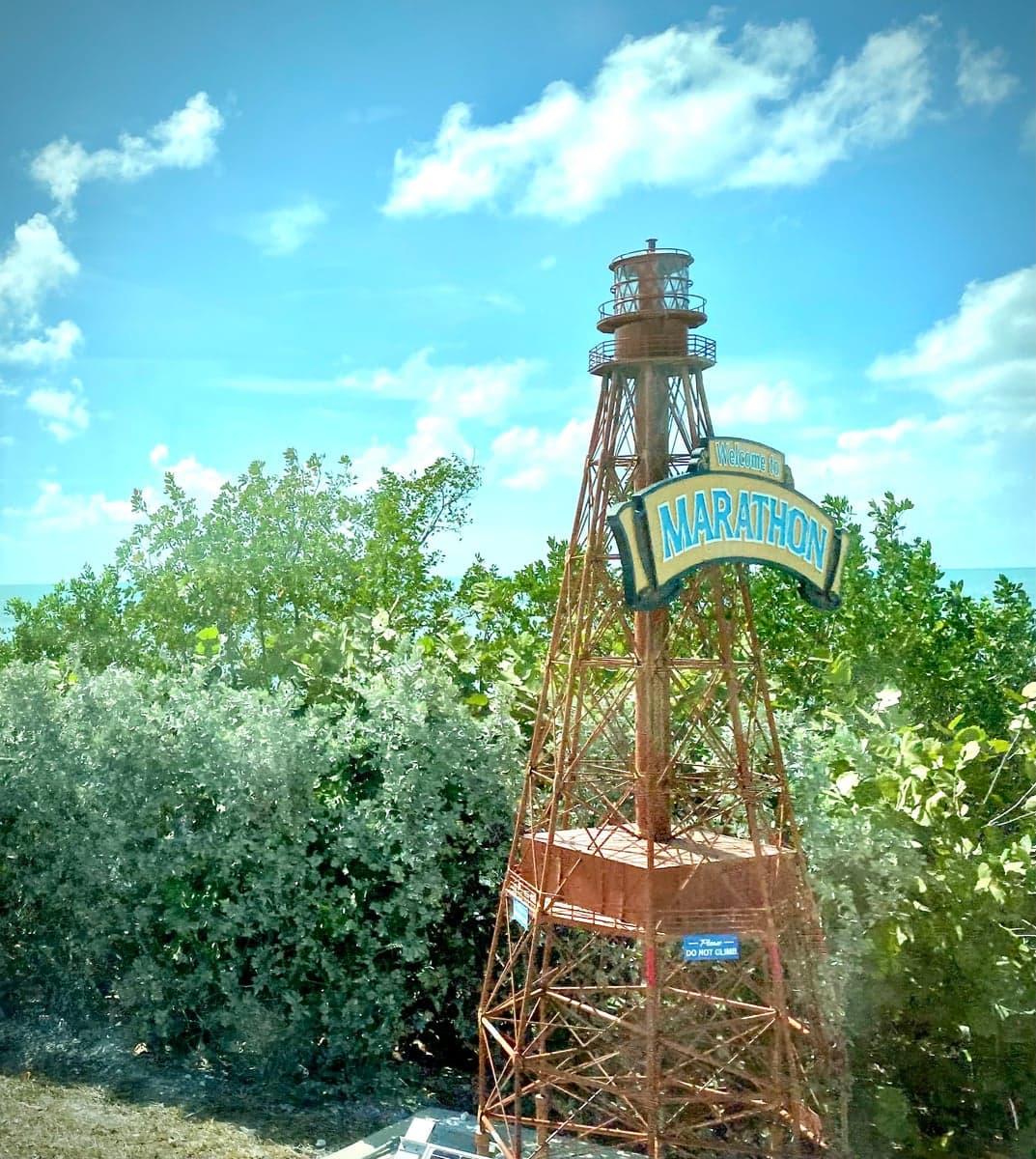
Photo: Wikipedia
Strategic Assessment of Marathon, FL
Meaningful friction. Expect exposure to either population pressure, blast zones, or natural disaster risk. Consider buying a retreat property.
What does the Strategic Assessment tell us?
Our Strategic Assessment grades tactical survivability of an area. Major population centers, military targets, fallout zones, natural disasters, and border exposure all drive risk — lower exposure means a more defensible position in a crisis.
This is heavily inspired by Joel Skousen's Strategic Relocation book. Highly recommended you checkout the book ($)What does this tell us?
Our Strategic Assessment grades tactical survivability of an area. Major population centers, military targets, fallout zones, natural disasters, and border exposure all drive risk — lower exposure means a more defensible position in a crisis.
This is heavily inspired by Joel Skousen's Strategic Relocation book. Highly recommended you checkout the book ($)Strategic Pillars

Key Distances
Regional Safe Places
Below is our recommended "safe zones" in Florida and the surrounding area based on our strategic heuristics. For most people, it's unrealistic to live in a “safe zone” full-time due to work, family or other personal reasons. They tend to be more rural. However, many of these areas are perfect for second homes and retreat properties that double as a vacation home or even a short-term rental.

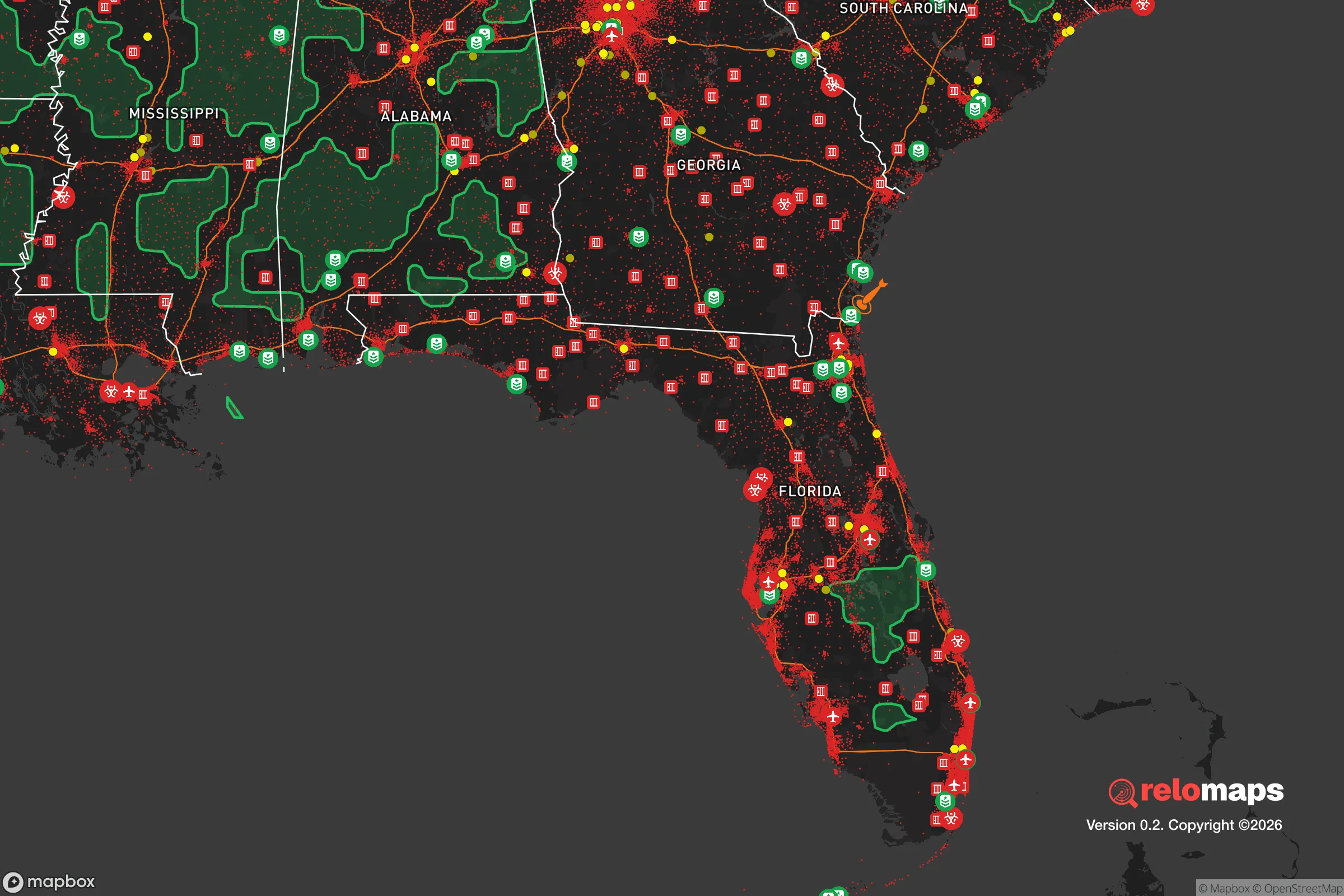


Important Note: For informational purposes only. This does not mean nothing bad ever happens in the green zones. Please use common sense. This is based on public data and modeled with AI. We tried to take a conservative approach but mistakes happen. We update this regularly as new information becomes available.
Solar Generator Recommendations
Backup power matters more here than in safer locations. We've picked three solar generators across budgets and capacity tiers — start with the budget unit if you only need a few essentials, or step up if you want to run a fridge and HVAC for days at a time.

Jackery Portable Power Station Explorer 300
Budget OptionPower on the Go: Weighing only 11 lbs, it's convenient to set up and store with book-sized foldable solar panels

BLUETTI Portable Power Station AC180
Designed for both indoor and outdoor scenarios, AC180 is highly capable as it has a robost capacity and continuous output power.

EF ECOFLOW DELTA Pro Ultra Power Station
Upgraded PickEcoFlow DELTA Pro Ultra is a whole-home energy system designed to grow with your family. Integrated with the Smart Home Panel 2, it scales to meet your evolving energy needs — keeping your home powered, intelligent, and secure through every stage of life.
We earn a commission, at no additional cost to you.
Strategic Assessment Analysis
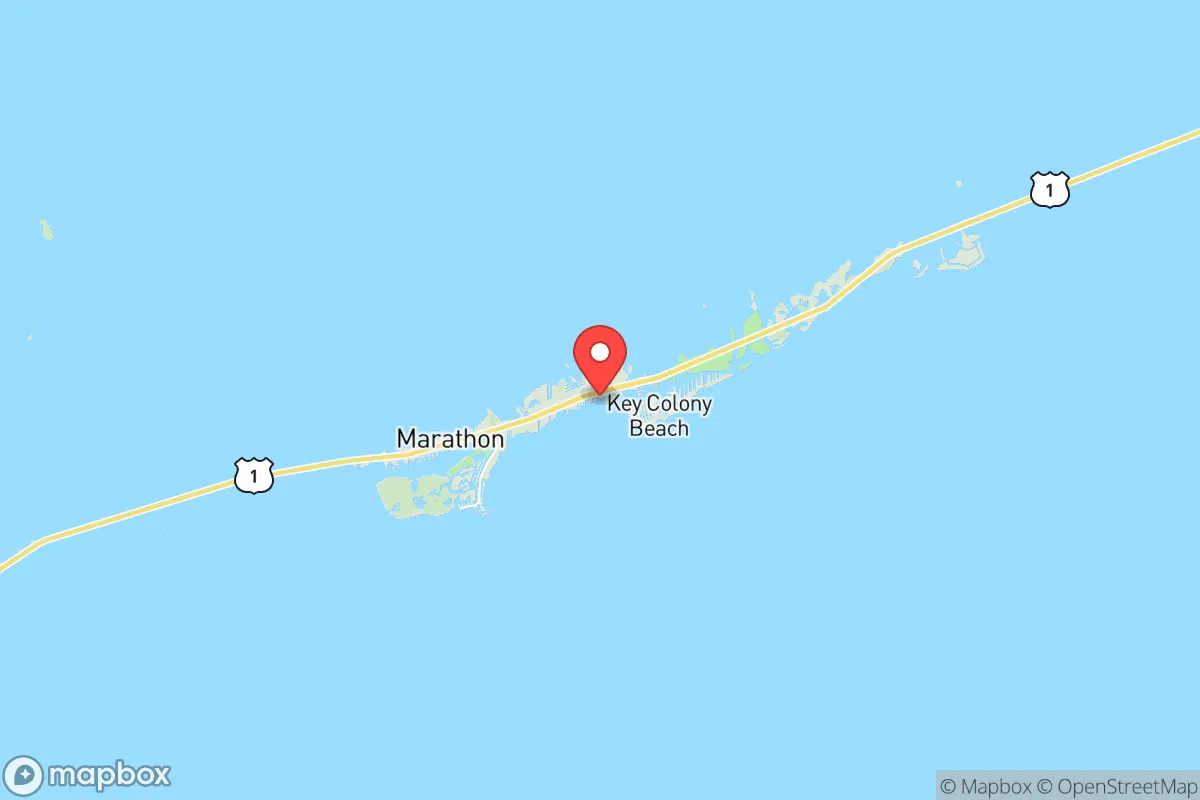
Marathon, Florida, sits in the middle of the Florida Keys, roughly 50 miles from Key West and 110 miles from Miami, but its strategic value for a survival-minded relocator is defined less by distance and more by the single-threaded vulnerability of the Overseas Highway (US-1). This 113-mile chain of islands offers a unique combination of natural isolation and marine abundance, but it also presents a hard ceiling on self-sufficiency that demands serious pre-planning. For a conservative-leaning individual or family looking to ride out civic unrest or a major disaster, Marathon provides a defensible redoubt—provided you accept that your bug-out route is also your only supply line, and that the ocean is both your greatest asset and your most likely threat.
Geographic position and natural advantages for long-term survival
Marathon’s location in the central Keys gives it a distinct edge over Key West (too crowded, too tourist-dependent) or Key Largo (too close to Miami’s sprawl). The island sits on a 10-mile stretch of US-1 with a permanent population of roughly 8,000, but that number swells to 30,000+ during peak tourist season—a seasonal vulnerability you must account for. The surrounding Florida Bay and Atlantic Ocean provide year-round access to fish, lobster, and crab, making food procurement more reliable than in most inland areas. The shallow waters of the bay also make small-boat navigation feasible for a prepared individual, offering multiple escape routes that don’t rely on the highway. Freshwater is the critical constraint: Marathon’s municipal supply comes via a 130-mile pipeline from the mainland, and private wells are brackish at best. Any serious prepper must plan for rainwater catchment and desalination, as the island’s natural aquifer is unusable for drinking. The subtropical climate means no freeze risk, but hurricane season (June–November) is a non-negotiable reality that will test every aspect of your setup.
Risks, exposures, and proximity to fallout-relevant landmarks
The single greatest exposure for Marathon is its complete dependence on US-1. A single bridge failure—whether from hurricane damage, sabotage, or a mass-casualty event on the mainland—turns the Keys into a trap. The Seven Mile Bridge, just west of Marathon, is the most obvious chokepoint; if it goes down, you’re effectively islanded with no road egress. For a survivalist, this is both a strength and a weakness: it makes the area hard for outsiders to reach, but it also means you cannot easily leave if conditions deteriorate. Marathon is roughly 110 miles from the Turkey Point Nuclear Generating Station (south of Miami), which places it outside the 10-mile emergency planning zone but within the 50-mile ingestion pathway zone. A major release at Turkey Point would not require evacuation of Marathon, but it would contaminate local fisheries and rainwater for weeks to months. The island’s proximity to Cuba (90 miles south) also introduces a secondary concern: in a scenario of mass migration or regional instability, the Keys could become a landing zone for boat traffic that overwhelms local resources. Marathon has no major military installations, no strategic industrial targets, and no large-scale fuel storage—which, from a prepper perspective, makes it a low-priority target for any coordinated attack or civil unrest. The nearest major population center is Miami, and in a collapse scenario, Marathon would likely see a wave of refugees from the mainland before the bridges become impassable. Your window for securing the island is measured in hours, not days, after a major event on the mainland.
Practical resilience for a relocator: food, water, energy, and defensibility
Marathon’s practical resilience is a mixed bag that rewards serious preparation. Food is the strongest category: the surrounding waters are among the most productive in the continental US, with year-round access to yellowtail snapper, grouper, hogfish, stone crab, and spiny lobster. A family with a small boat, a cast net, and basic knowledge of local fishing grounds can realistically harvest enough protein to supplement stored supplies indefinitely. The island also has a handful of small farms and community gardens, but they produce a fraction of what the population consumes. Water is the weakest link: Marathon’s municipal water comes from the mainland via the Florida Keys Aqueduct Authority pipeline, which is vulnerable to both hurricane damage and intentional disruption. Rainwater catchment is legal and common among long-term residents, but the average annual rainfall (40 inches) is seasonal, with a dry winter period from November to April. A serious setup requires at least 1,000 gallons of storage per person, plus a backup desalination unit (hand-pump or solar-powered) for the dry months. Energy is manageable: Marathon has excellent solar exposure (5.5 peak sun hours per day year-round), and many homes already have rooftop solar due to high electricity rates. Battery storage is essential, as the grid is fragile and prone to outages during storms. Propane is widely available for cooking and refrigeration, but gasoline and diesel are delivered by truck over US-1—meaning fuel becomes scarce within 48 hours of a bridge closure. Defensibility is the island’s strongest card: Marathon is a narrow strip of land with limited access points, making it relatively easy to monitor and control. The local population is small and tight-knit, with a strong culture of self-reliance among the year-round residents. The Monroe County Sheriff’s Office has a substation in Marathon, but in a prolonged event, law enforcement presence would be thin. Your best defense is a low profile and a well-stocked pantry, not a fortified compound.
The overall strategic picture for Marathon is one of high reward paired with high risk. For a conservative-leaning individual or family who values isolation, marine resources, and a small community of like-minded people, the Keys offer a genuine refuge from the chaos of the mainland. But that refuge comes with hard constraints: you must pre-position at least six months of dry goods, a reliable water system, and a plan for medical emergencies (the nearest hospital is in Key West, 50 miles away, and it’s a small facility). The island’s single-road dependency means you cannot treat Marathon as a bug-out location you can reach after a crisis—you must already be there, fully stocked, before the bridges close. If you can accept those terms, Marathon provides a defensible, resource-rich base that few other locations in Florida can match. If you cannot, the Keys will become a beautiful trap. Make your decision before hurricane season, not during it.

* Values derived from national, state, county, city and local statistics and may differ in a specific area. Last updated: 2026-05-14T01:41:43.000Z
Narrative content on this page is AI-generated and may contain mistakes. Verify any details that matter before acting on them.
ReloMaps may earn a commission from affiliate links at no extra cost to you.

