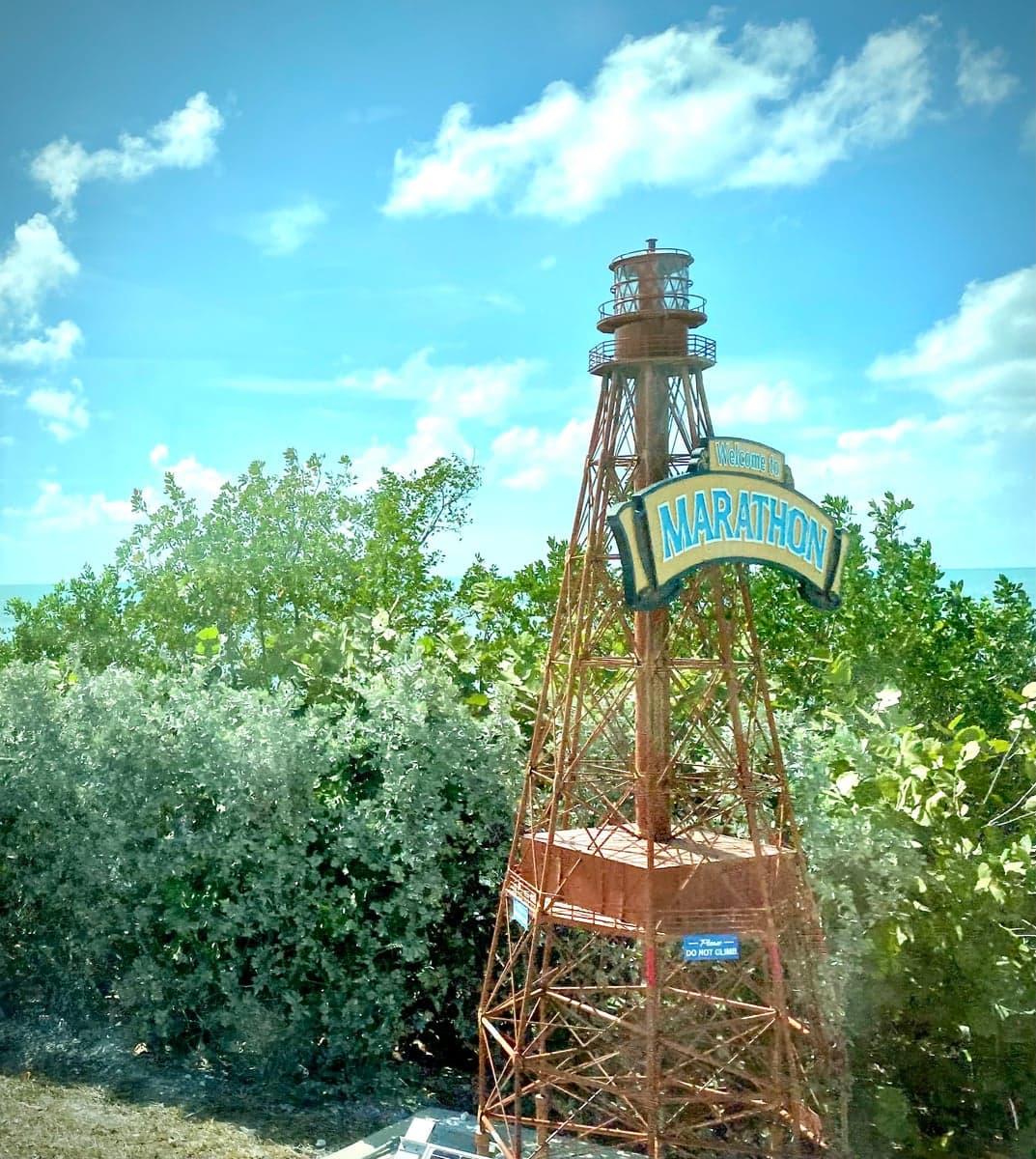
Photo: Wikipedia
Political ClimatePolitical Climate in Marathon, FL
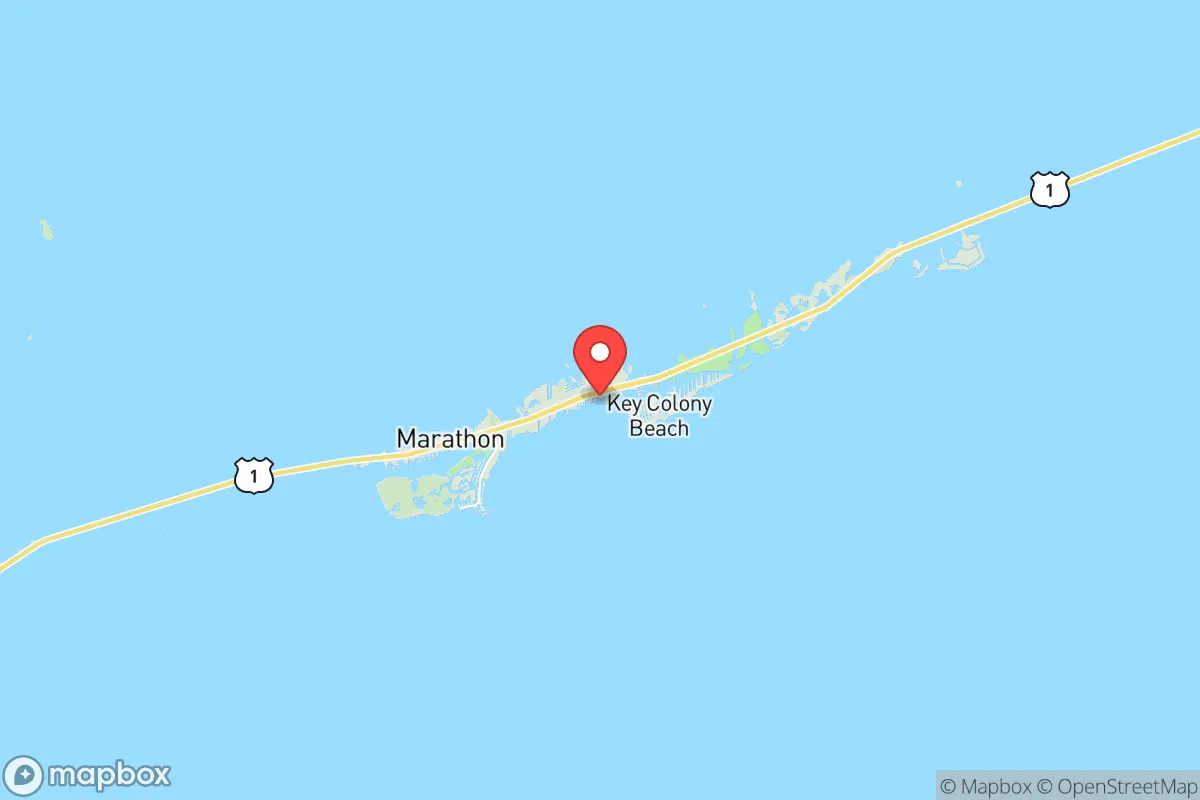
District shown is the primary district for this city’s centroid. Cities may span multiple districts.
Local Political AnalysisPolitical Analysis of Marathon, FL
Marathon, Florida, sits squarely in the conservative camp, with a Cook PVI of R+10 that makes it significantly more Republican than the state of Florida as a whole (R+5). This isn’t a recent shift; the Keys have long been a place where folks value their independence and are wary of government overreach. You’ll find that the local political conversation leans heavily toward limited regulation, property rights, and a general skepticism of top-down mandates—especially anything that feels like it’s coming from Tallahassee or Washington. The trajectory here is steady: if anything, the area has hardened its conservative stance over the last decade, as more people move in specifically to escape the progressive policies creeping into mainland Florida cities.
How it compares
Compared to the rest of Florida, Marathon is a clear outlier in its intensity. While the state as a whole is a purple-ish R+5, with swing areas like Tampa and Orlando pulling it toward the center, the Keys are a different animal. Drive up to Key Largo or Islamorada, and you’ll find a similar vibe—conservative, pro-business, and deeply protective of local autonomy. But contrast that with a place like Miami-Dade, which is more mixed, or Broward County, which leans blue, and you see the divide. Marathon’s R+10 rating isn’t just a number; it reflects a community that actively resists the kind of progressive social experiments you see in larger Florida cities. The surrounding state’s R+5 means there’s a constant tug-of-war, but down here, the political culture is more uniform—and more resistant to change.
What this means for residents
For someone living in Marathon, this political climate translates into a daily life that feels less encumbered by bureaucracy. You’re less likely to see aggressive zoning laws, heavy-handed environmental restrictions that hurt small businesses, or the kind of woke policies that have taken over school boards elsewhere. The local government tends to focus on practical issues—hurricane preparedness, water quality, and keeping tourism humming—rather than social engineering. That said, there’s a growing concern among long-time residents that the state’s overall R+5 status is slipping, with more progressive transplants bringing their voting habits with them. If you value personal freedom—like the right to run a business without endless red tape or to live without a nanny-state telling you how to use your property—Marathon feels like a holdout. The worry is that as Florida’s population grows, the pressure to conform to national trends will increase, but for now, this area remains a stronghold of common-sense conservatism.
Culturally, Marathon stands apart from the rest of Florida in its fierce independence. You won’t find the same level of chain-store homogenization or cookie-cutter HOA rules that dominate places like Fort Lauderdale or Naples. The policy distinctions are subtle but real: local ordinances here tend to favor property owners over renters, and there’s a strong tradition of self-reliance. If you’re looking for a place where the government stays out of your way and the neighbors share your values, Marathon is it. Just keep an eye on the long-term trends—if the state keeps drifting left, this little slice of the Keys might become an even more important refuge for those who believe freedom isn’t negotiable.

State Political ClimatePolitical Climate in Florida
State Political AnalysisPolitical Environment in the State
Florida is a solidly Republican state with a Cook PVI of R+5, but don’t let that single number fool you — it’s a battleground in miniature, with a political climate that has shifted rightward over the past two decades, driven by a massive influx of conservative-leaning transplants from the Northeast and Midwest. The dominant coalition is a mix of suburban families, retirees, and rural conservatives, but the state’s growth has also brought a resilient Democratic base concentrated in the urban cores. Over the last 10-20 years, Florida has gone from a true purple swing state — where elections were decided by a few thousand votes — to a lean-Republican stronghold, with Republicans now holding a supermajority in the legislature and winning every statewide race since 2014. That said, the margins can still tighten in presidential years, especially when Democrats turn out in Miami-Dade and Broward.
Urban vs. rural divide
The political map of Florida is a tale of three Floridas: the deep-blue urban corridors, the red-leaning suburbs and exurbs, and the deep-red rural interior. Miami-Dade County, once a Democratic stronghold, has been trending right — in 2020, Trump improved his margin there by 10 points compared to 2016, and in 2024, the county flipped to Republican for the first time in decades, driven by Cuban-American and Venezuelan voters who are fiercely anti-socialist. Broward County (Fort Lauderdale) and Palm Beach County remain solidly Democratic, but their influence is diluted by explosive growth in red-leaning areas like The Villages (a massive retirement community that votes 70%+ Republican) and the I-4 corridor suburbs like Lakeland and Winter Garden. The rural Panhandle — places like Panama City and Milton — is deep red, while Gainesville (home to UF) and Tallahassee (the state capital) are blue islands. The key battleground is the I-4 corridor from Tampa to Daytona Beach, where fast-growing suburbs like Wesley Chapel and St. Cloud are pulling the state rightward.
Policy environment
Florida’s policy environment is a conservative’s dream on paper, but the devil is in the details. There is no state income tax, which is a huge draw for high-earners and retirees. Property taxes are moderate, and the state’s homestead exemption caps annual assessment increases at 3% for primary residences, protecting long-time homeowners from being priced out. The regulatory posture is business-friendly — Florida is a right-to-work state, and permitting for construction is generally faster than in the Northeast. On education, Governor Ron DeSantis pushed through the Parental Rights in Education Act (HB 1557, often called the “Don’t Say Gay” law by critics), which prohibits classroom instruction on sexual orientation and gender identity in K-3, and has expanded school choice with universal vouchers under the Family Empowerment Scholarship program. Healthcare policy is mixed: Florida did not expand Medicaid under the ACA, keeping costs lower for taxpayers, but the state has a high uninsured rate. Election laws were tightened after 2020 with SB 90, which limited drop boxes, required stricter ID for mail-in ballots, and banned “ballot harvesting” — a move that drew lawsuits but has held up in court. The state also passed a 15-week abortion ban (HB 5) in 2023, with a six-week ban signed in 2024 that is currently tied up in court. For gun rights, Florida is a “shall issue” state for concealed carry, and in 2023, permitless carry (HB 543) was signed into law, allowing any legal gun owner to carry concealed without a permit.
Trajectory & freedom
Florida is arguably becoming more free in the areas that matter most to conservatives — but it’s not a straight line. The passage of permitless carry (HB 543) in 2023 was a major expansion of Second Amendment rights, reversing a long-standing “may issue” culture. The Parental Rights in Education Act and the Stop WOKE Act (HB 7), which restricts critical race theory training in schools and workplaces, were both aimed at curbing progressive overreach in education and corporate diversity programs. On property rights, the state passed SB 250 in 2023, which limits homeowners’ associations’ ability to ban short-term rentals like Airbnb — a win for property owners. However, there are concerning trends: the state’s insurance market is in crisis, with property insurance premiums skyrocketing due to litigation abuse and hurricane risk, and the legislature’s response (SB 2A in 2022) has been slow to stabilize rates. Additionally, the state’s growth management laws have been weakened, leading to unchecked development that some residents feel infringes on their quality of life. On medical freedom, Florida banned vaccine passports (SB 2006) and prohibited mask mandates in schools (HB 7), but the state also passed a law in 2023 that restricts transgender medical care for minors (SB 254), which is a win for parental rights advocates but has drawn legal challenges. Overall, the trajectory is toward more personal liberty in education, guns, and speech, but with growing pains in housing and insurance.
Civil unrest & political movements
Florida has seen its share of political flashpoints, but they are less about street violence and more about organized activism and legal battles. The Parkland school shooting in 2018 sparked a massive youth-led gun control movement (March for Our Lives), which led to the passage of the Marjory Stoneman Douglas High School Public Safety Act — a rare instance of gun control in a red state, raising the purchase age to 21 and imposing a three-day waiting period. That law remains controversial among gun rights advocates. More recently, the “Don’t Say Gay” protests drew large crowds at the state capitol, but they were largely peaceful. Immigration politics are a constant flashpoint: Florida passed SB 1718 in 2023, one of the toughest anti-illegal immigration laws in the country, requiring hospitals to ask about immigration status and making it a felony to transport undocumented immigrants into the state. This has led to a noticeable exodus of undocumented workers from agriculture and construction, and some businesses have complained about labor shortages. Election integrity remains a hot-button issue: after the 2020 election, the state conducted a special election police force (the Office of Election Crimes and Security) that has arrested several people for voter fraud, though critics say it’s overkill. There is no serious secessionist movement in Florida, but there is a strong “free state of Florida” rhetoric among conservatives who see the state as a refuge from progressive policies elsewhere.
Projection
Over the next 5-10 years, Florida is likely to become more Republican, but not uniformly. The in-migration from blue states (New York, California, Illinois) is overwhelmingly conservative-leaning — these are people fleeing high taxes and crime, not progressives looking for a new utopia. The fastest-growing counties are Sumter County (The Villages), St. Johns County (suburban Jacksonville), and Osceola County (Orlando exurbs), all of which are trending red. However, the Democratic base is also growing in urban centers like Miami and Orlando, and the Hispanic vote is becoming more diverse — while Cuban-Americans lean Republican, Puerto Ricans and Central Americans in Central Florida lean Democratic. The wild card is climate change: rising sea levels and stronger hurricanes could eventually slow growth in coastal areas, but for now, the state’s population is booming. Expect continued fights over education (school choice vs. public school funding), insurance reform, and water rights (the Everglades and springs). A new resident moving in now should expect a state that is increasingly conservative on cultural issues but still grappling with the practical consequences of rapid growth — traffic, housing costs, and insurance premiums.
For a new resident, the bottom line is this: Florida offers a high degree of personal freedom compared to most states, especially on taxes, guns, and education. You won’t have a state income tax, you can carry a concealed weapon without a permit, and your kids won’t be taught critical race theory in elementary school. But don’t expect a libertarian paradise — the state government is still big and interventionist in areas like insurance regulation and growth management. If you’re moving here for freedom, you’ll find it, but you’ll also find a state that is still figuring out how to manage its own success. The politics are real, the debates are loud, and the sun is always shining — just make sure you’ve got a good insurance policy.
* Values derived from national, state, county, city and local statistics and may differ in a specific area. Last updated: 2026-05-14T01:41:43.000Z
Narrative content on this page is AI-generated and may contain mistakes. Verify any details that matter before acting on them.
ReloMaps may earn a commission from affiliate links at no extra cost to you.

