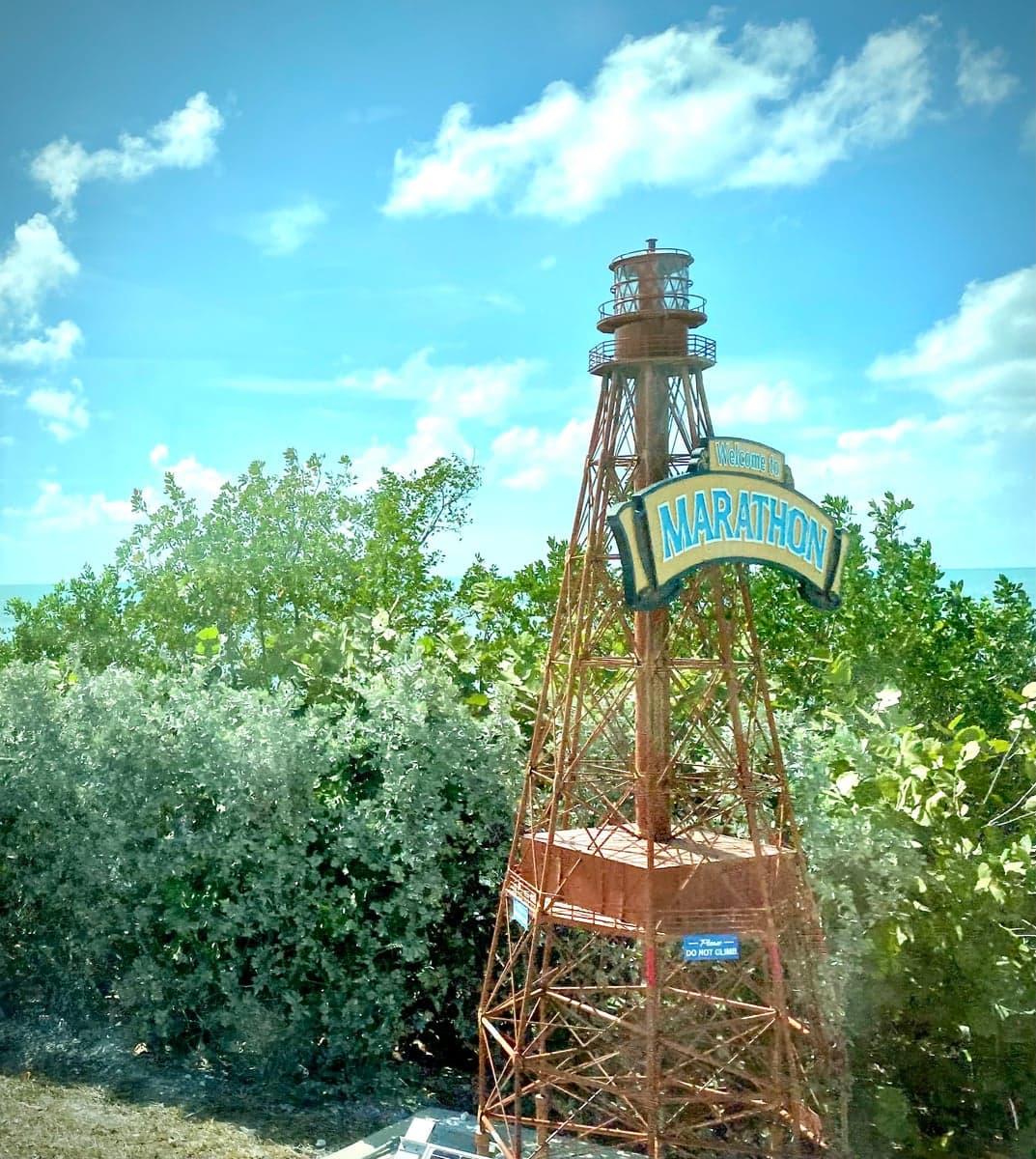
Photo: Wikipedia
Personal Sovereignty in Marathon, FL
Viable for self-reliance. Generally workable, though some barriers may limit total independence.
What does Personal Sovereignty tell us?
Personal Sovereignty measures your capacity for self-reliance and independence with minimal government friction. Higher scores mean fewer barriers between you and the way you want to live... but it assumes you have the space you need and good neighbors.
What does this tell us?
Personal Sovereignty measures your capacity for self-reliance and independence with minimal government friction. Higher scores mean fewer barriers between you and the way you want to live... but it assumes you have the space you need and good neighbors.
State Policy
Energy independence: Importer (10% of energy produced in-state)
Personal Liberty
Homesteading

Personal Liberty Analysis
For the individual or family prioritizing personal sovereignty above all else, Marathon, Florida presents a complex picture of freedom and constraint. Nestled in the heart of the Florida Keys, this island city offers a unique blend of deep-rooted self-reliance culture and the unavoidable regulatory realities of a densely populated, environmentally sensitive archipelago. While the state of Florida has aggressively positioned itself as a bastion of liberty in recent years, the specific geography and municipal codes of Marathon impose a distinct set of trade-offs that a strategic relocation must account for. The autonomy environment here is best described as a high-ceilinged room with a few low-hanging beams: you have immense freedom in lifestyle and self-defense, but your physical footprint and ability to live entirely off-grid are sharply limited by the land itself.
Tax burden and regulatory posture in the Florida Keys
Florida’s lack of a state income tax is the single most powerful lever for personal financial sovereignty here, and Marathon residents benefit from it fully. This means every dollar earned stays in your pocket, a critical advantage for anyone seeking to minimize dependency on government systems. However, the trade-off is a heavy reliance on property taxes and tourist-driven sales taxes. Monroe County, which encompasses Marathon, has some of the highest property tax rates in the state, driven by the need to fund infrastructure on fragile islands. More importantly, the regulatory posture is dense. The Florida Keys Area of Critical State Concern designation means that virtually any construction, renovation, or land-use change is subject to strict oversight from both the county and the state. Expect permitting delays, environmental impact reviews, and building codes that are far more restrictive than in mainland Florida. For a prepper or survivalist, this translates to a significant barrier to building a hardened retreat or expanding a homestead without bureaucratic entanglement. The cost of compliance is a real tax on your time and autonomy.
Self-defense and gun law specifics in Monroe County
On the matter of self-defense, Marathon is situated in a state that has become a national leader in firearm freedom. Florida’s “Constitutional Carry” law, effective July 1, 2023, means that any law-abiding adult can carry a concealed firearm without a permit. This is a foundational pillar of personal sovereignty. There is no state-level waiting period for long guns, and the “Stand Your Ground” statute provides broad legal protection for the use of deadly force in self-defense. Monroe County’s sheriff has historically been supportive of Second Amendment rights, and local gun culture is strong, with several ranges and gun shops in the area. However, the practical reality of island living imposes constraints. The nearest major firearms dealers and gunsmiths are a drive away in Homestead or Miami. More critically, the high population density and tourist traffic in Marathon mean that a defensive firearm encounter would face intense scrutiny. While the law is on your side, the social and legal aftermath in a small, interconnected community is a factor to weigh. For those who prioritize armed preparedness, the legal framework is excellent, but the physical environment demands discretion and sound judgment.
Self-reliance and homesteading viability on a small island
This is where Marathon’s sovereignty profile diverges sharply from rural mainland Florida. The average residential lot size in Marathon is small—often a quarter-acre or less—and land prices are among the highest in the state. Zoning codes are restrictive: raising livestock, keeping chickens, or maintaining a substantial garden is heavily regulated or outright prohibited in most residential zones. The concept of a self-sufficient homestead is nearly impossible to achieve within city limits. Off-grid living is also severely constrained. While solar panels are permitted, the city requires connection to the municipal water and sewer systems in most areas. Rainwater collection is allowed but limited by code, and composting toilets are not a standard alternative to sewer hookups. The Keys’ fragile freshwater lens means strict rules on wells and septic systems. For the survivalist seeking land to cultivate, hunt, and live independently, Marathon is a poor choice. Your self-reliance here must be financial and logistical—stockpiling supplies, maintaining a boat for evacuation, and building community networks—rather than agricultural or off-grid. The trade-off is a stunning natural environment and a tight-knit community of like-minded individuals, but the physical capacity for true homesteading is minimal.
Personal liberties: parental rights, medical autonomy, speech, and property
Florida has been at the forefront of protecting parental rights in education and healthcare, and Marathon reflects this state-level priority. The “Parental Rights in Education” law ensures that parents have substantial control over their children’s schooling and medical decisions. Medical autonomy is generally respected, with no state-level vaccine mandates for adults and a strong legal framework against government overreach into private health choices. Free speech is robustly protected under Florida law, and the local culture in the Keys is fiercely independent and outspoken. Property rights, however, are the weak link. As noted, the combination of state-level critical area designation and local zoning creates a thicket of regulations that limit what you can do with your land. Eminent domain is a real concern for infrastructure projects, and the constant pressure of sea-level rise regulations adds another layer of potential government intervention. Your property is yours, but what you can build, modify, or even maintain on it is subject to far more oversight than in less regulated parts of Florida. This tension between state-level liberty and local-level control is the defining characteristic of personal sovereignty in Marathon.
In the final analysis, Marathon offers a unique but narrow band of personal sovereignty. It excels in financial freedom through no income tax and in personal defense through strong gun laws and a supportive legal climate. Parental and medical autonomy are well-protected at the state level. However, the physical constraints of the island—small lots, high costs, dense regulations, and limited off-grid potential—make it a poor fit for the traditional homesteading or survivalist lifestyle. Compared to rural areas in the Florida Panhandle or the interior of the state, Marathon trades physical self-reliance for a high degree of legal and financial autonomy in a stunning, but heavily managed, environment. For the strategic relocator who values community, legal freedom, and a strong defensive posture over land independence, Marathon can work. For those whose sovereignty vision includes a large, self-sufficient property with minimal government interaction, the mainland remains the superior choice. The Keys demand a different kind of preparedness: one based on adaptability, community ties, and a clear-eyed acceptance of the trade-offs inherent in living on a small island in a big state.

* Values derived from national, state, county, city and local statistics and may differ in a specific area. Last updated: 2026-05-14T01:41:43.000Z
Narrative content on this page is AI-generated and may contain mistakes. Verify any details that matter before acting on them.
ReloMaps may earn a commission from affiliate links at no extra cost to you.

