Photo: Wikipedia
Demographics of Maricopa, AZ
Affluence Level in Maricopa, AZ
A middle-class area roughly in line with national averages across income, home values, education, and employment.
People of Maricopa, AZ
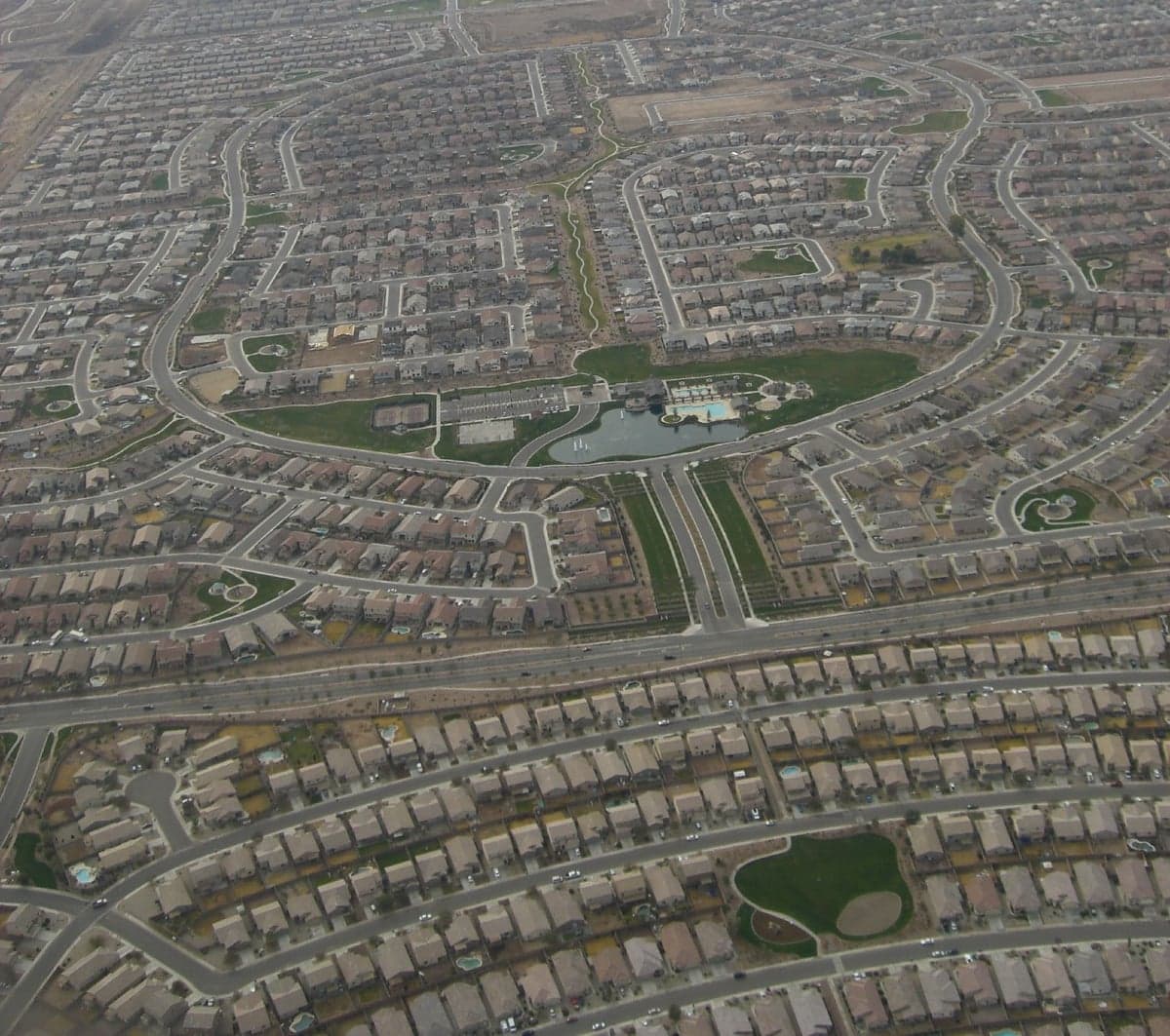
The people of Maricopa, Arizona today form a rapidly growing, family-oriented community of roughly 63,000 residents, characterized by its high homeownership rate and a demographic profile that is younger and more diverse than the state average. The city’s identity is shaped by its recent, explosive growth as a master-planned exurb of Phoenix, attracting primarily domestic migrants seeking affordable housing and a suburban lifestyle. With a population that is 45.8% White, 28.6% Hispanic, 13.3% Black, and 2.1% East/Southeast Asian, Maricopa is notably more diverse than many neighboring communities, yet it remains a place where distinct neighborhoods often reflect the timing and origin of settlement waves.
How the city was settled and grew
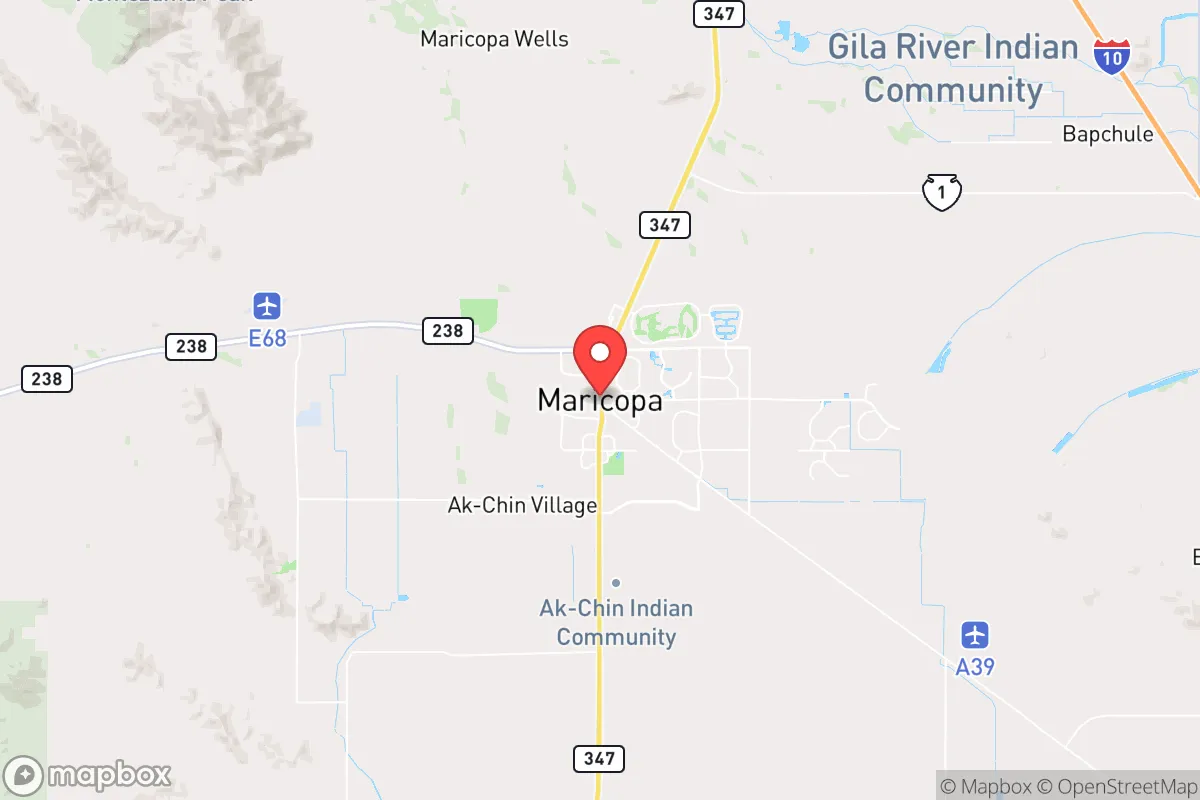
Maricopa is a genuinely post-1900 Sun Belt exurb with no deep colonial history. Its founding was tied to the arrival of the Southern Pacific Railroad in 1879, which established a small depot and water stop named Maricopa Station. For nearly a century, the population remained tiny—a few hundred people—serving the railroad and surrounding cotton and cattle ranches. The original settlement clustered around what is now the Historic Maricopa Village area near the railroad tracks, where a handful of Anglo and Mexican-American families lived and worked. No significant land grants or large-scale agricultural colonies shaped the town; it remained a rural whistle-stop until the late 20th century. The first major demographic wave came in the 1960s and 1970s, when a small number of White and Hispanic families moved in to work at the nearby Ak-Chin Indian Community’s farms and the growing industrial base in Pinal County.
Modern era (post-1965)
The post-1965 transformation of Maricopa is almost entirely a story of domestic in-migration, not international immigration. The city’s foreign-born population is just 4.3%, well below the national average. The real catalyst was the 1990s and 2000s housing boom, which turned Maricopa into one of the fastest-growing cities in America. Master-planned communities like Rancho El Dorado and Senita were built from scratch, attracting a wave of young families—predominantly White and Hispanic—from California and other expensive Western states seeking affordable new homes. A second major wave, beginning around 2010, brought a significant Black population, many of whom moved from the Phoenix metro area and California. These families concentrated in newer subdivisions like Alta and Glacier, where home prices were lower than in Phoenix proper. The East/Southeast Asian community (2.1%) and the smaller Indian subcontinent community (0.7%) are more dispersed but have a visible presence in the Edison and Mirage neighborhoods, often drawn by professional jobs in healthcare and logistics in the broader Phoenix region. The city’s low college attainment rate (22.7%) reflects its character as a blue-collar and service-worker exurb, not a knowledge-economy hub.
The future
Maricopa’s population is heading toward further diversification, but it is likely to remain a predominantly domestic-migrant city rather than a major immigrant gateway. The Hispanic share (28.6%) is growing steadily through both natural increase and continued migration from other parts of Arizona and California, while the White share (45.8%) is slowly declining. The Black population (13.3%) has plateaued in recent years as housing prices have risen, making the city less affordable for first-time buyers. The East/Southeast Asian and Indian communities are small but growing, driven by professionals in the expanding logistics and healthcare sectors along the I-10 corridor. The city is not tribalizing into rigid ethnic enclaves; instead, neighborhoods like Rancho El Dorado and Senita are becoming more mixed over time, though newer developments like Alta still tend to attract a higher share of Black and Hispanic families. Over the next 10-20 years, Maricopa will likely homogenize in terms of lifestyle—becoming a denser, more built-out exurb—but its population will continue to diversify ethnically, with the Hispanic share potentially approaching 35-40% by 2040.
For someone moving in now, Maricopa is becoming a solidly middle-class, family-focused exurb where domestic migrants from across the West are creating a new, blended community. The city’s low foreign-born share means less linguistic and cultural friction than in many other Sun Belt boomtowns, but its rapid growth has also created infrastructure strains and a sense of impermanence. The bottom line: Maricopa is a place for people who want an affordable, safe, and ethnically diverse suburban life without the high costs or deep-rooted traditions of older American cities.

* Values derived from national, state, county, city and local statistics and may differ in a specific area. Last updated: 2026-04-19T07:19:09.000Z
Narrative content on this page is AI-generated and may contain mistakes. Verify any details that matter before acting on them.
ReloMaps may earn a commission from affiliate links at no extra cost to you.

