Photo: Wikipedia
Political ClimatePolitical Climate in Maricopa, AZ
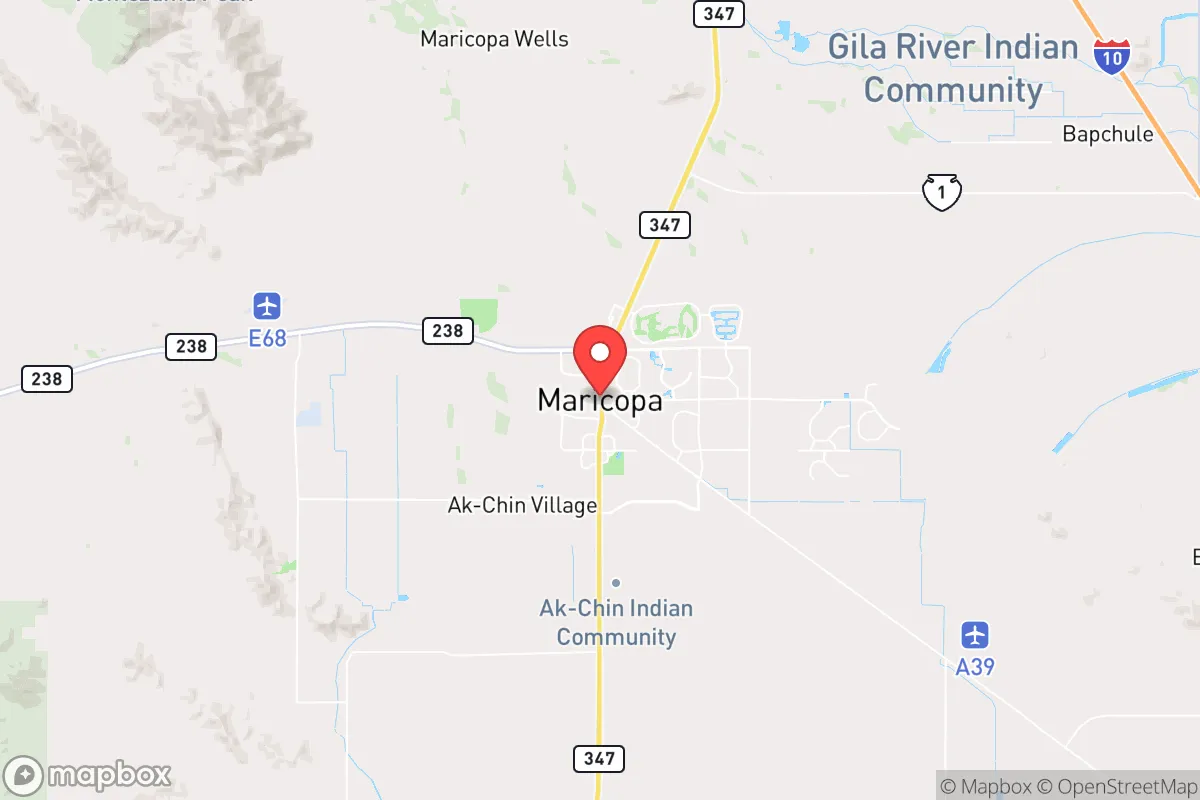
District shown is the primary district for this city’s centroid. Cities may span multiple districts.
Local Political AnalysisPolitical Analysis of Maricopa, AZ
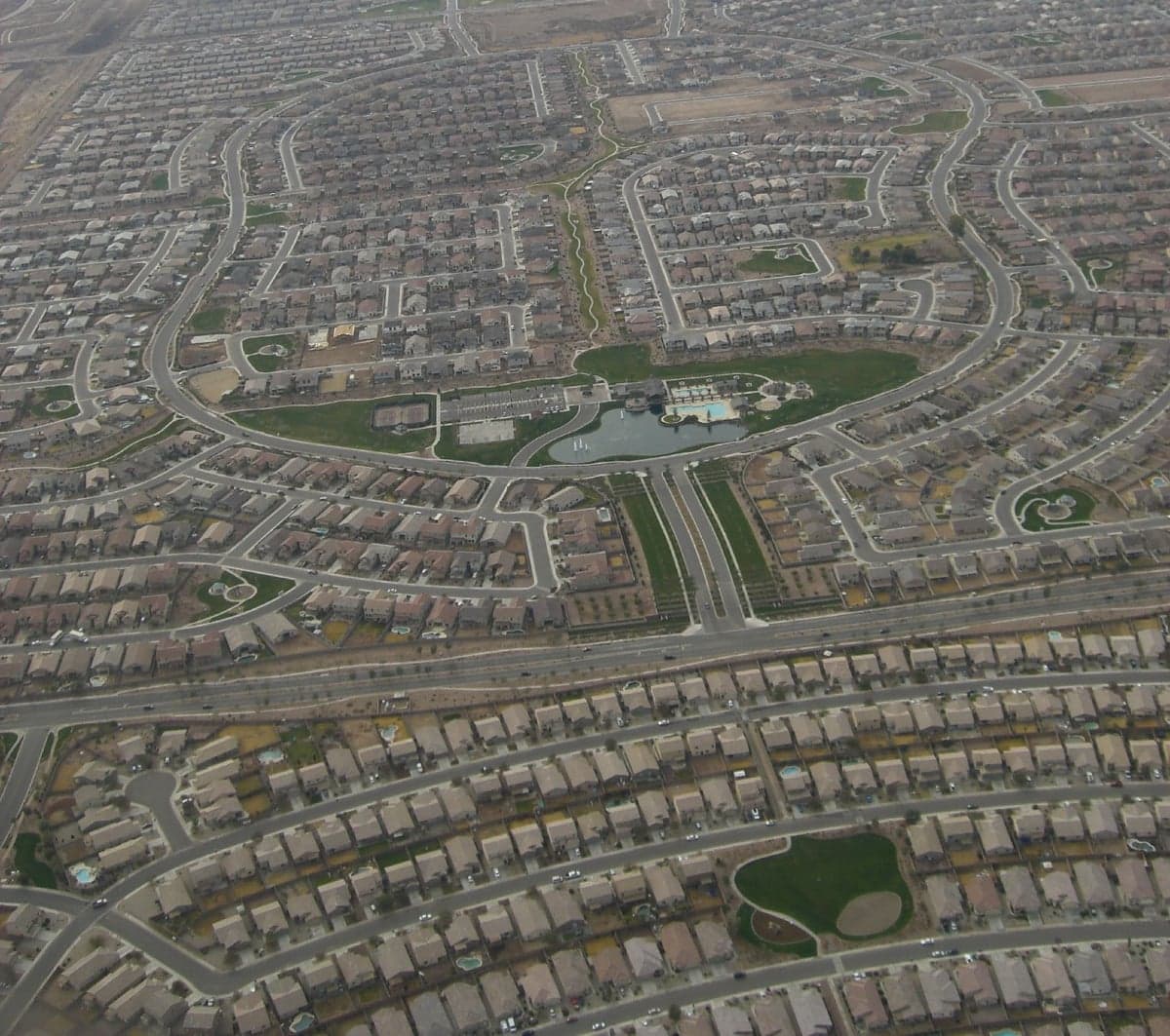
Maricopa, Arizona, has long been a solidly conservative community, and that hasn’t changed much despite the city’s rapid growth. The Cook PVI rating of R+7 tells you the basics—this area leans Republican by a comfortable margin, and that’s been the case for as long as I can remember. But if you’ve been here a while, you’ve seen the shift: it’s not just about party registration anymore; it’s about how people here feel about government overreach and personal freedoms. The old-timers who moved out from Phoenix to escape the hustle and the taxes still set the tone, but the newcomers—many from California and other blue states—are starting to test the waters. So far, the conservative backbone holds, but you can feel the tension building.
How it compares
Compared to nearby cities, Maricopa is a conservative island in a sea of even redder territory. Head north to Casa Grande, and you’ll find a similar vibe—working-class, pro-business, and wary of big government—but Casa Grande has seen more of a purple tinge in recent years, especially in local school board races. Drive east to Coolidge or Florence, and you’re in deep red country where the Second Amendment is practically a religion and property rights are sacred. The real contrast is with Phoenix, just 30 miles north. Phoenix has shifted leftward in the last decade, with city council races often dominated by progressive activists pushing zoning changes and higher taxes. Maricopa residents I talk to see that as a cautionary tale: once you let the government start dictating what you can build on your own land or how you can run your small business, it’s a slippery slope. The fact that Maricopa’s city council remains majority conservative—and that the mayor’s office has stayed in Republican hands—is a point of pride for locals who want to keep that Phoenix-style overreach at arm’s length.
What this means for residents
For the average person living here, the political climate translates into a few concrete realities. First, taxes stay low—there’s no appetite for the kind of property tax hikes you see in blue-leaning suburbs. Second, the local government tends to stay out of your business. Want to put a fence on your property without a dozen permits? That’s the norm. Want to carry a firearm for self-defense? No one bats an eye. But there’s a growing concern among longtime residents that the progressive drift we’ve seen in other Arizona cities could creep in. The 2024 election saw a few more Democratic-leaning voters in Maricopa than in 2020, and some of the newer subdivisions are drawing families from out of state who don’t share the same distrust of government. If you value personal freedom—the right to make your own choices about your health, your kids’ education, and your property—you’ll find Maricopa still feels like a refuge. But keep an eye on the school board meetings and the city council elections; that’s where the real battles are starting to heat up.
One thing that sets Maricopa apart culturally is its strong sense of community self-reliance. There’s no big-city bureaucracy here; people solve problems through neighborhood groups and church networks, not by calling a government hotline. The city’s rapid growth has brought some growing pains—traffic on State Route 347 is a daily reminder that more people means more government services—but the prevailing attitude is still “we’ll handle it ourselves.” That’s a sharp contrast to places like Chandler or Tempe, where city planners and zoning boards seem to have a hand in everything. If you’re moving here, expect a place where your vote actually matters, where the local paper still covers city council votes in detail, and where the biggest political fights are about keeping the government out of your life, not expanding its reach. It’s not perfect—no place is—but for now, Maricopa remains a place where conservative values and personal liberty are the default, not the exception.

State Political ClimatePolitical Climate in Arizona
State Political AnalysisPolitical Environment in the State
Arizona has transformed from a reliably red stronghold into a purple battleground over the past two decades, with the 2024 presidential race seeing Maricopa County—home to nearly 60% of the state’s population—flip back to the GOP by a razor-thin margin after voting blue in 2020. The dominant coalition remains a mix of conservative retirees, Mormon communities in the eastern suburbs, and rural ranchers, but explosive growth in Maricopa County’s sprawling suburbs like Gilbert and Chandler has diluted the old guard with a wave of moderate and left-leaning transplants from California and Illinois. The state’s trajectory is a tug-of-war: the legislature and governor’s office have been split between parties since 2022, with a Republican-controlled House and Senate often clashing with Democratic Governor Katie Hobbs, producing a gridlock that frustrates conservatives who remember the unified GOP control of the early 2010s.
Urban vs. rural divide
The political map of Arizona is a classic tale of two landscapes. Maricopa County, anchored by Phoenix and its sprawling suburbs, is the epicenter of the state’s swing-voter universe—places like Scottsdale and Paradise Valley lean reliably Republican, while Tempe and Flagstaff (home to Northern Arizona University) are deep blue. The rural counties—Yavapai (Prescott), Mohave (Lake Havasu City), and Cochise (Sierra Vista)—vote Republican by margins of 20-30 points, driven by mining, ranching, and a fierce independent streak. The real shift has been in the suburban ring: Mesa and Chandler were once GOP lockboxes, but the influx of tech workers and Californians has turned them into toss-up territory. Tucson, the second-largest city, is a blue island in a red desert, with Pima County consistently voting Democratic by double digits. The divide isn’t just about population density—it’s about water rights, land use, and a cultural clash between the old West and the new West.
Policy environment
Arizona’s policy landscape is a mixed bag for conservatives. The state has a flat income tax rate of 2.5% (down from 4.5% in 2021 thanks to a 2022 tax cut bill), and no estate tax, making it attractive for wealth preservation. Property taxes are low, averaging about 0.62% of home value, but sales taxes can hit 10% in some cities. The regulatory posture is generally business-friendly, with right-to-work laws and no state-level minimum wage above the federal floor (though cities like Flagstaff have local ordinances). Education policy is a flashpoint: the state expanded school choice through the Empowerment Scholarship Account program in 2022, allowing parents to use public funds for private or homeschool expenses—a major win for conservatives. However, Governor Hobbs vetoed a 2023 bill that would have banned transgender athletes from girls’ sports, and the legislature has struggled to override her vetoes. Election laws are a battleground: the 2021 audit of Maricopa County’s ballots (the “Cyber Ninjas” audit) was a national spectacle, and the state now requires voter ID for mail-in ballots, though same-day voter registration remains legal. Healthcare is a sore spot: Arizona expanded Medicaid under the Affordable Care Act in 2013, and the state has some of the loosest vaccine mandate laws in the country, but a 2024 law banning mask mandates in schools was signed by Hobbs under pressure.
Trajectory & freedom
On personal freedom, Arizona is a tale of two trends. The good news: the state passed a constitutional carry law in 2010, allowing permitless concealed carry, and a 2022 law prohibits enforcement of federal gun laws that violate the Second Amendment. Parental rights got a boost with the 2023 “Parents’ Bill of Rights,” which requires schools to notify parents of curriculum changes and medical services. Property rights are strong—Arizona is a “Dillon’s Rule” state, meaning local governments have limited power, and a 2023 law restricts cities from banning short-term rentals like Airbnb. The bad news: the state’s medical autonomy took a hit in 2024 when Hobbs signed a bill codifying abortion access up to 15 weeks, overriding a near-total ban from 1864 that the state Supreme Court had upheld. This was a massive loss for pro-life conservatives. Taxation is trending in the right direction—the 2022 tax cut is projected to save residents $1.5 billion annually by 2027—but the state’s budget is strained by rapid population growth and water scarcity. The overall trajectory is a slow drift toward more government intervention in social issues, even as economic freedom expands.
Civil unrest & political movements
Arizona has been a hotbed of political activism, especially around immigration and election integrity. The 2020 election aftermath saw massive protests in Phoenix, with both “Stop the Steal” rallies and counter-protests from groups like Indivisible. The 2021 Maricopa County audit drew national attention and sparked a wave of election integrity activism that led to the 2022 law requiring hand-count audits in some precincts. Immigration politics are visceral: Yuma and Nogales are ground zero for border crossings, and the state’s 2010 SB 1070 law (the “show me your papers” law) was largely upheld by the Supreme Court, though key provisions were struck down. The “Sanctuary City” movement is weak—Phoenix and Tucson have resisted it, but a 2023 law bans any local “sanctuary” policies. On the left, the “Red for Ed” teacher strikes in 2018 mobilized thousands, and the movement has kept education funding a top issue. On the right, the “Arizona Freedom Caucus” in the legislature has pushed for nullification of federal gun laws and a state-level border enforcement fund. Visible flashpoints: the border wall construction near Douglas and the ongoing water disputes with California over the Colorado River. A new resident will notice the constant political ads, the “Don’t Tread on Me” flags on trucks in rural areas, and the occasional protest at the state capitol.
Projection
Over the next 5-10 years, Arizona is likely to become more competitive but not necessarily more liberal. The in-migration from California and the Midwest is slowing, and the transplants are increasingly conservative-leaning—many are fleeing high taxes and crime in blue states. The Hispanic population, which makes up 32% of the state, is not a monolith; many are Catholic and socially conservative, and the GOP has made inroads with this group, especially in Yuma and Santa Cruz County. The water crisis will be the defining issue—if the Colorado River compact is renegotiated, Arizona’s agricultural and suburban growth could be capped, which would slow the demographic shift. The legislature is likely to remain Republican-controlled through 2030, but the governor’s office will be a toss-up. Expect more battles over school choice, election integrity, and abortion. For a conservative moving in now, the state will feel like a battleground—you’ll have to fight for your values, but the infrastructure for conservative activism is strong, and the economic climate is favorable.
For a new resident, the bottom line is this: Arizona offers low taxes, strong gun rights, and a growing economy, but you’ll need to stay engaged politically. The state is not a safe red haven like Texas or Florida—it’s a purple state where your vote matters, and where local elections can swing the balance. If you’re looking for a place where your freedoms are protected and your voice counts, Arizona is a solid bet, but be prepared for a fight over the direction of the state. The old West is still here, but it’s being reshaped by newcomers—and the outcome is far from settled.
* Values derived from national, state, county, city and local statistics and may differ in a specific area. Last updated: 2026-04-19T07:19:09.000Z
Narrative content on this page is AI-generated and may contain mistakes. Verify any details that matter before acting on them.
ReloMaps may earn a commission from affiliate links at no extra cost to you.

