Photo: Wikipedia
Personal Sovereignty in Marshfield, VT
Moderate friction. Expect trade-offs in some aspect of personal liberty and independence.
What does Personal Sovereignty tell us?
Personal Sovereignty measures your capacity for self-reliance and independence with minimal government friction. Higher scores mean fewer barriers between you and the way you want to live... but it assumes you have the space you need and good neighbors.
What does this tell us?
Personal Sovereignty measures your capacity for self-reliance and independence with minimal government friction. Higher scores mean fewer barriers between you and the way you want to live... but it assumes you have the space you need and good neighbors.
State Policy
Energy independence: Importer (15% of energy produced in-state)
Personal Liberty
Homesteading

Personal Liberty Analysis
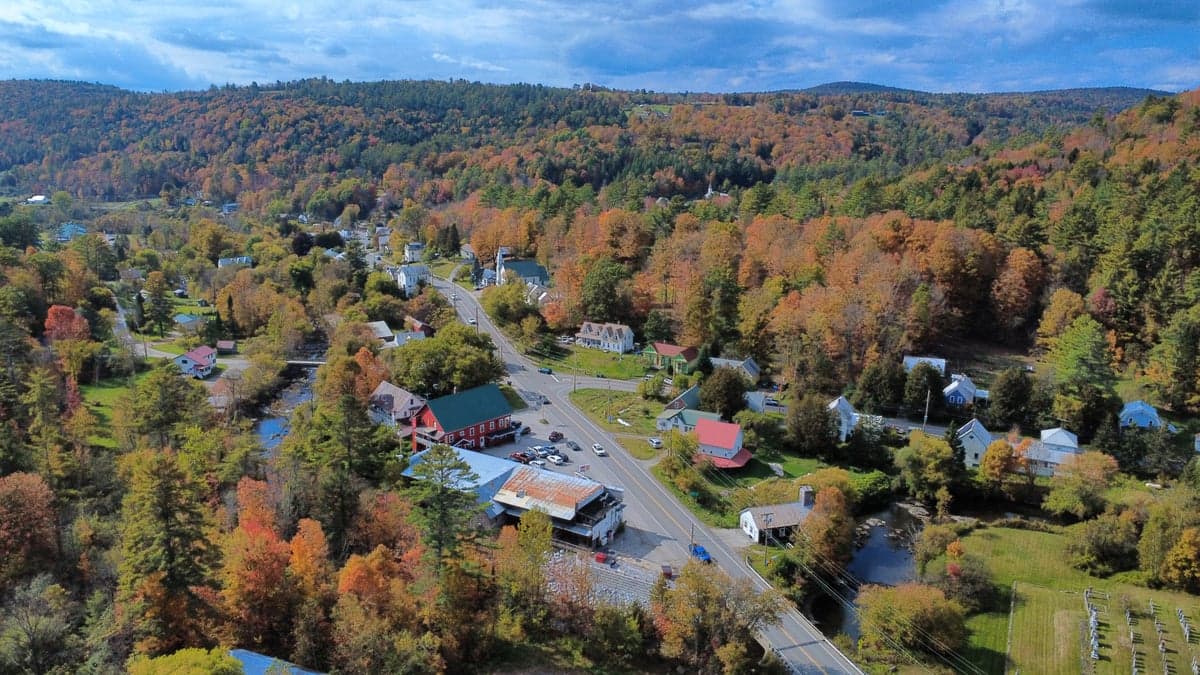
For the individualist, survivalist, or prepper looking to plant roots in a place where the state doesn't have its hand in every aspect of daily life, Marshfield, Vermont, presents a complex but promising picture. Nestled in Washington County, this small town of roughly 1,500 residents offers a degree of personal sovereignty that is increasingly rare in the modern United States. While Vermont as a whole leans left politically, the reality on the ground in rural towns like Marshfield is often a different story—one where local culture, geography, and a stubborn Yankee independence create a buffer against the overreach you’d find in Burlington or Montpelier. The key is understanding where the state-level constraints end and where genuine personal freedom begins.
Tax burden and regulatory posture: What you keep and what you can build
When assessing personal sovereignty, the first question is always: how much of your labor does the government take, and how much say does it have over your property? Vermont’s state-level tax burden is among the highest in the nation, and Marshfield residents are not immune. You’ll face a progressive income tax topping out at 8.75%, a statewide property tax that funds education (currently around $1.60 per $100 of assessed value, though local rates can vary), and a 6% sales tax. For a prepper, this means you’re funding a state apparatus that often pushes policies contrary to self-reliance. However, the regulatory posture at the local level is far more forgiving. Marshfield’s zoning is minimal compared to suburban or urban areas. There are no county-level planning commissions breathing down your neck for every shed or chicken coop. The town’s development review is handled by a volunteer board, and as long as you’re not building a commercial operation in a residential zone, you’ll find a "live and let live" attitude. The real regulatory friction comes from Act 250, Vermont’s state-level land use law, which can trigger a lengthy permitting process for any significant construction or subdivision. For a homesteader, this means you can build a cabin or a barn without much hassle, but if you plan to subdivide your 50 acres into five 10-acre parcels for family or community, you’ll hit a bureaucratic wall. The takeaway: your day-to-day autonomy is high, but major property changes require navigating state-level red tape.
Self-defense and gun law specifics: Can you keep and bear without permission?
This is where Vermont shines, and it’s a major reason why many liberty-minded people still consider the state. Vermont is a constitutional carry state—no permit required to carry a concealed or open firearm. There is no state-level firearm registry, no waiting periods for purchases, and no "may issue" nonsense for carry permits (though a permit is available for reciprocity with other states). Magazine capacity is unrestricted, and there is no state-level assault weapons ban. For the prepper, this means your right to keep and bear arms is as close to the Second Amendment’s original intent as you’ll find in the Northeast. However, there are caveats. Vermont passed a "red flag" law (Extreme Risk Protection Order) in 2018, allowing law enforcement to petition a court to temporarily seize firearms from someone deemed a risk. This is a point of concern for those who view such laws as a due process violation. Additionally, the state has universal background checks for all firearm sales, including private transactions. So while your personal arsenal is unmolested, the transfer of firearms is monitored. In Marshfield specifically, the local sheriff’s office is generally supportive of gun rights, and you won’t find the anti-gun sentiment that pervades Chittenden County. For self-defense, you are well within your rights to defend your home and property with deadly force if necessary, as Vermont law has a strong "castle doctrine" and no duty to retreat in your own home.
Self-reliance and homesteading viability: Lot sizes, zoning, and off-grid feasibility
Marshfield is a rural town with a strong agricultural history, and this is where the prepper mindset finds fertile ground. Minimum lot sizes in the rural areas are typically 2 to 5 acres, but many parcels available for sale are 10, 20, or even 50 acres. Zoning is light: you can keep livestock (chickens, goats, cows) without special permits, and there are no restrictions on gardening or food storage. The big question for off-grid living is water and waste. Vermont state law requires a permit for any new well or septic system, and the state has strict water quality standards. However, there is no state law that forces you to connect to a municipal grid if you don’t want to. You can go fully off-grid with solar panels, a composting toilet, and a rainwater catchment system, provided you meet health code for drinking water. The town does not have a municipal water or sewer system, so you’re on your own anyway. For the survivalist, this is a huge plus: you can build a self-sufficient homestead without the government dictating your utility choices. The climate is a challenge—short growing seasons, heavy snow, and cold winters—but that’s part of the self-reliance equation. You’ll need a wood stove, a backup generator, and a well-stocked pantry. The local culture supports this: neighbors trade firewood, share harvests, and help each other with barn raisings. It’s not a libertarian utopia, but it’s about as close as you’ll get in New England for living off the land.
Personal liberties: Parental rights, medical autonomy, speech, and property
This is the gray area where Vermont’s progressive state government clashes with local reality. On parental rights, Vermont has some of the most aggressive child protection laws in the nation, with a low threshold for state intervention. Homeschooling is legal but requires filing an enrollment notice and providing an annual assessment, which some see as government overreach into family decisions. Medical autonomy is a mixed bag. Vermont has legalized assisted suicide and recreational marijuana, which aligns with a "live and let live" philosophy, but it also has a vaccine mandate for school attendance (with medical and religious exemptions, though philosophical exemptions were removed in 2015). For the medical freedom advocate, this is a red flag: the state has shown it will compel medical procedures for children in certain contexts. Free speech is protected, but Vermont has a "bias-motivated crime" law that can enhance penalties for speech deemed hateful, which some view as chilling. Property rights are generally strong, but the state’s Act 250 and environmental regulations can limit what you do with your land, especially near waterways or wetlands. The bottom line: your personal liberties in Marshfield are high in the private sphere (what you do on your own property, with your own family) but constrained in the public sphere (what you can say or do that the state deems a risk to others). For a conservative prepper, this means you can live your life largely as you see fit, but you must be aware that the state government is not your ally—it’s a potential adversary that you navigate around.
In the grand calculus of personal sovereignty, Marshfield offers a strong foundation for the self-reliant individual. Compared to the heavily regulated states of the West Coast or the Northeast corridor, Vermont’s rural towns provide a rare combination of low local oversight, constitutional carry, and genuine homesteading feasibility. The trade-offs are real: high state taxes, a progressive state government that can be hostile to traditional values, and a regulatory framework that can trip you up on major projects. But for the prepper who values autonomy over convenience, who is willing to work the land and keep a low profile, Marshfield is a solid bet. It’s not a free state in the libertarian sense, but it’s a place where you can build a life largely on your own terms—if you’re willing to fight for it, or at least, to quietly ignore the parts of the system that don’t serve you. That’s more than most places in America can offer in 2026.

* Values derived from national, state, county, city and local statistics and may differ in a specific area. Last updated: 2026-05-01T13:30:58.000Z
Narrative content on this page is AI-generated and may contain mistakes. Verify any details that matter before acting on them.
ReloMaps may earn a commission from affiliate links at no extra cost to you.

