Photo: Wikipedia
Political ClimatePolitical Climate in Marshfield, VT
District shown is the primary district for this city’s centroid. Cities may span multiple districts.
Inherited from parent state — no local data available.
Local Political AnalysisPolitical Analysis of Marshfield, VT
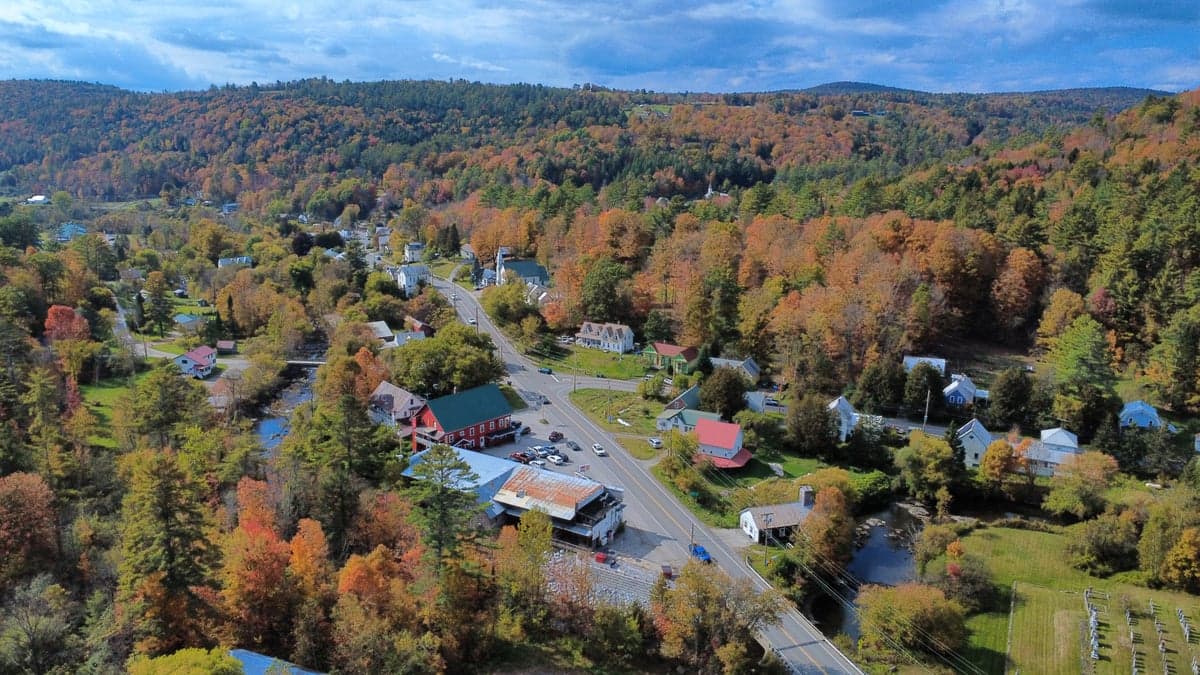
Marshfield, Vermont, leans heavily to the left, with a Cook PVI of D+17 that puts it among the most reliably Democratic towns in the state. That wasn't always the case—I remember when folks here were more independent, voting for the person, not the party. But over the last decade or so, the shift has been unmistakable, driven largely by an influx of out-of-state transplants who brought their big-city politics with them. If you're looking at the trajectory, it's not trending back toward the middle; it's digging in deeper, with local elections often decided by who can promise the most progressive agenda.
How it compares
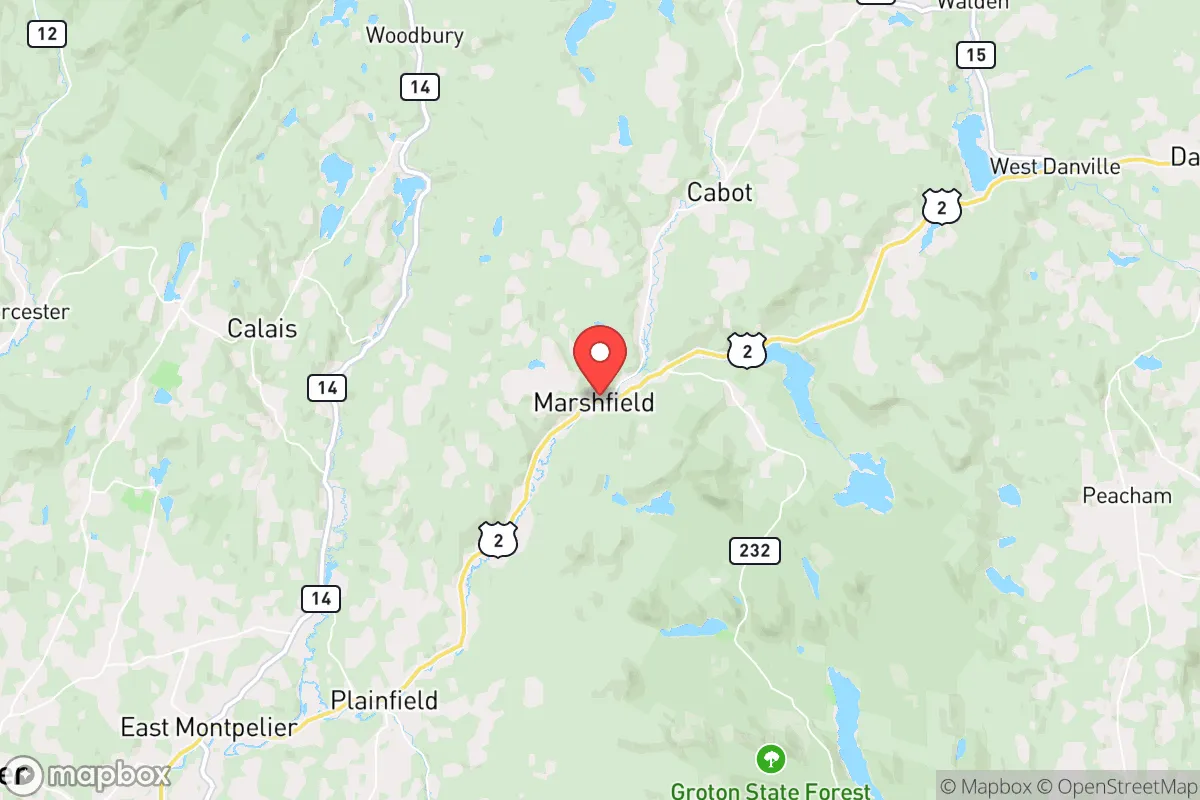
Drive ten miles west to Cabot or fifteen miles south to Barre, and you'll feel a different political pulse. Cabot still has a strong conservative streak, with town meeting votes that often push back on state mandates, while Barre is more of a working-class mix, where folks are skeptical of government overreach. Marshfield, by contrast, has become a hub for activists and newcomers who see government as the solution to every problem. The contrast is stark: in Marshfield, you'll see more "Defund the Police" signs than "Don't Tread on Me" flags, while just over the hill in Plainfield, you get a similar vibe but with a slightly more libertarian edge. The surrounding Washington County as a whole is purple-ish, but Marshfield pulls it hard to the left.
What this means for residents
For those of us who value personal freedoms and limited government, the daily reality can be frustrating. Local boards and committees are increasingly filled with people who see zoning, land-use restrictions, and new taxes as tools to shape behavior rather than protect property rights. Property taxes have climbed steadily, and there's a push for more municipal control over everything from short-term rentals to how you heat your home. If you're a hunter, a small-business owner, or someone who just wants to be left alone, you'll find yourself on the defensive more often than not. The school board has also leaned progressive, with curriculum debates that prioritize social justice over core academics—something that has driven a few families I know to homeschool or move to neighboring towns like East Montpelier, where the politics are a bit more balanced.
On the cultural side, Marshfield has a strong activist community that organizes around climate change, racial equity, and affordable housing. While those are fine goals in theory, the approach often feels heavy-handed—like mandatory energy audits for old homes or density mandates that ignore the rural character people moved here for. Local businesses have to navigate a web of new regulations, and some have simply closed rather than deal with the paperwork. The town's general store and a few restaurants still hold on, but the vibe is shifting from "live and let live" to "comply or face fines." In the long term, I see this driving a further wedge between Marshfield and the surrounding towns, with more conservative families leaving and being replaced by those who welcome the oversight. It's a quiet erosion of the independent spirit that used to define this place.

State Political ClimatePolitical Climate in Vermont
State Political AnalysisPolitical Environment in the State
Vermont has a reputation as one of the most reliably progressive states in the nation, but the reality on the ground is more complicated than the national headlines suggest. Over the last 20 years, the state has shifted from a moderate, independent-minded place to a solidly Democratic stronghold, with Democrats holding a supermajority in the legislature and the governor’s mansion since 2017. However, that blue veneer hides a deep and growing urban-rural split, and the state’s trajectory on personal freedom—especially around taxes, education, and property rights—is raising serious concerns for anyone who values limited government and individual liberty.
Urban vs. rural divide
The political map of Vermont is a tale of two states. The urban corridor along the I-89 spine—Burlington, South Burlington, Winooski, and Montpelier—drives the state’s progressive tilt. Chittenden County, home to about a quarter of Vermont’s population, routinely votes 70%+ Democratic in statewide races. Burlington itself is a classic college town (University of Vermont) with a strong activist scene, and it’s where the state’s most aggressive policies on housing, zoning, and climate originate. In contrast, the rural counties—Orleans, Essex, Franklin, and Rutland—are more conservative, often voting Republican by double digits in local races. The town of Derby in Orleans County, for example, is a small, working-class community where gun rights and property rights are taken very seriously. The divide is stark: you can drive 30 minutes from Burlington’s socialist mayor to a farm in Hardwick where the local general store still has a “Don’t Tread on Me” flag out front. This split means that while the state legislature is deep blue, many rural towns are effectively governed by their own local, more libertarian-leaning values.
Policy environment
Vermont’s policy environment is a mixed bag for a conservative-leaning newcomer. On the plus side, the state has no sales tax and relatively low property taxes compared to neighboring New Hampshire (though that’s changing). But the income tax is progressive and steep—top marginal rate hits 8.75% on income over $213,000—and the state’s regulatory posture is heavy. The Vermont Clean Heat Standard, passed in 2023, effectively taxes heating fuel, and the state’s Act 250 land-use law is one of the most restrictive in the country, making it hard to build anything new without years of permitting. Education policy is a flashpoint: Vermont’s school funding system is a statewide property tax pool, meaning wealthy towns subsidize poorer ones, and per-pupil spending is among the highest in the nation—over $20,000 per student—yet outcomes are middling. The state also has a universal healthcare system (Green Mountain Care) that covers all residents, but it’s funded by a payroll tax and has led to long wait times for specialists. Election laws are among the most liberal: automatic voter registration, same-day registration, and no-excuse absentee voting are all standard. For a conservative, the policy environment feels like a slow, steady squeeze on personal finances and local control.
Trajectory & freedom
Vermont is becoming less free by almost any measure, and the trend is accelerating. The most visible flashpoint is gun rights: in 2023, the legislature passed Act 69, which bans the sale of many semi-automatic firearms and limits magazine capacity to 10 rounds. This came on top of a 2018 law that raised the purchase age to 21 and required background checks on private sales. Parental rights have taken a hit too: in 2024, the state passed a law allowing minors to receive gender-affirming care without parental consent, and schools are required to affirm a student’s chosen name and pronouns without notifying parents. Medical autonomy is also under pressure—Vermont was one of the first states to mandate COVID-19 vaccines for schoolchildren, and the state’s health department has broad powers to impose quarantines. Property rights are eroding under Act 250 and new zoning mandates that force towns to allow higher density housing, often overriding local zoning boards. The state’s Renewable Energy Standard requires 100% renewable electricity by 2035, which has led to massive solar farms on farmland and rising electricity costs. For someone moving here, the trajectory is clear: more mandates, less local control, and a government that increasingly sees itself as the arbiter of personal choices.
Civil unrest & political movements
Vermont is not a hotbed of civil unrest, but there are visible political movements on both sides. The left is well-organized: Rights & Democracy and the Vermont Progressive Party are active in Burlington and Montpelier, pushing for rent control, defunding police, and climate action. In 2020, Burlington saw protests over police brutality that led to the city council cutting the police budget by 10%. On the right, the Vermont Republican Party is small but vocal, with a strong libertarian streak. The Vermont Federation of Sportsmen’s Clubs is a powerful lobbying force against gun control, and there’s a growing “Second Amendment Sanctuary” movement in rural towns like Newport and St. Johnsbury, where local officials have passed resolutions refusing to enforce state gun laws. Immigration politics are relatively quiet—Vermont has a sanctuary state law (2017) that limits cooperation with federal immigration enforcement, but the state’s small population means it’s not a major flashpoint. Election integrity controversies are minimal, though some rural towns have complained about the state’s universal mail-in voting system. The most visible flashpoint for a new resident would be the constant tension between Burlington’s activist culture and the quiet, live-and-let-live attitude of the rural north.
Projection
Over the next 5-10 years, Vermont is likely to become more progressive and less free. The demographic trends are clear: young, college-educated professionals are moving to Burlington and the surrounding suburbs, while rural areas are losing population. The state’s population is aging and shrinking, which means the tax base is eroding even as spending increases. In-migration from out-of-state—especially from New York and Massachusetts—is bringing more progressive voters who are comfortable with high taxes and government intervention. The legislature is unlikely to flip: Democrats have a supermajority in both chambers, and the governor (Republican Phil Scott) is a moderate who has signed most of the progressive agenda into law. Expect more gun control, more climate mandates, and more erosion of parental rights. The one wild card is the state’s fiscal crisis: Vermont’s pension system is underfunded by billions, and the state’s bond rating has been downgraded. If taxes rise too high, you might see a backlash, but for now, the trajectory is one of steady, progressive consolidation.
Bottom line for a new resident: Vermont is a beautiful state with a strong sense of community, but if you value limited government, low taxes, and personal freedom, you’ll find yourself swimming against the current. The rural towns offer a quieter, more libertarian lifestyle, but you’ll still be subject to state-level mandates on guns, education, and energy. If you’re moving here, pick your town carefully—Derby, Hardwick, or St. Johnsbury will feel more like home than Burlington. And be prepared to fight for your rights at the ballot box and in the town hall, because the state government is not going to back down.
* Values derived from national, state, county, city and local statistics and may differ in a specific area. Last updated: 2026-05-01T13:30:58.000Z
Narrative content on this page is AI-generated and may contain mistakes. Verify any details that matter before acting on them.
ReloMaps may earn a commission from affiliate links at no extra cost to you.

