Photo: Wikipedia
Quality of Life in Martinsville, VA
Above-average quality of iife. The area offers a reasonable cost of living, decent mobility, and a mix of neighborhood amenities.
What does Quality of Life tell us?
Quality of Life blends cost of living, nearby amenities, socioeconomic signals, and neighborhood character. City-level scores represent the whole municipality; individual neighborhoods can differ.
What does this tell us?
Quality of Life blends cost of living, nearby amenities, socioeconomic signals, and neighborhood character. City-level scores represent the whole municipality; individual neighborhoods can differ.
Cost of Living
46% below national average
The Real Cost of Living in Martinsville, VA for 2026
| Tier | Individual | Family (4) |
|---|---|---|
| Survival | $13k | $24k |
| Comfortable | $22k | $32k |
| Luxury | $77k+ | $119k+ |
| Elite (Top 5%) | $116k+ | $179k+ |
131%
The Area Signal
A metric tracking the socioeconomic signals of the area.
Hobbies
Explore the areaGroceries
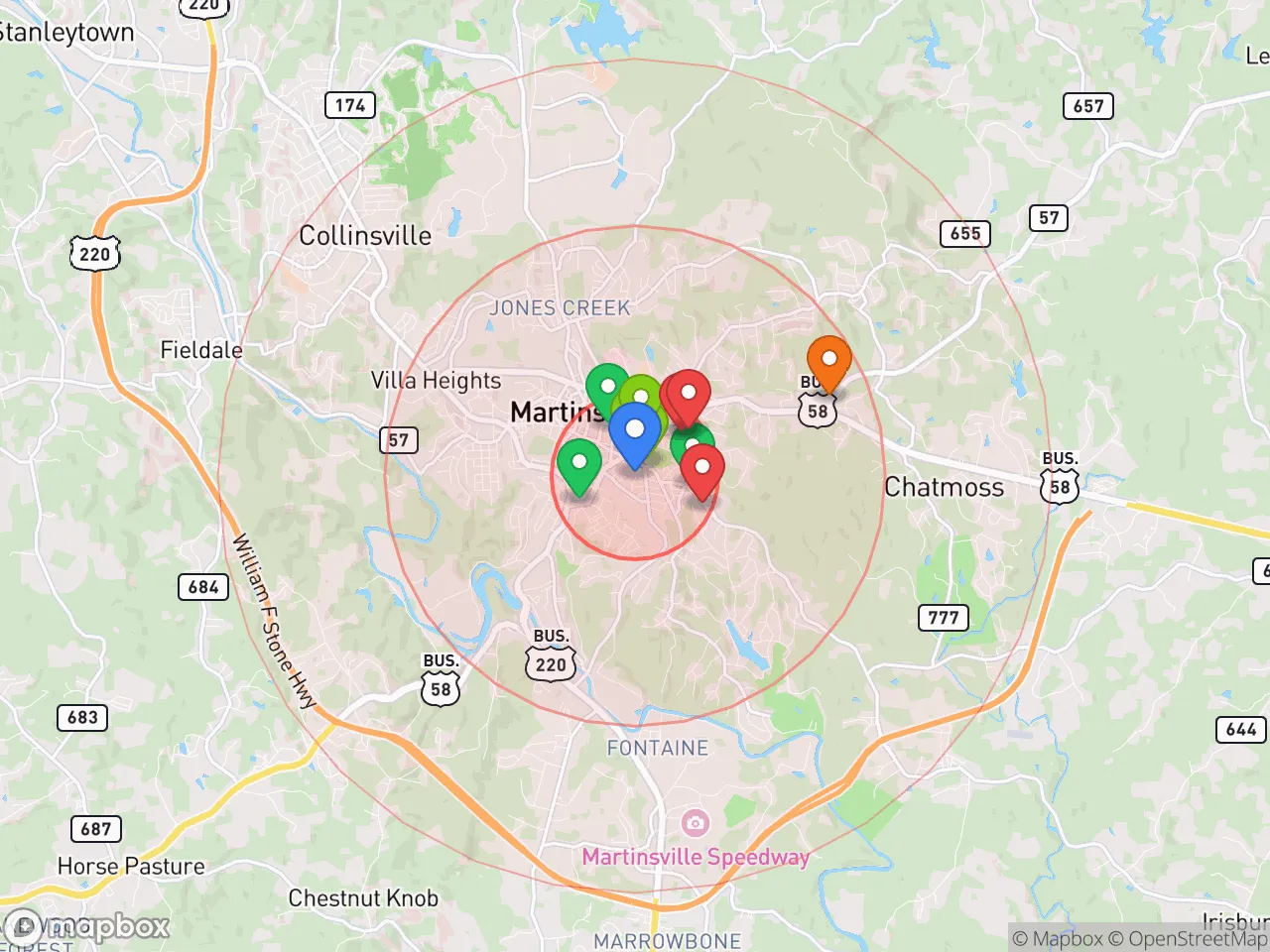
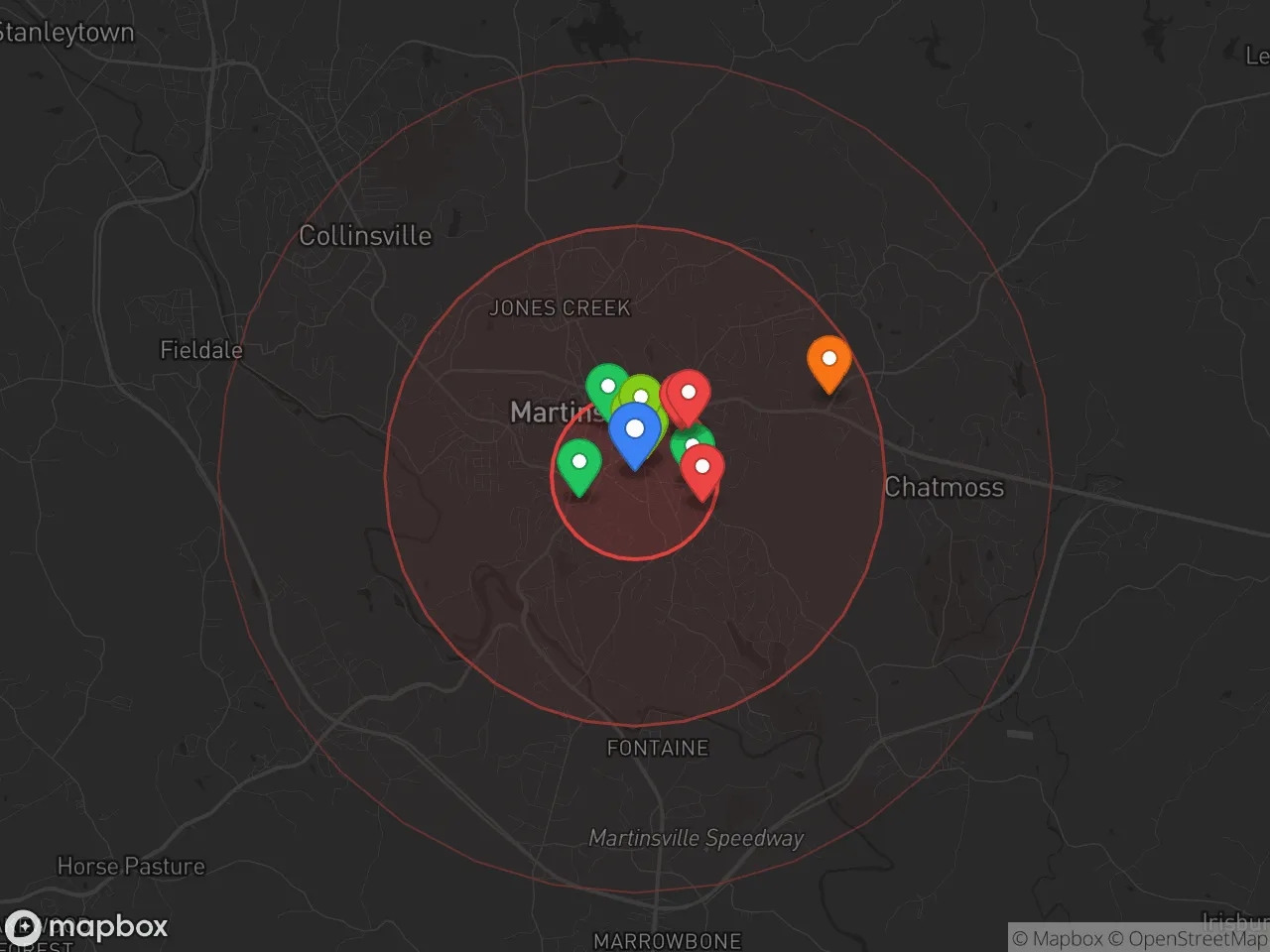
4 within 10 miles
Gas
20 within 10 miles
Hospital
2 within 20 miles
Airport
RDU — Raleigh–Durham International
Post Office
USPS — Martinsville, VA
Critical Amenities
Quality-of-Life Analysis
Martinsville, Virginia, offers a markedly lower cost of living than most of the United States, with a composite cost-of-living index of just 54 (where 100 equals the national average). This extreme affordability attracts a mix of retirees seeking to stretch fixed incomes, young families priced out of larger metro areas, and workers in manufacturing and logistics who value short commutes and homeownership. The city’s median household income is below the national median, but the low cost structure means residents often enjoy a higher effective standard of living than their nominal earnings would suggest.
How housing costs and affordability compare to nearby cities
Housing in Martinsville is among the most affordable in Virginia. The median home value sits at $92,500, roughly one-fifth the national median and far below nearby Roanoke (around $200,000) or Greensboro, North Carolina (around $230,000). Median gross rent is $784 per month, making it possible for a single earner at minimum wage to afford a one-bedroom apartment without cost burden. The average commute time is just 19.6 minutes, well under the national average of 26 minutes, which reduces transportation costs and frees up time for family or recreation. Property taxes are low, with effective rates around 0.8% of assessed value, and Virginia’s income tax is flat at 5.75% — moderate but offset by the low housing base. For comparison, a home in Martinsville costs about 60% less than one in Charlottesville, and rent is roughly half that of Richmond.
What daily life is like for families and retirees
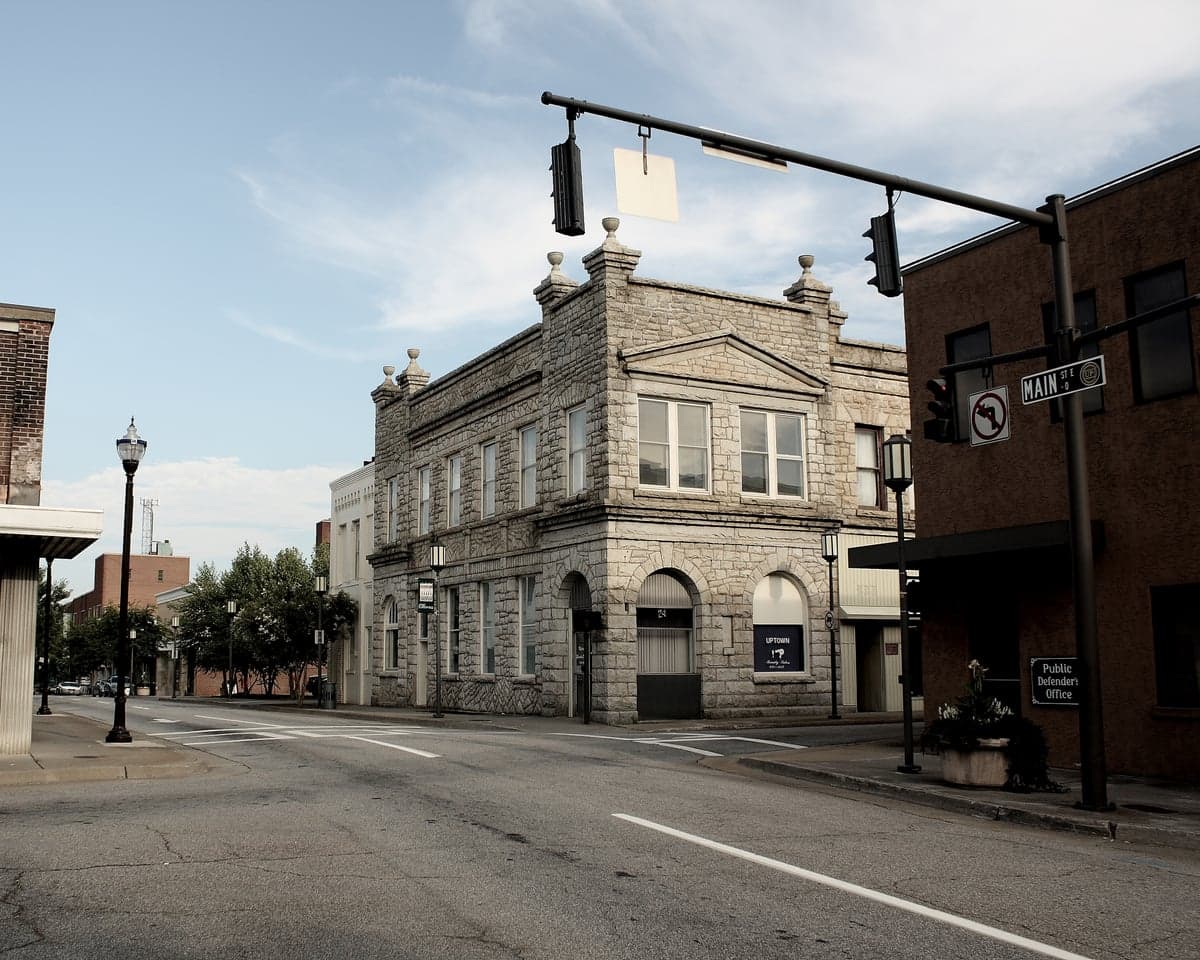
Daily life in Martinsville centers on a small-town rhythm with access to outdoor recreation and basic amenities. The city’s public school system, Martinsville City Public Schools, serves about 2,000 students across four elementary schools, one middle school, and Martinsville High School. Graduation rates hover around 85%, slightly below the state average, but class sizes are small and per-pupil spending is competitive. For shopping and dining, residents rely on the Uptown district and the nearby Commonwealth Centre, which includes a Walmart Supercenter and chain restaurants. Healthcare is anchored by Sovah Health Martinsville, a 220-bed hospital offering emergency and specialty care. Outdoor amenities include the 2.5-mile Dick & Willie Passage Rail Trail, Smith River for fishing and kayaking, and Fairy Stone State Park 20 minutes east. The city lacks a major university or performing arts venue, but the Piedmont Arts Association and the Virginia Museum of Natural History provide cultural outlets. Most errands require a car, though the city is compact enough that drives rarely exceed 15 minutes.
Martinsville is best suited for those who prioritize affordability and a slower pace over urban amenities and career diversity. Retirees on fixed incomes, remote workers with stable salaries, and families who value homeownership over proximity to high-end retail will find the math compelling. However, job growth has been modest — the city lost its last major textile mill in the 2000s — and the local economy now leans on distribution centers, healthcare, and small manufacturing. Anyone considering a move should verify employment options or bring a portable income, as the low cost of living is partly a reflection of limited economic dynamism. For those who can work remotely or have secured local employment, Martinsville offers a rare combination of financial breathing room and a tight-knit community.

Crime in Martinsville, VA
Crime rates similar to the national median for U.S. locations.
Violent CrimeViolent Crime Analysis
Property CrimeProperty Crime Analysis
Crime Analysis
Martinsville, Virginia, reports a violent crime rate of 522.8 incidents per 100,000 residents and a property crime rate of 1,468.3 per 100,000, placing it above both state and national averages for public safety risk. These figures indicate that residents face a heightened likelihood of experiencing crime compared to the typical American or Virginian community. The city’s location as a small, independent city near the larger metro area of Greensboro–Winston-Salem–High Point introduces additional dynamics, as regional crime patterns and prosecutorial policies can influence local safety outcomes.
Crime in context
Martinsville’s violent crime rate of 522.8 per 100,000 is roughly 1.5 times the national average of 380 per 100,000 and significantly higher than Virginia’s state average of approximately 240 per 100,000. Property crime, at 1,468.3 per 100,000, also exceeds the national benchmark of 1,954 per 100,000 but is notably lower than the state average of around 1,600 per 100,000. These numbers place Martinsville in a tier of elevated concern, particularly for violent offenses such as aggravated assault and robbery. The city’s proximity to larger metro areas with progressive justice systems—where district attorneys and judges may prioritize rehabilitation over incarceration—can contribute to recidivism and a revolving-door effect for offenders, directly impacting Martinsville’s crime statistics. Readers should be aware that lenient sentencing policies in surrounding jurisdictions often result in more criminals returning to the streets, undermining public safety and victim justice.
What residents experience
For those living in Martinsville, the daily reality includes a tangible risk of property crimes like burglary, larceny, and motor vehicle theft, which together account for the bulk of reported incidents. Violent crime, while less frequent, is a serious concern, with the city’s rate indicating that residents face a 1-in-191 chance of being a victim of violent crime annually. Neighborhood-level variation is notable: areas closer to the city’s core, particularly around the historic downtown and along major corridors like US-58 and VA-57, tend to report higher incident densities. In contrast, outlying residential neighborhoods such as those near the Martinsville Speedway or the Smith River offer comparatively lower crime rates. However, the overall safety picture is tempered by the influence of regional prosecutorial policies; progressive district attorneys in nearby counties may decline to prosecute certain offenses or offer plea deals that keep offenders active, directly increasing risks for Martinsville residents. For families and individuals prioritizing safety, this context makes thorough research into specific blocks and recent crime mapping essential before relocating.
* Values derived from national, state, county, city and local statistics and may differ in a specific area. Last updated: 2026-05-01T06:43:47.000Z
Narrative content on this page is AI-generated and may contain mistakes. Verify any details that matter before acting on them.
ReloMaps may earn a commission from affiliate links at no extra cost to you.

