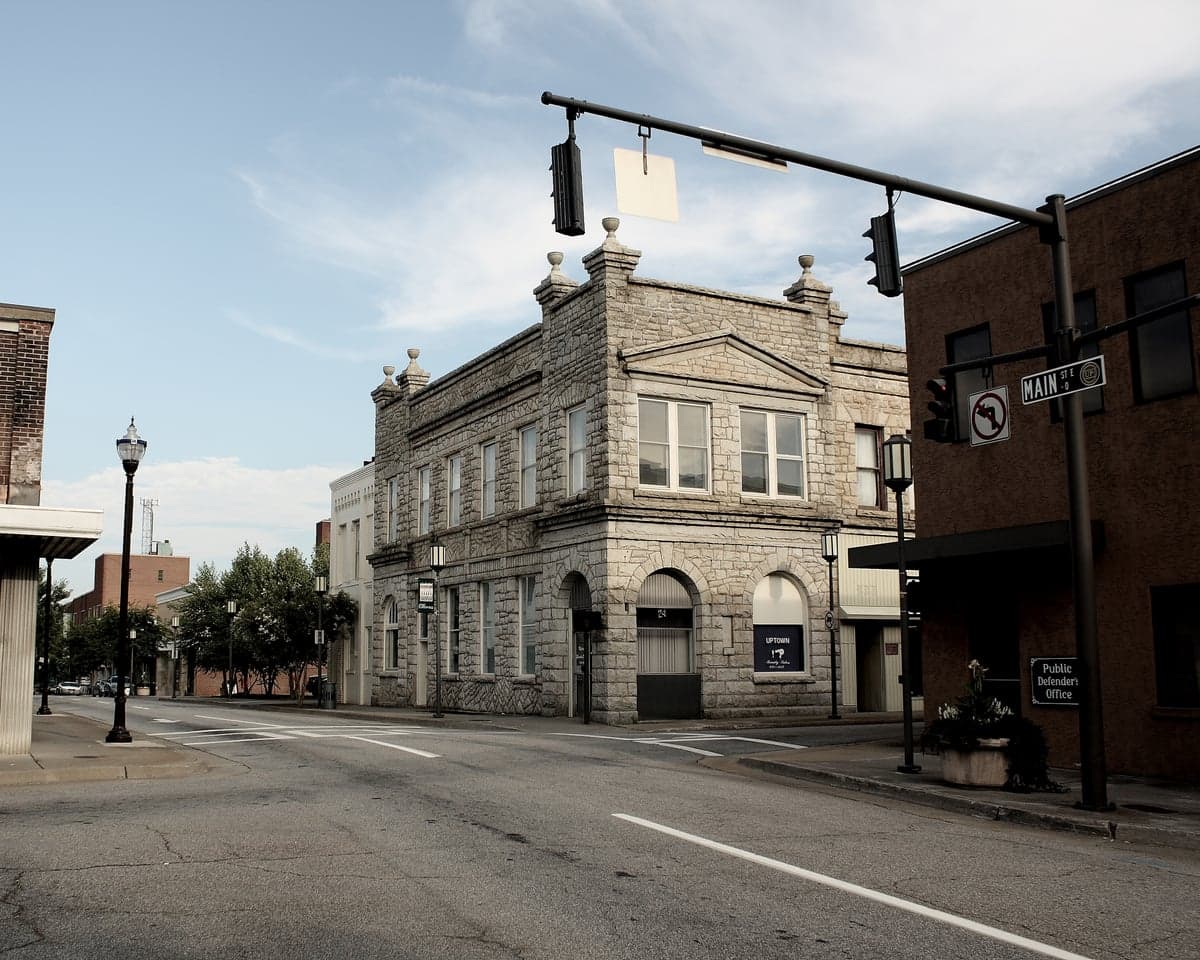
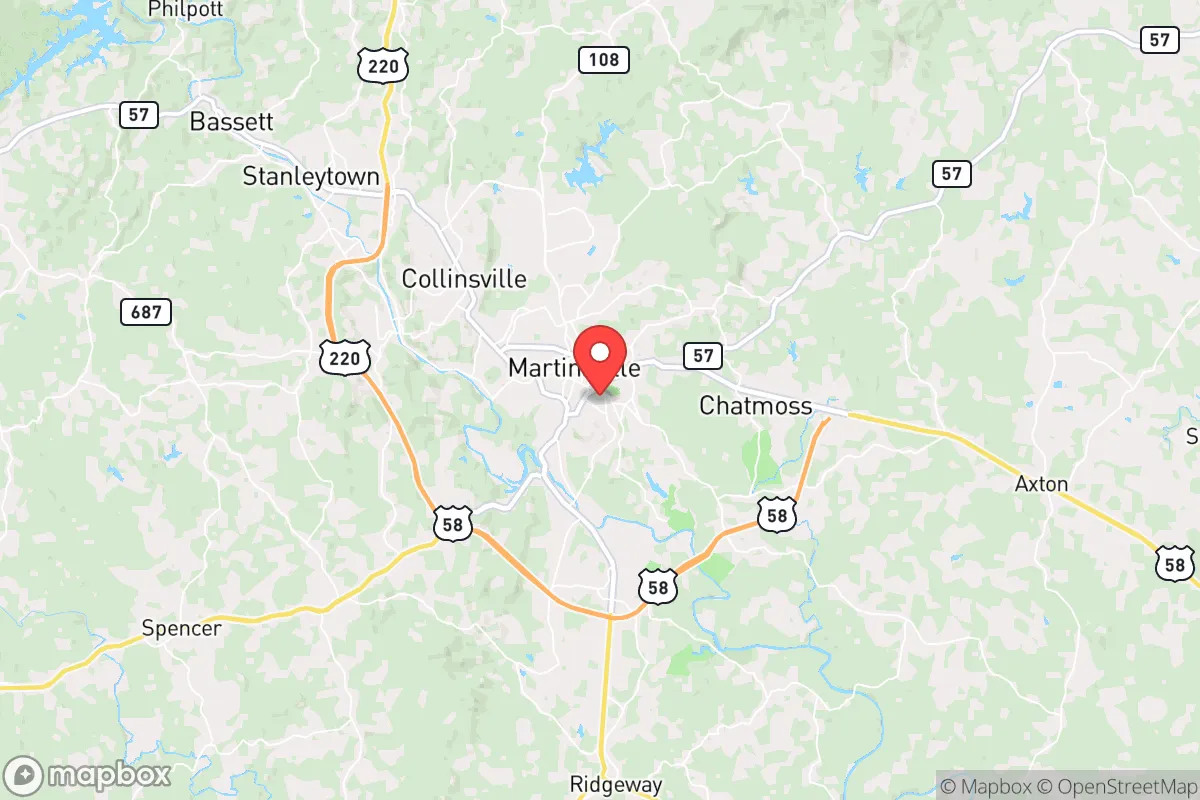
Photo: Wikipedia
Political ClimatePolitical Climate in Martinsville, VA
District shown is the primary district for this city’s centroid. Cities may span multiple districts.
Local Political AnalysisPolitical Analysis of Martinsville, VA
Martinsville, Virginia, sits in a deeply conservative corner of the state, with a Cook Partisan Voting Index of R+22—meaning the area votes about 22 points more Republican than the national average. That’s not just a number; it’s a reflection of a community that has long valued personal responsibility, limited government, and the right to live life without a bunch of bureaucratic red tape. If you’ve been around here for a while, you’ve seen the political lean hold steady through good times and bad, though there’s a quiet unease now about how far some of the bigger cities’ progressive ideas might creep into our way of life.
How it compares
Martinsville’s politics stand in stark contrast to places like Roanoke, about 50 miles north, which has trended more moderate-to-liberal in recent years, or Charlottesville, which is a whole different world politically. Even Danville, about 30 miles east, leans conservative but has seen some local shifts toward more progressive policies on zoning and spending that make folks here raise an eyebrow. In Martinsville, the surrounding Henry County is solidly red, and the city itself—though historically more mixed—hasn’t flipped to the kind of progressive governance you see in Northern Virginia or Richmond. The R+22 rating tells you this isn’t a swing area; it’s a place where conservative values are the baseline, not the exception. That said, there’s been a slow trickle of outside influence from state-level mandates on things like energy regulations and education curricula that feel like overreach to many locals.
What this means for residents
For someone moving here, the political climate means a few practical things. First, you’re not going to see a lot of government meddling in your day-to-day—property taxes are relatively low, zoning is straightforward, and there’s a general attitude of “live and let live” as long as you’re not hurting anybody. Second, the local economy has struggled since the furniture and textile mills closed, and the political response has been more about attracting business with less regulation rather than expanding government programs. That’s a double-edged sword: it keeps taxes down and freedom high, but it also means fewer public services than you might find in a more liberal area. The real concern for residents is the long-term trajectory—if state-level progressive policies on energy, land use, or school standards keep tightening, it could chip away at the local autonomy that makes Martinsville feel like a place where you’re still the boss of your own life.
Culturally, Martinsville is a place where church potlucks and high school football still matter more than political rallies. There’s a strong sense of community self-reliance—people help neighbors without waiting for a government program. The biggest policy distinction you’ll notice is the local resistance to statewide gun control measures and a general skepticism of any new tax or fee that doesn’t come with a clear, local benefit. If you’re looking for a place where you can raise a family without constant political noise or government overreach, Martinsville fits the bill—but keep an eye on Richmond, because the real fights over personal freedoms are coming from the state capital, not the town square.

State Political ClimatePolitical Climate in Virginia
State Political AnalysisPolitical Environment in the State
Virginia has long been a political battleground, but over the past two decades it has shifted from a reliably purple state to a solidly blue one at the statewide level. The Democratic coalition is now dominant in presidential and Senate races, powered by the explosive growth of Northern Virginia and the Richmond suburbs, while the GOP holds sway in the rural south and west. The 10-20 year trajectory is unmistakably leftward, with Democrats controlling the governorship, both U.S. Senate seats, and both chambers of the General Assembly as of 2026, though the margins are often razor-thin and the state’s political identity remains deeply contested.
Urban vs. rural divide
The political map of Virginia is a tale of two commonwealths. The urban crescent stretching from Arlington and Alexandria in Northern Virginia down through Richmond and into Norfolk and Virginia Beach is the engine of Democratic power. Fairfax County alone, with over 1.1 million residents, delivers a Democratic margin larger than the entire population of many rural counties. Meanwhile, the rural south and west—places like Roanoke, Lynchburg, and the coal country of Wise County—vote overwhelmingly Republican. The divide is stark: in 2024, Fairfax County went +35 for Biden, while Buchanan County in the far southwest went +60 for Trump. The suburbs of Richmond, particularly Chesterfield and Henrico, have been trending blue as well, flipping from red to purple to light blue over the last decade. The only reliably red metro area of any size is Virginia Beach, which still leans Republican but is slowly shifting as military families and retirees are joined by younger, more diverse transplants.
Policy environment
Virginia’s policy environment has become increasingly progressive under Democratic control. The state income tax is a flat 5.75%, but sales tax varies by locality, with Northern Virginia counties adding an extra 1% for transportation. Property taxes are set locally and can be high in desirable suburbs—Fairfax County’s rate is about 1.1% of assessed value. The regulatory posture has tightened significantly: the Clean Economy Act mandates a 100% carbon-free grid by 2050, and the Virginia Environmental Justice Act gives state agencies new power to block projects in disadvantaged communities. Education policy is a flashpoint—the state eliminated its Standards of Learning (SOL) graduation requirements for certain students in 2021 and has expanded transgender student policies that allow students to use preferred names and pronouns without parental consent. Election laws have been loosened: no-excuse absentee voting, same-day voter registration, and a permanent absentee voter list are now law. The state also legalized recreational marijuana in 2021, though retail sales have been delayed repeatedly, leaving a gray market in place.
Trajectory & freedom
On the freedom front, Virginia is moving in a concerning direction for conservatives. The most visible contraction of personal liberty came in 2020, when the Democratic-controlled General Assembly passed a sweeping gun control package that included universal background checks, a red flag law (the first in the South), a one-handgun-per-month limit, and a ban on assault weapons for those under 21. Over 100 localities passed Second Amendment Sanctuary resolutions in response, but the laws remain on the books. Parental rights have been eroded: the 2021 transgender student policies allow schools to keep information about a child’s gender identity from parents, and a 2024 law banned corporal punishment in private schools that receive state funding. Medical autonomy took a hit with the 2024 expansion of the state’s vaccine mandate for healthcare workers, though it was later softened. On the positive side, Virginia has no state-level occupational licensing for many trades, and the right-to-work law remains intact, keeping unions weak. Property rights are generally strong, but the state’s aggressive land-use planning in Northern Virginia can slow development. The trajectory is clear: each legislative session brings new restrictions on gun rights, parental authority, and economic freedom.
Civil unrest & political movements
Virginia has been a flashpoint for political movements on both sides. The 2017 Unite the Right rally in Charlottesville left a lasting scar, with the city still divided over the removal of Confederate statues and the subsequent legal battles. The 2020 protests in Richmond saw the Robert E. Lee statue become a focal point for both Black Lives Matter demonstrations and counter-protests, with the statue eventually removed in 2021. Immigration politics are heated: Alexandria and Arlington are sanctuary cities, refusing to cooperate with ICE detainers, while rural counties like Loudoun have passed resolutions opposing sanctuary policies. Election integrity remains a live issue—the 2020 election saw Virginia’s mail-in ballot surge, and the 2021 gubernatorial race was decided by just 2 points, with Republicans alleging irregularities in absentee ballot processing. The Virginia Citizens Defense League (VCDL) remains one of the most active gun rights groups in the country, organizing annual Lobby Day rallies at the state capitol that draw thousands. The state’s political movements are organized, vocal, and increasingly polarized.
Projection
Looking ahead 5-10 years, the demographic trends favor continued Democratic dominance. Northern Virginia is growing faster than any other region, driven by federal contracting, tech jobs, and Amazon’s HQ2 in Arlington. The Hispanic and Asian populations are expanding rapidly, and both groups lean Democratic in Virginia. The rural areas are shrinking and aging, losing population and political clout. The state’s electoral college votes and congressional districts will likely be redrawn after the 2030 census, but the trend lines suggest Virginia will become more like Maryland—a reliably blue state with a Republican rump in the rural west. For a conservative moving in now, expect to see continued expansion of gun control, more progressive education policies, and higher taxes to fund green energy mandates and expanded social programs. The state’s right-to-work law and relatively low income tax may hold, but the cultural and regulatory environment will continue to shift left. The best bet for a conservative is to settle in a red-leaning county like Loudoun (which flipped back to red in 2024 after a blue wave) or Virginia Beach, where local governance can provide some buffer against state-level policies.
For a new resident, the bottom line is this: Virginia offers a high quality of life with strong schools, a diverse economy, and beautiful geography, but the political climate is increasingly hostile to conservative values. If you value gun rights, parental authority, and low taxes, you’ll need to choose your locality carefully—and be prepared to fight for those freedoms at the state level. The state is not yet California, but it’s moving in that direction, and the pace is accelerating. If you’re moving here, get involved in local politics, join the VCDL, and vote in every election—because every seat in the General Assembly matters. Virginia is still winnable, but only if conservatives show up.
* Values derived from national, state, county, city and local statistics and may differ in a specific area. Last updated: 2026-05-01T06:43:47.000Z
Narrative content on this page is AI-generated and may contain mistakes. Verify any details that matter before acting on them.
ReloMaps may earn a commission from affiliate links at no extra cost to you.

