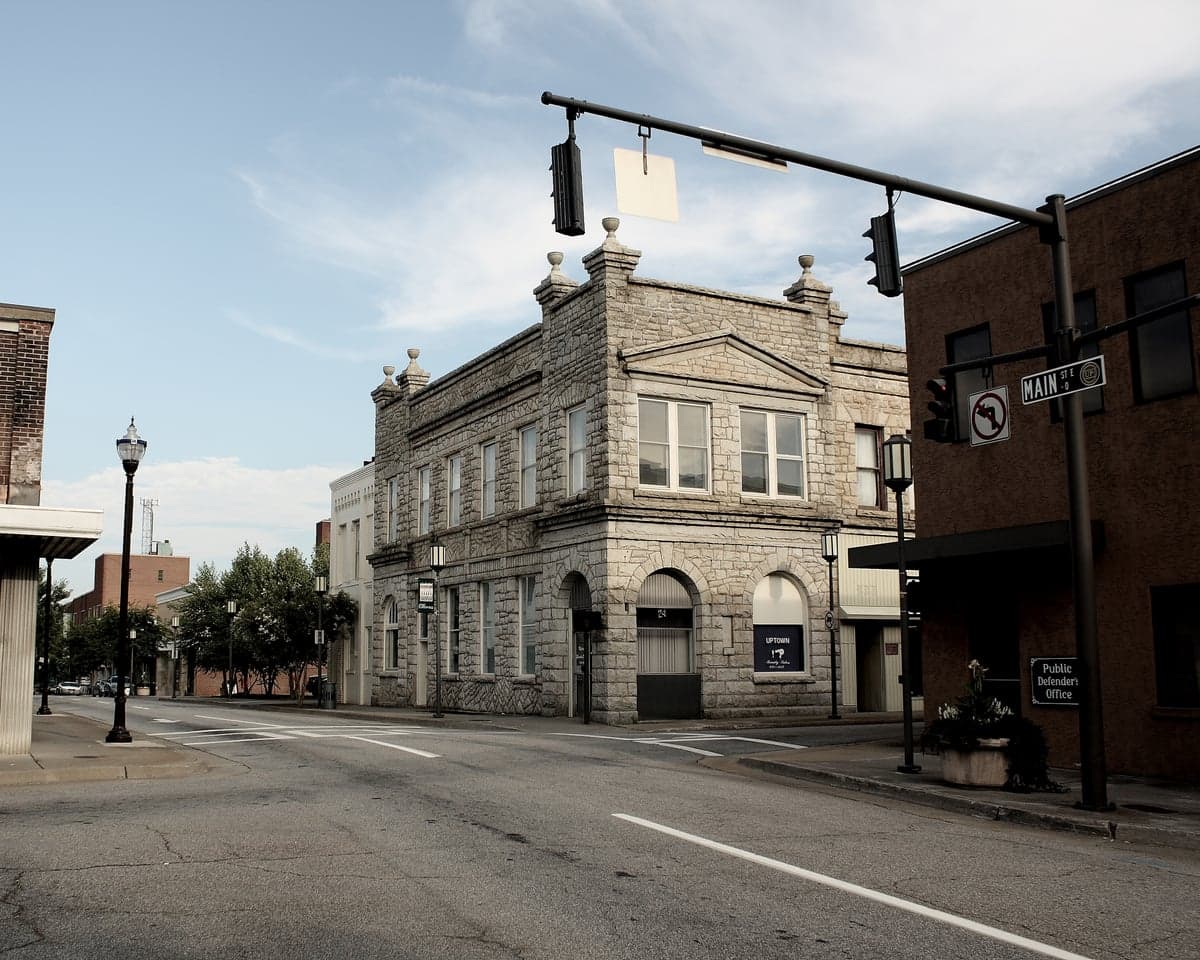
Photo: Wikipedia
Strategic Assessment of Martinsville, VA
Workable tactical position. Some exposure to population density or targets, but generally defensible in a crisis.
What does the Strategic Assessment tell us?
Our Strategic Assessment grades tactical survivability of an area. Major population centers, military targets, fallout zones, natural disasters, and border exposure all drive risk — lower exposure means a more defensible position in a crisis.
This is heavily inspired by Joel Skousen's Strategic Relocation book. Highly recommended you checkout the book ($)What does this tell us?
Our Strategic Assessment grades tactical survivability of an area. Major population centers, military targets, fallout zones, natural disasters, and border exposure all drive risk — lower exposure means a more defensible position in a crisis.
This is heavily inspired by Joel Skousen's Strategic Relocation book. Highly recommended you checkout the book ($)Strategic Pillars

Key Distances
Regional Safe Places
Below is our recommended "safe zones" in Virginia and the surrounding area based on our strategic heuristics. For most people, it's unrealistic to live in a “safe zone” full-time due to work, family or other personal reasons. They tend to be more rural. However, many of these areas are perfect for second homes and retreat properties that double as a vacation home or even a short-term rental.
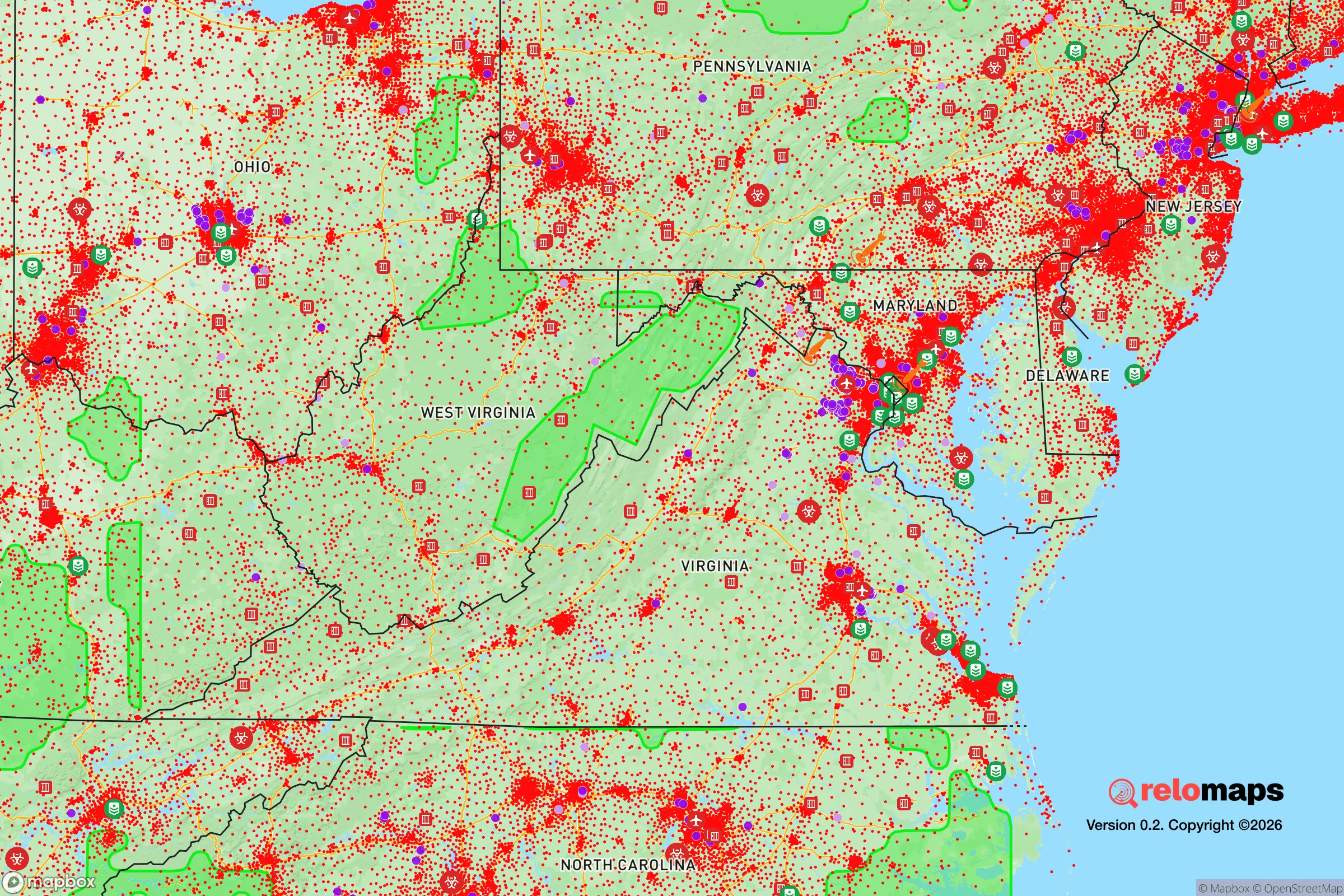
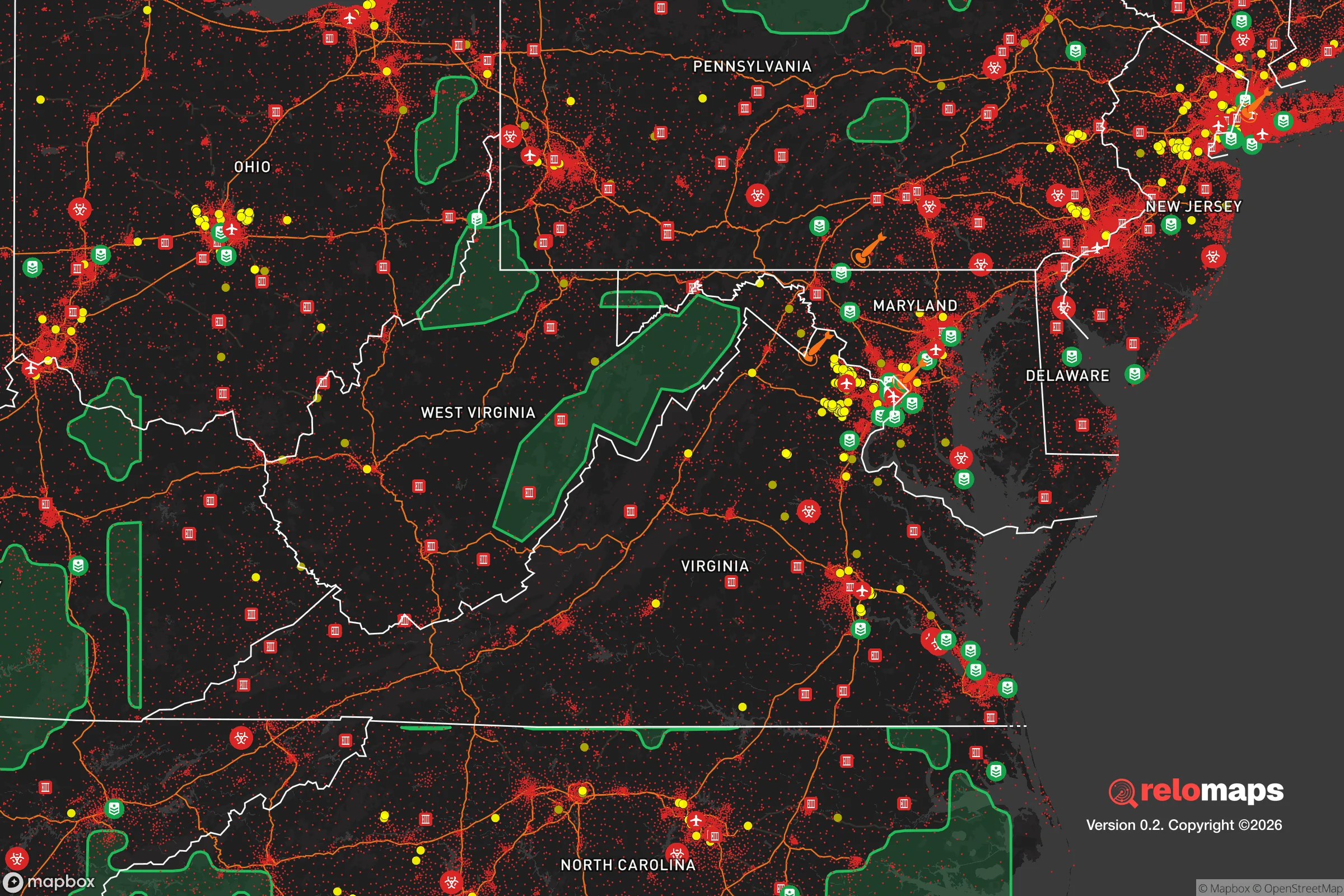


Important Note: For informational purposes only. This does not mean nothing bad ever happens in the green zones. Please use common sense. This is based on public data and modeled with AI. We tried to take a conservative approach but mistakes happen. We update this regularly as new information becomes available.
Solar Generator Recommendations
Backup power matters more here than in safer locations. We've picked three solar generators across budgets and capacity tiers — start with the budget unit if you only need a few essentials, or step up if you want to run a fridge and HVAC for days at a time.

Jackery Portable Power Station Explorer 300
Budget OptionPower on the Go: Weighing only 11 lbs, it's convenient to set up and store with book-sized foldable solar panels

BLUETTI Portable Power Station AC180
Designed for both indoor and outdoor scenarios, AC180 is highly capable as it has a robost capacity and continuous output power.

EF ECOFLOW DELTA Pro Ultra Power Station
Upgraded PickEcoFlow DELTA Pro Ultra is a whole-home energy system designed to grow with your family. Integrated with the Smart Home Panel 2, it scales to meet your evolving energy needs — keeping your home powered, intelligent, and secure through every stage of life.
We earn a commission, at no additional cost to you.
Strategic Assessment Analysis
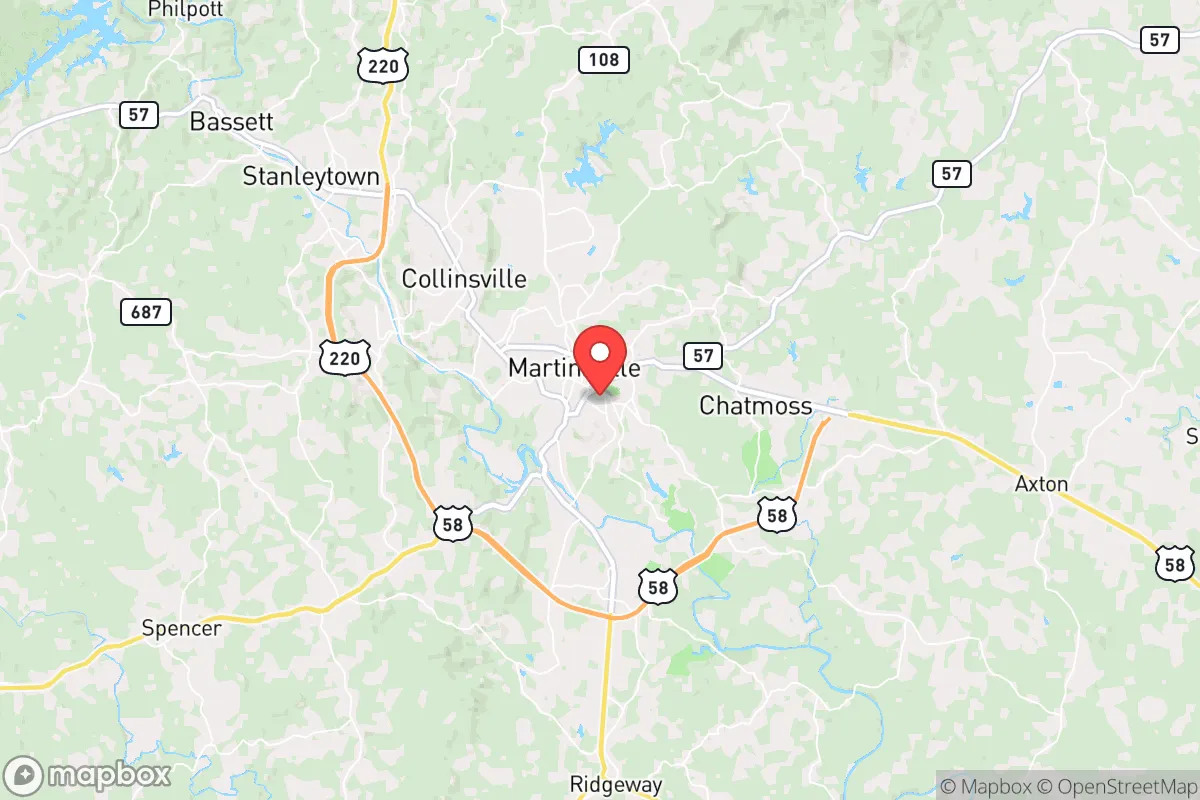
Martinsville, Virginia, sits in a strategic pocket of the Piedmont region that offers genuine resilience advantages for those thinking seriously about long-term preparedness. Its location—roughly 50 miles from the North Carolina line, 45 miles from Danville, and an hour from Roanoke—places it outside the immediate blast radius of any major metropolitan target while still providing access to regional supply chains and medical infrastructure. The city’s population of roughly 12,000, combined with Henry County’s 50,000 residents, means you’re not dealing with the anonymity and fragility of a dense urban center, but you’re also not so remote that basic logistics become a daily struggle. For a relocator with a conservative, survivalist mindset, Martinsville offers a rare combination: a low-profile community with a manufacturing heritage, decent water resources, and a geography that’s defensible without being isolated.
Geographic position and natural advantages for long-term security
Martinsville’s position in the southern Virginia Piedmont gives it several natural advantages that a prepper should take seriously. The city sits in a valley formed by the Smith River, which provides a reliable surface water source—critical if municipal systems fail or become contaminated. The surrounding terrain is rolling hills and mixed hardwood forest, offering ample cover and natural barriers that slow movement and create natural chokepoints. The Blue Ridge Mountains lie about 30 miles to the northwest, providing a potential fallback zone if coastal or urban areas become untenable. The climate is temperate, with four distinct seasons but no extreme weather patterns that would make long-term off-grid living impossible. Growing seasons run roughly 180 days, which is workable for serious gardening or small-scale agriculture. The area’s elevation (around 1,000 feet) keeps it above the worst of the heat and humidity found further south, and the region is not prone to hurricanes, earthquakes, or wildfires at the frequency seen in other parts of the country. For someone looking to establish a self-sufficient homestead or retreat, the soil quality is decent for the region—clay-loam that drains well enough for raised beds and pasture.
Risks, exposures, and proximity to fallout-relevant landmarks
No location is without risk, and Martinsville has specific exposures that a strategic relocator must weigh. The most obvious concern is the proximity to Interstate 85 and U.S. Route 58, both of which are major east-west and north-south corridors. In a collapse scenario, these roads could become evacuation routes or movement corridors for displaced populations. The city itself is not a primary target—no major military bases, nuclear facilities, or government command centers are within 50 miles—but it sits within the fallout shadow of several potential targets. Norfolk Naval Station and the Hampton Roads military complex are roughly 200 miles east, and prevailing winds would carry fallout inland in a nuclear exchange. The Surry Nuclear Power Plant is about 150 miles east, and while a meltdown is less likely than a direct strike, it’s a risk factor. Closer to home, the Danville Regional Airport (about 30 miles east) could become a staging area for FEMA or military operations in a crisis, which might draw unwanted attention. The area also has a history of industrial contamination from former textile and furniture plants, so soil and water testing is advisable before buying land. On the plus side, the lack of major dams, chemical plants, or rail hubs within 20 miles reduces the chance of a cascading industrial disaster.
Practical resilience for a relocator: food, water, energy, and defensibility
For the prepper evaluating Martinsville, the practical resilience metrics are mixed but generally favorable. Water is the strongest asset: the Smith River runs through the city, and the Philpott Lake reservoir (about 15 miles northwest) holds 290 billion gallons of water, providing a massive buffer against drought. The local water table is high enough that shallow wells (30-60 feet) are common in rural parts of Henry County, and rainwater collection is viable given the region’s 45 inches of annual precipitation. Food production is workable but not ideal: the growing season is long enough for warm-season crops, but the soil requires amendment for serious yields. Local farmers’ markets and small-scale producers exist, but the area is not a breadbasket—you’ll need to plan for seed stock, livestock, and possibly greenhouse infrastructure. Energy resilience is a weak point: the grid in southern Virginia is aging, and power outages from storms or ice are common. Solar is viable (the region gets about 200 sunny days per year), but you’ll need battery storage or a backup generator for winter months. Wood heating is a strong option—the surrounding forests are predominantly oak, hickory, and pine, and firewood is cheap or free if you’re willing to cut it yourself. Defensibility is good for a small group: the terrain offers natural observation points, and the low population density means you can find properties with good standoff distance. The local law enforcement presence is thin—Henry County has about 80 deputies for 500 square miles—so in a prolonged crisis, you’ll largely be on your own. That’s a feature, not a bug, for those who prefer self-reliance.
Community and cultural fit for conservative-leaning individuals and families
Martinsville’s cultural and political landscape is a significant factor for the conservative relocator. The city and surrounding county are overwhelmingly Republican—Henry County voted +38 points for Trump in 2020, and the local government is consistently conservative on fiscal and social issues. Gun culture is strong: Virginia is a shall-issue state for concealed carry, and the area has multiple gun shops, ranges, and a robust hunting tradition. Churches are everywhere—Baptist, Methodist, and Pentecostal congregations dominate—and community life revolves around them. For families, the school system is a mixed bag: Martinsville City Schools have struggled with funding and performance, but the Henry County system is generally better-regarded, and private or homeschool options exist. The cost of living is a major draw: median home prices are around $150,000, and property taxes are low (roughly $0.60 per $100 of assessed value). You can buy a 5-10 acre parcel with a house for under $250,000, which is hard to beat for a retreat property. The downsides are real: the local economy is weak, with a poverty rate around 20%, and the opioid crisis has hit the region hard. You’ll want to be selective about neighbors and property location—stick to rural parts of the county, avoid the city core, and vet any land for proximity to known drug activity.
The overall strategic picture for Martinsville is one of moderate resilience with strong cost advantages. It’s not a perfect retreat—the lack of a robust local food system and the aging grid are genuine concerns—but it offers a defensible, low-profile base with excellent water access and a culturally aligned community. For a single individual or family looking to establish a prepared lifestyle without the extreme isolation of the deep mountains or the high costs of the western states, Martinsville is a solid option. The key is to act before the area gets discovered by the wave of urban refugees that will inevitably look inland when the next crisis hits. Buy land with a well, invest in solar and wood heat, and build relationships with local farmers and gun clubs. If you do that, you’ll be in a position to ride out whatever comes—and you’ll have the Smith River and Philpott Lake as your ace in the hole.

* Values derived from national, state, county, city and local statistics and may differ in a specific area. Last updated: 2026-05-01T06:43:47.000Z
Narrative content on this page is AI-generated and may contain mistakes. Verify any details that matter before acting on them.
ReloMaps may earn a commission from affiliate links at no extra cost to you.

