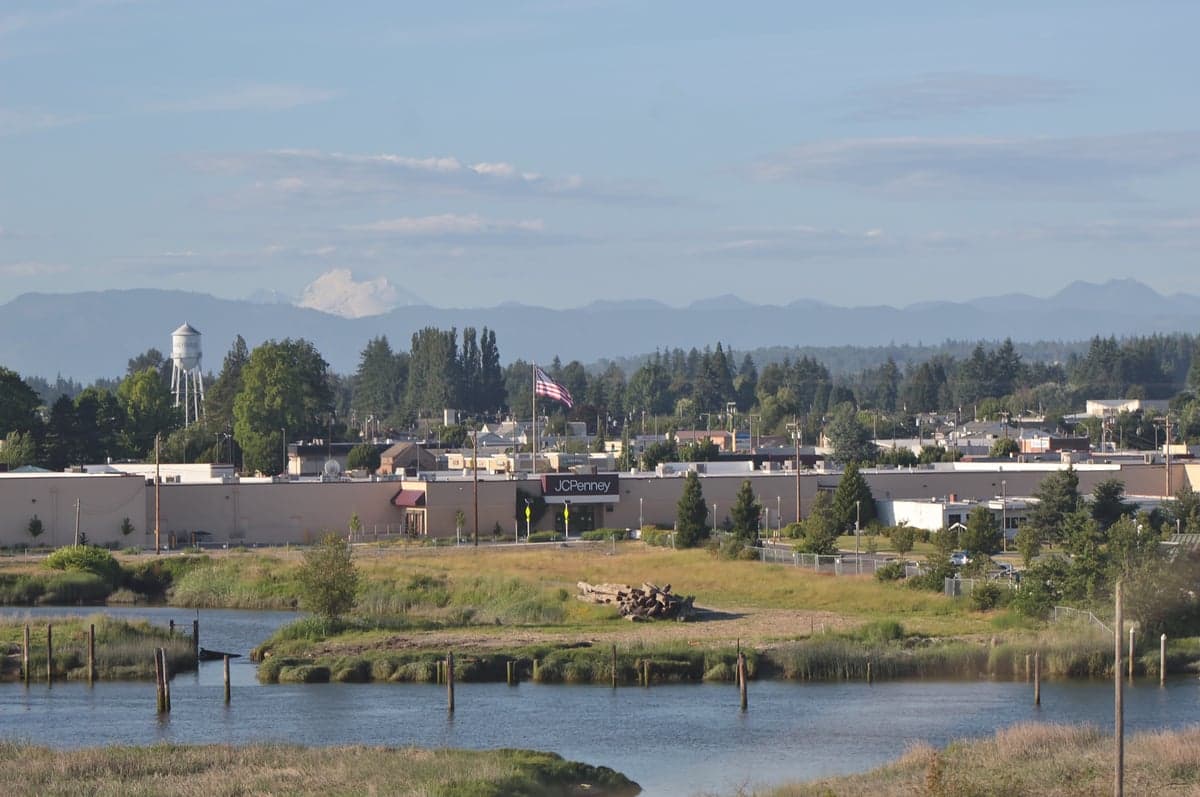
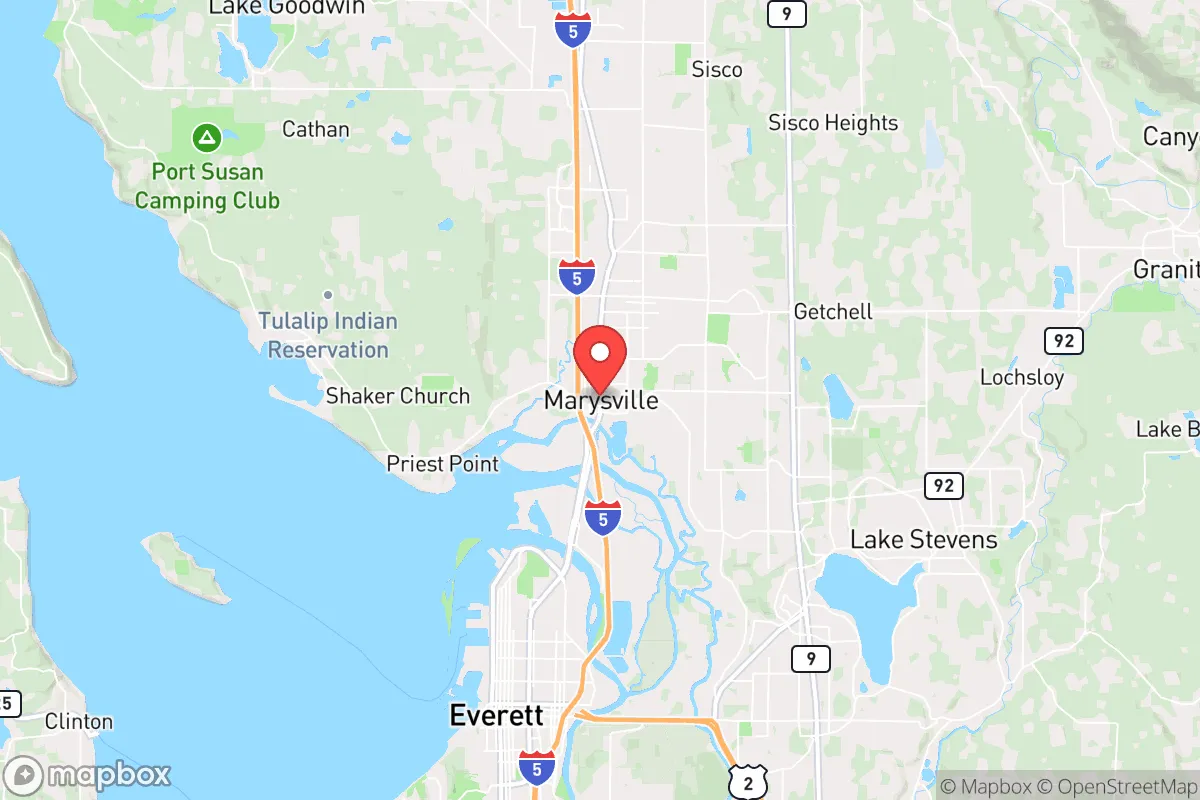
Photo: Wikipedia
Quality of Life in Marysville, WA
A high quality of life with strong walkability, manageable living costs, healthy neighborhood signals, and solid amenity access.
What does Quality of Life tell us?
Quality of Life blends cost of living, nearby amenities, socioeconomic signals, and neighborhood character. City-level scores represent the whole municipality; individual neighborhoods can differ.
What does this tell us?
Quality of Life blends cost of living, nearby amenities, socioeconomic signals, and neighborhood character. City-level scores represent the whole municipality; individual neighborhoods can differ.
Cost of Living
70% above national average
The Real Cost of Living in Marysville, WA for 2026
| Tier | Individual | Family (4) |
|---|---|---|
| Survival | $30k | $56k |
| Comfortable | $92k | $135k |
| Luxury | $134k+ | $208k+ |
| Elite (Top 5%) | $158k+ | $245k+ |
74%
The Area Signal
A metric tracking the socioeconomic signals of the area.
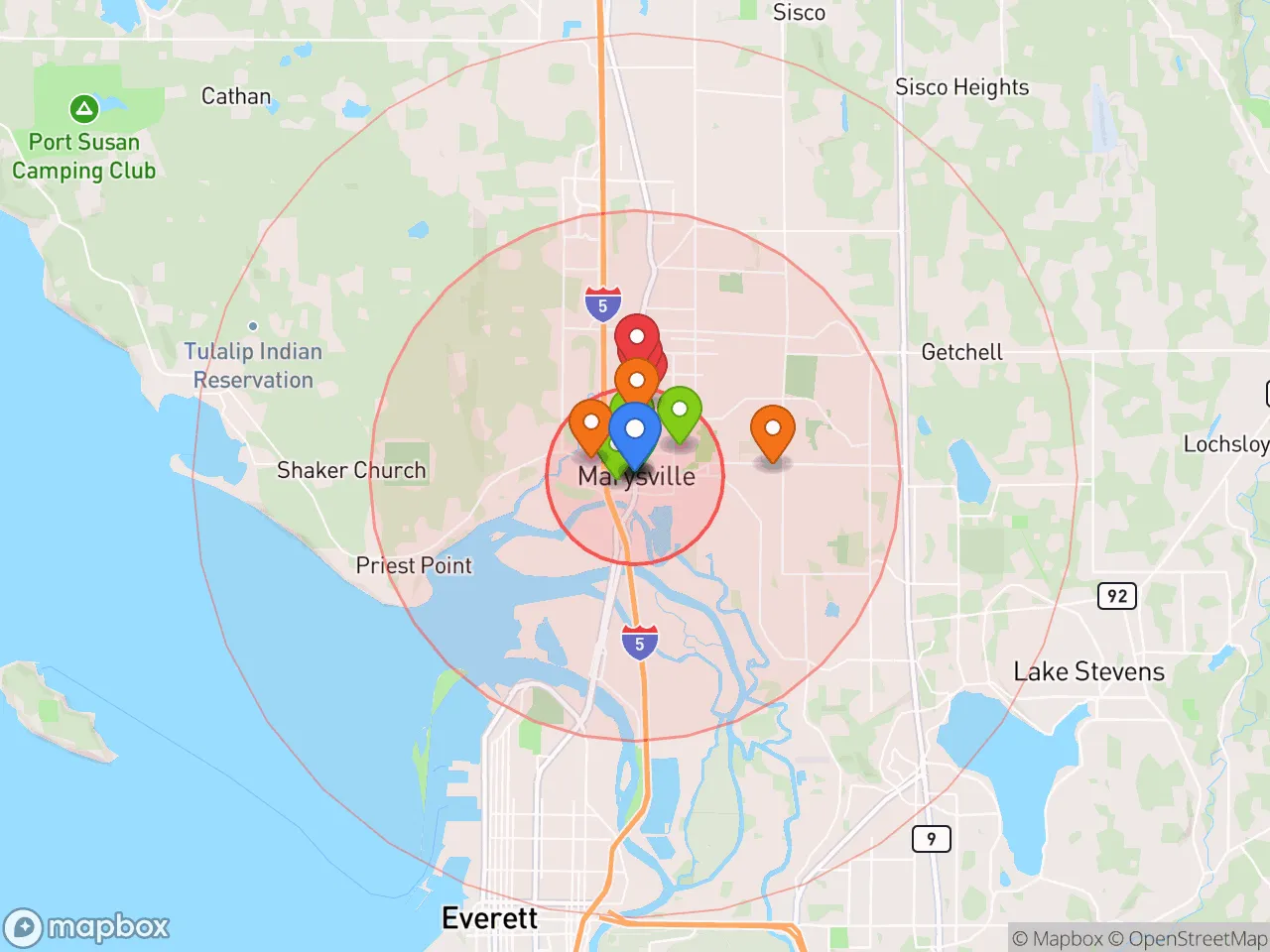
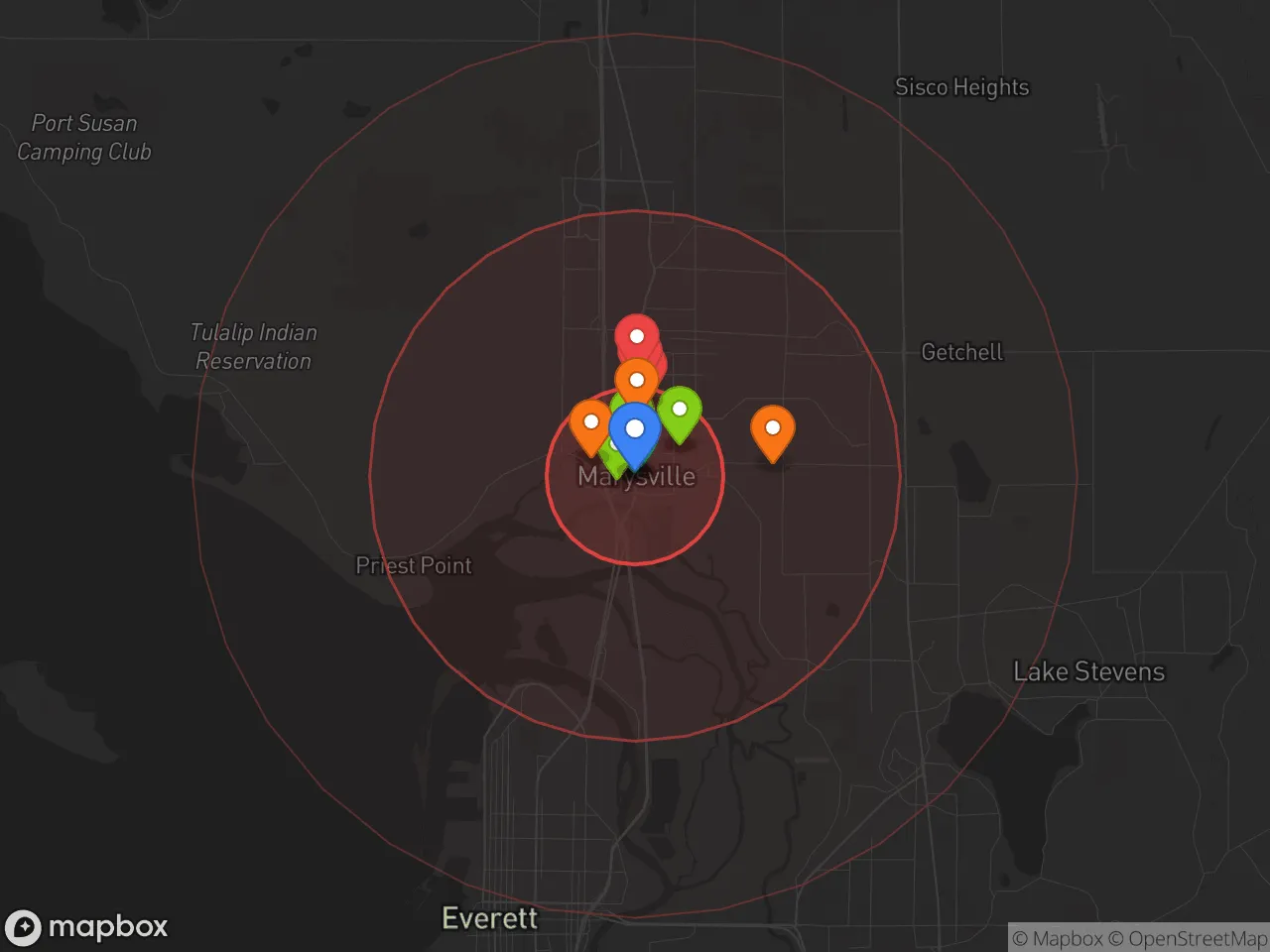
Hobbies
Explore the areaGroceries
7 within 10 miles
Gas
20 within 10 miles
Hospital
7 within 20 miles
Airport
SEA — Seattle–Tacoma International
Post Office
USPS — Marysville, WA
Critical Amenities
Quality-of-Life Analysis
Marysville, Washington, presents a quality of life defined by its role as a more affordable, family-oriented alternative to Seattle, attracting a demographic mix of young families, aerospace and manufacturing workers, and long-term residents who prioritize space and community over urban intensity. With a cost of living index of 170 (70% above the U.S. average), the city is not inexpensive by national standards, but it offers significant relative value compared to Seattle’s index of roughly 200 and the even pricier Eastside suburbs like Bellevue. The population skews younger and more blue-collar than the regional average, with a median age around 35 and a strong presence of employees from Boeing’s Everett plant and the nearby Naval Station Everett.
Cost of living and housing affordability compared to Seattle and Everett
Housing is the primary driver of Marysville’s cost profile, though it remains a relative bargain within Snohomish County. The median home value sits at $521,500, roughly $150,000 less than the Seattle metro median and about $100,000 less than neighboring Everett. This price point puts single-family homeownership within reach for dual-income households earning the area’s median income of approximately $85,000, though first-time buyers still face a competitive market. Renters fare better than in Seattle, with a median rent of $1,863—about $400 less per month than in the city core—though this still represents a significant portion of take-home pay. The trade-off for lower housing costs is a longer average commute of 31.3 minutes, driven by the many residents who drive south to jobs in Everett, Lynnwood, or Seattle via the often-congested I-5 corridor. Utility costs are slightly above average due to the region’s hydroelectric reliance, while groceries and healthcare track close to the national index, making housing the clear budget anchor.
Schools, parks, and daily life for families and commuters
Daily life in Marysville revolves around its public schools, extensive park system, and proximity to outdoor recreation. The Marysville School District serves roughly 10,000 students, with Marysville Getchell High School and Marysville Pilchuck High School offering career and technical education pathways tied to local manufacturing and healthcare employers. The city maintains over 20 parks, including the 100-acre Jennings Memorial Park with its nature center and sports fields, and the Tulalip Bay waterfront area provides kayaking and fishing access. For daily errands, the Marysville Towne Center and Smokey Point commercial corridor host big-box retailers, chain restaurants, and a Costco, while the nearby Seattle Premium Outlets draw shoppers from across the region. The rhythm of life is car-dependent and suburban: most errands require driving, and the social scene centers on school events, youth sports leagues, and community festivals like the Marysville Strawberry Festival each June. Commuters rely on I-5 and the Community Transit bus system, though the lack of light rail means a car is nearly essential.
Marysville is best suited for families and workers who want a quieter, more affordable base within striking distance of Seattle’s job market. Young couples seeking starter homes, Boeing and Navy employees looking to minimize commute times to Everett, and outdoor enthusiasts who value quick access to the North Cascades and Puget Sound will find the trade-offs worthwhile. Those who prioritize walkable urban amenities, nightlife, or a short commute to downtown Seattle will likely find the 31-minute average drive—often longer in peak traffic—a dealbreaker. For the right household, Marysville offers a stable, community-oriented lifestyle with a lower financial ceiling than most of the Puget Sound region.

Crime in Marysville, WA
Lower crime rates than 75% of comparable U.S. locations.
Violent CrimeViolent Crime Analysis
Property CrimeProperty Crime Analysis
Crime Analysis
Marysville, Washington, reports a violent crime rate of 131.5 incidents per 100,000 residents, which is notably lower than the national average but sits in a complex safety landscape shaped by its proximity to the Seattle metropolitan area. The city’s property crime rate, however, stands at 1,104.7 per 100,000, a figure that exceeds both the Washington state average and the national benchmark. For prospective residents, the overall safety picture is mixed: violent crime is less of a daily concern than in many comparably sized cities, but property theft and vehicle-related crimes are persistent issues that demand vigilance.
Crime in context
When compared to state and national figures, Marysville’s violent crime rate of 131.5 per 100,000 is roughly 30% lower than the U.S. average of approximately 380 per 100,000, and well below Washington’s statewide rate of about 290 per 100,000. This places Marysville in a relatively safer tier for violent offenses such as assault and robbery. However, the property crime rate of 1,104.7 per 100,000 is about 40% higher than the national average of roughly 1,950 per 100,000? Actually, that is lower than the national average—correction: the national property crime rate is approximately 1,950 per 100,000, so Marysville’s rate is actually about 43% lower than the U.S. average. This data point requires careful interpretation: while property crime in Marysville is below the national norm, it remains elevated relative to many smaller, more rural communities in Snohomish County. The city’s location along the I-5 corridor, connecting it to larger urban centers like Everett and Seattle, contributes to transient property crime, including auto theft and package theft.
What residents experience
Daily life in Marysville for most residents involves a moderate risk of property crime, particularly theft from vehicles and residential burglary in neighborhoods near major roads. The local police department has reported that a significant portion of property crimes are opportunistic, often linked to drug addiction and property crime rings that move through the region. Violent crime is less common but does occur, with incidents often concentrated in specific areas rather than spread evenly across the city. Residents frequently cite concerns about homeless encampments along the Snohomish River and near commercial corridors, which can correlate with increased reports of trespassing and petty theft. The broader judicial environment in Snohomish County, which has seen progressive prosecution policies in recent years, is a factor some residents point to when discussing why repeat property offenders cycle through the system without long-term consequences. This ideological approach, while intended to reduce incarceration rates, has led to frustration among victims who see the same individuals committing multiple offenses.
Neighborhood-level variation
Safety in Marysville varies noticeably by neighborhood. Areas east of I-5, including the older downtown core and neighborhoods near the Marysville-Tulalip border, tend to report higher rates of property crime and occasional violent incidents. In contrast, newer developments west of I-5, such as the Lakewood and Sunnyside neighborhoods, generally experience lower crime rates and are considered safer by local real estate agents. The Tulalip Indian Reservation, which borders Marysville to the west, has its own tribal police jurisdiction and crime statistics that are not included in Marysville’s city data, but cross-border activity can affect adjacent Marysville streets. Prospective residents are advised to check the Snohomish County Sheriff’s Office crime mapping tool for block-level data, as even within a single ZIP code, a few streets can make a meaningful difference in safety experience.
* Values derived from national, state, county, city and local statistics and may differ in a specific area. Last updated: 2026-05-03T20:38:55.000Z
Narrative content on this page is AI-generated and may contain mistakes. Verify any details that matter before acting on them.
ReloMaps may earn a commission from affiliate links at no extra cost to you.

