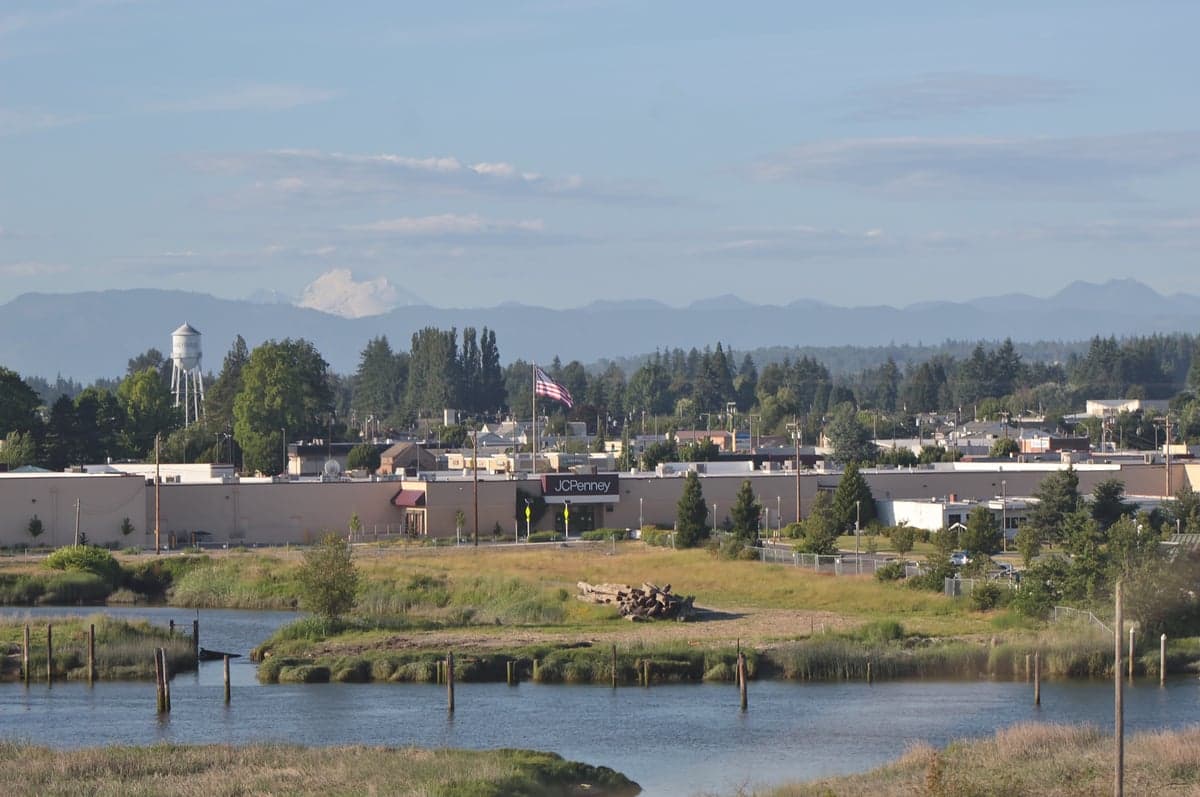
Photo: Wikipedia
Political ClimatePolitical Climate in Marysville, WA
District shown is the primary district for this city’s centroid. Cities may span multiple districts.
Local Political AnalysisPolitical Analysis of Marysville, WA
Marysville’s political climate has shifted noticeably over the past decade, and not in a direction that sits well with folks who value personal freedom and limited government. The city now carries a Cook PVI of D+15, meaning it votes about 15 points more Democratic than the national average—a stark contrast to the more balanced, independent-minded community I remember growing up here. While the city itself leans left, the surrounding Snohomish County has trended even harder blue in recent cycles, driven largely by an influx of Seattle-area transplants who brought their big-government ideas with them. If you’re looking for a place where local officials still respect property rights, gun ownership, and school choice, Marysville is becoming a tougher sell.
How it compares
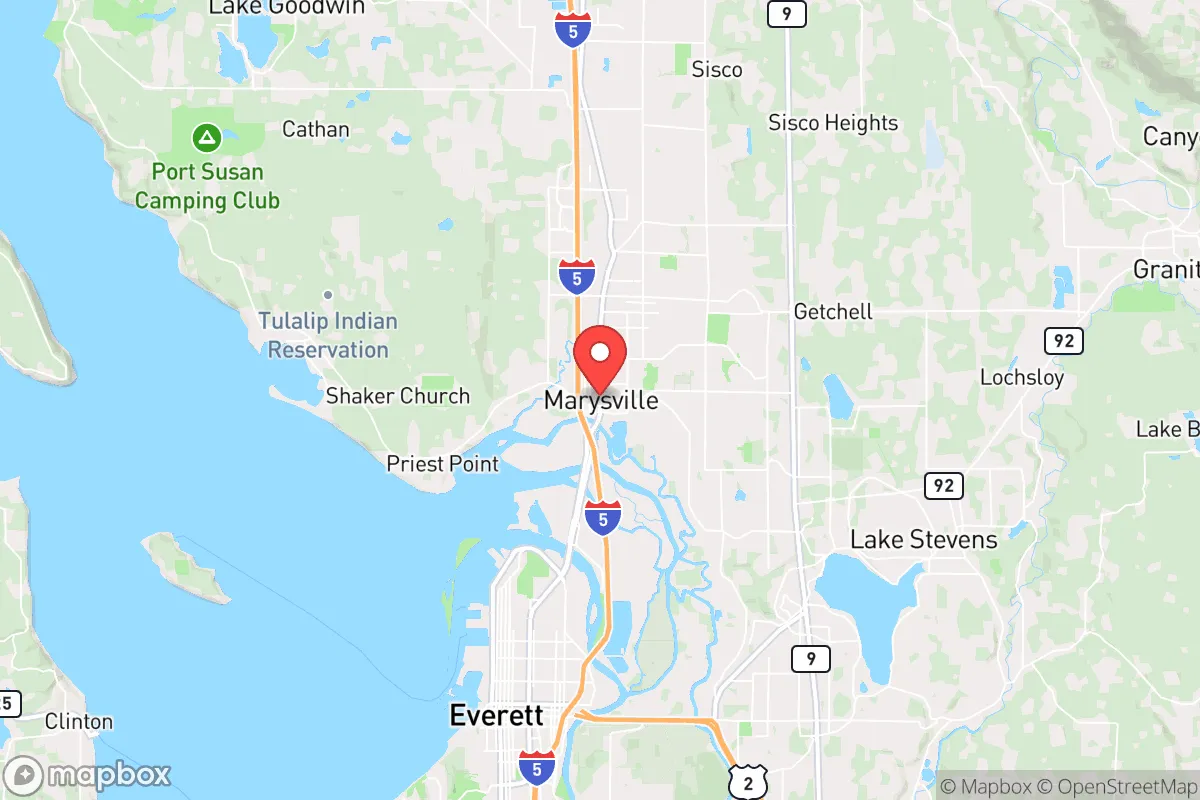
Drive just 15 minutes east to Arlington or north to Stanwood, and you’ll find a political landscape that feels more like the Marysville of the 1990s—more conservative, more skeptical of new taxes, and less eager to embrace progressive social experiments. Even Lake Stevens, just south of us, has held onto a more moderate, pro-business vibe. But Marysville itself? It’s been pulled into the orbit of Everett and Seattle, where the county council and state legislators seem to think they know better than you how to run your life. The contrast is stark: while Arlington’s city council still debates how to keep property taxes low, Marysville’s leaders have been more willing to sign onto regional housing mandates and environmental regulations that drive up costs for everyone. It’s a classic story of a once-sleepy mill town getting absorbed into the greater Puget Sound progressive machine.
What this means for residents
For the average family or small business owner, this political drift has real consequences. You’ll see it in the rising property taxes that fund new light rail expansions and social programs you may not support, and in the increasingly restrictive zoning rules that make it harder to build a workshop on your own land or run a home-based business. The school board has also leaned left, pushing curriculum changes that emphasize equity over academic rigor—something that has many parents I know looking into private or homeschool options. On the plus side, if you’re a renter or a young professional who values public transit and urban amenities, the shift might not bother you. But for anyone who moved here to escape the high cost and heavy hand of Seattle, the trend is concerning. Local elections matter more than ever here, because the city council and school board races are often decided by just a few hundred votes—and those votes determine whether Marysville continues down this path or pulls back toward common-sense governance.
Culturally, Marysville still has a blue-collar, outdoorsy backbone—lots of fishing, hunting, and weekend trips to the Cascades. But the policy direction is increasingly at odds with that lifestyle. The city has embraced sanctuary city policies that limit local police cooperation with federal immigration enforcement, and it’s been quick to adopt state-mandated energy codes that make it pricier to build or renovate a home. If you value the Second Amendment, you’ll find the local gun laws are still relatively sane compared to Seattle’s, but the county-wide push for more restrictions is a constant threat. My honest take? Marysville is at a crossroads. The next few election cycles will decide whether it becomes another Everett—a high-tax, high-regulation city where personal freedoms take a back seat—or whether it rediscovers the independent, live-and-let-live spirit that made it a great place to raise a family in the first place.

State Political ClimatePolitical Climate in Washington
State Political AnalysisPolitical Environment in the State
Washington State has shifted from a purple swing state to a solidly blue stronghold over the past two decades, with Democrats controlling every statewide office and both legislative chambers since 2017. The state’s overall partisan lean is roughly D+8 in presidential elections, but that number masks a deep and growing urban-rural chasm that makes life very different depending on where you land. For a conservative-leaning individual or family, the key takeaway is that your experience of Washington will be almost entirely determined by which county you choose to call home.
Urban vs. rural divide
The political map of Washington is a tale of two worlds. The Puget Sound corridor—Seattle, Bellevue, Redmond, Tacoma, and Olympia—drives the state’s blue lean, with King County alone delivering roughly one-third of the state’s total votes and consistently voting D+30 or more. Snohomish and Pierce counties have followed suit, flipping from purple to reliably blue over the last decade. Meanwhile, the eastern half of the state—places like Spokane, Spokane Valley, Wenatchee, and the Tri-Cities (Kennewick, Pasco, Richland)—votes reliably red, often by margins of 15-20 points. The rural counties in the southwest, like Lewis and Cowlitz, have also trended redder as Seattle’s influence pushes voters away. The divide isn’t just about geography; it’s about culture, economics, and a growing sense that the state government in Olympia doesn’t represent the values of anyone living east of the Cascades.
Policy environment
Washington’s policy environment is aggressively progressive, with a few notable exceptions. The state has no personal income tax, which is a major draw for high earners, but it compensates with some of the highest sales taxes in the nation (state rate 6.5%, but local add-ons push it to 10%+ in Seattle and Tacoma). Property taxes are moderate but rising fast, especially in fast-growing counties like Clark and Snohomish. On regulation, Washington is a leader in environmental mandates, including the 2021 Climate Commitment Act that caps carbon emissions and drives up energy costs. Education policy is dominated by teachers’ unions, with the state spending over $18,000 per pupil but seeing mediocre outcomes in urban districts. Healthcare is heavily regulated, with a state-run insurance exchange and some of the strictest abortion access laws in the country. Election laws are among the most liberal: all voting is by mail, same-day registration is allowed, and ballots are automatically sent to every registered voter. There is no voter ID requirement, which has fueled ongoing integrity concerns among conservatives.
Trajectory & freedom
Over the past five years, Washington has become measurably less free for conservatives. The 2021 passage of HB 1055 effectively banned the sale of many semi-automatic rifles and magazines over ten rounds, making it one of the strictest gun control states in the West. In 2023, the legislature passed SB 5599, which allows minors to receive gender-affirming care without parental consent, and HB 1469, which restricts conversion therapy for minors. Parental rights have been further eroded by HB 1239, which mandates that schools withhold information about a student’s gender identity from parents if the student requests it. On the medical autonomy front, the state expanded abortion access to include advanced practice clinicians and removed parental notification requirements for minors. Property rights have taken a hit with the 2023 HB 1110, which effectively eliminated single-family zoning in most cities, allowing duplexes and fourplexes in formerly quiet neighborhoods. The trajectory is clear: Olympia is moving to centralize control over family decisions, gun ownership, and local land use.
Civil unrest & political movements
Washington has been a flashpoint for political activism on both sides. The 2020 CHOP/CHAZ occupation in Seattle’s Capitol Hill neighborhood—where protesters took over several blocks for weeks, leading to multiple shootings and a police retreat—remains a vivid memory for residents. Since then, organized left-wing activism has focused on climate protests (blocking highways for the Youth Climate Strike) and pro-Palestinian demonstrations at the University of Washington. On the right, the Washington State Republican Party has struggled to gain traction, but grassroots movements like the “We the People” coalition and the Spokane County Republican Party have been active in election integrity efforts, including challenging the state’s mail-in voting system. Immigration politics are tense: Washington is a sanctuary state, with SB 5497 (2019) prohibiting local law enforcement from cooperating with federal immigration authorities. This has led to visible tensions in border counties like Yakima and Grant, where agricultural communities rely on immigrant labor but also see the strain on public services. Secession talk is common in eastern Washington, with the “Liberty State” movement gaining some traction, though it remains a fringe idea without serious legislative support.
Projection
Looking ahead five to ten years, Washington’s political trajectory is likely to continue leftward, but the pace may slow as demographic shifts create new dynamics. In-migration from California and other blue states is fueling growth in the Puget Sound region, but it’s also driving up housing costs and pushing some families to the exurbs and smaller cities like Bellingham, Mount Vernon, and Walla Walla. These areas are seeing a mix of new arrivals—some fleeing high taxes, others bringing progressive voting habits. The state’s reliance on sales tax and capital gains tax (a new 7% tax on gains over $250,000, passed in 2021 and upheld by the state supreme court) may eventually push more high-income earners to consider moving to Idaho or Texas. The biggest wildcard is the 2024 election and the potential for a Republican governor in 2028, but given the current legislative supermajority, any governor will have limited power to reverse the policy direction. A new resident moving in now should expect that the state government will continue to expand its reach into personal decisions, gun rights, and family matters, while local control in red counties will be increasingly challenged by state preemption.
Bottom line for a new resident: Washington offers stunning natural beauty and a strong economy, but it comes with a government that is actively hostile to conservative values on guns, parental rights, and local autonomy. If you’re considering a move, your best bet is to target a red county like Spokane, Stevens, or Yakima, where you’ll find like-minded neighbors and a slower pace of change. Just be prepared for the state legislature to keep pushing policies that feel like they’re written for Seattle, not for you.
* Values derived from national, state, county, city and local statistics and may differ in a specific area. Last updated: 2026-05-03T20:38:55.000Z
Narrative content on this page is AI-generated and may contain mistakes. Verify any details that matter before acting on them.
ReloMaps may earn a commission from affiliate links at no extra cost to you.

