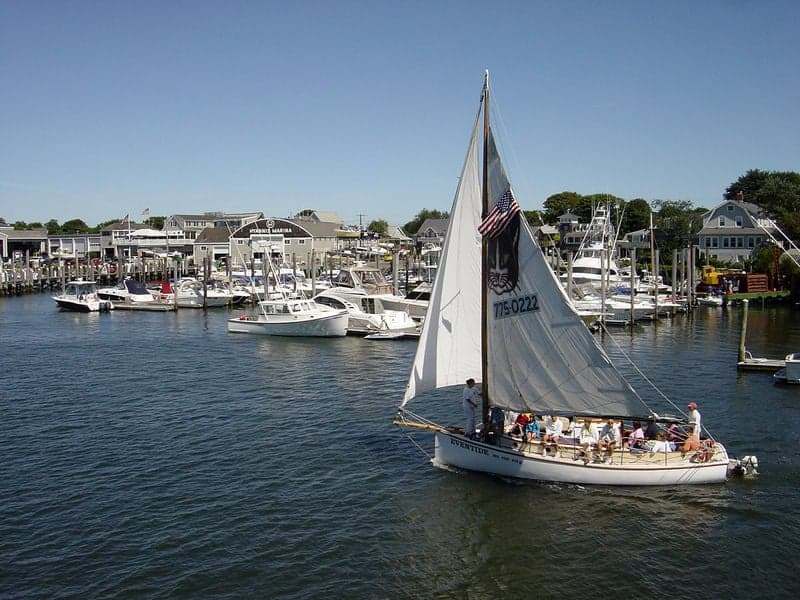
Photo: Wikipedia
Political ClimatePolitical Climate in Barnstable County
Showing district-level results — no local-only data available.
Local Political AnalysisPolitical Analysis of Barnstable County
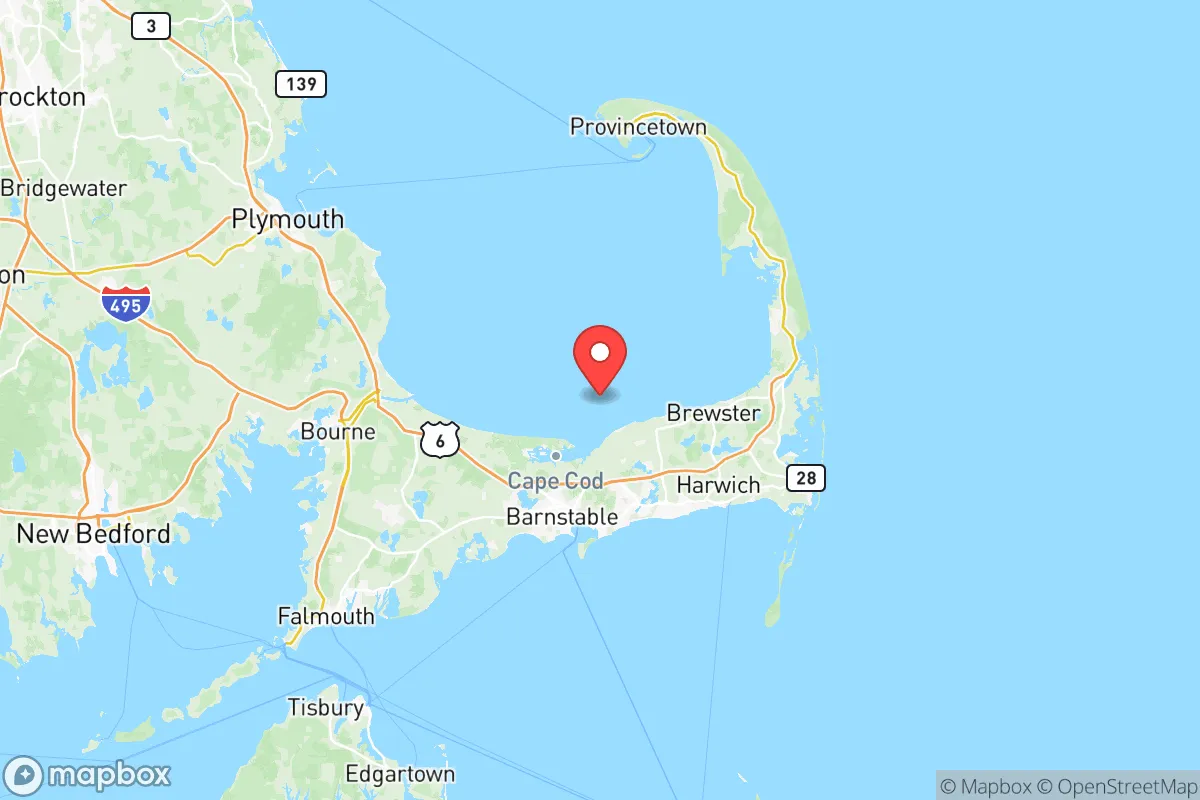
Barnstable County, which encompasses all of Cape Cod, is a politically complex region that leans Democratic but with a much narrower margin than the rest of Massachusetts. The county holds a Cook Partisan Voting Index (PVI) of D+6, meaning it votes about 6 points more Democratic than the national average. That's a far cry from the state's overall D+15 rating, and it reflects a deep internal split: the county is home to some of the most reliably blue towns in New England alongside some of the most stubbornly red precincts east of Worcester. Over the past decade, the county has been drifting leftward, but at a slower pace than the state as a whole, and local elections often turn on quality-of-life issues rather than national party loyalty.
How it compares
The gap between Barnstable County's D+6 and Massachusetts's D+15 is not just a number — it's the difference between a county where Republicans can still win local races and a state where Democrats hold every statewide office and supermajorities in the legislature. The political geography breaks down roughly by town. The outer Cape — Provincetown, Truro, Wellfleet — is deep blue, with Provincetown regularly delivering some of the highest Democratic vote shares in the entire state. Barnstable (the town), Falmouth, and Sandwich are more competitive, often swinging between parties depending on the race and turnout. Meanwhile, Brewster, Harwich, and especially Chatham and Orleans lean noticeably redder, with precincts that can go +10 to +15 for Republican candidates in statewide races. The swing precincts tend to cluster in mid-Cape towns like Dennis and Yarmouth, where retiree transplants from redder states mix with younger service-industry workers and second-home owners. In the 2024 presidential race, for example, Barnstable County voted for the Democratic candidate by about 8 points — closer to the national popular vote than to the Massachusetts statewide result. That pattern holds for Senate and gubernatorial races too: Republicans routinely clear 40% in the county even when they're getting crushed statewide.
What this means for residents
For liberal residents, the county's D+6 lean means they live in a place where their party usually wins, but not by enough to take anything for granted. Local school board and select board races are genuinely competitive, and progressive policy proposals — like rent control or plastic bag bans — often face real opposition before passing. For conservative residents, the picture is more mixed. You can absolutely find like-minded neighbors, especially in the towns east of the Cape Cod Canal, and Republican candidates for county commission or state representative can and do win. But you're living in a county that votes Democratic in presidential years, which means your state representative is almost certainly a Democrat, and your vote in statewide primaries is largely symbolic. The practical effect is that both sides have to engage in local politics to see their priorities reflected — there's no automatic majority for either party on the county assembly of delegates or the regional planning commission.
Culturally, the political split in Barnstable County manifests in ways that go beyond election returns. The outer Cape towns have a visible, established LGBTQ+ community and a countercultural streak that dates back to the artists and writers who settled there in the early 20th century. The mid- and lower-Cape towns are more traditionally New England: church suppers, rotary clubs, and a deep skepticism of both state government in Boston and any new development. The one issue that tends to unite the county across party lines is opposition to offshore wind projects that would be visible from the shoreline — a reminder that on Cape Cod, localism often trumps national party affiliation. Property taxes are high by national standards but average for Massachusetts, and the real political friction in daily life is less about national culture wars and more about the tension between year-round residents trying to afford to stay and seasonal residents who vote in their primary homes elsewhere. That dynamic, more than any party label, defines what it means to live and vote on Cape Cod today.

State Political ClimatePolitical Climate in Massachusetts
State Political AnalysisPolitical Environment in the State
Massachusetts is one of the most reliably Democratic states in the country, with a Cook Partisan Voting Index of D+15, meaning it votes about 15 points more Democratic than the national average in presidential elections. The state hasn't voted for a Republican presidential candidate since Ronald Reagan in 1984, and Democrats hold every statewide office, supermajorities in both legislative chambers, and all 11 U.S. House seats. Over the last 20 years, the shift has been toward the left, driven by the Boston metro area's growing population and influence, while the western and central parts of the state have become more Republican but lack the numbers to flip the statewide balance.
Urban vs. rural divide
The political map of Massachusetts is a classic urban-rural split, but the urban side dominates. Greater Boston — including Boston proper, Cambridge, Somerville, and Brookline — is the engine of the state's Democratic lean, routinely voting 80-90% Democratic. The I-495 belt and the North and South Shores are more moderate but still reliably blue. The western part of the state, including Springfield, Worcester, and Pittsfield, leans Democratic but with more competitive pockets. The truly rural areas — the Berkshires, Cape Cod, and towns like Sturbridge and Palmer — have shifted rightward over the past decade, with many small towns voting 60-70% Republican in recent cycles. But these areas are sparsely populated compared to the Boston metro, which holds about half the state's population. The net effect is that a conservative moving to rural western Mass will find like-minded neighbors, but they'll still be outvoted on statewide issues.
Policy environment
Massachusetts has a high-tax, high-service policy environment. The state income tax is a flat 5% (recently reduced from 5.15% via a 2022 ballot measure), and the sales tax is 6.25%. Property taxes are locally set and vary widely — Boston's rate is relatively low at about $10.50 per $1,000 of assessed value, while rural towns like Worcester County communities can exceed $18 per $1,000. The state has a robust regulatory framework, particularly in environmental permitting, healthcare (the state's 2006 reform was the model for the ACA), and education. Massachusetts consistently ranks #1 in K-12 education nationally, with strong public schools and a high concentration of private and charter options. Election laws are among the most accessible in the country: no-excuse mail-in voting, early voting, same-day registration, and automatic voter registration are all in place. For a conservative relocator, the tax and regulatory climate will feel heavy, but the education and healthcare infrastructure are top-tier.
Recent policy direction
Over the past five years, Massachusetts has moved decisively left on several fronts. In 2022, the state passed the Work and Family Mobility Act, allowing undocumented immigrants to obtain driver's licenses. In 2023, the legislature overrode Governor Healey's veto to pass the Massachusetts Parentage Act, which expanded legal parentage definitions for LGBTQ+ families. On gun policy, the state passed the Massachusetts Gun Safety Act in 2024, which banned "ghost guns," expanded the state's assault weapons ban, and required safe storage. On education, the state has maintained its MCAS graduation requirement but added a "high-quality" curriculum mandate. On property rights, Massachusetts has some of the strongest tenant protections in the country, including rent control in Boston and a statewide "right to counsel" in eviction cases. On privacy, the state passed a data privacy law in 2024 that restricts how companies collect and sell personal data. For a conservative relocator, the direction on guns, immigration, and parental rights will feel restrictive, while the education and property rights protections may be neutral or positive depending on circumstances.
Civil unrest & political movements
Massachusetts has a history of organized activism on both sides. The 2017 Women's March in Boston drew over 100,000 people, and the city has been a hub for climate activism, racial justice protests, and pro-choice rallies. On the right, the Massachusetts Fiscal Alliance and local Republican town committees organize around tax and education issues, but they are a clear minority. Immigration politics are a flashpoint: the state has a sanctuary law (the 2017 "Safe Communities Act" was not passed, but many cities including Boston, Cambridge, and Somerville have sanctuary policies). In 2023, the state's emergency shelter system was overwhelmed by an influx of migrants, leading to a political crisis and a waitlist for shelter. Election integrity has not been a major controversy here — the state's voting system is widely trusted, and there have been no significant fraud allegations. A new resident will see occasional protests on the Boston Common and State House steps, but the overall political climate is stable and institutional.
Projection
Over the next 5-10 years, Massachusetts is likely to become more Democratic, not less. The Boston metro area continues to grow, driven by the biotech, tech, and education sectors, and these industries attract a young, diverse, and left-leaning population. The western and rural parts of the state will continue to trend Republican, but their share of the population is shrinking. The state's high cost of living — particularly housing — may slow in-migration, but the people who do move in are disproportionately college-educated and left-leaning. A conservative moving in now should expect the state's policy direction to continue leftward on guns, immigration, and social issues, with incremental tax increases and regulatory expansion. The education system will remain a strong draw, but the political environment will feel increasingly hostile to traditional conservative values.
For a new resident, the bottom line is this: Massachusetts offers world-class education, healthcare, and infrastructure, but at a high cost in taxes, regulation, and political alignment. If you're conservative, you'll find like-minded communities in the western and rural towns, but you'll be outvoted on statewide issues. If you're liberal, you'll find a state that largely aligns with your values, with strong protections and services. The state is stable, safe, and well-run, but it is not politically neutral — it's a deep blue state that is getting bluer.
* Values derived from national, state, county, city and local statistics and may differ in a specific area. Last updated: 2026-08-08T18:50:57.000Z
Narrative content on this page is AI-generated and may contain mistakes. Verify any details that matter before acting on them.
ReloMaps may earn a commission from affiliate links at no extra cost to you.

