
Photo by Evan McNamara on Unsplash
Political ClimatePolitical Climate in Methuen Town, MA
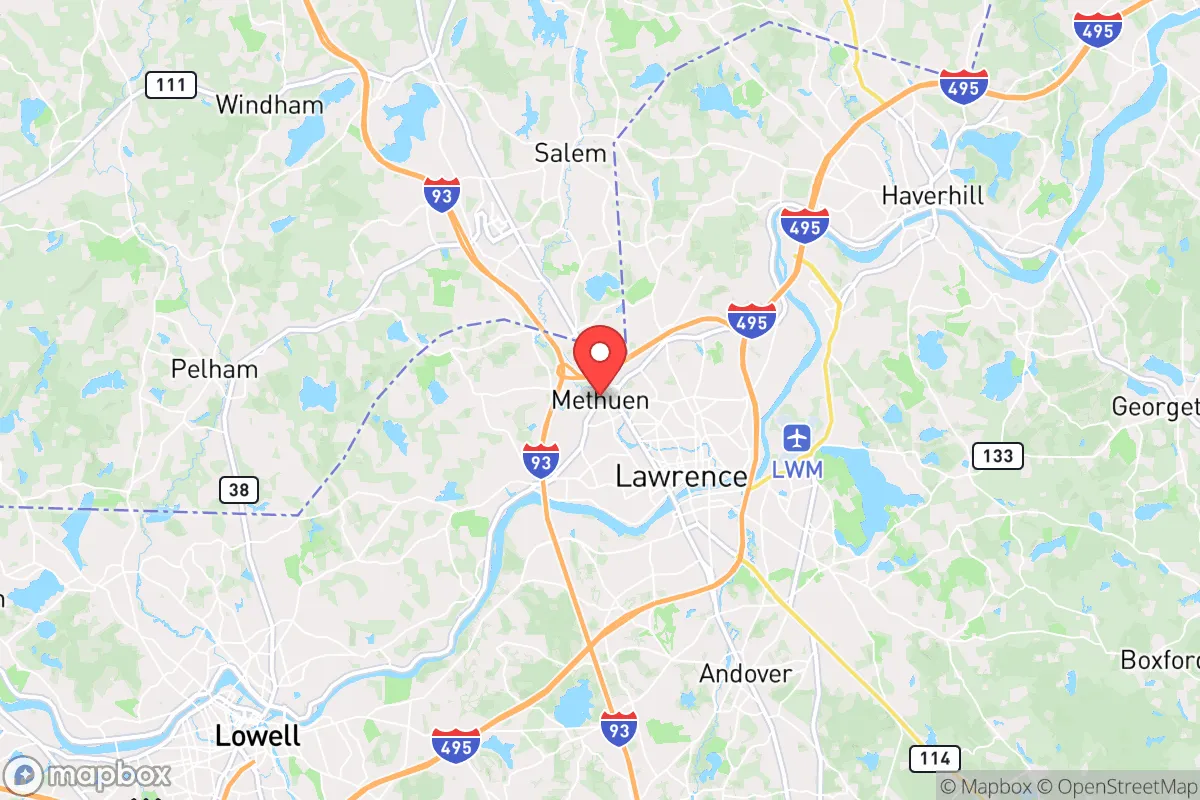
District shown is the primary district for this city’s centroid. Cities may span multiple districts.
Local Political AnalysisPolitical Analysis of Methuen Town, MA
Look, I’ve lived in Methuen my whole life, and I’ve watched this town shift from a solid, blue-collar community into something that feels increasingly out of step with its own roots. The Cook PVI of D+11 tells you the headline: Methuen leans heavily Democratic, and that lean has gotten steeper in the last decade. It wasn’t always this way. Back in the 90s and early 2000s, you’d see a real mix of conservative and moderate Democrats at town meetings—people who cared about keeping taxes low and the streets safe. Now? The local politics are dominated by progressive voices, and the old-school common sense is getting harder to find.
How it compares
Drive ten minutes south to Andover, and you’ll find a town that’s still more purple—Cook PVI around D+5 or so—with a strong independent streak and a tax base that keeps local government in check. Head north to Salem, New Hampshire, and you cross a state line into a place where the political climate is genuinely conservative, with lower taxes and fewer regulations. Methuen sits right on that border, but it’s become a mirror image of its neighbor. Where Salem fights to keep government small, Methuen’s city council and school board have embraced progressive priorities—think expanded social programs, diversity initiatives, and zoning changes that prioritize density over single-family homes. The contrast is stark, and it’s not an accident. A lot of the folks who moved here from Boston and Lawrence brought their politics with them, and they’ve reshaped the town’s identity.
What this means for residents
For a conservative-leaning resident, the practical effects are real. Property taxes have climbed steadily—up about 18% over the last five years—as the city funds new programs and staff positions that many of us never asked for. The school district has adopted curriculum materials that emphasize social-emotional learning and equity over academic rigor, and parents who raise concerns at school board meetings are often dismissed as out of touch. There’s a growing sense that your voice doesn’t matter unless you’re on the progressive team. The city council has pushed through zoning changes that make it easier to build multi-unit housing in single-family neighborhoods, which sounds fine on paper but has led to parking shortages and a change in the character of established streets. If you value personal freedom—the right to run your home, your business, and your family without the government breathing down your neck—Methuen is becoming a harder place to live.
On the cultural side, Methuen still has its old guard: the Portuguese and Irish clubs, the family-run diners, the guys who’ve been working at the same mill or construction company for thirty years. But those voices are getting quieter. The new energy in town comes from transplants who see Methuen as a cheaper bedroom community for Boston, and they bring a different set of values. The annual Feast of the Three Saints is still a big deal, but it’s now surrounded by Pride flags and climate action rallies. If you’re looking for a place where your conservative values are respected and your tax dollars are spent wisely, I’d honestly steer you toward Salem, NH, or even Pelham. Methuen’s still a fine town in many ways, but the political direction is clear, and it’s not turning back anytime soon.

State Political ClimatePolitical Climate in Massachusetts
State Political AnalysisPolitical Environment in the State
Massachusetts has long been one of the most reliably Democratic states in the nation, but the political climate here is far more complex than a simple blue label suggests. Over the past two decades, the state has shifted steadily leftward on social and economic issues, driven by the Boston metro area’s overwhelming progressive tilt, while rural and suburban pockets have become increasingly isolated and frustrated. For a conservative-leaning individual or family considering relocation, the key takeaway is that Massachusetts offers world-class education and infrastructure, but at the cost of high taxes, heavy regulation, and a political culture that often prioritizes government solutions over personal freedom.
Urban vs. rural divide
The political map of Massachusetts is a tale of two worlds. The Boston metropolitan area—including Cambridge, Somerville, and Brookline—is the engine of the state’s progressive dominance, routinely delivering 80-90% of the vote to Democratic candidates. These communities are dense, highly educated, and culturally aligned with national progressive movements. In contrast, the western and central parts of the state, such as Pittsfield, North Adams, and the Berkshires, lean Democratic but with a more moderate, working-class flavor. The true conservative strongholds are the small towns and rural areas of central and southeastern Massachusetts: Sturbridge, Spencer, and parts of Plymouth County often vote Republican by double digits. However, these areas lack the population to offset Boston’s dominance. A notable exception is Worcester County, where towns like Holden and Paxton have become reliable red spots, but even there, the urban core of Worcester city itself votes heavily Democratic. The divide is stark: drive 30 minutes west of Boston and you’ll find Trump signs in yards; drive 30 minutes east and you’re in deep-blue Cambridge.
Policy environment
Massachusetts’ policy environment is a textbook example of progressive governance. The state has a flat income tax rate of 5%, but a 2022 ballot question (Question 1) added a 4% surtax on income over $1 million, creating a de facto progressive income tax. Property taxes are moderate compared to national averages, but combined with high home prices, the effective burden is steep. The regulatory posture is among the most aggressive in the country: the state has strict environmental rules, a near-total ban on new fossil fuel infrastructure, and a right-to-shelter law that guarantees housing for homeless families, which has strained local budgets. Education policy is top-tier—Massachusetts consistently ranks #1 in K-12 performance—but the system is heavily centralized, with the state Board of Education dictating curriculum and testing. Healthcare is dominated by the state’s 2006 universal coverage law, which served as a model for the Affordable Care Act; the state now mandates health insurance and heavily regulates premiums. Election laws are among the most accessible in the nation: no-excuse mail-in voting, same-day registration, and early voting are all permanent fixtures. For conservatives, the policy environment feels like a one-size-fits-all approach that leaves little room for local or individual variation.
Trajectory & freedom
Over the past five years, Massachusetts has moved decisively toward expanding government authority at the expense of personal freedom. The 2022 “Right to Shelter” law (Chapter 260) mandated that the state provide emergency housing to all eligible families, regardless of immigration status, leading to a massive influx of migrants and a housing crisis that has driven up rents statewide. On gun rights, the state passed the Massachusetts Gun Safety Act of 2023, which banned the sale of many semi-automatic rifles, restricted magazine capacity to 10 rounds, and required gun owners to renew licenses every five years with a state-approved safety course. This law is widely seen as one of the strictest in the nation. On parental rights, the state’s 2018 “Gender Identity” law (Chapter 199) allows students to use bathrooms and locker rooms matching their gender identity without parental notification, and a 2023 Department of Education directive requires schools to affirm a student’s chosen name and pronouns even if parents object. Medical autonomy has been expanded for abortion—the 2020 ROE Act removed parental consent requirements for minors seeking abortions—but sharply curtailed for COVID-19 vaccine mandates, which remain in place for healthcare workers and state employees. Property rights are constrained by the state’s Chapter 40B affordable housing law, which allows developers to bypass local zoning if a town has less than 10% affordable housing, effectively overriding local control. The trajectory is clear: more state intervention, less individual discretion.
Civil unrest & political movements
Massachusetts has seen its share of political flashpoints. The 2020 George Floyd protests in Boston were large and occasionally violent, with property damage in the Downtown Crossing and Back Bay areas. More recently, the 2023-2024 migrant shelter crisis has sparked heated town hall meetings in suburbs like Woburn and Dedham, where residents have protested the placement of temporary shelters in their communities. The state’s sanctuary state status (enacted via a 2017 executive order and codified in 2023) means local law enforcement cannot cooperate with federal immigration authorities, a policy that has drawn both strong support and fierce opposition. On the right, the Massachusetts Fiscal Alliance and local Republican committees have organized against tax increases and the shelter law, but they remain a minority voice. Election integrity controversies have been minimal compared to other states, though the 2020 election saw a surge in mail-in ballots that some conservatives viewed as lacking safeguards. The most visible flashpoint for a new resident would likely be the constant political signage: in blue areas, you’ll see “Hate Has No Home Here” and “Black Lives Matter” signs; in red areas, “Don’t Tread on Me” and “Defend the Second Amendment” flags. The cultural divide is palpable, even if the political outcome is predetermined.
Projection
Looking ahead 5-10 years, Massachusetts is likely to become even more progressive. The state’s population is aging and shrinking in rural areas, while Boston and its suburbs continue to attract young, college-educated professionals from around the world. This demographic shift will reinforce the existing political lean. The 2024 election results showed that even in conservative-leaning towns like Sturbridge, the Republican margin shrank by 5 points compared to 2020, suggesting that the rural base is eroding. In-migration from other states is modest and largely from other blue states like New York and California, so there’s little chance of a political realignment. The most likely scenario is that Massachusetts will continue to lead on progressive policy—expanding government healthcare, tightening gun laws, and further centralizing education—while the conservative minority becomes more vocal but less influential. For a new resident, this means accepting that the political climate will not change in your favor, but that you can find like-minded communities in specific towns and counties if you choose carefully.
For a conservative-leaning individual or family, moving to Massachusetts requires a clear-eyed trade-off. You gain access to the best public schools in the nation, world-class healthcare, and a stable economy, but you must accept high taxes, heavy regulation, and a political culture that often feels hostile to traditional values. The practical takeaway is to choose your town wisely: look at Holden, Paxton, or Sturbridge for a more conservative environment, or consider Plymouth County for a mix of suburban amenities and red-leaning politics. Avoid Boston, Cambridge, and the immediate suburbs unless you’re prepared for a deeply progressive daily life. Massachusetts is not a state where you can change the political direction, but it is a state where you can carve out a comfortable life if you know where to look.
* Values derived from national, state, county, city and local statistics and may differ in a specific area. Last updated: 2026-04-23T05:06:20.000Z
Narrative content on this page is AI-generated and may contain mistakes. Verify any details that matter before acting on them.
ReloMaps may earn a commission from affiliate links at no extra cost to you.

