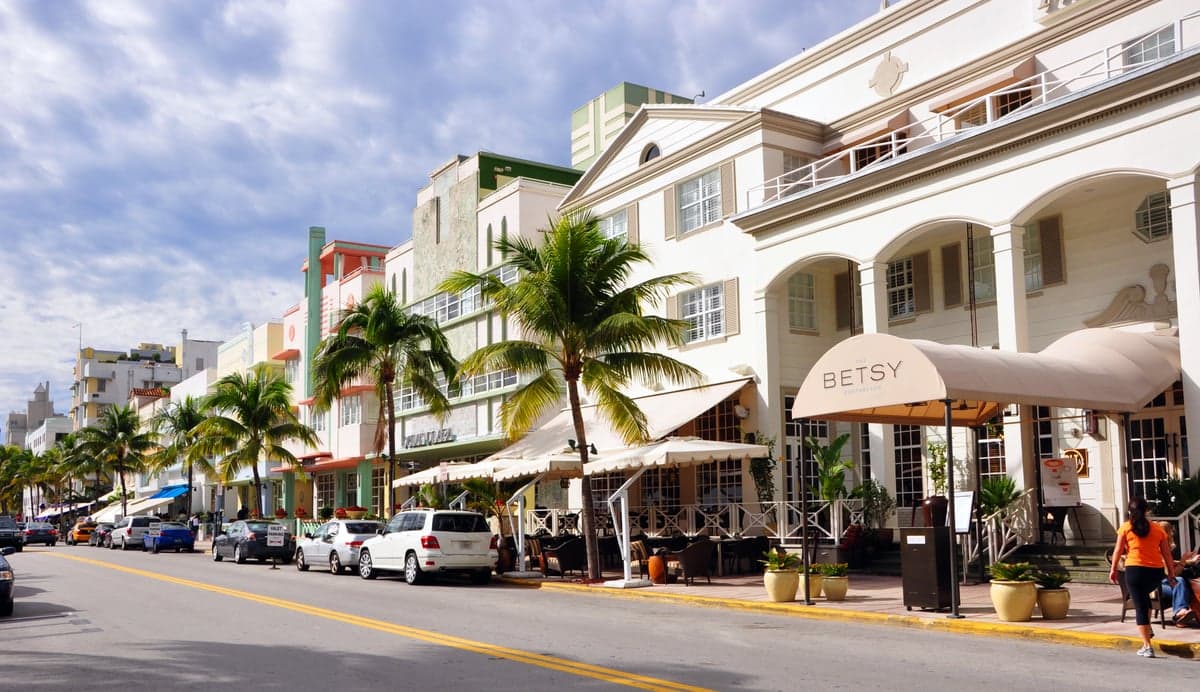
Photo: Wikipedia
Strategic Assessment of Miami Beach, FL
High tactical risk. This location is likely close to major population centers, strategic targets, or sits in a high-disaster corridor. A retreat property and careful exit planning is required.
What does the Strategic Assessment tell us?
Our Strategic Assessment grades tactical survivability of an area. Major population centers, military targets, fallout zones, natural disasters, and border exposure all drive risk — lower exposure means a more defensible position in a crisis.
This is heavily inspired by Joel Skousen's Strategic Relocation book. Highly recommended you checkout the book ($)What does this tell us?
Our Strategic Assessment grades tactical survivability of an area. Major population centers, military targets, fallout zones, natural disasters, and border exposure all drive risk — lower exposure means a more defensible position in a crisis.
This is heavily inspired by Joel Skousen's Strategic Relocation book. Highly recommended you checkout the book ($)Strategic Pillars

Key Distances
Regional Safe Places
Below is our recommended "safe zones" in Florida and the surrounding area based on our strategic heuristics. For most people, it's unrealistic to live in a “safe zone” full-time due to work, family or other personal reasons. They tend to be more rural. However, many of these areas are perfect for second homes and retreat properties that double as a vacation home or even a short-term rental.

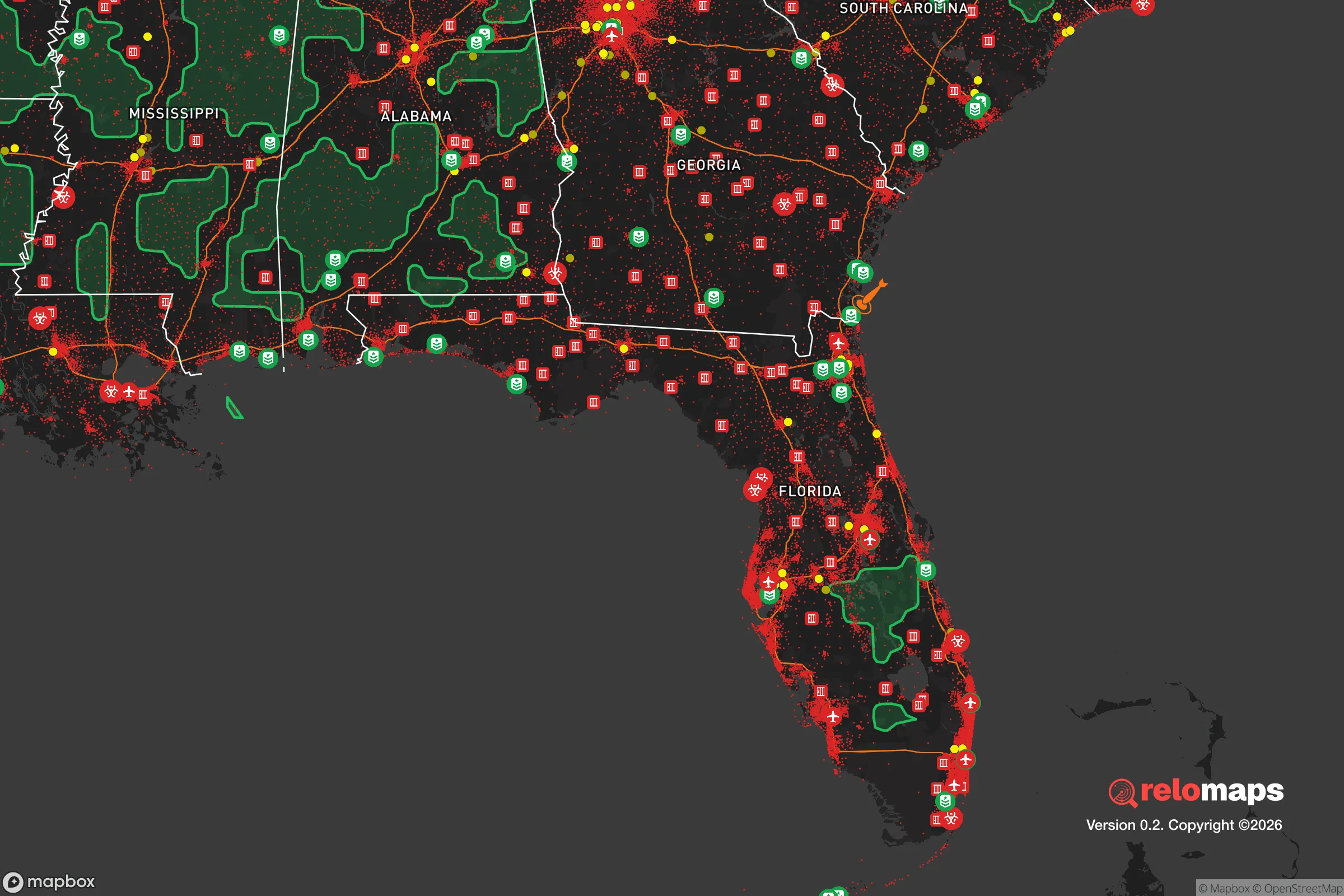


Important Note: For informational purposes only. This does not mean nothing bad ever happens in the green zones. Please use common sense. This is based on public data and modeled with AI. We tried to take a conservative approach but mistakes happen. We update this regularly as new information becomes available.
Solar Generator Recommendations
Backup power matters more here than in safer locations. We've picked three solar generators across budgets and capacity tiers — start with the budget unit if you only need a few essentials, or step up if you want to run a fridge and HVAC for days at a time.

Jackery Portable Power Station Explorer 300
Budget OptionPower on the Go: Weighing only 11 lbs, it's convenient to set up and store with book-sized foldable solar panels

BLUETTI Portable Power Station AC180
Designed for both indoor and outdoor scenarios, AC180 is highly capable as it has a robost capacity and continuous output power.

EF ECOFLOW DELTA Pro Ultra Power Station
Upgraded PickEcoFlow DELTA Pro Ultra is a whole-home energy system designed to grow with your family. Integrated with the Smart Home Panel 2, it scales to meet your evolving energy needs — keeping your home powered, intelligent, and secure through every stage of life.
We earn a commission, at no additional cost to you.
Strategic Assessment Analysis
Miami Beach, Florida, presents a complex strategic picture for the conservative prepper or survivalist. While its location offers some natural advantages for resilience, its dense population, high-value real estate, and proximity to major geopolitical and environmental risks make it a high-risk, high-maintenance location for long-term preparedness. For a single individual or family seeking a secure base of operations, the trade-offs are significant, and the margin for error is thin.
Geographic position and natural advantages for a survivalist
Miami Beach sits on a barrier island separated from the mainland by Biscayne Bay. This insular geography provides a natural defensive buffer against ground-based civil unrest spreading from the mainland. The island's limited access points—primarily the MacArthur, Julia Tuttle, and Venetian causeways—can be monitored and, in a worst-case scenario, physically restricted. This chokepoint dynamic is a double-edged sword, but for a prepared individual, it offers a degree of control over ingress and egress that a mainland neighborhood cannot match. The surrounding shallow waters and mangrove-lined shores also make amphibious approach difficult for any disorganized group. Furthermore, the subtropical climate allows for year-round food cultivation, and the proximity to the Atlantic provides an essentially unlimited source of protein and water (with proper desalination). The area's flat terrain also simplifies the construction of rainwater catchment systems and solar panel arrays, as there are no hills to block sunlight or create microclimates that complicate gardening.
Risks, exposures, and proximity to fallout-relevant landmarks
The downsides are substantial and should give any strategic relocator pause. Miami Beach is a prime target for both natural and man-made disasters. Its elevation averages less than four feet above sea level, making it one of the most vulnerable urban areas in the world to storm surge from hurricanes. A Category 3 or higher storm would inundate the entire island, destroying infrastructure and forcing a complete evacuation—exactly the kind of mass casualty event that preppers seek to avoid. Beyond weather, the city's status as a global tourism hub and its concentration of high-net-worth individuals make it a high-value target for terrorism, cyberattacks, or even a coordinated civil disorder event. The nearby Port of Miami is a major military and commercial shipping hub, and the Miami International Airport is a key logistics node. In a national emergency, these assets would become focal points for federal response, drawing crowds, military checkpoints, and potential secondary attacks. The presence of the U.S. Southern Command headquarters in Doral, just a few miles inland, means that any major disruption in Miami Beach could be met with a rapid, heavy-handed security response that may not distinguish between residents and looters. For a conservative concerned with government overreach, being in the blast radius of a major federal installation is a liability, not a benefit.
Practical resilience for a relocator: food, water, energy, and defensibility
On the practical side, a survivalist relocating to Miami Beach faces a steep uphill battle. Fresh water is the single greatest vulnerability. The island relies entirely on mainland water supplies via underwater pipelines. A hurricane, earthquake, or sabotage would cut that supply instantly. Desalination is an option, but small-scale units require significant energy and maintenance, and the saltwater intrusion into the Biscayne Aquifer is already a growing problem. Rainwater catchment is viable, but storage space is at a premium in the dense, high-rise environment. Food storage is similarly constrained. Most residences lack basements or large pantries. The year-round growing season is a plus, but soil quality on a sandbar is poor, and salt spray can kill many crops. A hydroponic setup in a balcony or garage is possible but requires electricity and nutrients. Energy independence is achievable but expensive. Solar panels are common, but building codes and homeowners' associations often restrict their placement. Battery storage is essential, as grid outages are frequent during storms. A generator is a must, but fuel storage is limited by fire codes and space. Defensibility is the biggest wild card. A single-family home with a walled yard offers some protection, but most of Miami Beach consists of high-rise condos and apartments. In a prolonged grid-down scenario, these buildings become vertical traps—elevators stop, stairwells become choke points, and neighbors become competitors for limited resources. A prepared individual in a high-rise would need to fortify their floor, establish a communication network with trusted neighbors, and have a plan for rapid evacuation if the building becomes compromised. The dense population also means that any disease outbreak—natural or engineered—would spread like wildfire through shared ventilation systems and common areas.
The overall strategic picture for Miami Beach is one of high risk with limited upside for the conservative prepper. The natural defensive advantages of the island are real, but they are outweighed by the extreme vulnerability to hurricanes, the dependence on fragile mainland infrastructure, and the concentration of high-value targets that make the area a likely flashpoint in any national crisis. For a single individual or family willing to invest heavily in self-sufficiency—solar, desalination, hydroponics, and a fortified residence—it is possible to carve out a niche. However, the cost of entry is high, the maintenance burden is constant, and the exit options are limited. A more prudent strategy for most would be to look inland, to less dense, higher-elevation areas with more space for food production and water storage. Miami Beach is a beautiful place to live in peacetime, but in a collapse scenario, it is a trap. The smart money is on a location that offers both a good quality of life today and a realistic path to survival tomorrow—and this island does not deliver on the second count.

* Values derived from national, state, county, city and local statistics and may differ in a specific area. Last updated: 2026-04-15T23:47:15.000Z
Narrative content on this page is AI-generated and may contain mistakes. Verify any details that matter before acting on them.
ReloMaps may earn a commission from affiliate links at no extra cost to you.

