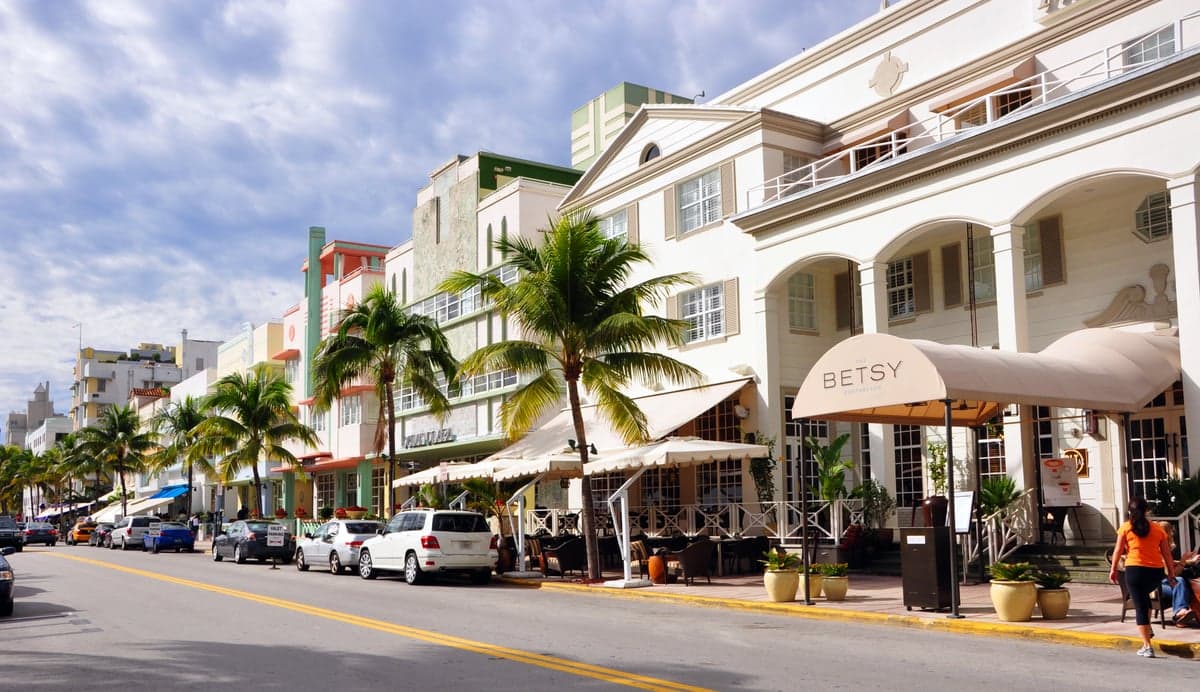
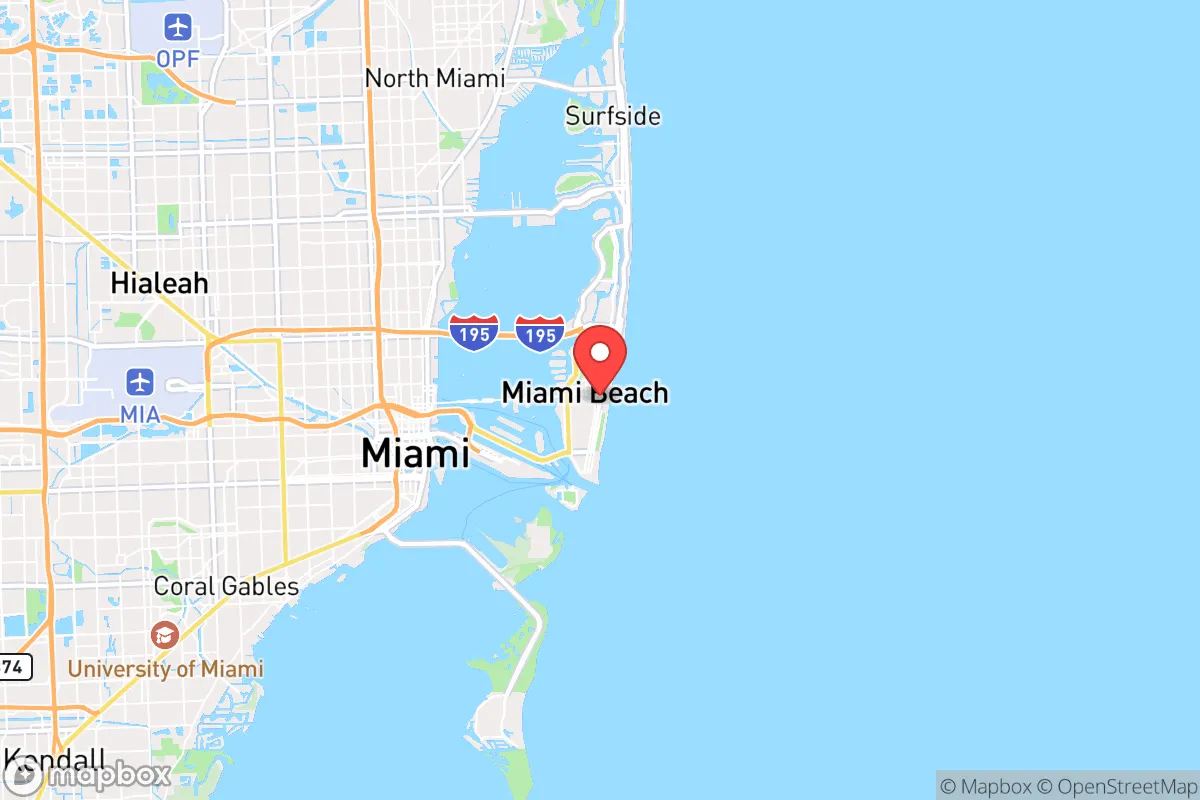
Photo: Wikipedia
Personal Sovereignty in Miami Beach, FL
Viable for self-reliance. Generally workable, though some barriers may limit total independence.
What does Personal Sovereignty tell us?
Personal Sovereignty measures your capacity for self-reliance and independence with minimal government friction. Higher scores mean fewer barriers between you and the way you want to live... but it assumes you have the space you need and good neighbors.
What does this tell us?
Personal Sovereignty measures your capacity for self-reliance and independence with minimal government friction. Higher scores mean fewer barriers between you and the way you want to live... but it assumes you have the space you need and good neighbors.
State Policy
Energy independence: Importer (10% of energy produced in-state)
Personal Liberty
Homesteading

Personal Liberty Analysis
Miami Beach presents a paradox for the individualist or prepper: it sits in a state that constitutionally protects gun rights and has no state income tax, yet it is governed by a city council that aggressively regulates personal behavior, property use, and public expression. For the survivalist-minded relocator, the city’s autonomy environment is best described as a high-tax, high-regulation urban island where state-level freedoms are constantly chipped away by local ordinances. The trade-off is clear: you get Florida’s legal framework for self-defense and no income tax, but you surrender significant control over your property, your business, and your daily movements to a municipal government that views personal sovereignty as a nuisance.
Tax burden and regulatory posture for the self-reliant individual
Florida’s lack of a state income tax is the single biggest financial win for anyone moving here, and Miami Beach residents benefit from that directly. However, the city more than makes up for it with a heavy local tax burden. The combined state and local sales tax rate is 7%, and property taxes in Miami-Dade County are among the highest in the state, with effective rates often exceeding 1.1% of assessed value. For a prepper or self-reliant individual, the real sting comes from the regulatory posture. Miami Beach has some of the strictest short-term rental laws in Florida, effectively banning Airbnb-style rentals in most residential zones unless the owner is present. The city also enforces aggressive noise ordinances, parking restrictions, and building codes that make it difficult to modify a home for self-sufficiency—installing a backup generator, for example, requires permits and can face HOA or city pushback. The regulatory environment is hostile to the kind of quiet, off-grid independence many preppers seek; the city wants you visible, compliant, and paying fees.
Self-defense and gun law specifics in a blue city within a red state
Florida is a “shall issue” state for concealed carry, and as of 2023, permitless carry (constitutional carry) is legal for residents 21 and older who can legally possess a firearm. This is a strong foundation for personal sovereignty. However, Miami Beach is a local government that has repeatedly tried to restrict firearms within its borders. While state preemption laws generally prevent cities from passing their own gun bans, Miami Beach has tested those limits. In 2018, the city passed an ordinance banning firearms at city-owned buildings, parks, and beaches—a move that was challenged but largely upheld for government property. For the prepper, this means you can carry in most public spaces, but you must be hyper-aware of where you step: city parks, the beach, and municipal buildings are off-limits. Stand-your-ground laws apply statewide, but the local political climate means you are more likely to face legal scrutiny and a hostile DA’s office if you use deadly force in self-defense. The practical takeaway: your gun rights are legally strong on paper, but the local enforcement culture will make you feel like a second-class citizen if you exercise them openly.
Self-reliance and homesteading viability in a dense urban environment
Homesteading in Miami Beach is nearly impossible for the average person. The city is a densely built barrier island with a median lot size of around 5,000 square feet, and most properties are condos or townhouses with zero yard space. Zoning laws are strict: you cannot keep chickens, goats, or any livestock within city limits. Backyard gardening is allowed but limited by HOA rules and the fact that the soil is mostly sand and limestone. Off-grid feasibility is laughable—the city requires connection to municipal water and sewer, and solar panels are heavily regulated by historic preservation boards in many neighborhoods. For the prepper who wants to grow food, store water, and generate power independently, Miami Beach is a non-starter. You would be entirely dependent on the grid, the grocery store, and the city’s infrastructure. The only self-reliance angle that works here is financial: if you own property free and clear, you have a hard asset that can be bartered or sold in a crisis. But for day-to-day homesteading, look inland to the Redland or Homestead areas, not the beach.
Personal liberties: parental rights, medical autonomy, speech, and property
Florida has become a national battleground for parental rights, with the Parental Rights in Education Act (the “Don’t Say Gay” law) and laws requiring parental consent for medical procedures. These state-level protections are strong, but Miami Beach’s local government has openly opposed them. The city council has passed resolutions condemning state education policies and has funded programs that bypass parental notification in certain health services. For a conservative parent, this creates a hostile school environment where your values are actively undermined by the local administration. Medical autonomy is similarly mixed: Florida banned COVID-19 vaccine mandates for most employees and students, but Miami Beach was one of the first cities to impose its own mask and vaccine mandates during the pandemic, showing a willingness to override state policy. Free speech is protected by the First Amendment, but the city has a history of restricting public assembly and protest permits, particularly around the beachfront and tourist areas. Property rights are the weakest link: the city’s historic preservation board can block you from painting your house a certain color or replacing windows, and the city has used eminent domain aggressively for redevelopment projects. Your property is not truly yours here—it is a regulated asset under constant municipal oversight.
Overall, Miami Beach offers a low sovereignty score for the survivalist or prepper. The state of Florida provides a solid baseline of gun rights, no income tax, and parental rights protections, but the city of Miami Beach actively works against those freedoms at every turn. Compared to a place like rural North Florida or the Panhandle, where you can own land, carry freely, and be left alone, Miami Beach feels like a liberal enclave where personal autonomy is constantly negotiated with a powerful local government. If your priority is maximum personal sovereignty, you are better off in a less regulated, less densely populated part of the state. Miami Beach is a place to visit, not a place to bunker down.

* Values derived from national, state, county, city and local statistics and may differ in a specific area. Last updated: 2026-04-15T23:47:15.000Z
Narrative content on this page is AI-generated and may contain mistakes. Verify any details that matter before acting on them.
ReloMaps may earn a commission from affiliate links at no extra cost to you.

