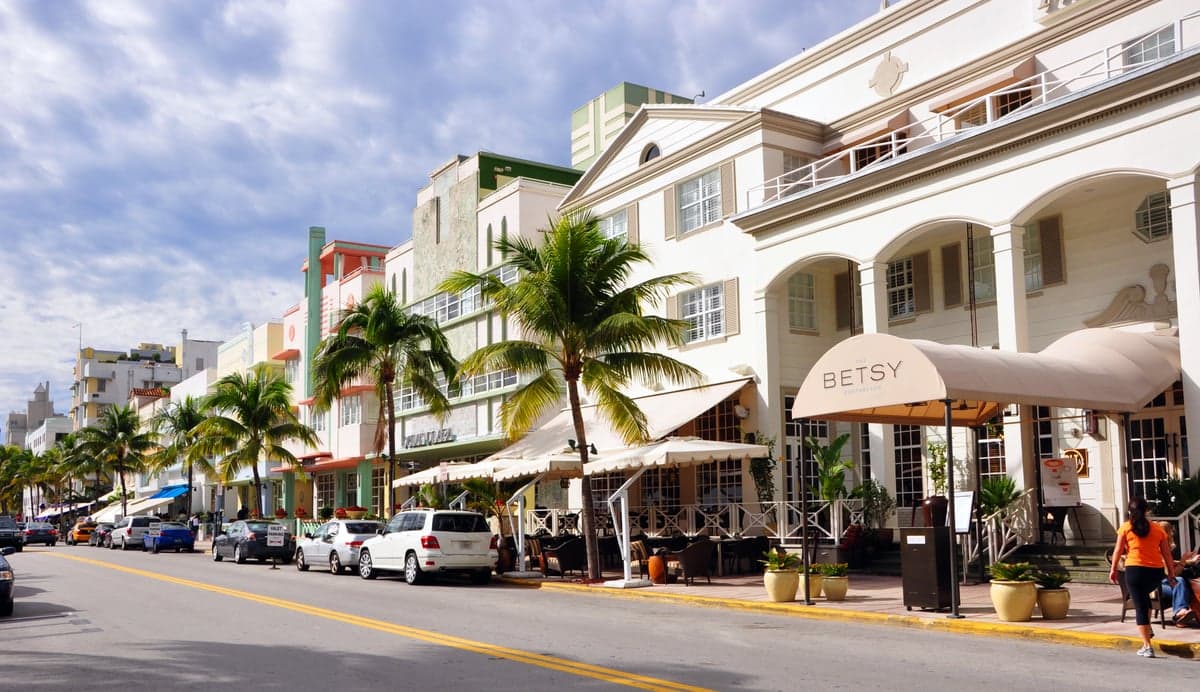
Photo: Wikipedia
Political ClimatePolitical Climate in Miami Beach, FL
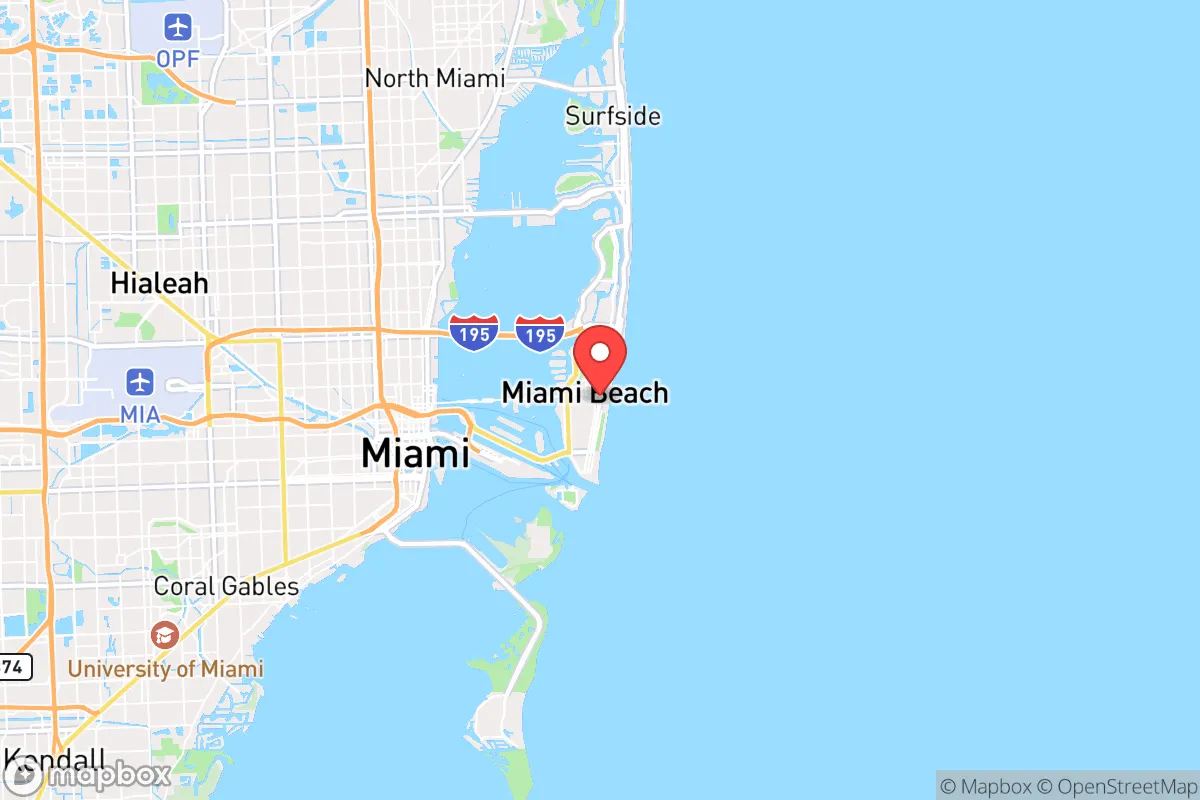
District shown is the primary district for this city’s centroid. Cities may span multiple districts.
Local Political AnalysisPolitical Analysis of Miami Beach, FL
Look, I’ve lived in Miami Beach long enough to remember when this place was more about sun, sand, and small-business grit than political posturing. Today, the city leans hard left, with a Cook PVI of D+18, meaning it’s one of the most reliably Democratic enclaves in Florida. That wasn’t always the case—back in the 80s and 90s, you had a real mix of retirees, Cuban exiles, and working-class families who valued self-reliance and fiscal caution. Now, the local government has shifted toward progressive activism, and honestly, it’s starting to feel like every new ordinance is another layer of red tape on your personal freedoms.
How it compares
If you drive just 15 minutes west to Hialeah or Doral, you’ll find a completely different political vibe—those areas are still solidly conservative, with strong Cuban-American communities that prioritize limited government and individual responsibility. Even Coral Gables, just south, is more moderate and business-friendly. Miami Beach, though, has become an island of progressive policy in a sea of more balanced South Florida politics. The contrast is stark: while Hialeah’s city council fights to keep taxes low and property rights strong, Miami Beach’s commission is busy banning plastic straws, restricting short-term rentals, and pushing density limits that hurt small landlords. It’s like living in a different country sometimes.
What this means for residents
For the average person, this political tilt translates into real headaches. Property taxes have crept up as the city funds more social programs and climate resilience projects—noble goals, sure, but they come straight out of your pocket. The rental market is a mess, too, because overregulation of Airbnb and vacation rentals has squeezed supply, driving up costs for everyone. And if you own a gun or want to carry for self-defense, forget it—Miami Beach has some of the strictest local firearm ordinances in the state, even though Florida law tries to preempt that. The city council also loves to impose mask mandates and vaccine requirements faster than the county does, which feels more like control than public health. It’s the kind of place where you have to think twice before speaking your mind at a town hall if you’re not on board with the progressive agenda.
On the cultural side, Miami Beach has always been a libertarian-leaning party town—think nightlife, beaches, and a live-and-let-live attitude. But that’s fading. The city now pushes a “family-friendly” vibe with curfews, noise ordinances, and restrictions on beach alcohol that feel more like a nanny state than a fun coastal community. Long-term, I worry we’re heading toward a place where personal choice is secondary to government convenience. If you value freedom from overreach—whether it’s how you use your property, what you eat, or how you run your business—Miami Beach might not be your best bet much longer. The old charm is still here, but it’s buried under a growing pile of regulations.

State Political ClimatePolitical Climate in Florida
State Political AnalysisPolitical Environment in the State
Florida has transformed from a quintessential swing state into a solidly Republican-leaning powerhouse over the past two decades, with registered Republicans now outnumbering Democrats by over 800,000 voters as of 2024. The state delivered a decisive +13.1 point margin for Donald Trump in the 2024 presidential election, a dramatic shift from the 2000 recount-era nail-biters where margins were measured in hundreds of votes. This realignment has been driven by a massive influx of conservative-leaning domestic migrants from high-tax states like New York, New Jersey, and California, combined with a steady rightward drift among Hispanic voters, particularly Cuban-Americans in Miami-Dade and Puerto Ricans in Central Florida.
Urban vs. rural divide
The political map of Florida is starkly divided between its booming conservative interior and its shrinking liberal coastal enclaves. The I-4 corridor, stretching from Tampa through Lakeland to Orlando, remains the state's ultimate battleground, but it has shifted noticeably red since 2020. Miami-Dade County, once a Democratic stronghold, flipped to Trump in 2024 by a narrow margin, driven by Cuban and Venezuelan voters who associate Democratic policies with socialism. Meanwhile, the rural Panhandle counties like Santa Rosa and Okaloosa routinely deliver 70-80% Republican margins, while the interior cattle and citrus counties like DeSoto and Hardee are equally deep red. The Democratic base is now concentrated in a few shrinking urban islands: Alachua County (Gainesville), Leon County (Tallahassee), Orange County (Orlando), and Broward/Palm Beach counties in South Florida. The suburbs of Jacksonville, Tampa, and Fort Myers have all moved decisively right, with once-purple Collier County (Naples) now reliably Republican.
Policy environment
Florida's policy environment under Governor Ron DeSantis has become a national model for conservative governance, with a focus on limiting government overreach and maximizing individual freedom. The state has no personal income tax, a constitutional cap on property tax increases (Save Our Homes), and a right-to-work law that has fueled explosive job growth. Education policy has been a flashpoint: the 2022 Parental Rights in Education Act (HB 1557, dubbed "Don't Say Gay" by critics) prohibits classroom instruction on sexual orientation and gender identity in grades K-3, while the 2023 "Stop WOKE Act" (HB 7) restricts critical race theory in schools and workplace training. School choice has been dramatically expanded, with universal Education Savings Accounts (HB 1, 2023) making Florida the national leader in educational freedom. Election integrity saw major reforms in 2021 (SB 90), including stricter voter ID requirements, limits on drop boxes, and enhanced signature verification. Healthcare policy has focused on deregulation and transparency, with the state rejecting Medicaid expansion and passing the 2023 "Live Healthy" initiative to reduce bureaucratic barriers for medical professionals.
Trajectory & freedom
Florida is unequivocally moving toward greater personal freedom, particularly in areas where other states are imposing restrictions. The 2023 permitless carry law (HB 543) allows law-abiding citizens to carry concealed firearms without a government-issued license, a major expansion of Second Amendment rights. On medical freedom, the 2023 ban on COVID-19 vaccine mandates for private employers (SB 252) and the 2024 prohibition on mRNA vaccine requirements for children (SB 988) represent a sharp rejection of federal overreach. Property rights were strengthened by the 2023 "Live Local Act" (SB 102), which preempts local zoning restrictions to allow affordable housing development, though some conservatives worry this infringes on local control. The 2024 "Digital Bill of Rights" (HB 3) restricts social media platforms from deplatforming political candidates and requires age verification for adult content, a direct challenge to Big Tech censorship. However, there are concerning trends: the 2024 "Anti-Riot Act" (HB 1) has been criticized for potentially chilling lawful protest, and the state's aggressive pursuit of election fraud cases has raised due process concerns among some libertarians.
Civil unrest & political movements
Florida has experienced relatively low levels of civil unrest compared to other large states, but there have been notable flashpoints. The 2020 George Floyd protests in Miami, Tampa, and Jacksonville saw some property damage but were quickly contained by law enforcement. The state's response was the 2021 "Combating Public Disorder Act" (HB 1), which enhanced penalties for rioting and protected monuments. Immigration politics are particularly intense in South Florida, where the 2023 "Essential State Services" law (SB 1718) requires hospitals to ask about immigration status and invalidates out-of-state driver's licenses for undocumented immigrants. This has created a visible tension in agricultural communities like Immokalee and Homestead, where migrant labor is essential. The "Freedom Convoy" movement saw some participation from Florida truckers in 2022, but it never reached the scale of Canada's protests. Election integrity remains a live issue, with the state's Office of Election Crimes and Security actively investigating cases, though critics argue this has created a chilling effect on voter participation. The most visible political movement is the "DeSantis Republican" coalition, which has successfully absorbed both traditional conservatives and Trump-aligned populists into a unified governing majority.
Projection
Over the next 5-10 years, Florida is likely to become even more conservative as demographic trends accelerate. The state is projected to gain two additional congressional seats after the 2030 census, with growth concentrated in the Republican-leaning interior and Gulf Coast. The Hispanic vote, particularly among younger Cuban-Americans and Venezuelans, is expected to continue its rightward shift, potentially making Miami-Dade a permanently competitive or even Republican county. The Democratic Party's base will increasingly be confined to the urban cores of Miami, Orlando, and Tampa, while the suburbs and exurbs become solidly red. The biggest wildcard is climate change: rising sea levels and hurricane intensity could eventually slow migration to coastal areas, but for now, the influx of conservative-leaning migrants from blue states shows no signs of abating. The state's policy trajectory suggests continued expansion of school choice, further tax cuts, and additional restrictions on local government power. A new resident moving in now should expect to find a state that is increasingly assertive in its conservative identity, with a government that views itself as a "laboratory of freedom" against federal overreach.
For a conservative individual or family considering relocation, Florida offers a rare combination of low taxes, strong parental rights, robust Second Amendment protections, and a government that actively pushes back against progressive ideology. The practical takeaway is that you'll find a state where your values are reflected in state law, where your children's education is under your control, and where your economic opportunities are not hamstrung by income taxes or excessive regulation. The trade-offs are real: summers are brutal, hurricane season is stressful, and the cost of living in desirable areas like Naples or Sarasota has skyrocketed due to demand. But for those prioritizing freedom and limited government, Florida is arguably the best bet in the nation right now, and the trajectory suggests it will only get better over the next decade.
* Values derived from national, state, county, city and local statistics and may differ in a specific area. Last updated: 2026-04-15T23:47:15.000Z
Narrative content on this page is AI-generated and may contain mistakes. Verify any details that matter before acting on them.
ReloMaps may earn a commission from affiliate links at no extra cost to you.

