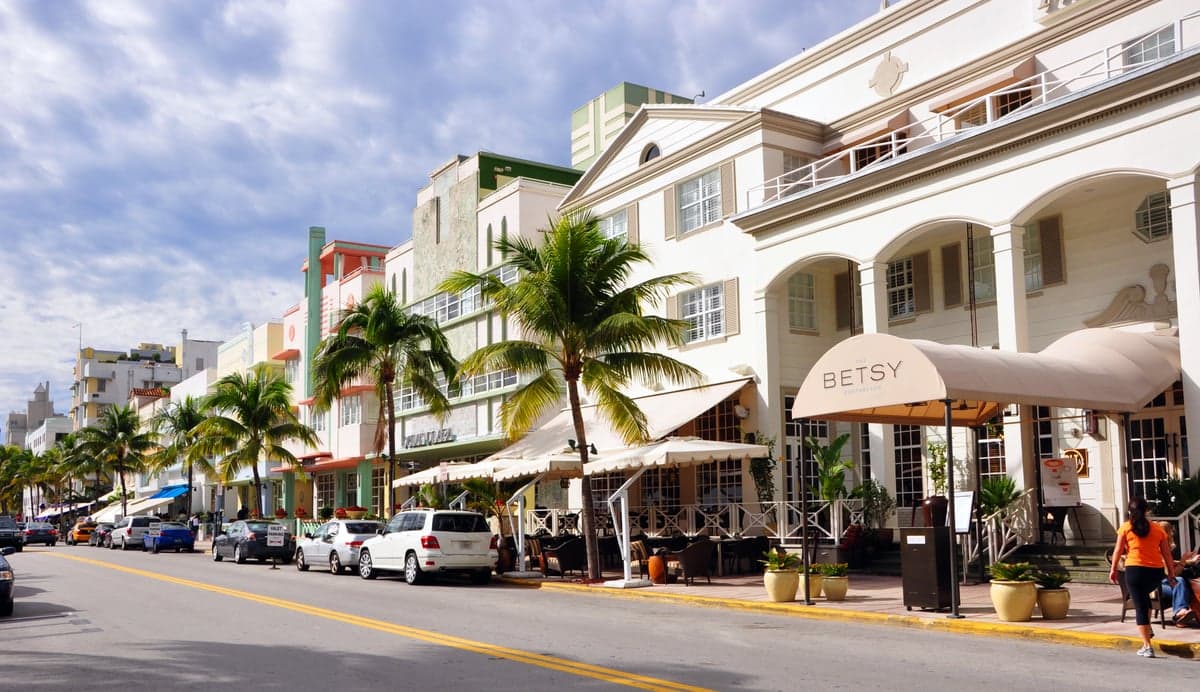
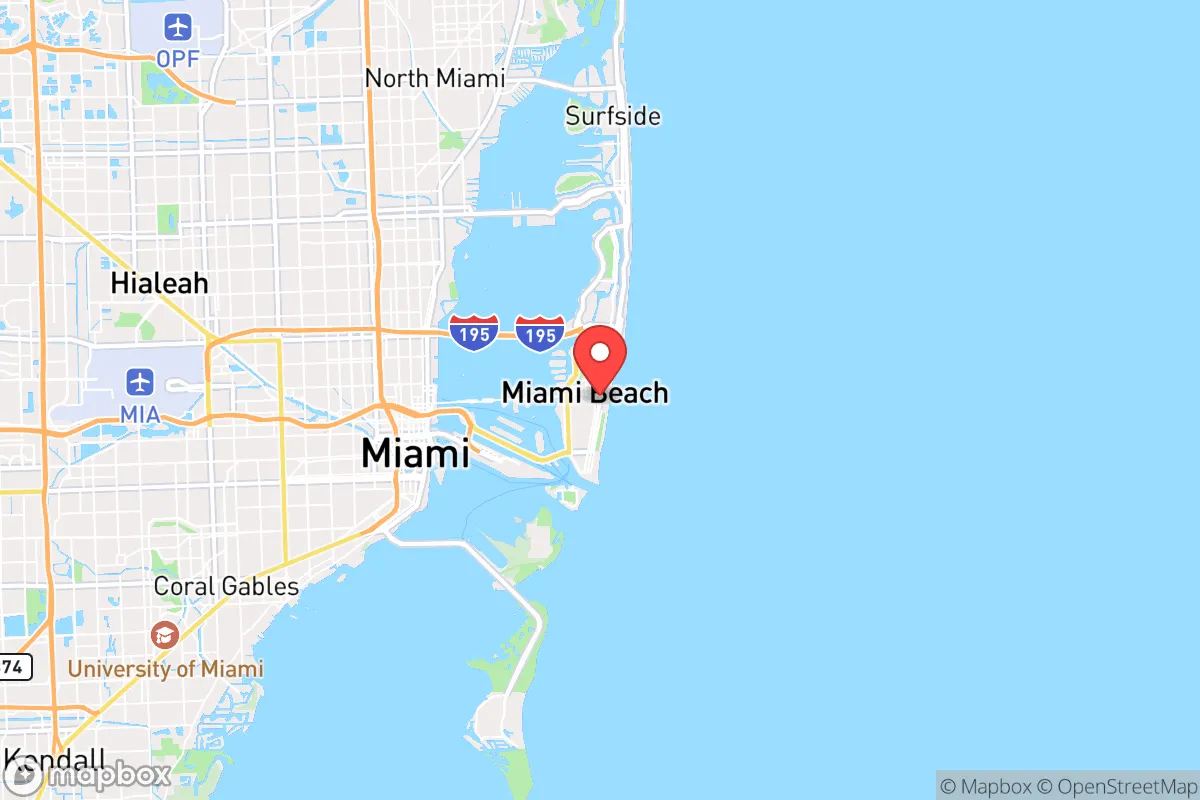
Photo: Wikipedia
Quality of Life in Miami Beach, FL
Above-average quality of iife. The area offers a reasonable cost of living, decent mobility, and a mix of neighborhood amenities.
What does Quality of Life tell us?
Quality of Life blends cost of living, nearby amenities, socioeconomic signals, and neighborhood character. City-level scores represent the whole municipality; individual neighborhoods can differ.
What does this tell us?
Quality of Life blends cost of living, nearby amenities, socioeconomic signals, and neighborhood character. City-level scores represent the whole municipality; individual neighborhoods can differ.
Cost of Living
66% above national average
The Real Cost of Living in Miami Beach, FL for 2026
| Tier | Individual | Family (4) |
|---|---|---|
| Survival | $28k | $52k |
| Comfortable | $105k | $155k |
| Luxury | $121k+ | $188k+ |
| Elite (Top 5%) | $298k+ | $461k+ |
43%
The Area Signal
A metric tracking the socioeconomic signals of the area.


Hobbies
Explore the areaGroceries
3 within 10 miles
Gas
0 within 10 miles
Hospital
3 within 20 miles
Airport
MIA — U.S. Customs and Border Protection - Miami International
Post Office
USPS — Miami, FL
Critical Amenities
Quality-of-Life Analysis
Miami Beach, Florida, is a densely populated barrier island city known for its high cost of living, world-famous beaches, and a demographic mix of affluent retirees, international investors, and young professionals in the tourism and creative sectors. With a cost of living index of 166 (66% above the U.S. average), the city is significantly more expensive than mainland Miami and most of South Florida, attracting those who prioritize oceanfront lifestyle and walkable urban energy over suburban space and affordability.
Cost of living, housing, and how it compares to mainland Miami
The financial reality of Miami Beach is steep. The median home value sits at $542,000, while the median rent is $1,733—figures that are roughly 30-40% higher than comparable properties in nearby cities like Hialeah or Kendall. However, these numbers are still below the ultra-luxury enclaves of Fisher Island or Star Island, where single-family homes routinely exceed $5 million. The average commute time of 26.6 minutes is shorter than the Miami metro average (around 30 minutes), largely because many residents work within the Beach itself or in the adjacent Brickell financial district. For renters, the $1,733 median is a baseline; a one-bedroom in South Beach often commands $2,200+, while units north of 63rd Street in the less trendy "North Beach" area can dip below $1,500. Property taxes in Miami-Dade County are moderate (roughly 1.0-1.2% of assessed value), but flood insurance—mandatory for most mortgage holders—can add $2,000-$5,000 annually, a hidden cost that surprises many newcomers.
What daily life is like: amenities, schools, and neighborhood rhythm
Daily life in Miami Beach is defined by outdoor recreation and a 24/7 hospitality economy. The city boasts over 7 miles of public beach, dozens of Art Deco parks (like Lummus Park and Flamingo Park), and the 8-mile-long Miami Beach Boardwalk. The public school system is part of Miami-Dade County Public Schools, with South Pointe Elementary and Nautilus Middle School consistently rated A or B by the state; however, many affluent families opt for private schools like Ransom Everglades or Carrollton School of the Sacred Heart on the mainland. The rhythm of the city varies sharply by neighborhood: South Beach (south of 23rd Street) is a dense, loud, tourist-heavy zone with nightclubs and sidewalk cafes, while Mid-Beach (23rd to 63rd Street) offers quieter condos and the Faena District's cultural venues. North Beach (63rd Street to 87th Terrace) is more residential and family-oriented, with lower density and the newly renovated North Beach Bandshell. Groceries and errands are expensive—a gallon of milk often costs $5+—and parking is notoriously difficult, with monthly garage fees of $150-$300 common.
Miami Beach is best suited for people who value walkable beach access, a vibrant social scene, and warm weather year-round, and who have the financial flexibility to absorb its premium costs. It is less ideal for families seeking large yards, top-tier public schools, or a quiet suburban commute. Retirees and remote workers with six-figure incomes, along with professionals in hospitality, real estate, and finance, tend to find the trade-offs worthwhile. For those who can afford it, the city offers a unique blend of urban density and coastal recreation that few other U.S. locations can match.

Crime in Miami Beach, FL
Generally safer than 73% of comparable U.S. locations.
Violent CrimeViolent Crime Analysis
Property CrimeProperty Crime Analysis
Crime Analysis
Miami Beach presents a mixed safety picture for prospective residents. While the city's violent crime rate of 166.8 per 100,000 residents is notably lower than the national average, its property crime rate of 735.6 per 100,000 is significantly elevated, reflecting the challenges of a dense, tourism-driven urban environment. The overall safety experience is heavily influenced by location and time of day, with the city's status as a major international destination attracting both visitors and opportunistic criminals.
Crime in context
Miami Beach's violent crime rate of 166.8 per 100,000 is roughly half the national average, placing it in a safer tier for personal safety compared to many U.S. cities of similar size. However, the property crime rate of 735.6 per 100,000 is substantially higher than both the Florida state average and the national figure. This disparity is typical of high-tourism destinations, where thefts from vehicles, burglaries of vacation rentals, and pickpocketing are more common. A critical factor for readers to consider is the influence of the local justice system. Miami-Dade County, which includes Miami Beach, operates under a progressive prosecutorial philosophy that prioritizes diversion and reduced incarceration for many property and non-violent offenses. This approach, while intended to reduce jail populations, has been linked by critics to higher recidivism rates and a perception that property crimes carry minimal consequences, directly contributing to the elevated property crime numbers residents face.
What residents experience
For those living in Miami Beach, daily safety concerns are less about violent confrontation and more about property security. Residents frequently report car break-ins, package thefts, and burglaries of ground-floor apartments, particularly in areas with high foot traffic like South Beach. The city has responded with increased police patrols and surveillance cameras in commercial corridors, but the transient population makes long-term crime prevention difficult. The progressive judicial environment means that many offenders arrested for theft or burglary are released on minimal bail or into pretrial diversion programs, often returning to the same neighborhoods quickly. This cycle creates frustration among residents who feel the system prioritizes offender rehabilitation over public safety and victim restitution. For families, the perception of lawlessness around property crime can be as impactful as the actual risk, influencing decisions about where to live within the city.
Neighborhood-level variation is significant. The quieter, residential areas north of 63rd Street, such as Surfside and Bal Harbour, experience far lower crime rates than the dense, nightlife-heavy South Beach area south of 5th Street. The central Collins Avenue corridor, while convenient, sees a disproportionate share of thefts and disturbances. Prospective residents should prioritize buildings with secure parking, doormen, and package-receiving services, and should avoid ground-floor units in high-traffic zones. While Miami Beach is not a high-violence city, the combination of elevated property crime and a lenient justice system means that proactive personal security measures are not optional—they are a necessary part of daily life.
* Values derived from national, state, county, city and local statistics and may differ in a specific area. Last updated: 2026-04-15T23:47:15.000Z
Narrative content on this page is AI-generated and may contain mistakes. Verify any details that matter before acting on them.
ReloMaps may earn a commission from affiliate links at no extra cost to you.

