Demographics of Mililani, HI
Affluence Level in Mililani, HI
A wealthy area with high-earning, well-educated households. Incomes, home values, and educational attainment meaningfully outpace national averages.
People of Mililani, HI
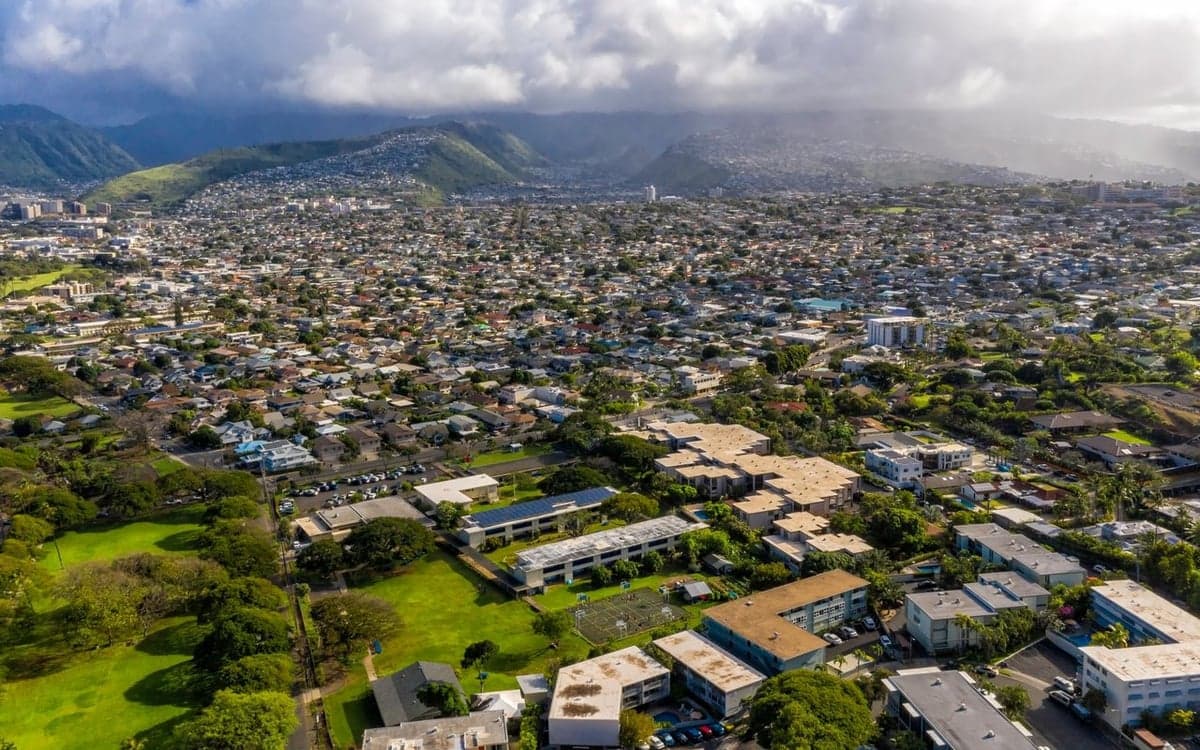
Today, Mililani, Hawaii is a densely populated, master-planned community of 21,967 residents, distinguished by its overwhelming East and Southeast Asian majority (49.2%) and a very low foreign-born population of just 2.9%. The city is notably family-oriented and highly educated, with 48.9% of adults holding a college degree, and its character is defined by a stable, middle-class suburban identity rather than the transient or tourist-driven feel of other Oahu towns. This population is overwhelmingly native-born, with deep local roots that trace back to the plantation era and the post-statehood suburban boom that created the town itself.
How the city was settled and grew
Mililani is a planned community that did not exist before the 1960s. The land was originally part of the vast sugar cane and pineapple plantation holdings of the Castle & Cooke corporation, which dominated central Oahu. The area was not a historic Hawaiian village or plantation camp; it was agricultural land. The first major wave of settlement began in 1968 when Castle & Cooke launched Mililani Town, a master-planned suburban development designed to house Oahu’s growing middle class. The original population was drawn from the children and grandchildren of plantation workers—primarily of Japanese, Chinese, Filipino, and Korean ancestry—who had lived in older plantation camps like Waipahu and Ewa. These families moved to Mililani for newer, larger homes and better schools. The first neighborhoods to open were Mililani Mauka (the upper section) and the original Mililani Town Center area, which became the core of the community. By the 1980s, the population was overwhelmingly Asian and native-born, with a small White minority and virtually no foreign-born residents, as the development was marketed to established local families.
Modern era (post-1965)
The post-1965 era in Mililani is not about new immigration but about internal growth and demographic stabilization. Because the city was built from scratch after the 1965 Hart-Cellar Act, it never experienced the classic immigrant gateway pattern. Instead, the population grew through natural increase and domestic relocation from other parts of Oahu. The 1990s and 2000s saw the expansion of Mililani Waena (central Mililani) and the newer Mililani Highlands section, which attracted a mix of second-generation Filipino, Japanese, and Chinese families, as well as a small but steady influx of White military and professional families from the mainland. The Hispanic population, now 9.3%, grew modestly during this period, largely from Puerto Rican and Mexican-origin families moving from other Hawaiian islands or the mainland for service-sector jobs. The Black population (1.9%) and Indian subcontinent population (0.3%) remain very small, concentrated in no single neighborhood but scattered across the newer subdivisions. The key demographic shift has been the gradual decline of the White share (now 12.7%) as the Asian majority has solidified, and the near-total absence of new foreign-born arrivals—Mililani is a community of multigenerational local families, not a landing pad for immigrants.
The future
The population of Mililani is likely to continue homogenizing rather than tribalizing into distinct enclaves. The city’s master-planned layout and uniform housing stock discourage the formation of ethnic neighborhoods; instead, the Asian majority is spread evenly across all sections, from Mililani Mauka to Mililani Highlands. The foreign-born share (2.9%) is so low that it is unlikely to rise significantly, as Hawaii’s high cost of living and limited job growth in central Oahu do not attract large new immigrant streams. The Hispanic and Black populations are expected to grow slowly through domestic migration, but they will remain small minorities. The biggest demographic trend is aging: Mililani’s original 1970s homeowners are now retiring, and younger families are being priced out by rising home values, leading to a gradual decline in the under-18 population. Over the next 10-20 years, Mililani will likely become an older, more established Asian-majority suburb, with little ethnic change but a slow shift toward a higher share of empty-nesters and retirees.
For someone moving in now, Mililani offers a stable, safe, and highly educated community where the population is overwhelmingly native-born, family-oriented, and culturally rooted in the local Japanese, Filipino, and Chinese traditions of Hawaii. It is not a diverse melting pot in the mainland sense, but a place where one Asian-majority norm dominates, and where new residents—especially those from the mainland—will find a quiet, orderly suburb with excellent schools and very little demographic flux. The city is becoming more settled and less dynamic, which suits families seeking predictability but may feel insular to those looking for a rapidly changing or multicultural environment.

* Values derived from national, state, county, city and local statistics and may differ in a specific area. Last updated: 2026-04-24T00:08:12.000Z
Narrative content on this page is AI-generated and may contain mistakes. Verify any details that matter before acting on them.
ReloMaps may earn a commission from affiliate links at no extra cost to you.

