Political ClimatePolitical Climate in Mililani, HI
District shown is the primary district for this city’s centroid. Cities may span multiple districts.
Local Political AnalysisPolitical Analysis of Mililani, HI
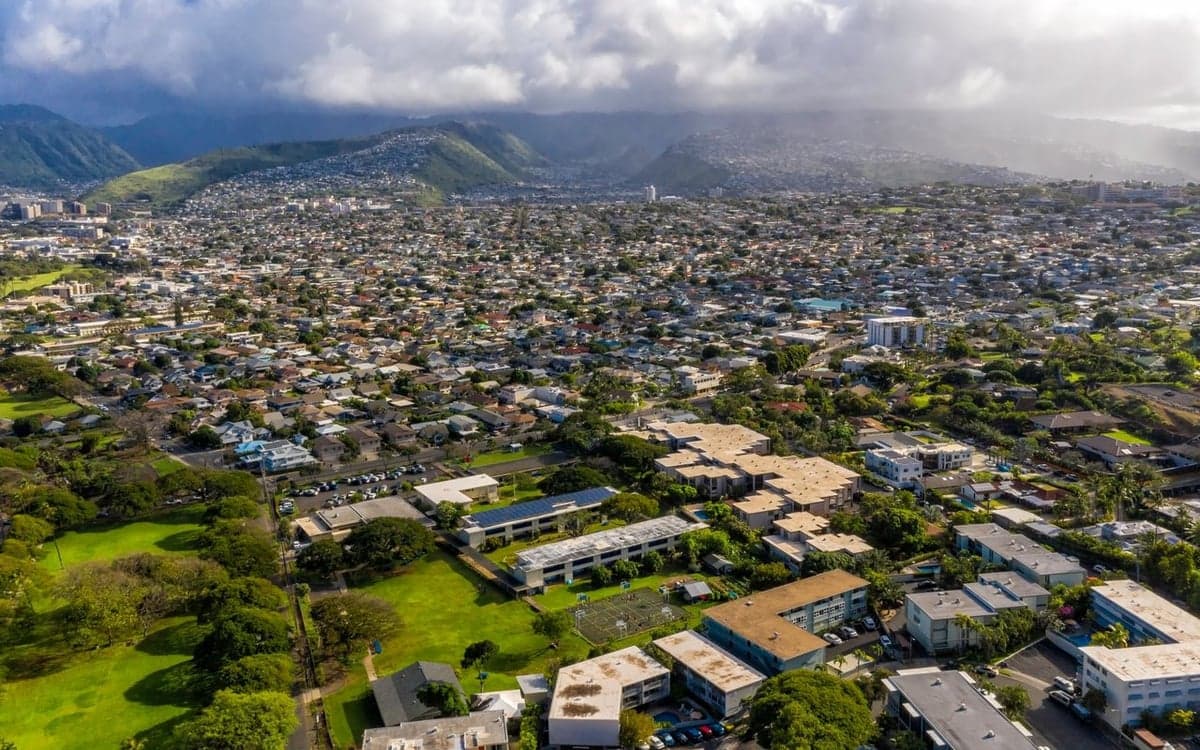
Mililani, HI, has long been a solidly blue stronghold, with a Cook PVI of D+13 that puts it among the most reliably Democratic communities in the state. But if you’ve lived here as long as I have, you’ve watched the political climate shift from a more moderate, live-and-let-live vibe to something that feels increasingly like a one-party echo chamber. The trajectory is unmistakable: what was once a place where neighbors could disagree over a fence and still share a beer has become a community where progressive orthodoxy is the only acceptable stance, and that’s a red flag for anyone who values personal freedoms and limited government.
How it compares
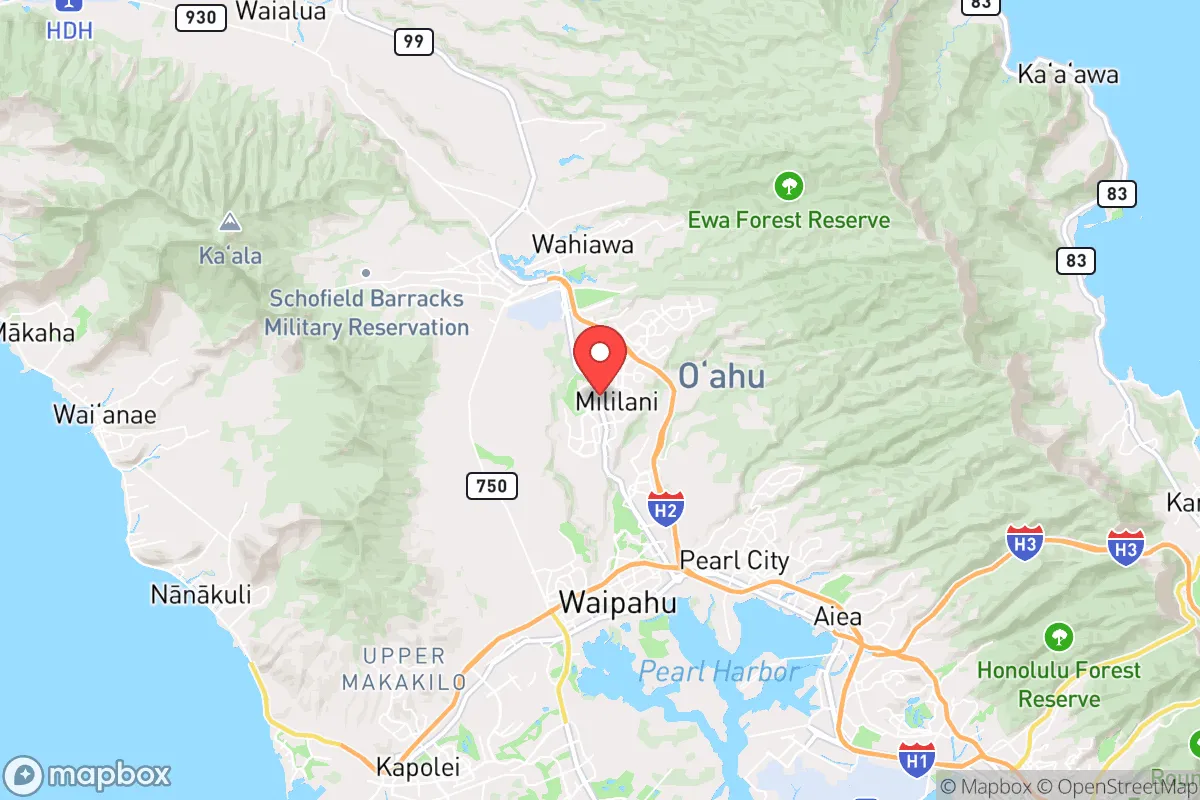
To understand Mililani’s political character, you have to look at its neighbors. Head west to Waipahu or Ewa Beach, and you’ll find similar Democratic dominance, but with a more working-class, pragmatic edge—folks there are less likely to cheer for every new tax or regulation. Drive north to Wahiawa or Haleiwa, and the politics get even more complicated: Wahiawa has a strong military presence that leans conservative, while Haleiwa is a haven for environmental activists and anti-development types. Mililani sits squarely in the middle of this spectrum, but it’s trending hard toward the progressive side. The contrast is sharpest with the North Shore’s rural communities, where property rights and Second Amendment concerns still get a real hearing. In Mililani, those conversations are increasingly drowned out by calls for more government programs and tighter controls on everything from housing to energy.
What this means for residents
For the average Mililani family, the political tilt translates into real-world consequences. You’ll see it in the local school board meetings, where curriculum debates often sideline parental input in favor of top-down mandates. You’ll feel it in the rising property taxes and utility costs, driven by state-level policies that prioritize green energy mandates over affordability. And you’ll notice it in the zoning battles, where new housing projects are approved or denied based on ideological goals rather than what the community actually needs. The one-party rule means that if you’re a conservative or even a moderate who questions the direction, your voice is often dismissed as out of touch. It’s not the Mililani I remember from the 1990s, when the biggest political fights were about traffic and school funding—now it’s about redefining the very nature of community life.
One cultural distinction that stands out is Mililani’s relationship with the military. With Schofield Barracks and Wheeler Army Airfield just up the road, you’d expect a stronger conservative influence, but the base’s active-duty families are often transient and less engaged in local politics. Meanwhile, the long-term civilian residents have embraced a progressive agenda that feels increasingly disconnected from the values of service and self-reliance that the military represents. If the trend continues, I worry that Mililani will become a place where individual rights—whether it’s choosing your child’s education, deciding how to use your property, or simply speaking your mind without fear of social backlash—are slowly eroded by well-intentioned but overreaching government policies. It’s a shift worth watching, and for those of us who remember a freer Mililani, it’s a concerning one.

State Political ClimatePolitical Climate in Hawaii
State Political AnalysisPolitical Environment in the State
Hawaii has been a one-party Democratic stronghold for decades, with Democrats holding supermajorities in both legislative chambers and every statewide office since 2010. The state has not voted Republican in a presidential election since 1984, and its partisan lean is roughly D+28 by Cook PVI. Over the past 10-20 years, the dominant coalition has shifted from a more moderate, union-driven Democratic machine toward a younger, more progressive faction that prioritizes environmental regulation, social justice, and government expansion. This trajectory is concerning for anyone who values limited government, property rights, or personal freedom — the state is moving further left, not moderating.
Urban vs. rural divide
The political map of Hawaii is starkly divided between the dense urban core of Honolulu on Oahu and the more rural, conservative-leaning areas on the neighbor islands. Honolulu County, home to nearly 70% of the state's population, drives the state's deep blue lean — it consistently delivers 65-70% of its vote to Democrats. The city's economy is heavily dependent on tourism, military spending, and government jobs, which creates a voter base that favors big government and generous public sector unions. In contrast, Hilo and Kailua-Kona on the Big Island, Kahului on Maui, and Lihue on Kauai are more mixed. The rural districts of Hawaii County (the Big Island) and Maui County have pockets of Republican and independent voters, especially in agricultural and ranching communities like Waimea and Hawi. However, even these areas have been trending left as mainland transplants and younger residents move in. The only reliably red precincts are in the Leeward side of Oahu (like Ewa Beach and Kapolei) and some parts of Kauai's North Shore, but they are too small to shift statewide outcomes.
Policy environment
Hawaii's policy environment is a textbook case of progressive governance with high costs. The state has the highest combined state and local tax burden in the nation, with a general excise tax (GET) of 4% that applies to nearly all goods and services, plus county surcharges that push it to 4.5% in Honolulu and 4.75% on the Big Island. There is no local property tax on real estate — instead, the state collects property taxes at the county level, which are relatively low for owner-occupied homes but high for investment properties. Income tax rates are progressive, topping out at 11% for individuals earning over $200,000. Education policy is dominated by a single statewide school district — the Hawaii Department of Education — which means parents have almost no local control over curriculum or school choice. Charter schools exist but are heavily regulated. Healthcare is heavily regulated, with the state mandating employer-provided coverage and running a robust Medicaid program. Election laws are relatively restrictive: Hawaii has closed primaries (only registered party members can vote), and while mail-in voting is universal, voter ID requirements are minimal. The state also has some of the strictest gun laws in the country, including a ban on assault weapons, magazine capacity limits, and a requirement for a permit to purchase any firearm. For a conservative-leaning individual, the policy environment feels like a one-size-fits-all government that leaves little room for personal choice or local variation.
Trajectory & freedom
Hawaii is becoming less free by nearly every measure. In 2022, the legislature passed Act 207, which created a "Green Fee" on all visitors and expanded the state's authority to regulate short-term rentals, effectively reducing property rights for homeowners who want to rent out their second home. In 2023, Act 40 was signed into law, which prohibits the sale of flavored tobacco products and e-cigarettes — a clear expansion of government control over personal choice. On the education front, Act 51 (2021) mandated that all public schools teach "social-emotional learning" and culturally responsive curriculum, which many parents view as a vehicle for progressive ideology. Gun rights have been under constant assault: in 2024, the legislature passed a bill requiring a 14-day waiting period for all firearm purchases and expanding the state's "red flag" law to allow family members to petition for temporary gun confiscation without a criminal conviction. On the positive side for freedom, Hawaii has no "right-to-work" law, meaning union membership is effectively mandatory in many government and construction jobs. The state also has a strong homestead exemption that protects up to $30,000 of home equity from creditors, which is a modest property right. But overall, the trajectory is toward more regulation, higher taxes, and less individual autonomy — a trend that accelerated after the COVID-19 pandemic, when Hawaii maintained some of the longest and strictest lockdowns in the nation, including a mandatory 10-day quarantine for all travelers that lasted into 2022.
Civil unrest & political movements
Hawaii has a history of organized protest, mostly from the left. The most visible flashpoint in recent years was the Thirty Meter Telescope (TMT) protests on Mauna Kea from 2015-2019, which drew thousands of Native Hawaiian activists and environmentalists who blocked construction. While framed as indigenous rights, the movement was also a vehicle for anti-development, anti-science sentiment that effectively halted a major scientific project. More recently, the 2023 Maui wildfires sparked protests over government response and land use, with some activists calling for a moratorium on vacation rentals and a ban on non-resident property ownership. On the right, there is a small but vocal Hawaii Republican Party that holds annual conventions and runs candidates, but they rarely win more than 30% of the vote. There is also a fringe sovereignty movement that advocates for Hawaiian independence or re-establishment of the Kingdom of Hawaii, which occasionally surfaces in protests against federal land management. Immigration politics are relatively quiet — Hawaii has a large immigrant population from Asia and the Pacific, but the state is not a major destination for illegal immigration, so sanctuary policies are not a hot-button issue. Election integrity controversies are minimal, as Hawaii's mail-in system has been in place since 2020 with few reported problems. For a new resident, the political climate feels dominated by progressive activism, with conservative voices largely marginalized or self-censoring.
Projection
Over the next 5-10 years, Hawaii will likely continue its leftward drift. Demographic trends are not favorable for conservatives: the state's population is aging, with a median age of 40, and younger residents are more progressive. In-migration from mainland states like California and New York — which accelerated during the pandemic — brings more liberal voters who are comfortable with high taxes and government regulation. The Native Hawaiian population (about 20% of the state) is increasingly politically active and leans left on environmental and land-use issues. The only potential counterbalance is the military community, which makes up about 10% of the population and tends to be more conservative, but they are concentrated on Oahu and have limited political influence. Expect more gun control, higher taxes (possibly a wealth tax or a land value tax), and further restrictions on property rights, especially for short-term rentals. The state's housing crisis will likely lead to more government intervention in the housing market, including rent control and public housing expansion. For someone moving in now, the Hawaii of 2035 will likely be more expensive, more regulated, and less tolerant of conservative viewpoints than it is today.
Bottom line for a new resident: If you value low taxes, gun rights, school choice, or individual autonomy, Hawaii is a challenging place to live. The state's natural beauty and outdoor lifestyle are unmatched, but the political climate is increasingly hostile to conservative values. You will pay a premium in taxes and regulation, and your voice will be a minority in local politics. If you can afford the financial and cultural costs, the trade-off might be worth it for the lifestyle — but go in with eyes open, knowing that the trend lines are not in your favor.
* Values derived from national, state, county, city and local statistics and may differ in a specific area. Last updated: 2026-04-24T00:08:12.000Z
Narrative content on this page is AI-generated and may contain mistakes. Verify any details that matter before acting on them.
ReloMaps may earn a commission from affiliate links at no extra cost to you.

