Photo: Wikipedia
Quality of Life in Bates County
A livable area that tracks near national norms for affordability, walkability, and neighborhood health.
What does Quality of Life tell us?
Quality of Life measures an area by evaluating factors like cost of living, nearby amenities, country club access, airport proximity, socioeconomic signals and neighborhood character. For large states, this is a general average — quality of life can vary dramatically between metro areas, suburbs, and rural communities within the same state.
What does this tell us?
Quality of Life measures an area by evaluating factors like cost of living, nearby amenities, country club access, airport proximity, socioeconomic signals and neighborhood character. For large states, this is a general average — quality of life can vary dramatically between metro areas, suburbs, and rural communities within the same state.
Cost of Living
39% below national average
131%
The Real Cost of Living in Bates County for 2026
| Tier | Individual | Family (4) |
|---|---|---|
| Survival | $12k | $23k |
| Comfortable | $30k | $44k |
| Luxury | $93k+ | $144k+ |
| Elite (Top 5%) | $110k+ | $170k+ |
Quality-of-Life Analysis
Bates County, Missouri, offers a spectrum of quality-of-life options that range from the modest commercial hub of Butler to the quiet, unincorporated crossroads of Amoret and Foster, attracting everyone from commuters seeking affordable acreage to retirees looking for a low-cost, slow-paced lifestyle. With a cost of living index of 61 (well below the national average of 100), a median home value of $154,800, and a median rent of $760, the county provides a distinctly affordable entry point into rural western Missouri. The trade-off is a notably long average commute of 33.8 minutes, reflecting the distance many residents travel to employment centers in the Kansas City metro area or nearby Cass and Vernon counties.
Largest town(s) & population centers
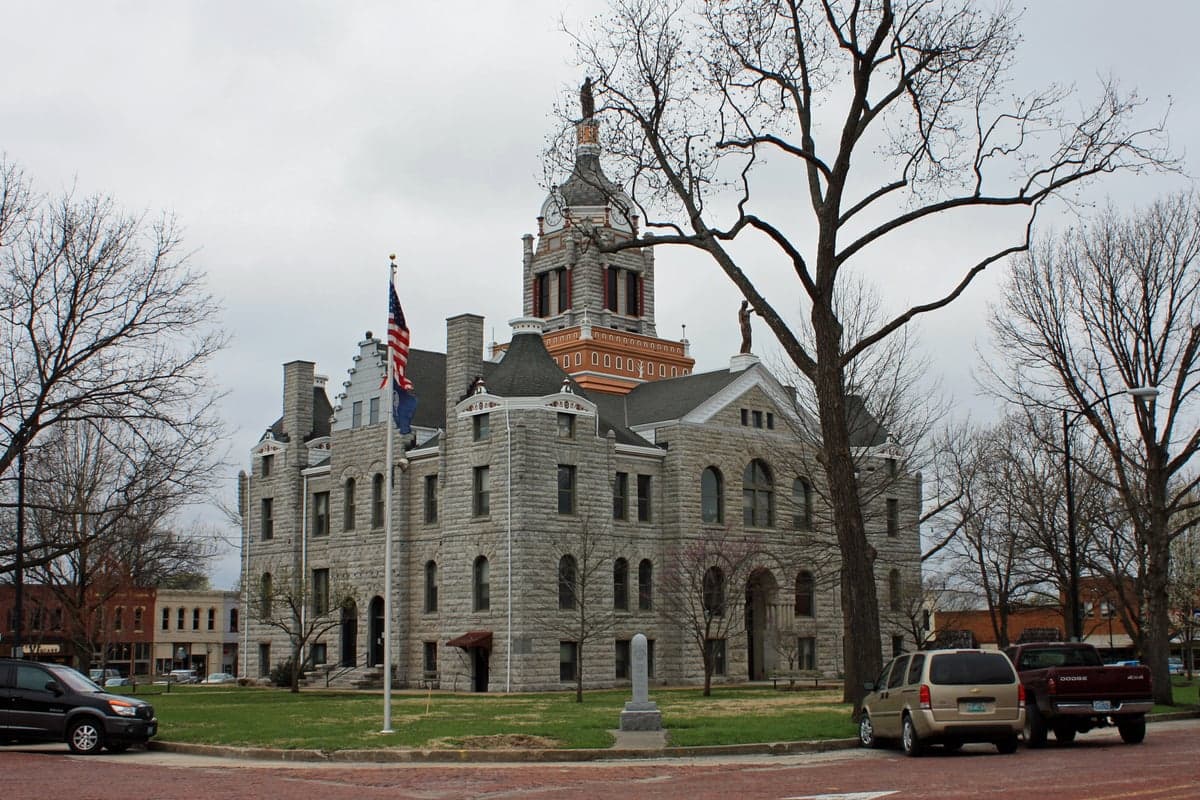
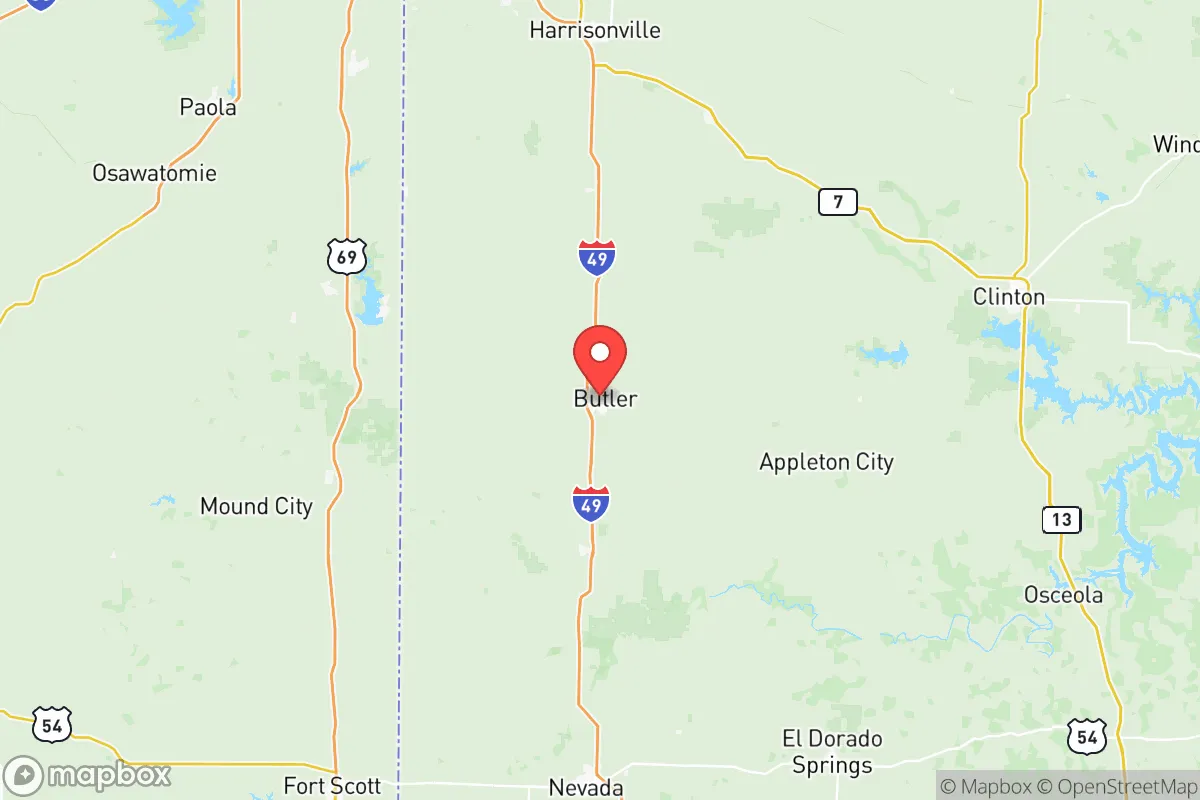
Butler, the county seat and largest town (population roughly 4,200), is the primary population center and the hub for daily errands, government services, and local commerce. Daily life here centers around the historic downtown square, which hosts the county courthouse, a few locally owned restaurants, and essential retailers like a grocery store and hardware store. The town has a strong sense of community, with events like the Bates County Fair and the annual Butler Balloonfest drawing residents from across the county. Housing in Butler is affordable, with many homes under $150,000, and the town offers the most concentrated set of amenities in the county, including a hospital (Bates County Memorial Hospital), a public library, and several parks. For families, the Butler R-V School District is the largest in the county, though many residents commute to jobs in the Kansas City area, a drive of roughly 50–60 minutes via U.S. Route 71.
Smaller towns & rural pockets
Beyond Butler, the county is dotted with smaller communities that offer a quieter, more isolated rural lifestyle. Adrian (population ~1,700) is a notable secondary town with its own school district and a small downtown, but it functions largely as a bedroom community for commuters. Rich Hill (population ~1,400) sits in the southern part of the county and has a more industrial history tied to coal mining, now offering very low home prices—often below $100,000—and a slower pace. Drexel (population ~1,000) straddles the Cass County line and provides a few basic services. The truly rural pockets are found in unincorporated places like Amoret, Foster, and Passaic, where residents rely on gravel roads, well water, and septic systems, and the nearest grocery store may be a 20-minute drive. These areas attract those seeking maximum privacy, land for hobby farming, or a complete escape from suburban noise.
Cost & lifestyle range
The cost of living and lifestyle options in Bates County vary significantly between its population centers and its deep rural areas. At the higher end of the spectrum, Butler offers the most amenities and the highest home values, with median prices around $154,800 and rents averaging $760—still extremely affordable by national standards. Here, residents have access to sidewalks, a hospital, and a wider range of services. At the lower end, Rich Hill and unincorporated areas like Amoret and Foster see home prices frequently below $100,000, with some properties under $50,000. The trade-off in these areas is a near-total lack of public services, limited internet options (often satellite or fixed wireless), and the long commute—often exceeding 40 minutes one way—to reach a full-service grocery store or a job. The county's overall commute average of 33.8 minutes is heavily influenced by these rural residents who drive to Butler, Nevada (in Vernon County), or all the way to the Kansas City suburbs for work.
Bates County is best suited for those who prioritize affordability, space, and a quiet, self-reliant lifestyle over urban convenience and short commutes. Retirees on fixed incomes, remote workers who can tolerate limited broadband, and families willing to drive for employment and shopping will find the most value here. The county's spectrum of options—from the modest town life of Butler to the isolated homesteads of Amoret—means that almost any budget under $200,000 can secure a home, but the trade-off in time and access to amenities is a constant factor in daily life.

Crime in Bates County
Higher crime rates than 58% of comparable U.S. locations.
Violent CrimeViolent Crime Analysis
Property CrimeProperty Crime Analysis
Crime Analysis
Bates County, Missouri, reports a violent crime rate of 420.1 per 100,000 residents and a property crime rate of 1,667.9 per 100,000, placing it above national averages for both categories. These figures, drawn from the most recent FBI Uniform Crime Reporting data, indicate that while the county is not among the most dangerous in the state, residents face elevated risks compared to rural Missouri benchmarks. The county's proximity to the Kansas City metro area, particularly the influence of Jackson County's progressive prosecutorial policies, contributes to crime spillover into communities like Butler, Adrian, and Rich Hill.
Crime in context
Bates County's violent crime rate of 420.1 per 100,000 is roughly 20% higher than the national average of approximately 380 per 100,000 and significantly above the Missouri state average of 490 per 100,000. Property crime in the county, at 1,667.9 per 100,000, exceeds the national rate of about 1,950 per 100,000 but remains below the Missouri state average of 2,200 per 100,000. These numbers place Bates County in a middle tier among Missouri's 114 counties—safer than urban centers like Kansas City or St. Louis but riskier than many rural counties in northern Missouri. The county's crime index is notably higher than neighboring Cass County to the north, which benefits from stronger law enforcement presence and more conservative judicial oversight in the Western District of Missouri.
What residents experience
Residents of Bates County's largest town, Butler (population ~4,200), report property crimes—particularly theft from vehicles and burglary—as the most common public safety concern. The city's location along U.S. Highway 71, a major north-south corridor, makes it a transit point for criminals moving between Kansas City and points south. Adrian, a smaller community of roughly 1,700, experiences lower violent crime rates but has seen a rise in drug-related offenses tied to methamphetamine trafficking from the Joplin area. Rich Hill, with fewer than 1,400 residents, reports the county's highest per-capita property crime rate, driven largely by thefts from outbuildings and farm equipment. The county's rural nature means response times from the Bates County Sheriff's Office can exceed 20 minutes in outlying areas, leaving residents reliant on neighborhood watch programs and personal security measures. The 27th Judicial Circuit, which covers Bates and Vernon counties, has maintained a moderately conservative sentencing record, though some residents express concern that progressive diversion programs in nearby Jackson County encourage repeat offenders to cross county lines.
Neighborhood-level variation
Crime in Bates County is not evenly distributed. The unincorporated areas around Drexel and Amsterdam report violent crime rates roughly half the county average, benefiting from tighter-knit communities and fewer transient populations. Conversely, the southern portion of the county near the Vernon County line, including parts of Rockville, sees elevated property crime due to its proximity to the Truman Lake recreational area, which attracts seasonal visitors and opportunistic thieves. The county's most significant safety concern remains the lack of a dedicated drug task force; the Bates County Sheriff's Office relies on the Missouri State Highway Patrol for major narcotics investigations, creating enforcement gaps that local prosecutors acknowledge. For families considering relocation, the safest housing options are in the northern half of the county, particularly within the Adrian and Drexel school districts, where community policing initiatives have shown measurable reductions in both violent and property crime since 2022.
* Values derived from national, state, county, city and local statistics and may differ in a specific area. Last updated: 2026-10-18T11:28:49.000Z
Narrative content on this page is AI-generated and may contain mistakes. Verify any details that matter before acting on them.
ReloMaps may earn a commission from affiliate links at no extra cost to you.

