Photo: Wikipedia
Political ClimatePolitical Climate in Greene County
Showing district-level results — no local-only data available.
Local Political AnalysisPolitical Analysis of Greene County
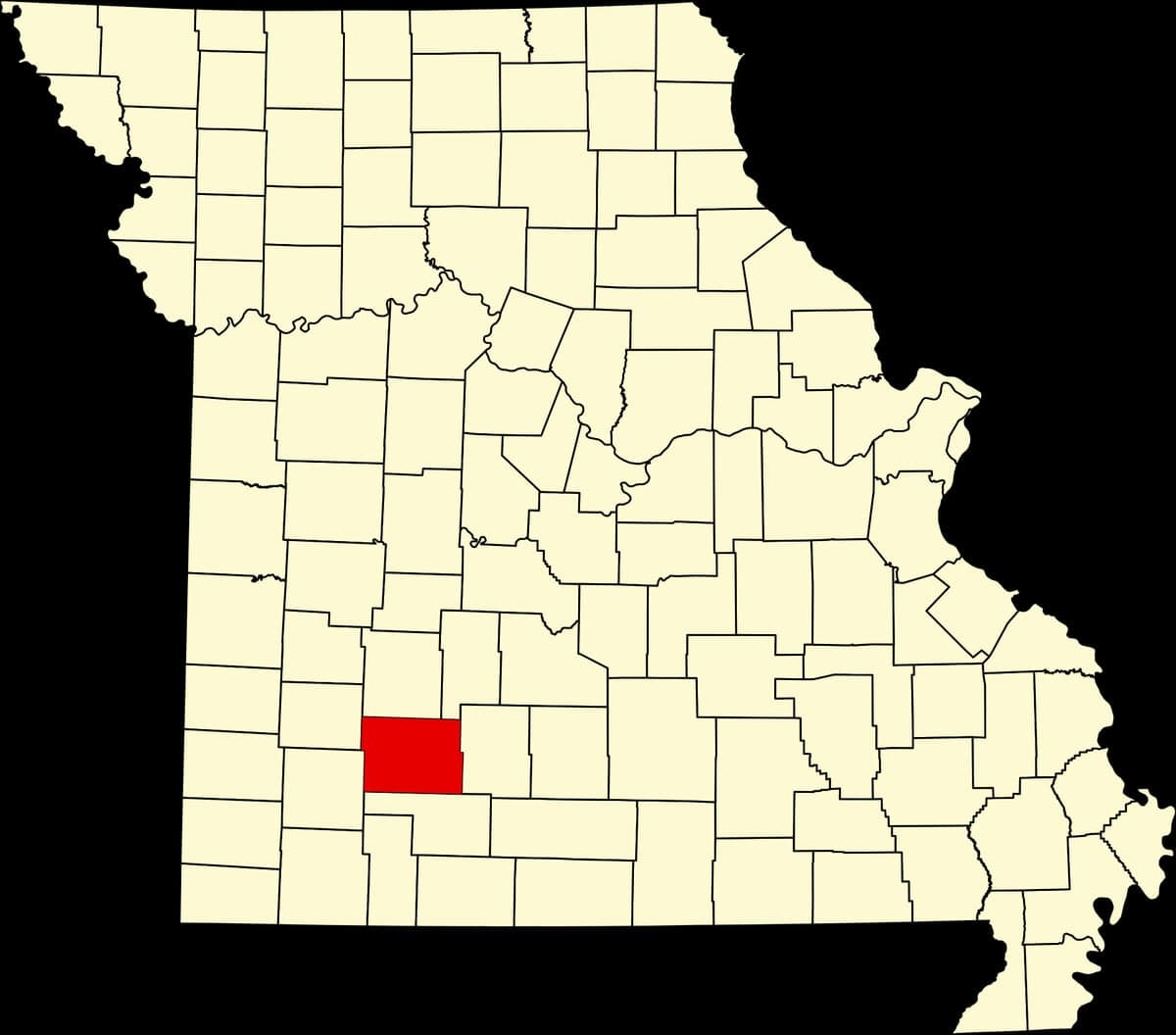
Greene County, anchored by Springfield, is a solidly conservative stronghold with a Cook Partisan Voting Index of R+21, making it significantly more Republican than Missouri as a whole, which sits at R+8. This isn't a recent shift; the county has been reliably red for decades, though the margins have widened in the last two presidential cycles. The real story isn't just the overall lean, but the sharp internal divide between the urban core and the surrounding rural areas, a split that defines local politics more than any statewide trend.
How it compares
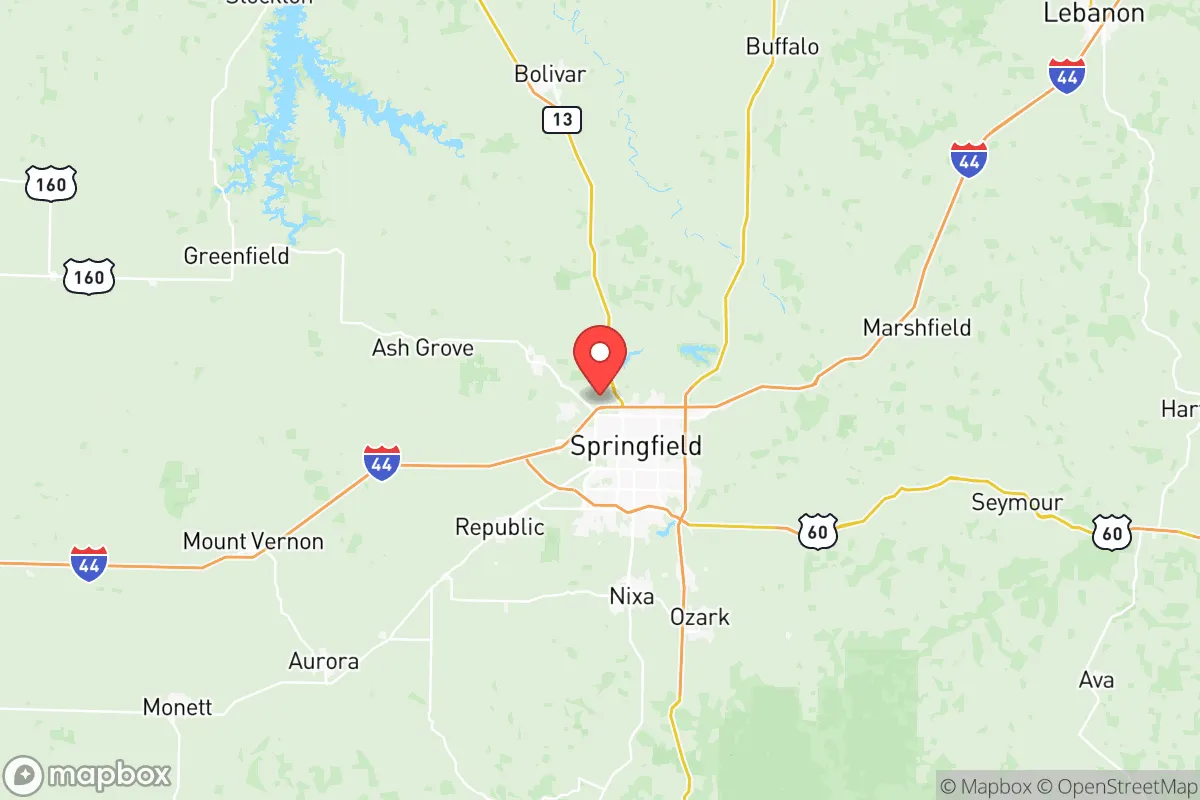
While Missouri has become a reliably red state, Greene County is in a different league entirely. The R+21 rating means a Republican candidate can expect to win by roughly 21 points here, compared to the statewide 8-point margin. This difference is driven by the county's rural and suburban precincts. Towns like Republic, Nixa, and Ozark routinely deliver 70-80% of their votes to GOP candidates. In contrast, the city of Springfield itself is far more competitive. Precincts near Missouri State University and the Downtown area often lean Democratic, sometimes by double digits, while the Rountree and Midtown neighborhoods are genuine swing areas that can decide local races. The county's trajectory is toward even deeper red, as the fastest-growing areas are the conservative suburbs to the south and west, not the more liberal urban core.
What this means for residents
For conservative residents, Greene County feels like home politically. Local offices—from the county commission to the sheriff and prosecuting attorney—are almost uniformly held by Republicans. Policy debates tend to center on growth management, school funding, and infrastructure, with a strong emphasis on limited government and low taxes. For liberal residents, the reality is more nuanced. While they are a clear minority countywide, they hold real influence in Springfield's city council races and school board elections. The Springfield City Council has a mix of moderate Republicans and Democrats, and issues like LGBTQ+ nondiscrimination ordinances and affordable housing have seen genuine debate. However, statewide ballot measures—such as those on abortion rights or marijuana legalization—often pass in Springfield's urban precincts even as they fail in the county's rural areas, creating a persistent cultural tension.
The most distinctive cultural and policy distinction in Greene County is its blend of conservative governance with a pragmatic, "live and let live" attitude, especially in Springfield. Unlike some deeply red rural counties, there's a visible and active progressive community centered around Drury University and the Commercial Street district. The county's politics are also heavily shaped by the presence of Evangelical Christian institutions, including Baptist Bible College and James River Church, which influence social policy debates. At the same time, the area's growing tech and healthcare sectors—anchored by Mercy Hospital and CoxHealth—bring in a more moderate, business-oriented Republicanism. Looking ahead, the county will likely remain R+21 or even redder, but the internal urban-rural divide will continue to make local elections in Springfield the most interesting and consequential races to watch.

State Political ClimatePolitical Climate in Missouri
State Political AnalysisPolitical Environment in the State
Missouri is a solidly Republican state with a Cook PVI of R+8, but that number masks a deeply divided political landscape that has shifted rightward over the past two decades. The state was a classic bellwether for much of the 20th century, but since 2000, it has moved from a purple swing state to a reliably red one, driven by the exodus of rural and suburban voters from the Democratic coalition and the collapse of the party’s once-dominant position in the Bootheel and the Ozarks. Today, the GOP holds supermajorities in both chambers of the legislature, controls the governorship, and has a lock on all but one of the state’s congressional seats, though the Kansas City and St. Louis metro areas remain Democratic strongholds that keep the state from being as uniformly conservative as its neighbors to the south and west.
Urban vs. rural divide
The political map of Missouri is a tale of two cities and a whole lot of country. The St. Louis metro area, including St. Louis City and St. Louis County, is the engine of Democratic votes in the state, with the city itself consistently delivering 80%+ margins for Democratic candidates. Kansas City, along with its inner-ring suburbs like Independence and Raytown, is similarly blue, though Jackson County as a whole is more competitive than St. Louis County. The real action is in the fast-growing suburban counties that have been trending rightward: St. Charles County, just west of St. Louis, is now a GOP stronghold, while Jefferson County and Franklin County have also moved decisively red. The rural areas are overwhelmingly Republican—places like the Ozarks (Springfield, Branson, and the Lake of the Ozarks region) and the Bootheel (Cape Girardeau, Sikeston) are deep red, with some precincts hitting 80% GOP. The one notable exception is Boone County, home to Columbia and the University of Missouri, which has become a blue island in a sea of red, driven by the student and faculty population. The divide is stark: drive 20 minutes outside of any major city, and you’re in Trump country.
Policy environment
Missouri’s policy environment is defined by low taxes, limited regulation, and a strong conservative tilt on social issues. The state has a flat income tax rate of 4.8% (with a phase-down to 4.5% by 2027), a low corporate tax rate, and no estate tax. Property taxes are among the lowest in the nation, averaging around 0.8% of assessed value. The regulatory posture is business-friendly, with a right-to-work law that was passed in 2017 but repealed by voters in 2018—a rare loss for the GOP on labor policy. On education, Missouri has a robust charter school system in St. Louis and Kansas City, and a growing school choice movement, including a tax-credit scholarship program for private school tuition. Healthcare policy is mixed: the state expanded Medicaid under the Affordable Care Act via a 2020 ballot initiative, but the legislature has since imposed work requirements and other restrictions. Election laws have tightened in recent years, with a voter ID requirement passed in 2022 and restrictions on absentee ballot drop boxes. The state also has a constitutional amendment protecting the right to bear arms, passed in 2014, which has been used to challenge federal gun laws.
Recent policy direction
The last five years have seen Missouri move decisively in a conservative direction on nearly every front. In 2021, the legislature passed a “Second Amendment Preservation Act” (SAPA) that purports to nullify federal gun laws, though it has been partially blocked by federal courts. On parental rights, the 2022 “Save Adolescents from Experimentation” (SAFE) Act bans gender-affirming care for minors, and a 2023 law restricts transgender athletes from competing in school sports matching their gender identity. The state has also passed a near-total abortion ban, with no exceptions for rape or incest, following the Dobbs decision in 2022. On speech and privacy, Missouri has enacted a law requiring age verification for adult websites and has pushed back against federal surveillance programs. Property rights are strong, with no statewide zoning mandates and a “stand your ground” self-defense law. Tax policy has been trending downward, with the flat income tax rate being phased down and a 2023 law eliminating the state’s tax on Social Security benefits. Voting access has been restricted: the 2022 voter ID law is one of the stricter in the Midwest, and the state has purged inactive voters from rolls. The overall direction is toward maximizing individual liberty on guns, property, and speech, while restricting it on abortion, transgender rights, and voting.
Civil unrest & political movements
Missouri has a history of political flashpoints, most notably the 2014 Ferguson protests after the shooting of Michael Brown, which sparked a national movement and led to the creation of the “Ferguson Commission” and some police reforms, though many activists say progress has stalled. More recently, the state has seen organized protests from both sides: pro-choice rallies in Jefferson City and St. Louis after the abortion ban, and pro-gun rallies in support of the Second Amendment Preservation Act. Immigration politics are less heated than in border states, but there have been local controversies, such as the 2023 push by St. Louis County to become a “sanctuary” jurisdiction, which was blocked by the state legislature. Election integrity has been a major issue since 2020, with the GOP-led legislature passing the voter ID law and creating a new election security unit within the Secretary of State’s office. There is a small but vocal “Show-Me Nullification” movement that advocates for state sovereignty, though it hasn’t gained mainstream traction. A new resident would notice the strong presence of political signage and bumper stickers, especially in rural areas, and the occasional protest at the state capitol, but the state is generally not a hotbed of civil unrest compared to coastal states.
Projection
Over the next 5-10 years, Missouri is likely to become even more Republican, but the margin of that shift will depend on demographic trends. The state is growing slowly, with most growth happening in the suburban counties around St. Louis and Kansas City—places like St. Charles, Wentzville, and Lee’s Summit—which are already red and getting redder. The rural areas are losing population, which will reduce the GOP’s raw vote share but not its electoral dominance, because those areas are so heavily Republican. The biggest wildcard is the Kansas City and St. Louis suburbs: if they continue to trend right, the state could become as red as Arkansas or Oklahoma. However, if the urban cores grow faster and the suburbs moderate, the state could become more competitive. The Democratic Party’s best hope is to hold onto Boone County and the urban cores while flipping some suburban seats, but that’s a long shot given the current trajectory. A new resident moving in now should expect a state that is solidly conservative for the foreseeable future, with the GOP in firm control of policy, but with enough urban and suburban diversity to keep things interesting.
For a new resident, the bottom line is that Missouri offers a low-tax, business-friendly environment with strong protections for gun rights and property owners, but with significant restrictions on abortion and transgender rights. If you’re conservative, you’ll find a state that aligns with your values on most issues, with a government that is actively pushing in your direction. If you’re liberal, you’ll find vibrant communities in St. Louis, Kansas City, and Columbia where you can live comfortably, but you’ll be outvoted on state policy and may find the cultural climate in rural areas challenging. The state is not a political battleground in the way that Arizona or Georgia are—it’s a settled red state, and the trajectory is toward more of the same. Plan accordingly.
* Values derived from national, state, county, city and local statistics and may differ in a specific area. Last updated: 2026-06-12T17:40:25.000Z
Narrative content on this page is AI-generated and may contain mistakes. Verify any details that matter before acting on them.
ReloMaps may earn a commission from affiliate links at no extra cost to you.

