
Photo by Mike Gattorna on Unsplash
Political ClimatePolitical Climate in St Louis City County
Showing district-level results — no local-only data available.
Local Political AnalysisPolitical Analysis of St Louis City County
Look, I’
Look, I’ve lived here long enough to watch St. Louis City County go from a place with a mix of viewpoints to what is now one of the most solidly Democratic strongholds in the entire Midwest. The Cook PVI sits at D+29, which is a staggering 37 points more liberal than the rest of Missouri, which clocks in at R+8. That gap isn’t just a number—it means that if you’re a conservative or even a moderate who values limited government, you are now living in a political island. The shift has been steady over the last two decades, but it really accelerated after 2020, with the city and inner-ring suburbs moving hard left on everything from policing to taxes.
How it compares
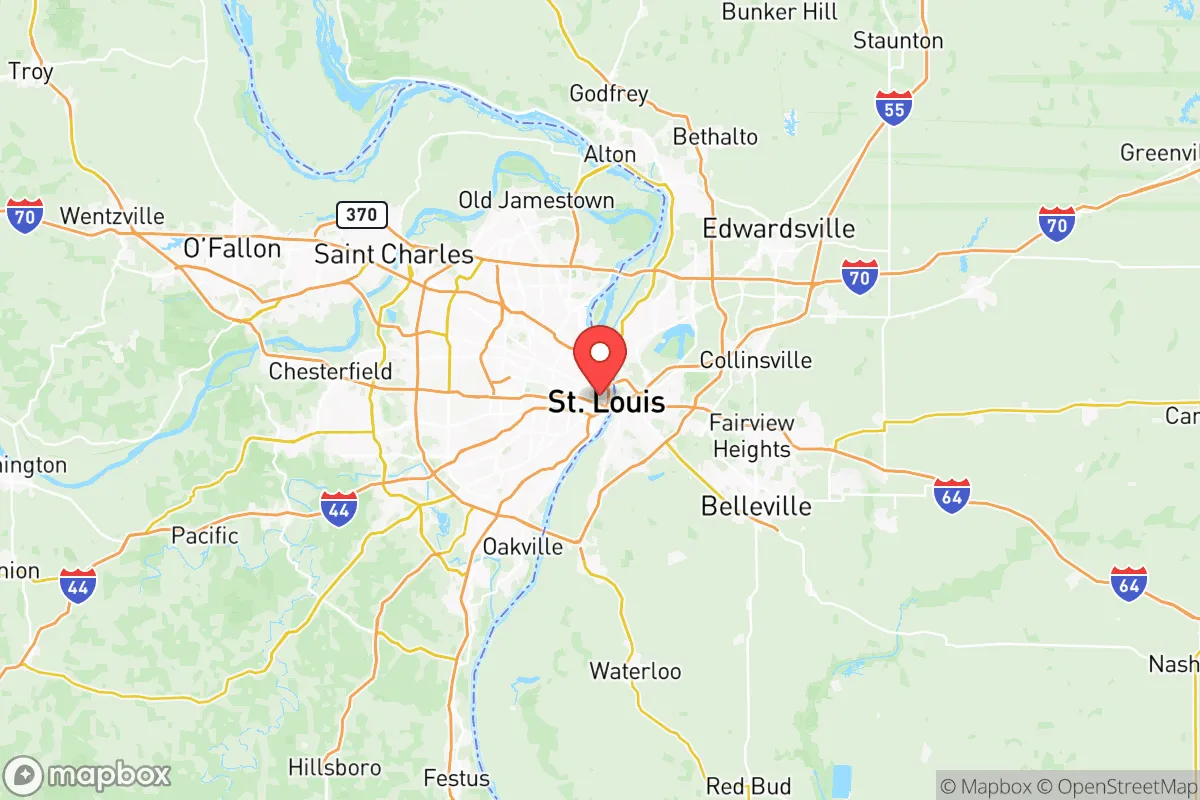
To understand the divide, you have to look at the map. The core of the county—places like Clayton, University City, and Richmond Heights—vote like mini San Franciscos, with precincts regularly hitting 80-85% for Democratic candidates. These are the areas where you see the most aggressive pushes for progressive policies, like defunding police initiatives and massive property tax hikes for social programs. Meanwhile, the outer edges of the county tell a different story. Head out to Affton, Oakville, or parts of south St. Louis County near Mehlville, and you’ll find precincts that still lean red or are competitive swing areas. These communities have historically been working-class and more skeptical of government overreach, but they are being squeezed by the county’s overall leftward drift. The state of Missouri, by contrast, has been moving in the opposite direction—passing right-to-work laws, cutting income taxes, and pushing back on federal mandates. So if you live in the county, you’re essentially under a different set of rules than the rest of the state, which creates constant friction over things like gun rights, school curriculum, and local business regulations.
What this means for residents
For a conservative or libertarian-leaning resident, the practical person, this political climate means you are constantly fighting an uphill battle against local government overreach. The county council and city boards have become increasingly comfortable with mandates and restrictions that would never fly in the rest of Missouri. You’re seeing it in the push for stricter business licensing, higher minimum wages that hurt small shops, and zoning laws that make it harder to start a home-based business. The schools in the blue strongholds are also adopting curricula that many parents find intrusive, with a heavy focus on social justice themes that crowd out basics like math and vocational training. On the flip side, the more conservative pockets like Affton and Oakville still have a fighting chance to elect local officials who push back, but it’s getting harder every cycle as the county’s population shifts and younger, more progressive voters move in from the city core.
The cultural and policy distinctions are stark. In the rest of Missouri, you can-do Missouri, you can still buy a gun without a waiting period and run a business without a dozen permits. In St. Louis City County, you’re dealing with a patchwork of city-level ordinances that feel like they were written by people who don’t trust you to make your own decisions. The property taxes are also noticeably higher here than in St. Charles or Jefferson County, which is a direct result of the progressive tax-and-spend approach. If you value personal freedom and want to be left alone, the county is becoming a tough place to call home unless you’re willing to get involved in local politics just to keep the government off your back. Long-term, I see the divide only widening, with the county doubling down on its blue identity while the rest of Missouri continues to chart a more independent, freedom-oriented path.

State Political ClimatePolitical Climate in Missouri
State Political AnalysisPolitical Environment in the State
Missouri has long been a reliably Republican state at the federal level, with a Cook PVI of R+8, but its political climate is far from monolithic. Over the past 10-20 years, the state has shifted noticeably rightward in rural and suburban areas, even as its two major metros—St. Louis and a few college towns—have become more Democratic. The result is a state that feels like two different countries politically, with the outcome of which is a state government that has become increasingly conservative on taxes, guns, and cultural issues, while local control in the cities pushes back. For a conservative-leaning individual or family looking to relocate, the key question is whether you want to live in the red part of the map or the blue part, because the difference is stark.
Urban vs. rural divide
The political map of Missouri is a textbook case of the urban-rural split. The state's two largest metros—St. Louis and St. Louis—are the Democratic strongholds. St. Louis City and County, along with Kansas City (Jackson County), consistently vote blue by wide margins. In 2020, St. Louis City went 84% for Biden, while Jackson County went 60% for Biden. These areas are home to the state's most progressive policies, including local sanctuary city ordinances, and high taxes. In contrast, the rest of the state is deeply red. The rural counties along the Mississippi River, the Ozarks, and the northern plains regularly vote 70-80% Republican. A notable example is Christian County (suburban Springfield), which voted 76% for Trump in 2020, and St. Charles County (suburban St. Louis), which has shifted from a swing county to a solidly Republican one, voting 58% for Trump. The Lake of the Ozarks area (Camden, Miller, Morgan counties) is a conservative stronghold. The Bootheel region (Dunklin, Pemiscot) is also reliably red, though with lower turnout. The key Democratic holdovers in local races. The divide is so sharp that the state legislature is dominated by rural Republicans who often view St. Louis and Kansas City with suspicion, leading to constant preemption battles over local ordinances.
Policy environment
Missouri's state-level policy environment is decidedly conservative, for now, very friendly to conservative priorities. The state has a flat income tax rate of 4.95% (as of 2025), and the legislature has been gradually reducing it with triggers tied to revenue growth. There is no state property tax on vehicles, and property taxes on real estate are among the lowest in the nation (average effective rate around 0.8%). The state is a "right-to-work" state (though voters repealed it in 2018, the legislature has since passed other union restrictions). On education, Missouri has a robust charter schools in Kansas City and St. Louis, and a robust school choice program of school choice programs, including tax-credit scholarships and open enrollment. The state has a "Second Amendment Preservation Act" (SAPA) that purports to nullify federal gun laws, though it has been partially struck down in court. On healthcare, Missouri did not expand Medicaid until 2021, when voters approved it via ballot initiative, overriding years after most states. The state has some of the most restrictive abortion laws in the country, with a near-total ban in effect (no exceptions for rape or incest, only medical emergency). Election laws have been tightened: voter ID is now requiring photo ID to vote, and banning ballot drop boxes. The state also has a "Critical Race Theory" ban in public schools (HB 952), and a "Save Adolescents from Experimentation" (SAFE) Act banning gender transition procedures for minors. For a conservative, the policy environment is largely aligned with their values, though the constant preemption battles with St. Louis and Kansas City create a source of friction.
Trajectory & freedom
Missouri has been on a trajectory of expanding personal freedom in many areas, but contracting in others. On the positive side for conservatives, the state has consistently expanded gun rights: the 2016 "Constitutional Carry" law allowed permitless concealed carry, and the 2021 Second Amendment Preservation Act (SAPA) was an attempt to nullify federal gun control. The state also passed a "Parental Bill of Rights" in 2022 (HB 2414), giving parents more control over their children's education and medical decisions. Property rights were strengthened with the 2014 "Right to Farm" constitutional amendment, protecting agricultural practices from nuisance lawsuits. On the negative side, the state has seen an erosion of local control: the legislature frequently preempts local ordinances on minimum wage, paid leave, plastic bags, and even police funding (HB 1602, the "police funding" bill that threatened to withhold state funds from cities that defund police). This can feel like government overreach from the state level, even if the policies themselves are conservative. The biggest freedom concern for many is the state's high violent crime rate in St. Louis and Kansas City, which has led to calls for more state intervention in local policing. The 2020 protests in St. Louis and Kansas City were large and sometimes violent, leading to a "law and order" backlash that helped Republicans win statewide races. Overall, Missouri is becoming more conservative on cultural issues, but the state government's willingness to override local decisions is a double-edged sword for those who value localism.
Civil unrest & political movements
Missouri has a history of civil unrest, most notably the 2014 Ferguson protests after the shooting of Michael Brown, which sparked nationwide protests and the "Black Lives Matter" movement. In 2020, St. Louis and Kansas City saw significant protests and some property damage, leading to a strong "law and order" response from the Republican governor and legislature. On the right, there is an active "constitutional sheriff" movement in rural counties, and some counties have declared themselves "Second Amendment sanctuaries." Immigration politics are less heated than in border states, but there have been controversies over sanctuary city policies in St. Louis and Kansas City, with the state legislature threatening to withhold funding. Election integrity has been a flashpoint: after the 2020 election, Missouri Republicans passed voter ID laws and banned private funding of election administration (which was used in some states). There is no serious secession movement for secession, but there is a strong "Show-Me State" independence streak. A new resident would notice the stark political signage, the prevalence of "Don't Tread on Me" flags in rural areas, and the occasional protest in the cities. The political movements are largely channeled through the state legislature, where the Republican supermajority often pushes bills that are then veto-proof margins, leading to a sense of constant cultural warfare.
Projection
Over the next 5-10 years, Missouri is likely to become even more Republican at the state level, but the urban areas will continue to become more Democratic. The in-migration pattern is interesting: people moving to Missouri from blue states (Illinois, California) tend to settle in the suburbs of St. Louis and Kansas City, or in fast-growing areas like Springfield and Branson. These newcomers are often moderate or conservative, but not always. The rural population is aging and shrinking, while the state is gaining population overall, the growth is concentrated in the red suburbs and exurbs. The state legislature will likely continue to push conservative policies on education, guns, and gun rights, and abortion, and may even pass a school voucher program. The biggest wild card is the state's budget: if income tax cuts continue, services may be strained, but Missouri's low cost of living is already low. The Democratic strongholds will likely become more isolated, and the state may see more preemption battles over local control. For a conservative moving in 2035, expect a state that is solidly red outside of St. Louis and Kansas City, Kansas City, and Columbia, with a government that is actively conservative on most issues, but with a persistent tension between state and local authority.
Bottom line for a new resident: If you choose to live in the suburbs of St. Louis or Kansas City (like St. Charles, O'Fallon, Lee's Summit, or Liberty), you'll get a conservative-friendly environment with good schools and low taxes, but you'll be a short drive from a blue city with all its amenities and problems. If you choose a progressive politics. If you choose a rural area like Springfield, Joplin, or the Lake of the Ozarks, you'll be in a deeply red area with a slower pace of life. The state government will generally leave you alone on guns, taxes, and school choice, but you'll have to accept that the state legislature sometimes overrides local decisions. For a conservative individual or family, Missouri offers a strong alignment with your values, but you'll want to choose your county carefully—the political climate varies dramatically from one side of the state to the other.
* Values derived from national, state, county, city and local statistics and may differ in a specific area. Last updated: 2026-05-14T19:49:17.000Z
Narrative content on this page is AI-generated and may contain mistakes. Verify any details that matter before acting on them.
ReloMaps may earn a commission from affiliate links at no extra cost to you.

