
Photo by Mike Gattorna on Unsplash
Quality of Life in St Louis City County
A livable area that tracks near national norms for affordability, walkability, and neighborhood health.
What does Quality of Life tell us?
Quality of Life measures an area by evaluating factors like cost of living, nearby amenities, country club access, airport proximity, socioeconomic signals and neighborhood character. For large states, this is a general average — quality of life can vary dramatically between metro areas, suburbs, and rural communities within the same state.
What does this tell us?
Quality of Life measures an area by evaluating factors like cost of living, nearby amenities, country club access, airport proximity, socioeconomic signals and neighborhood character. For large states, this is a general average — quality of life can vary dramatically between metro areas, suburbs, and rural communities within the same state.
Cost of Living
23% below national average
105%
The Real Cost of Living in St Louis City County for 2026
| Tier | Individual | Family (4) |
|---|---|---|
| Survival | $16k | $29k |
| Comfortable | $36k | $53k |
| Luxury | $100k+ | $155k+ |
| Elite (Top 5%) | $132k+ | $204k+ |
Quality-of-Life Analysis
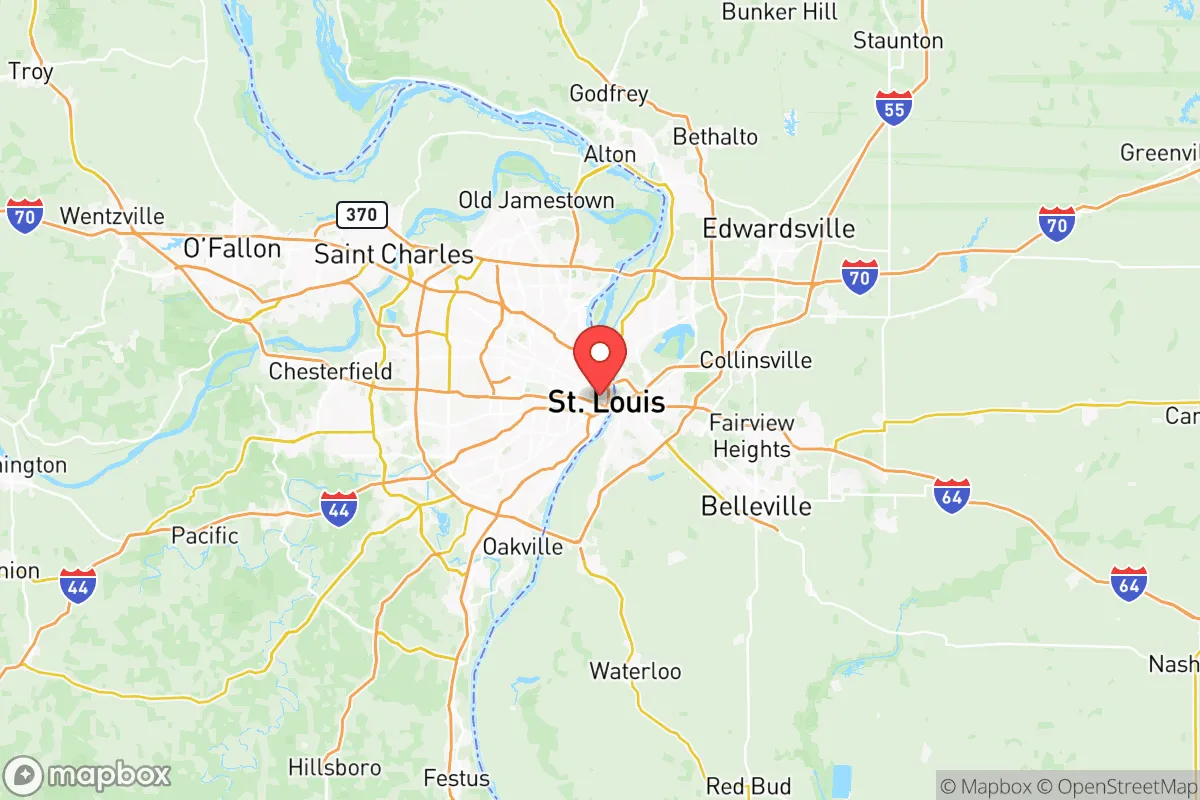
St. Louis City County, Missouri, offers a broad spectrum of quality-of-life options, from the dense, walkable urban core of St. Louis City to quiet, semi-rural pockets in its northern and southern reaches. The county’s character shifts character shifts character shifts dramatically within a 15-minute drive: young professionals and creatives cluster in the city’s central corridor, families with school-age children gravitate toward inner-ring suburbs like Clayton and University City, while those seeking more space and lower property taxes often settle in unincorporated areas near the county’s rural fringe. With a cost-of-living index of 77 (well below the US average of 100), the county provides a wide affordability range, though lifestyle and amenities vary significantly by neighborhood.
Largest town(s) & population centers
The county’s primary population center is St. Louis City itself, an independent city that functions as the urban core. Daily life here is defined by historic brick neighborhoods—such as the Central West End, Soulard, and Tower Grove South—where residents walk to coffee shops, farmers markets, and cultural institutions like the St. Louis Art Museum and the Missouri Botanical Garden. The city also contains major employment hubs, including the Cortex innovation district and the Washington University Medical Center. Clayton, the county seat, serves as a secondary commercial and legal hub, with a dense skyline of high-rise offices and a highly rated public school district that draws families willing to pay a premium for housing. University City and Richmond Heights offer a more suburban feel within the urban fabric, with tree-lined streets, local shopping districts like the Delmar Loop, and easy access to Interstate 64. These areas see average commute times of roughly 22 minutes, aligning with the countywide average of 22.2 minutes.
Smaller towns & rural pockets
Beyond the urban core, the county contains several smaller municipalities and unincorporated areas that feel distinctly suburban or even rural. St. Ann and Bridgeton, near Lambert-St. Louis International Airport, offer older, affordable housing stock and a quieter pace of life. Ferguson and Florissant in the north are larger suburbs but retain a short drive from more sparsely populated areas like Black Jack and Spanish Lake, where lots are larger and commercial development is sparse. In the far south, Oakville and Mehlville border the Meramec River and provide access to parks and green space, with some homes sitting on acreage. Unincorporated areas such as Lemay and Affton lack formal town governments but offer lower property tax rates and a mix of older ranch homes and newer subdivisions. These pockets are where residents often where residents find the county’s lowest home prices—median home value countywide is $185,100—and the most space per dollar.
Cost & lifestyle range
The cost-of-living spread across St. Louis City County is substantial. At the high end, Clayton and Ladue feature median home values exceed $400,000, with rents often above $1,500 for a two-bedroom. These areas offer top-tier public schools, high-end retail, and proximity to corporate headquarters. At the low end, neighborhoods in north St. Louis City (like the West End or Jeff-Vander-Lou) and inner-ring suburbs such as Jennings or Wellston see median home values below $100,000 and rents as low as $700 for a one-bedroom. The countywide median rent of $978 is achievable in many areas, but the quality of housing stock and neighborhood amenities varies widely. University City and Webster Groves occupy a middle ground, with home values around $250,000–$350,000, strong schools, and walkable commercial districts. The average commute of 22.2 minutes holds true across most of the county, though residents in far north or south areas may see 30–30-minute drives to downtown St. Louis.
This county best suits those who value choice and trade-offs. Urbanites who want walkability, cultural density, and a lower cost of entry will find the city’s historic neighborhoods appealing. Families seeking strong public schools and a suburban feel will gravitate toward Clayton, Ladue, or Webster Groves. And those who prioritize space, quiet, and lower taxes—while still being within 25 minutes of a major city—will find their job—can find value in the county’s smaller towns and unincorporated areas. The key is knowing which trade-offs matter most: school quality, commute time, school quality, housing size, or neighborhood character. St. Louis City County delivers on all of them, but rarely in the same zip code.

Crime in St Louis City County
Higher crime rates than 57% of comparable U.S. locations.
Violent CrimeViolent Crime Analysis
Property CrimeProperty Crime Analysis
Crime Analysis
St. Louis City County, Missouri, reports a violent crime rate of 413.1 per 100,000 residents and a property crime rate of 1,644.4 per 100,000, placing it among the most dangerous urban counties in the Midwest. These figures significantly exceed both the Missouri state averages and national benchmarks, driven largely by concentrated crime in the city of St. Louis and its immediate inner-ring suburbs. While some municipalities within the county maintain relatively lower crime rates, the overall safety picture is one of serious concern, particularly for property-related offenses and violent incidents involving firearms.
Crime in context
St. Louis City County's violent crime rate of 413.1 per 100,000 is roughly 2.5 times the national average of approximately 170 per 100,000, and well above the Missouri state average of about 280 per 100,000. Property crime in the county, at 1,644.4 per 100,000, is also elevated — roughly 1.5 times the national rate. These numbers are heavily influenced by the city of St. Louis itself, which consistently ranks among the highest-crime cities in the United States. However, crime is not uniform across the county. Suburbs such as Clayton and Webster Groves report violent crime rates closer to 200–300 per 100,000, while municipalities like University City and Jennings experience rates that approach or exceed the county average. The property crime rate is particularly high in areas with dense commercial corridors, including parts of Richmond Heights and Brentwood, where retail theft and vehicle break-ins are common.
What residents experience
Daily life for residents in St. Louis City County is shaped by a stark contrast between neighborhoods. In safer enclaves like Clayton and Kirkwood, residents report feeling secure walking their dogs at night and leaving garage doors open during the day. In higher-crime areas such as North St. Louis City and Wellston, gunfire is a frequent occurrence, and property crimes of opportunity — carjackings, package thefts, and burglaries — are routine. The county's property crime problem is pervasive: vehicle thefts and break-ins are the most common complaints, often targeting unattended cars in driveways or parking lots. Residents in all parts of the county are advised to lock vehicles, remove valuables, and install security cameras. Violent crime, while less common in the suburbs, spikes in the city core and along major transit corridors. The presence of progressive prosecutors in the city of St. Louis has been a point of contention, with critics arguing that lenient sentencing and reduced enforcement for repeat offenders back onto the streets, contributing to the cycle of violence. In contrast, some suburban municipalities maintain stricter policing and prosecution policies, which correlates with lower crime rates in those jurisdictions.
Neighborhood-level variation is extreme variation is the defining feature of safety in St. Louis City County. The safest areas are concentrated in the western and southwestern suburbs: — Ladue, Frontenac, and Des Peres consistently report violent crime rates below 100 per 100,000, comparable to the safest small towns in the state. Meanwhile, neighborhoods in the city's north side and parts of Pine Lawn and Berkeley experience violent crime rates exceeding 1,000 per 100,000 — more than ten times the county average. Property crime is more evenly distributed but still clusters in areas with high foot traffic and commercial activity. For anyone considering a move to St. Louis City County, choosing the specific municipality is the single most important safety decision. A move to Clayton or Webster Groves offers a dramatically different safety experience than a move to Jennings or Wellston, even though all are within the same county. Prospective residents should research block-level crime data and visit neighborhoods at different times of day before committing to a location.
* Values derived from national, state, county, city and local statistics and may differ in a specific area. Last updated: 2026-05-14T19:49:17.000Z
Narrative content on this page is AI-generated and may contain mistakes. Verify any details that matter before acting on them.
ReloMaps may earn a commission from affiliate links at no extra cost to you.

