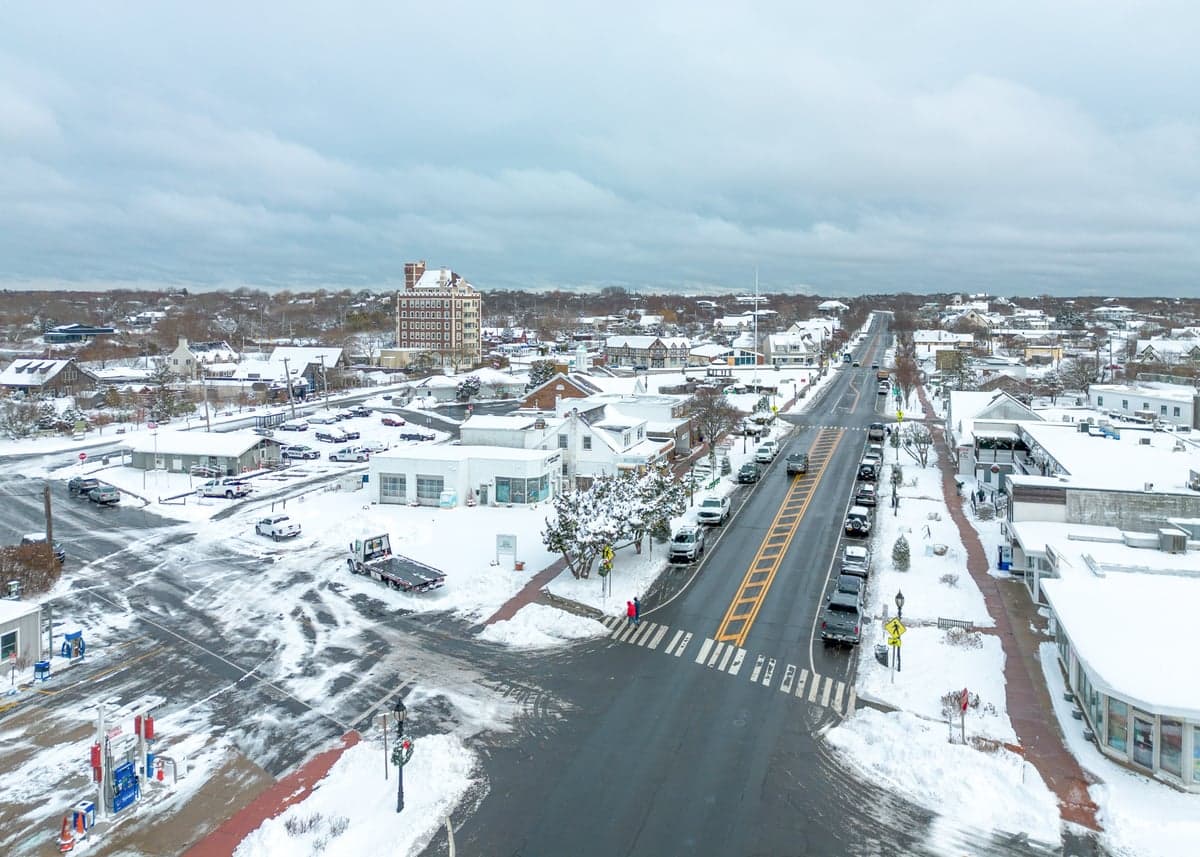
Photo: Wikipedia
Political ClimatePolitical Climate in Montauk, NY
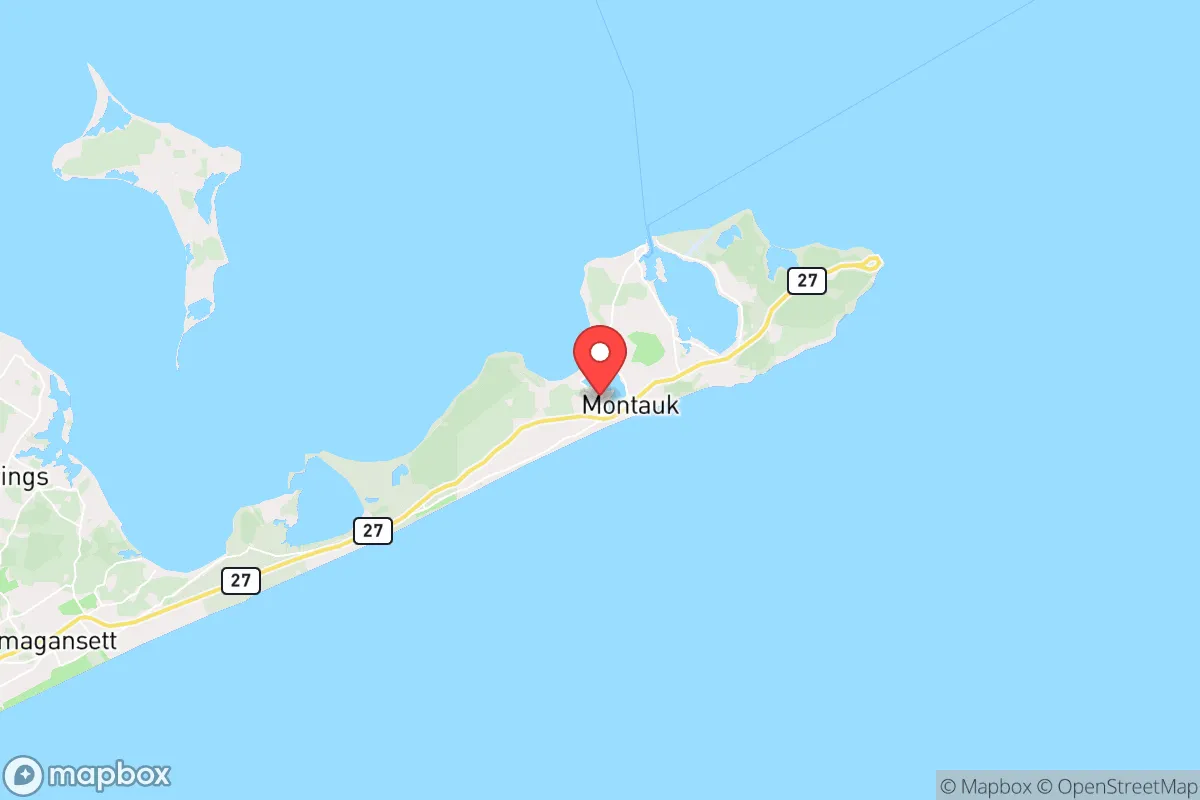
District shown is the primary district for this city’s centroid. Cities may span multiple districts.
Local Political AnalysisPolitical Analysis of Montauk, NY
Montauk has always been a bit of an outlier on the East End, and politically, it’s leaning more conservative than most folks realize. The Cook PVI clocks the area at R+4, which in deep-blue New York is practically a redoubt. That number tells you the real story: while the Hamptons proper have gone full coastal elite, Montauk still holds onto a working-class, independent streak. The trajectory here is a slow, grinding shift leftward as wealthy transplants from the city buy up property and bring their politics with them, but the old guard—fishermen, surfers, small business owners—still pushes back hard against the progressive tide.
How it compares
Drive ten miles west to East Hampton Village, and you’re in a different world—think $20 smoothies and town council debates about banning gas leaf blowers. That place votes D+20 easy. Montauk, by contrast, feels like a throwback. The local electorate here is far more skeptical of government overreach, whether it’s zoning restrictions on short-term rentals or new environmental regulations that choke off the fishing industry. Compare it to Amagansett or Sag Harbor, where the progressive agenda has a tighter grip, and Montauk stands out as the last place on the South Fork where a guy can still park his truck in the driveway without a permit. The R+4 rating isn’t just a number—it’s a reflection of a community that remembers when the government stayed out of your backyard.
What this means for residents
For the folks who live here year-round, the political climate means constant vigilance. Every new town ordinance or county mandate feels like another inch of ground lost. The push for higher property taxes to fund “green” initiatives or affordable housing schemes sounds noble on paper, but in practice it squeezes the middle class and rewards developers with deep pockets. The real concern is how fast the culture is shifting—what was once a quiet, libertarian-leaning fishing village is now a target for state-level overreach on everything from septic system upgrades to beach access rules. If you value personal freedom and don’t want a bureaucrat telling you how to run your life or your business, Montauk is still a decent bet, but you’ll need to stay involved in local politics to keep it that way. The long-term trend is worrying: as more second-home owners register to vote here, the R+4 could slip to a toss-up within a decade.
Culturally, Montauk still has a distinct “live and let live” vibe that’s rare in the Hamptons. You won’t see the same level of performative activism here—no car-free streets or plastic bag bans pushed through without a fight. The local resistance to over-regulation is baked into the DNA, from the commercial fishermen who’ve battled state quotas for decades to the surfers who’ve fought to keep the beaches open and unrestricted. That said, the pressure is mounting. The recent push to restrict off-road vehicle access on the beaches is a perfect example: a well-intentioned rule that ends up punishing the very people who’ve maintained the shoreline for generations. If Montauk can hold the line against the progressive wave washing over the rest of Long Island, it’ll stay a rare pocket of sanity. But if the transplants keep coming and the old-timers keep selling out, don’t be surprised if the R+4 becomes a memory.

State Political ClimatePolitical Climate in New York
State Political AnalysisPolitical Environment in the State
New York State has long been a Democratic stronghold, but its political landscape is far more complex than the national narrative suggests. The state leans heavily blue in statewide elections, with Democrats holding every major office and supermajorities in both legislative chambers, but this dominance is almost entirely driven by New York City and its immediate suburbs. Over the past 20 years, the state has shifted from a moderate, union-driven Democratic machine to a more progressive, activist-led coalition, while upstate and rural regions have swung sharply right, creating one of the most polarized political environments in the country. For a conservative considering relocation, the key takeaway is that New York is effectively two states: the densely populated, left-leaning downstate corridor and the increasingly red, economically struggling upstate.
Urban vs. rural divide
The political map of New York is a textbook case of geographic polarization. New York City alone accounts for roughly 40% of the state's vote, and its five boroughs—Manhattan, Brooklyn, Queens, the Bronx, and Staten Island—deliver massive Democratic margins. Manhattan and Brooklyn are among the most progressive jurisdictions in the nation, while Staten Island is the only borough that regularly votes Republican in local races. The immediate suburbs—Nassau and Westchester counties—have trended blue in recent cycles, though they retain pockets of moderate Republicanism, particularly in towns like Oyster Bay and North Hempstead. Upstate, the picture flips dramatically. Erie County (Buffalo), Monroe County (Rochester), and Albany County are Democratic islands surrounded by a sea of red. The vast rural stretches of the Southern Tier, North Country, and Finger Lakes regions—places like Chautauqua County, Steuben County, and Lewis County—vote Republican by 20 to 40 points. The divide is so stark that many upstate counties have seen their Democratic representation collapse; in 2024, Otsego County flipped from blue to red for the first time in decades, driven by frustration with state-level policies on energy, taxes, and crime.
Policy environment
New York's policy environment is defined by high taxes, heavy regulation, and a progressive social agenda that often clashes with upstate values. The state has the highest combined state and local tax burden in the nation, with income tax rates topping 10.9% for top earners and property taxes among the highest in the country, particularly in counties like Westchester, Nassau, and Erie. The regulatory posture is aggressive: New York has enacted some of the nation's strictest gun control laws (the SAFE Act of 2013, expanded in 2022), a near-total ban on natural gas in new construction (effective 2026), and a renewable energy mandate that has driven up electricity costs. Education policy is dominated by the state's powerful teachers' unions, with per-pupil spending among the highest in the U.S. but mixed outcomes. Healthcare is heavily regulated, with the state expanding Medicaid and implementing a public option for health insurance. Election laws have been liberalized significantly: no-excuse absentee voting, early voting, and automatic voter registration are now law, and the state has banned partisan gerrymandering (though the redistricting process remains contentious). For a conservative, the policy environment is a major red flag—government intervention touches nearly every aspect of daily life.
Trajectory & freedom
Over the past decade, New York has become less free by almost any measure, particularly for conservatives. The SAFE Act was a landmark gun control law that required universal background checks, banned assault weapons, and limited magazine capacity to 10 rounds. In 2022, the state passed the Concealed Carry Improvement Act (CCIA), which made it a crime to carry a firearm in "sensitive locations" like Times Square, public transit, and even private businesses unless the owner explicitly posts a sign allowing it. Parental rights have been eroded: the state has codified abortion rights up to birth, eliminated parental consent requirements for minors seeking abortions, and passed a law requiring schools to provide "medically accurate" sex education that includes LGBTQ+ content, with no opt-out for parents. Medical autonomy has been curtailed by vaccine mandates for healthcare workers and schoolchildren, though the COVID-era mandates have been relaxed. Property rights are under pressure from rent control laws in New York City and a statewide ban on evictions without "good cause" (effective 2024). Taxation remains a major freedom issue: the state's estate tax kicks in at $6.94 million, and the Mansion Tax imposes a 1% surcharge on property sales over $1 million. The trajectory is clear: more regulation, higher costs, and less personal autonomy.
Civil unrest & political movements
New York has been a flashpoint for political activism on both sides. The Black Lives Matter protests of 2020 were among the largest and most destructive in the nation, particularly in New York City, where looting and property damage were widespread. The state responded by passing police reform legislation, including the repeal of 50-a (which had shielded police disciplinary records) and a ban on chokeholds. On the right, the Second Amendment sanctuary movement has gained traction in upstate counties like Allegany, Chenango, and Delaware, where local sheriffs have vowed not to enforce certain provisions of the SAFE Act and CCIA. Immigration politics are a major fault line: New York City is a sanctuary city, and the state has passed laws limiting cooperation with federal immigration enforcement. In 2023, the city's migrant crisis overwhelmed shelters and schools, sparking backlash in working-class neighborhoods in Queens and Staten Island. Election integrity remains a hot-button issue, with Republicans alleging irregularities in mail-in voting and the state's automatic voter registration system. The New York State Independence Party and various secessionist movements in upstate counties have floated the idea of splitting the state, though these remain fringe efforts. A new resident would notice the tension between the progressive activism of the city and the defiant conservatism of the countryside.
Projection
Over the next 5-10 years, New York's political trajectory points toward continued polarization and progressive consolidation. Demographic trends favor Democrats: New York City continues to attract young, college-educated, left-leaning migrants from abroad and from other states, while upstate's population is aging and declining. The 2020 Census cost the state a congressional seat, and further losses are likely. In-migration from blue states like California and Illinois may slow but won't reverse the trend. The state's high taxes and regulatory burden are driving an exodus of businesses and wealthy individuals to Florida, Texas, and the Carolinas, but this outflow is concentrated among higher earners who vote Republican. The state legislature is likely to pass even more progressive policies: a single-payer healthcare system (the New York Health Act) has been proposed, and a wealth tax on billionaires is under discussion. For a conservative moving in now, the expectation should be that the state will become more expensive, more regulated, and more politically hostile to traditional values over the next decade. The upstate-downstate divide will only widen, with rural areas becoming more Republican but losing political power.
For a conservative considering New York, the bottom line is this: if you're moving to New York City or its immediate suburbs, you're entering a deeply progressive environment where your political views will be in the minority and state policy will actively work against your interests. If you're moving to upstate New York, you'll find a more conservative community, but you'll still be subject to the same high taxes, restrictive gun laws, and progressive state mandates. The state's trajectory is toward less freedom, higher costs, and greater government control. If you value personal autonomy, low taxes, and limited government, New York is likely not the right fit—unless you're prepared to fight for change in a state that's moving in the opposite direction.
* Values derived from national, state, county, city and local statistics and may differ in a specific area. Last updated: 2026-04-24T01:47:24.000Z
Narrative content on this page is AI-generated and may contain mistakes. Verify any details that matter before acting on them.
ReloMaps may earn a commission from affiliate links at no extra cost to you.

