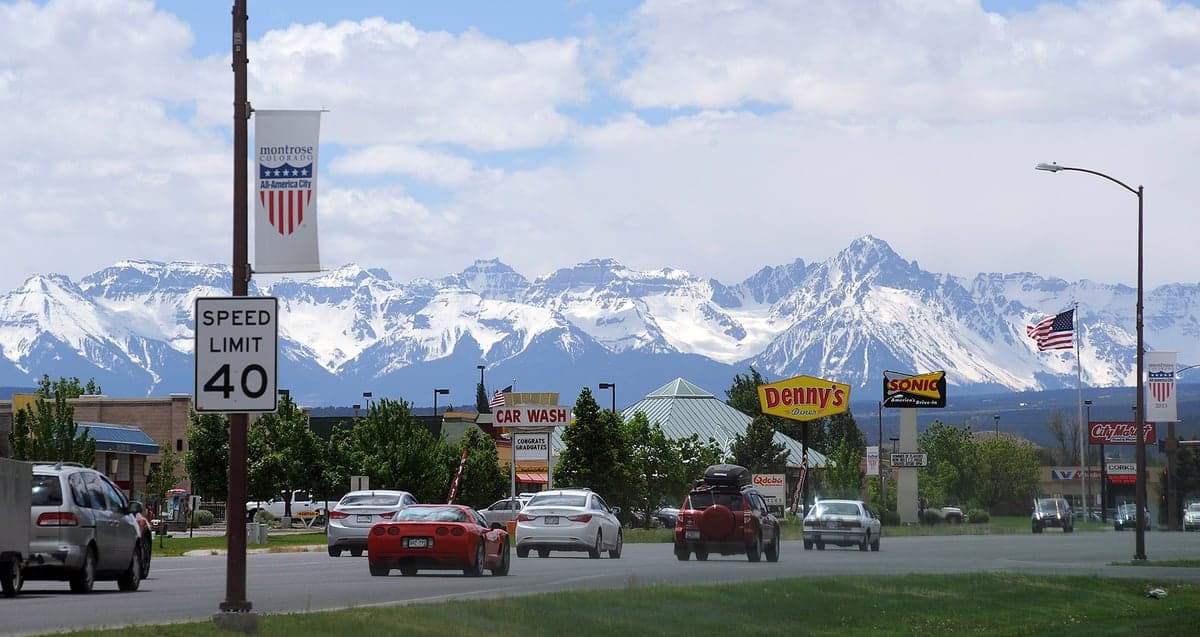
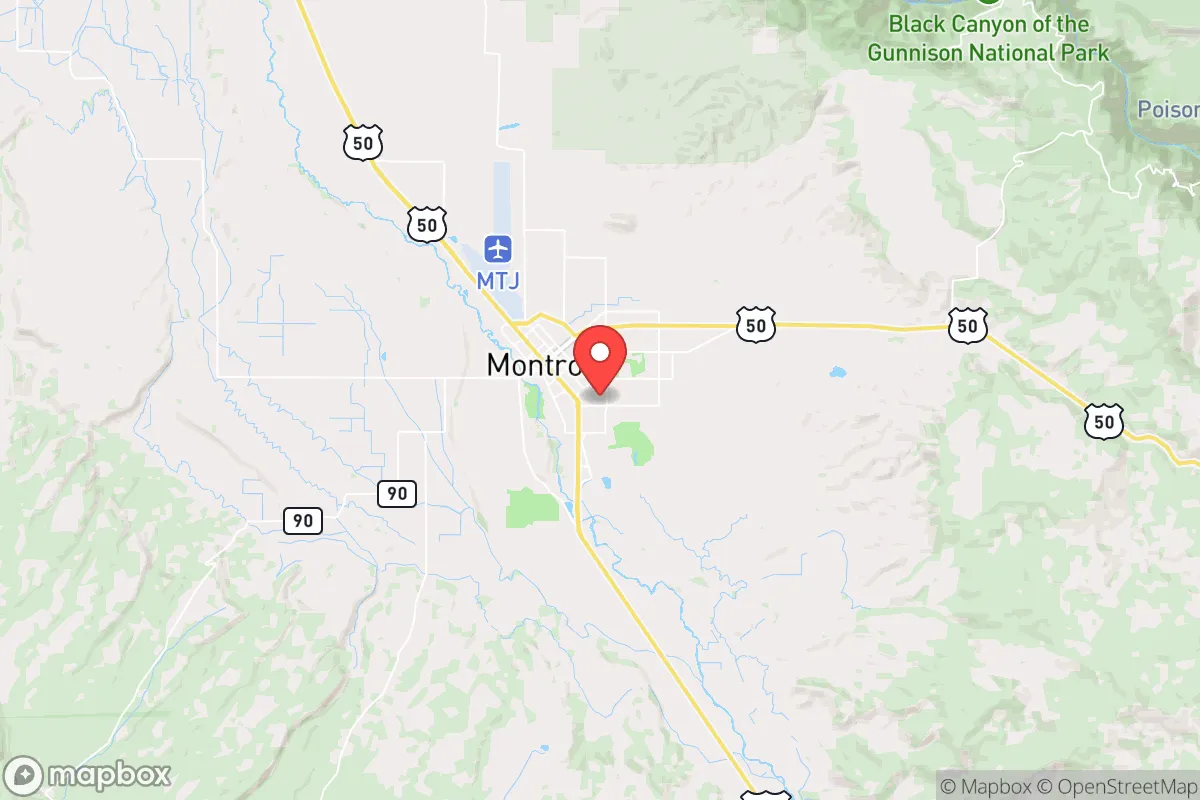
Photo: Wikipedia
Personal Sovereignty in Montrose, CO
Viable for self-reliance. Generally workable, though some barriers may limit total independence.
What does Personal Sovereignty tell us?
Personal Sovereignty measures your capacity for self-reliance and independence with minimal government friction. Higher scores mean fewer barriers between you and the way you want to live... but it assumes you have the space you need and good neighbors.
What does this tell us?
Personal Sovereignty measures your capacity for self-reliance and independence with minimal government friction. Higher scores mean fewer barriers between you and the way you want to live... but it assumes you have the space you need and good neighbors.
State Policy
Energy independence: Net exporter (110% of energy produced in-state)
Personal Liberty
Homesteading

Personal Liberty Analysis
Montrose, Colorado, offers a notably high degree of personal sovereignty relative to many Front Range or coastal jurisdictions, but it is not a libertarian free zone. The city and surrounding Delta County sit in a region where a live-and-let-live ethos still competes with state-level mandates from Denver, creating a practical tension that residents navigate daily. For those prioritizing autonomy over convenience, Montrose represents a strategic middle ground—far enough from state capital overreach to preserve local control, yet close enough to feel the weight of Colorado’s progressive legislative trends. The key is understanding where local enforcement stops and state preemption begins.
Tax burden and regulatory posture: How much government reaches into your wallet
Colorado’s overall tax burden is moderate by national standards, but Montrose’s local posture is notably leaner than the state average. The city levies a 2.5% sales tax on top of the state’s 2.9%, and Delta County adds another 1.5%, bringing the combined rate to roughly 6.9%—competitive with many rural Western towns. Property taxes are a standout advantage: Colorado’s assessment rate for residential property is 6.95% of actual value, and with mill levies in Montrose County averaging around 70 mills, the effective rate lands near 0.49% of market value. That’s roughly half the national average and a fraction of what you’d pay in Texas or California. The Gallagher Amendment is gone, but the state’s Taxpayer’s Bill of Rights (TABOR) still limits revenue growth and requires voter approval for tax increases, giving residents a direct check on government expansion. On the regulatory side, Montrose County has resisted adopting overly restrictive building codes or land-use ordinances that plague Front Range communities. Permitting for accessory structures, sheds, and small workshops is straightforward, though the city itself enforces standard zoning for setbacks and utility connections. The state’s energy code applies, but local inspectors are generally pragmatic. For a prepper or homesteader, the regulatory burden here is low enough to allow meaningful self-sufficiency without constant government interference.
Self-defense and gun law specifics: What you can carry, own, and where
Colorado is a shall-issue state for concealed carry permits, and Montrose County’s sheriff’s office processes applications efficiently—typically within 30 days. No permit is needed for open carry in most public spaces, including within city limits, though private businesses can post signage to restrict it. The state does have a 15-round magazine capacity limit (enacted in 2013), which applies to new purchases but not to magazines owned before the ban. This is a sore point for many in the region, but local enforcement is minimal; Montrose gun shops still sell standard-capacity magazines to law enforcement and out-of-state buyers, and private transfers remain unregulated. Background checks are required for all commercial sales via the state’s universal background check system, but private party sales between individuals are exempt. The state also has a “red flag” law (Extreme Risk Protection Order) passed in 2019, which allows family or law enforcement to petition for temporary firearm removal. In Montrose County, use of this law has been rare—fewer than a dozen petitions filed since enactment—and local judges are generally skeptical of it. For the survivalist, the practical reality is that you can own, carry, and store firearms with minimal bureaucratic friction, provided you comply with the magazine limit and background check requirement. The county’s rural character means shooting on private property is common and accepted, as long as you’re outside city limits and follow basic safety distances.
Self-reliance and homesteading viability: Lot sizes, zoning, and off-grid feasibility
Montrose’s surrounding county land is where personal sovereignty really shines. Unincorporated Delta County allows residential lots as small as 1 acre with no HOA, while agricultural parcels of 5 acres or more qualify for lower property tax rates under the state’s agricultural classification. Zoning in the county is minimal: no building permit is required for structures under 200 square feet, and there are no county-wide restrictions on rainwater collection, composting toilets, or solar panel installation. Off-grid living is legally feasible, though you’ll need to meet state health department standards for septic systems if you’re not connecting to municipal sewer. The city of Montrose itself requires connection to water and sewer for habitable dwellings, but the county does not. Many residents in the outlying areas (like Olathe, Hotchkiss, or Paonia) run fully off-grid setups with solar, propane, and well water. The biggest practical constraint is water rights: Colorado is a prior-appropriation state, meaning you need a valid water right (usually a well permit) to withdraw groundwater. Wells are permitted for domestic use on parcels of 35 acres or more without augmentation, but smaller lots may require proof of a legal water source. For the serious homesteader, a 5-acre parcel with a permitted well and solar array is entirely achievable within 20 minutes of Montrose’s grocery stores and medical facilities. The county’s right-to-farm ordinance protects agricultural activities from nuisance complaints, so neighbors can’t shut down your chickens or goats.
Personal liberties: Parental rights, medical autonomy, speech, and property
Parental rights in Colorado have been a battleground, but Montrose County’s school board and local government lean heavily toward family autonomy. The district does not enforce mask mandates or vaccine requirements beyond state law, and parents can opt children out of sex education or controversial curriculum without pushback. Homeschooling is straightforward: you file a notice of intent with the school district, provide 172 days of instruction annually, and are not required to follow state standards or submit to testing. The county has a robust homeschooling community with several co-ops and support groups. Medical autonomy is more constrained by state law: Colorado has no religious or philosophical exemption for childhood vaccine mandates in schools, though medical exemptions are available. The state also legalized assisted suicide (End of Life Options Act) in 2016, which some conservatives oppose on principle. However, local healthcare providers in Montrose are generally conservative-leaning, and the hospital (Montrose Memorial) does not actively promote the program. On speech and property, Montrose remains a strong First Amendment environment. Public meetings are open, and the city council has resisted adopting “hate speech” ordinances or overly broad public assembly restrictions. Property rights are well-protected: eminent domain is rarely used, and the county’s comprehensive plan emphasizes private property rights over government takings. For the prepper, this means you can build a bunker, stockpile supplies, and practice your beliefs without fear of local government intrusion—as long as you comply with basic building and health codes.
Overall, Montrose offers a level of personal sovereignty that is increasingly rare in the American West. It is not a sovereign citizen enclave—state laws on magazine capacity, background checks, and vaccine mandates still apply—but local enforcement is lax, and the county’s political culture actively resists Denver’s overreach. Compared to Front Range cities like Boulder or Denver, where red flag laws are aggressively used and property taxes are higher, Montrose feels like a different country. Compared to truly free states like Idaho or Wyoming, it falls short on magazine capacity and vaccine exemptions. For the strategic relocator who values self-reliance, gun rights, and minimal government interference, Montrose is a solid B+—good enough to build a life, close enough to mountains and resources, and far enough from the state’s progressive machinery to breathe.

* Values derived from national, state, county, city and local statistics and may differ in a specific area. Last updated: 2026-05-01T10:32:10.000Z
Narrative content on this page is AI-generated and may contain mistakes. Verify any details that matter before acting on them.
ReloMaps may earn a commission from affiliate links at no extra cost to you.

