Photo: Wikipedia
Quality of Life in Montrose, CO
A high quality of life with strong walkability, manageable living costs, healthy neighborhood signals, and solid amenity access.
What does Quality of Life tell us?
Quality of Life blends cost of living, nearby amenities, socioeconomic signals, and neighborhood character. City-level scores represent the whole municipality; individual neighborhoods can differ.
What does this tell us?
Quality of Life blends cost of living, nearby amenities, socioeconomic signals, and neighborhood character. City-level scores represent the whole municipality; individual neighborhoods can differ.
Cost of Living
9% above national average
The Real Cost of Living in Montrose, CO for 2026
| Tier | Individual | Family (4) |
|---|---|---|
| Survival | $18k | $34k |
| Comfortable | $70k | $103k |
| Luxury | $113k+ | $175k+ |
| Elite (Top 5%) | $133k+ | $206k+ |
62%
The Area Signal
A metric tracking the socioeconomic signals of the area.
Hobbies
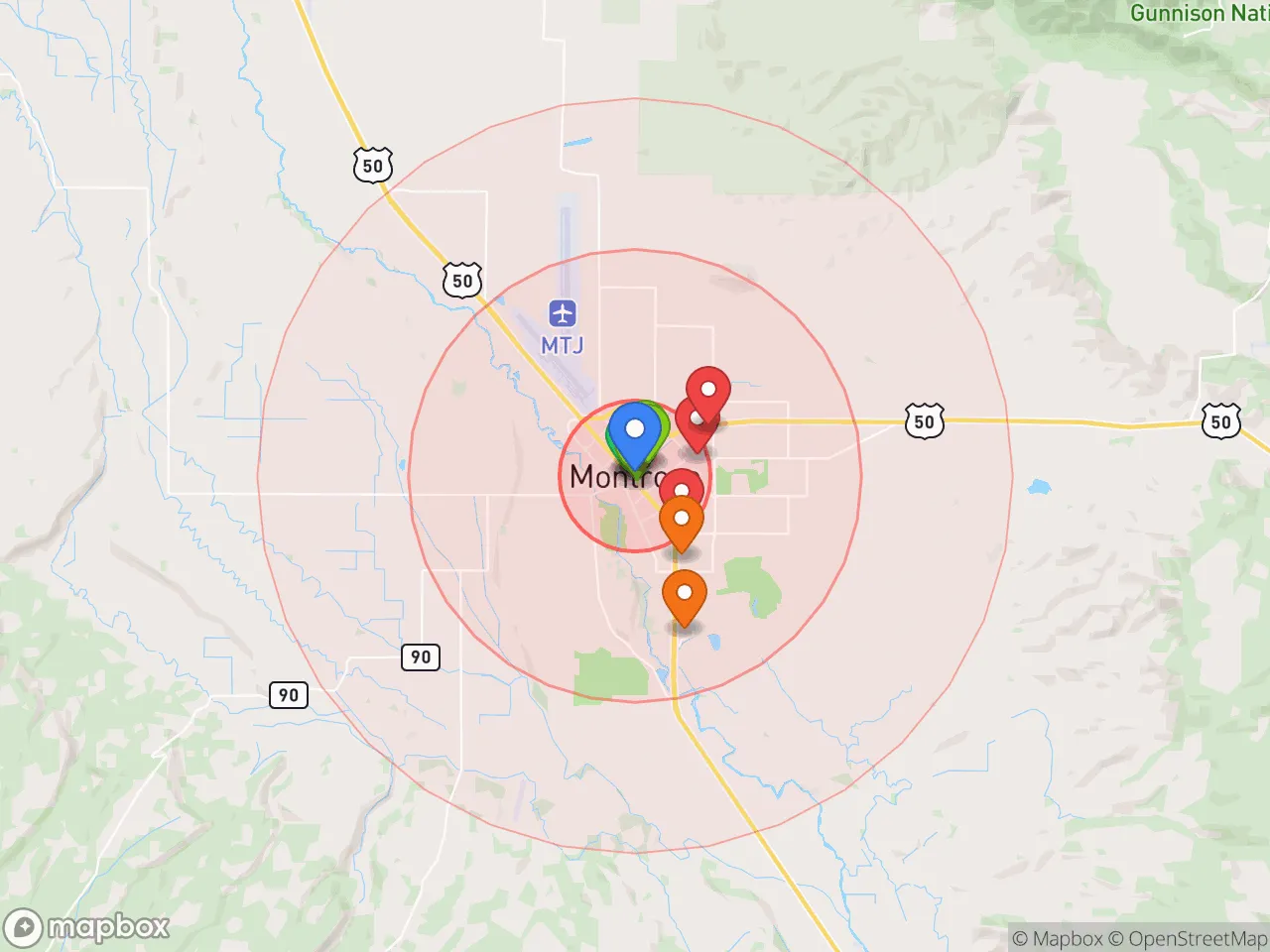
Explore the areaGroceries
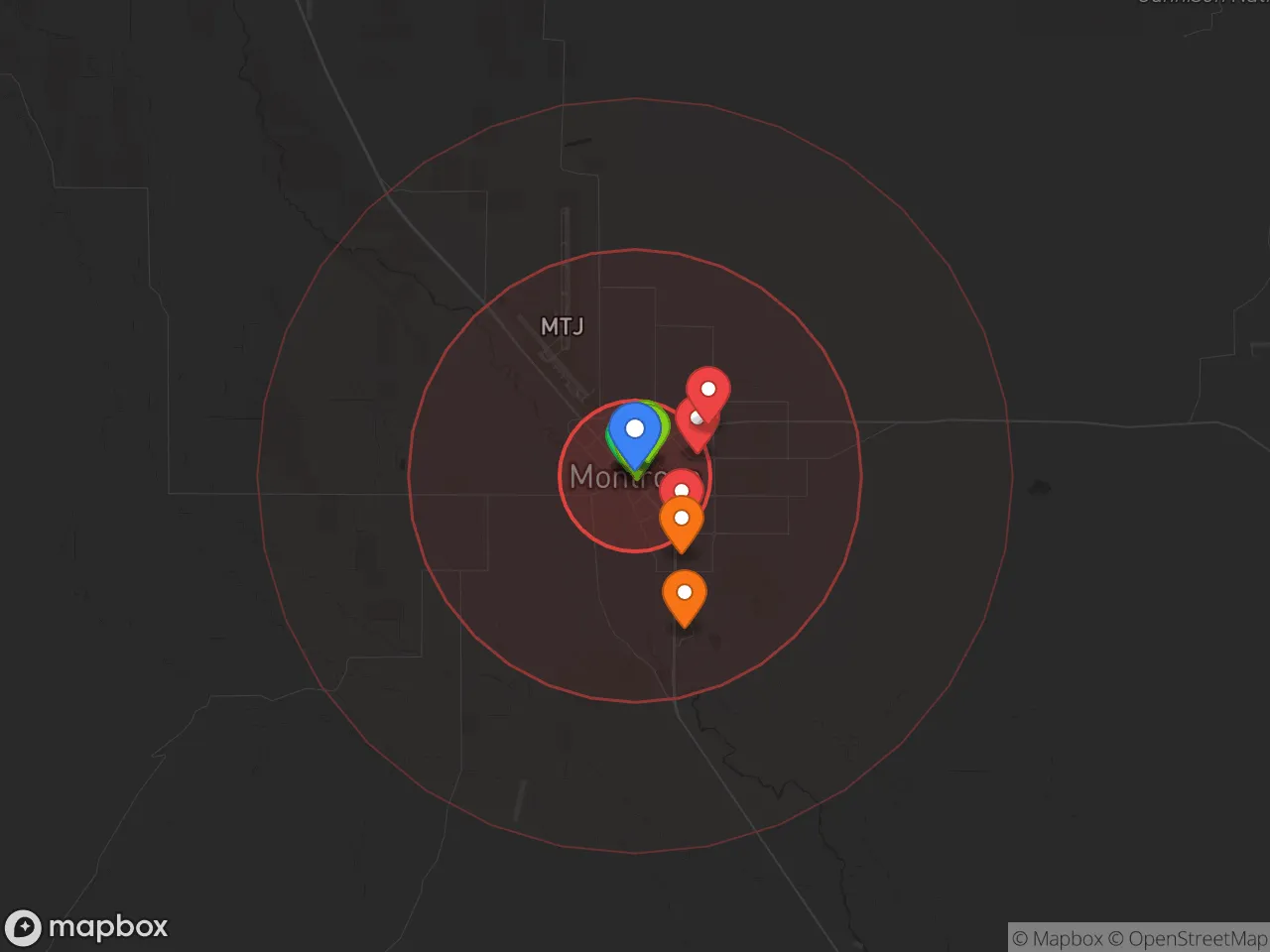
5 within 10 miles
Gas
10 within 10 miles
Hospital
1 within 20 miles
Airport
SAN — San Luis Valley Regional
Post Office
USPS — Montrose, CO
Critical Amenities
Quality-of-Life Analysis
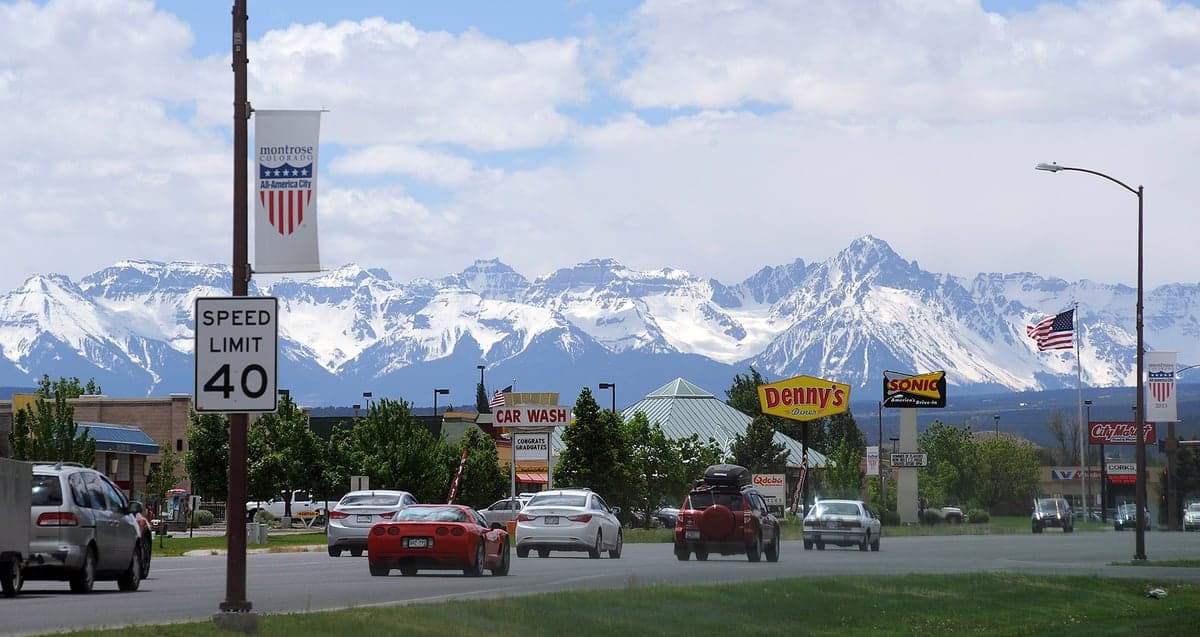
Montrose, Colorado, presents a quality of life defined by a blend of outdoor recreation, small-town stability, and a cost of living that is notably higher than the national average but more attainable than the resort towns to its south and west. The area attracts a mix of retirees seeking a slower pace, remote workers drawn to mountain views, and families employed in the region's growing healthcare, energy, and agricultural sectors. With a cost of living index of 109 (where 100 equals the U.S. average), Montrose is more expensive than the typical American city but remains a relative bargain compared to Telluride or Durango, where housing costs can be two to three times higher.
Cost of living, housing affordability, and how Montrose compares to nearby towns
Housing is the primary driver of Montrose's above-average cost of living, though it remains far more accessible than the resort communities of the San Juan Mountains. The median home value in Montrose is approximately $359,000, which is roughly $100,000 less than the Colorado statewide median and a fraction of the $1 million-plus averages seen in Telluride and Ouray. For renters, the median monthly rent of $1,117 is manageable for many dual-income households, though it has risen steadily since 2020 as demand from out-of-state movers has increased. Utilities and groceries also run slightly above national averages, reflecting the region's rural location and transportation costs. The average one-way commute in Montrose is just 21 minutes, a figure well below the national average of 27 minutes, which means residents save time and money on transportation compared to those commuting into larger Front Range cities like Denver or Colorado Springs.
What daily life is like: amenities, schools, and local recreation
Daily life in Montrose centers on a walkable downtown with independent shops, local restaurants, and community events like the weekly farmers market and the Montrose County Fair. The Montrose School District serves roughly 5,500 students and includes Montrose High School, which offers strong vocational and college-prep programs, as well as several charter and magnet options. For outdoor recreation, residents have immediate access to the Uncompahgre Riverway Trail for walking and biking, and within a 30-minute drive, the Black Canyon of the Gunnison National Park provides world-class hiking, fishing, and wildlife viewing. The city also operates a modern recreation center, a public golf course, and a regional airport with direct flights to Denver, which supports both business travel and leisure trips. Healthcare is anchored by the Montrose Memorial Hospital, a 75-bed facility that serves as a regional medical hub for western Colorado.
Montrose is best suited for individuals and families who value outdoor access, a slower pace, and a tight-knit community over the nightlife and cultural density of a major metro area. Retirees and remote workers will appreciate the lower housing costs relative to nearby resort towns, while families benefit from the short commutes and solid public schools. Those seeking high-end dining, frequent concerts, or a diverse urban environment may find Montrose limited, but for anyone prioritizing affordability, nature, and a manageable cost of living in the Colorado Rockies, it is a compelling choice.

Crime in Montrose, CO
Generally safer than 74% of comparable U.S. locations.
Violent CrimeViolent Crime Analysis
Property CrimeProperty Crime Analysis
Crime Analysis
Montrose, Colorado, reports a violent crime rate of 182 incidents per 100,000 residents and a property crime rate of 1,774.8 per 100,000, placing it below national averages for violent offenses but above the state median for property crimes. The city’s overall safety picture is mixed: while the likelihood of a violent encounter is relatively low, residents face elevated risks of theft, burglary, and vehicle break-ins compared to many other Colorado communities of similar size.
Crime in context
Montrose’s violent crime rate of 182 per 100,000 is roughly 38% lower than the national average of 293 per 100,000, and significantly below the Colorado state average of 330 per 100,000. However, its property crime rate of 1,774.8 per 100,000 is about 10% higher than the national average of 1,610 per 100,000 and closely mirrors the Colorado state figure of 1,780 per 100,000. The city’s crime index places it in a moderate-risk tier among Western Slope communities, with rates comparable to nearby Delta but notably lower than Grand Junction’s property crime figures. Montrose operates under a traditional law-and-order judicial philosophy in the 7th Judicial District, which generally avoids the progressive prosecutorial policies seen in larger Colorado metro areas like Denver or Boulder. This conservative approach to sentencing and pretrial release helps keep recidivism rates in check and ensures that repeat property offenders face consistent consequences—a factor that contributes to the city’s relatively stable crime trends over the past five years.
What residents experience
For daily life in Montrose, the most common safety concerns revolve around property crimes rather than violent confrontations. Residents report frequent incidents of unlocked vehicle entries, package thefts from porches, and occasional garage burglaries in neighborhoods near Main Street and the Highway 550 corridor. Violent crimes are rare and typically involve domestic disputes or isolated altercations rather than random attacks. The Montrose Police Department maintains a visible presence with community policing initiatives, including neighborhood watch programs and regular business district patrols. Emergency response times average under five minutes within city limits, and the department’s clearance rate for violent crimes exceeds the state average. Schools in the Montrose County School District RE-1J employ resource officers and conduct regular safety drills, contributing to a sense of security for families.
Neighborhood-level variation
Crime distribution across Montrose is not uniform. The historic downtown core and areas immediately adjacent to the Uncompahgre River trail see higher concentrations of property crime, particularly theft from vehicles and shoplifting. Newer subdivisions on the city’s south and east sides, such as the Cottonwood Park and Cedar Creek neighborhoods, report significantly lower incident rates—often 40-50% below the city average. The North Townsend Avenue corridor, with its concentration of motels and transient housing, experiences elevated calls for service related to disorderly conduct and drug activity. For prospective residents, choosing a home in the southern or eastern quadrants of Montrose typically offers the lowest crime exposure, while properties near the downtown core benefit from higher walkability but require more vigilance regarding vehicle security and outdoor belongings.
* Values derived from national, state, county, city and local statistics and may differ in a specific area. Last updated: 2026-05-01T10:32:10.000Z
Narrative content on this page is AI-generated and may contain mistakes. Verify any details that matter before acting on them.
ReloMaps may earn a commission from affiliate links at no extra cost to you.

