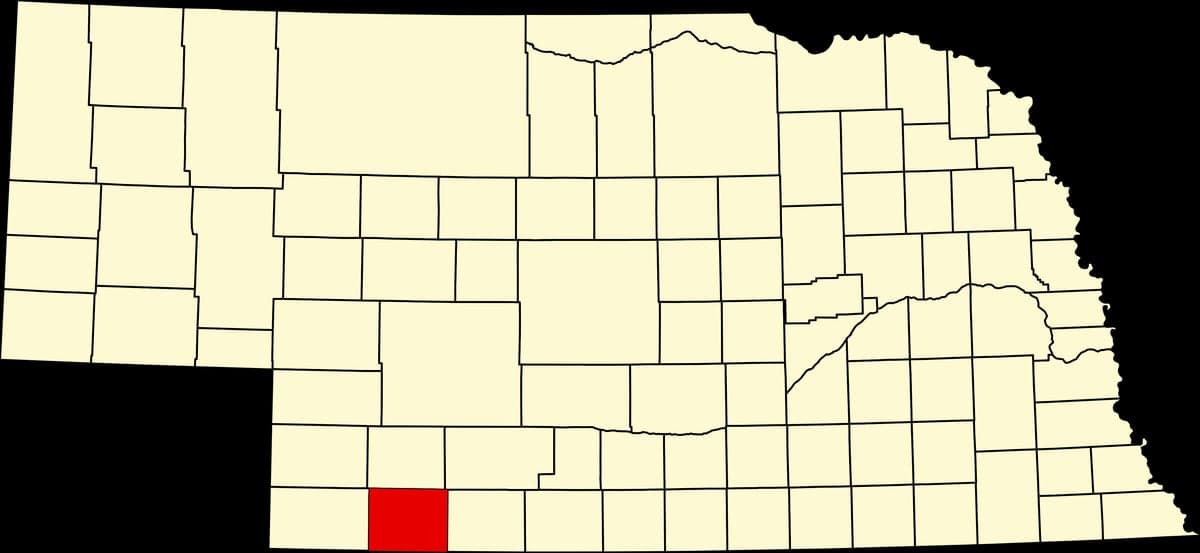
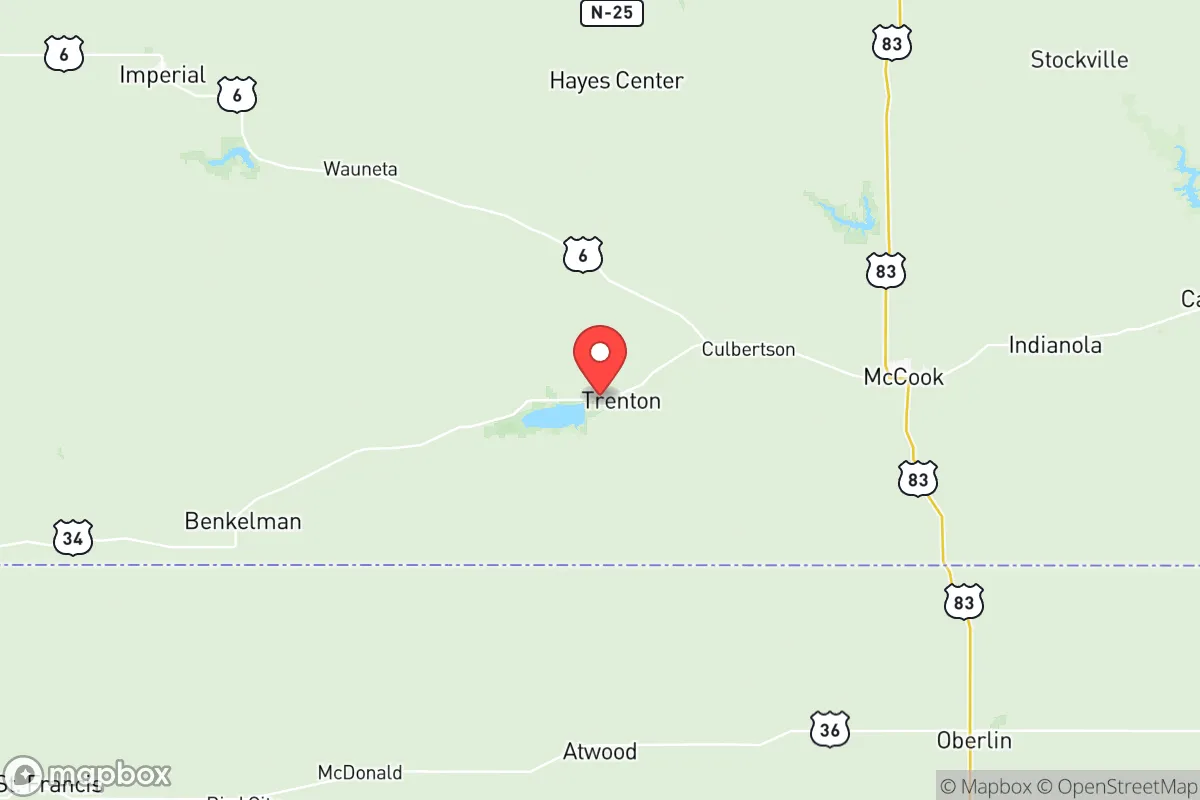
Photo: Wikipedia
Quality of Life in Hitchcock County
A livable area that tracks near national norms for affordability, walkability, and neighborhood health.
What does Quality of Life tell us?
Quality of Life measures an area by evaluating factors like cost of living, nearby amenities, country club access, airport proximity, socioeconomic signals and neighborhood character. For large states, this is a general average — quality of life can vary dramatically between metro areas, suburbs, and rural communities within the same state.
What does this tell us?
Quality of Life measures an area by evaluating factors like cost of living, nearby amenities, country club access, airport proximity, socioeconomic signals and neighborhood character. For large states, this is a general average — quality of life can vary dramatically between metro areas, suburbs, and rural communities within the same state.
Cost of Living
51% below national average
174%
The Real Cost of Living in Hitchcock County for 2026
| Tier | Individual | Family (4) |
|---|---|---|
| Survival | $11k | $21k |
| Comfortable | $20k | $30k |
| Luxury | $93k+ | $144k+ |
| Elite (Top 5%) | $110k+ | $170k+ |
Quality-of-Life Analysis
Hitchcock County, Nebraska, offers a quality-of-life spectrum that ranges from the modest conveniences of its county seat to the quiet self-reliance of its unincorporated hamlets and open farmlands. With a cost of living index of 49 — roughly half the national average — the county attracts retirees on fixed incomes, remote workers seeking affordable land, and agricultural families who value deep community roots. The character of daily life shifts noticeably between the largest town, the smaller villages, and the rural stretches, each appealing to a different tolerance for isolation and a different need for services.
Largest town(s) & population centers
Trenton, the county seat and largest community, is the commercial and civic hub of Hitchcock County. With a population hovering near 500, Trenton provides the essential services that define daily life here: a grocery store, a medical clinic, the county courthouse, and a K-12 school system. The town sits along the Republican River, offering residents access to the Swanson Reservoir State Recreation Area for fishing, boating, and camping — a rare recreational amenity in an otherwise agricultural landscape. Life in Trenton is walkable by rural standards; errands can be done without a long drive, and neighbors are known by name. The town's median home value of $88,800 and median rent of $715 make homeownership or stable renting accessible even on a modest Social Security check or a single income from a local agribusiness job. For those who need a larger retail or medical destination, McCook (in neighboring Red Willow County) is a 25-minute drive west.
Smaller towns & rural pockets
Outside Trenton, the county's smaller communities offer a quieter, more isolated version of rural life. Culbertson, with roughly 600 residents, is the second-largest town and sits along Highway 34 near the Kansas border. It has a post office, a few small businesses, and its own school district, but lacks the medical and retail depth of Trenton. Palisade, straddling the Hitchcock-Hayes county line, is a village of about 250 people with a grain elevator and a volunteer fire department — a place where residents typically commute to Trenton or McCook for work and shopping. Stratton, with fewer than 40 residents, and the unincorporated community of Beverly represent the most remote end of the spectrum. In these pockets, daily life revolves entirely around the home and the land: well water, septic systems, gravel roads, and a 20- to 30-minute drive to the nearest gas station. The average commute across the county is just over 20 minutes, but for residents of Stratton or Beverly, that figure can easily double when heading to a job or a grocery store.
Cost & lifestyle range
The cost-of-life spread within Hitchcock County is narrow by national standards but meaningful locally. At the low end, a small home or mobile home on a rural acreage in the Stratton or Beverly area can be purchased for well under the county median of $88,800 — sometimes for $40,000 to $60,000. Property taxes are correspondingly low, and the absence of city services means no monthly utility or trash fees beyond the well and septic maintenance. At the higher end, a newer or renovated home within Trenton's village limits — with access to municipal water, sewer, and paved streets — might approach $120,000 to $150,000. Rent follows a similar pattern: a rural rental can be found for $500–$600, while a Trenton apartment or house typically commands the county median of $715. The trade-off is clear: lower cost in the rural pockets comes with longer drives, no streetlights, and reliance on a personal vehicle for every errand, while Trenton offers a modest but real set of walkable amenities and a stronger sense of community gathering.
Hitchcock County is best suited for those who value extreme affordability and wide-open spaces over urban convenience. Retirees, remote workers with reliable internet (available via fixed wireless or satellite in most areas), and families tied to agriculture or local government will find the most to appreciate here. The county's low crime rates, slow pace, and proximity to the Republican River's recreation areas offer a quality of life that is difficult to replicate in higher-cost regions — provided the trade-offs in distance to services and limited employment diversity are acceptable.

Crime in Hitchcock County
Generally safer than 65% of comparable U.S. locations.
Violent CrimeViolent Crime Analysis
Property CrimeProperty Crime Analysis
Crime Analysis
Hitchcock County, Nebraska, presents a mixed safety profile that diverges sharply from national averages, with a violent crime rate of 215.2 per 100,000 residents and a property crime rate of 1,378.5 per 100,000. The county’s violent crime rate sits notably below the national median, but its property crime rate exceeds the national average, making theft and burglary the primary concerns for residents in communities like Trenton, Culbertson, and Palisade. The overall safety picture is heavily influenced by the county’s rural character, limited law enforcement resources, and the proximity to larger regional hubs that can drive transient criminal activity.
Crime in context
When placed against state and national benchmarks, Hitchcock County’s violent crime rate of 215.2 per 100,000 is roughly 40% lower than the national average of approximately 380 per 100,000, and comparable to other rural Nebraska counties like Red Willow and Dundy. However, the property crime rate of 1,378.5 per 100,000 is about 15% higher than the national average of roughly 1,200 per 100,000, and significantly above the Nebraska state average of around 1,100 per 100,000. This disparity suggests that while violent confrontations are rare, property crimes—particularly theft from vehicles, farm equipment, and unoccupied rural homes—are a persistent issue. The county’s small population (roughly 2,800) means that even a handful of incidents can skew the per-capita rates dramatically, but the trend is consistent with patterns seen across the Nebraska Panhandle and southwestern Nebraska, where economic pressures and limited policing coverage create opportunities for property crime.
What residents experience
Daily life in Hitchcock County is generally quiet, but residents in the county seat of Trenton and the village of Culbertson report periodic concerns about theft and vandalism, especially during harvest season when equipment and grain are vulnerable. The county’s judicial system operates under the 11th Judicial District, which covers Hitchcock, Red Willow, and Frontier counties. Unlike urban districts in Lincoln or Omaha, where progressive prosecutors have been criticized for lenient sentencing and reduced incarceration rates, Hitchcock County’s district attorney’s office maintains a more traditional, victim-focused approach. This conservative judicial philosophy means that offenders are more likely to face meaningful consequences, which helps deter repeat offenses. However, the county’s proximity to McCook (just east in Red Willow County) introduces some spillover crime, as McCook’s larger population and commercial base attract occasional property criminals who then target outlying rural areas. Residents in Palisade and Stratton report fewer incidents overall, likely due to their smaller populations and tighter-knit communities where suspicious activity is quickly reported.
Neighborhood-level variation
Crime in Hitchcock County is not evenly distributed. The unincorporated areas and farmsteads scattered between Trenton and the Kansas border experience the highest risk for property crime, simply because homes and outbuildings are often unattended for long periods. In contrast, the village of Stratton (population roughly 350) consistently reports the lowest crime rates in the county, with many years recording zero violent crimes. Culbertson, located along Highway 6 and the Republican River, sees slightly elevated property crime due to its accessibility to travelers and its role as a minor commercial stop. The county sheriff’s office, based in Trenton, covers the entire 710 square miles with a small staff, meaning response times in remote areas can exceed 30 minutes. This reality underscores the importance of community watch efforts and private security measures, particularly for residents in the most isolated parts of the county. Overall, Hitchcock County remains a safe place to live relative to urban Nebraska, but property crime vigilance is essential, especially in the more accessible towns and unincorporated zones.
* Values derived from national, state, county, city and local statistics and may differ in a specific area. Last updated: 2026-10-13T19:27:52.000Z
Narrative content on this page is AI-generated and may contain mistakes. Verify any details that matter before acting on them.
ReloMaps may earn a commission from affiliate links at no extra cost to you.

