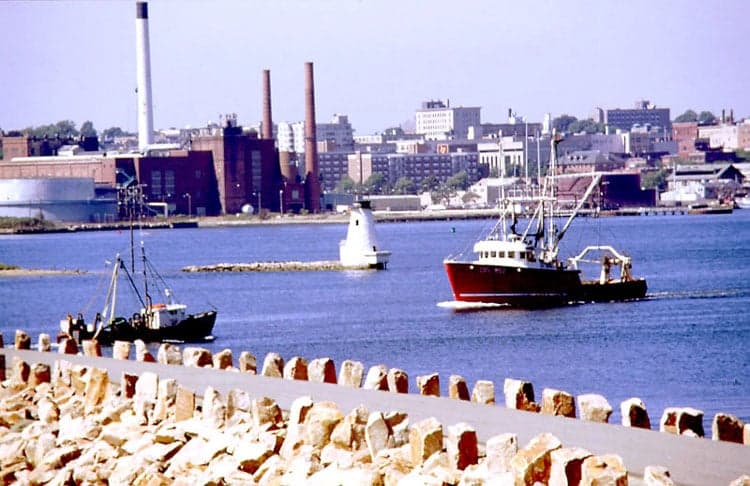
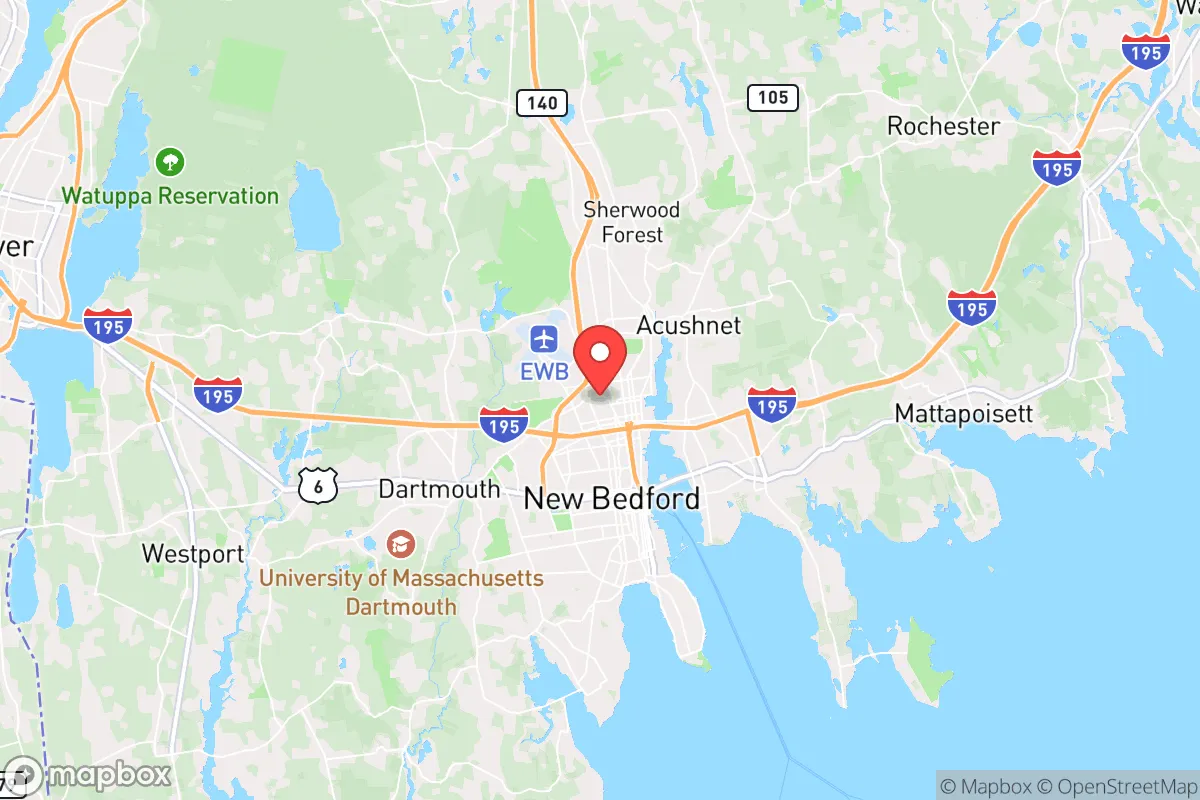
Photo: Wikipedia
Personal Sovereignty in New Bedford, MA
Viable for self-reliance. Generally workable, though some barriers may limit total independence.
What does Personal Sovereignty tell us?
Personal Sovereignty measures your capacity for self-reliance and independence with minimal government friction. Higher scores mean fewer barriers between you and the way you want to live... but it assumes you have the space you need and good neighbors.
What does this tell us?
Personal Sovereignty measures your capacity for self-reliance and independence with minimal government friction. Higher scores mean fewer barriers between you and the way you want to live... but it assumes you have the space you need and good neighbors.
State Policy
Energy independence: Importer (5% of energy produced in-state)
Personal Liberty
Homesteading

Personal Liberty Analysis
For a conservative-leaning individual or family weighing personal sovereignty, New Bedford, Massachusetts presents a challenging environment where state-level overreach significantly constrains local autonomy. While the city itself has a working-class, independent character rooted in its fishing and industrial history, residents operate under some of the nation's most restrictive state laws regarding taxation, firearms, property use, and medical choice. The net effect is that personal sovereignty here is heavily circumscribed by Boston's policy apparatus, making it a location where a survivalist or prepper mindset must contend with constant regulatory friction rather than open freedom.
Tax burden and regulatory posture: how Massachusetts state policy limits financial autonomy
Massachusetts imposes a flat state income tax of 5% on all earned income, with a separate 12% tax on long-term capital gains over a certain threshold. Property taxes in New Bedford are moderate for the state—around $13.50 per $1,000 of assessed value—but the statewide average effective property tax rate is 1.1%, placing it in the top ten highest in the nation. Sales tax is 6.25%, and there is no local option to reduce it. The state's regulatory posture is aggressive: Massachusetts has a strict building code that mandates energy-efficiency standards, septic system upgrades, and permitting processes that can delay or kill off-grid projects. For a prepper, this means any attempt to build a self-sufficient homestead—rainwater catchment, solar arrays, composting toilets—will face layers of state and local permitting, often requiring licensed professionals and environmental impact reviews. The state also has a rigid zoning framework that limits accessory dwelling units and agricultural uses in many residential zones, further constraining self-reliance.
Self-defense and gun law specifics: what the Second Amendment looks like in New Bedford
Massachusetts is one of the most restrictive states for gun owners, and New Bedford residents must comply with state law regardless of local sentiment. All firearms must be registered through a License to Carry (LTC) or Firearm Identification Card (FID), which requires a background check, fingerprinting, a firearms safety course, and a "suitable person" determination by local police. The LTC is issued at the discretion of the New Bedford Police Department, and while the city is generally not as hostile as Boston, denials or restrictions (e.g., "restricted" LTCs limiting carry to hunting and target) are not uncommon. Magazines over ten rounds are banned, as are "assault weapons" as defined by state law—a list that includes many common AR-15 and AK-pattern rifles. There is no permitless open carry; even with an LTC, open carry is effectively prohibited by local ordinance and police practice. Stand-your-ground laws do not exist; Massachusetts imposes a duty to retreat before using deadly force in self-defense, except inside one's home. For a prepper, this means defensive firearm options are limited, and any use of force will be scrutinized under a legal framework that favors prosecution over protection.
Self-reliance and homesteading viability: lot sizes, zoning, and off-grid feasibility
New Bedford is a dense, historic port city with typical residential lot sizes of 3,000 to 5,000 square feet in the urban core, and larger parcels (0.25 to 0.5 acres) in the outer neighborhoods like the South End and Far North. Zoning is predominantly R-1 (single-family) and R-2 (two-family), with strict setbacks and height limits. Chickens are allowed with a permit (up to six hens, no roosters), but goats, pigs, or larger livestock are prohibited in most residential zones. Off-grid living is effectively illegal: the city requires connection to municipal water and sewer, and any solar installation must be grid-tied and permitted through the building department. Rainwater collection for potable use is not allowed under state plumbing codes. Composting toilets are permitted only with a variance and a licensed septic system. For a prepper seeking true self-reliance, New Bedford's urban density and regulatory environment make it a poor fit; the nearby towns of Rochester, Freetown, or Acushnet offer larger parcels (1-5 acres) with more lenient zoning, but still under the same state-level restrictions on off-grid systems and firearms.
Personal liberties: parental rights, medical autonomy, speech, and property
Massachusetts has some of the strongest parental rights restrictions in the nation. The state's ERPO (Extreme Risk Protection Order) law allows family members or police to petition a court to temporarily remove firearms from an individual without a criminal conviction, based on a "risk" standard that critics argue is vague and subject to abuse. Medical autonomy is limited: the state has a universal health insurance mandate, and vaccine mandates for school attendance (including COVID-19 for K-12 students during the pandemic) have been enforced. Medical marijuana is legal (since 2013) and recreational since 2016, but home cultivation is limited to six plants per adult, and local zoning can restrict dispensaries. Free speech is generally protected, but Massachusetts has a criminal harassment law that has been used to prosecute online speech deemed "annoying" or "alarming," and the state's public records law is relatively weak, limiting transparency. Property rights are constrained by historic district commissions in New Bedford's historic neighborhoods, which can dictate exterior paint colors, window replacements, and even landscaping. For a conservative concerned with government overreach, these layers of control represent a persistent erosion of personal sovereignty.
Compared to states like New Hampshire, Texas, or Idaho, New Bedford offers a significantly lower degree of personal sovereignty for the survivalist or prepper. The combination of high taxes, restrictive gun laws, limited off-grid feasibility, and aggressive state intervention in family and medical decisions creates an environment where self-reliance is constantly fighting against regulatory headwinds. For those who must remain in the region due to family or economic ties, the best strategy is to locate in the outer suburbs or rural towns of Bristol County, where local enforcement is more lenient, and to invest in legal compliance (e.g., obtaining an unrestricted LTC, hiring a lawyer for zoning variances) as a cost of doing business. But for anyone prioritizing maximum personal autonomy, New Bedford is a location to avoid unless one is prepared to navigate a thicket of state-imposed limitations on nearly every aspect of independent living.

* Values derived from national, state, county, city and local statistics and may differ in a specific area. Last updated: 2026-04-23T05:00:12.000Z
Narrative content on this page is AI-generated and may contain mistakes. Verify any details that matter before acting on them.
ReloMaps may earn a commission from affiliate links at no extra cost to you.

