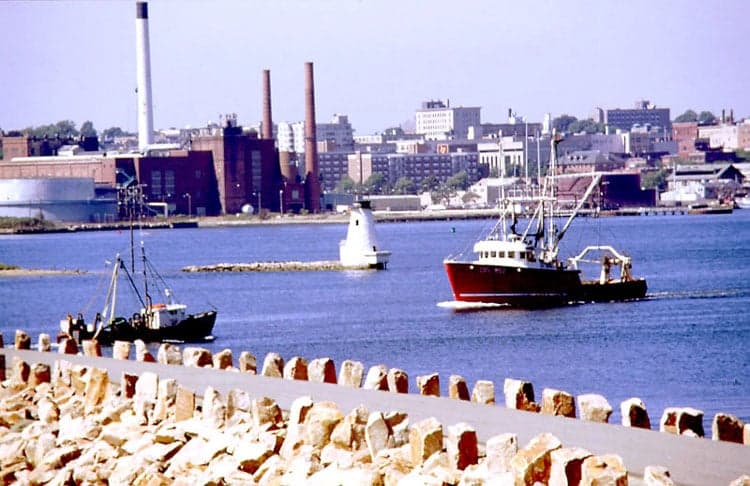
Photo: Wikipedia
Strategic Assessment of New Bedford, MA
Multiple tactical vulnerabilities. Population density, target proximity, or disaster risk are likely compounding. A retreat property and exit planning is required.
What does the Strategic Assessment tell us?
Our Strategic Assessment grades tactical survivability of an area. Major population centers, military targets, fallout zones, natural disasters, and border exposure all drive risk — lower exposure means a more defensible position in a crisis.
This is heavily inspired by Joel Skousen's Strategic Relocation book. Highly recommended you checkout the book ($)What does this tell us?
Our Strategic Assessment grades tactical survivability of an area. Major population centers, military targets, fallout zones, natural disasters, and border exposure all drive risk — lower exposure means a more defensible position in a crisis.
This is heavily inspired by Joel Skousen's Strategic Relocation book. Highly recommended you checkout the book ($)Strategic Pillars

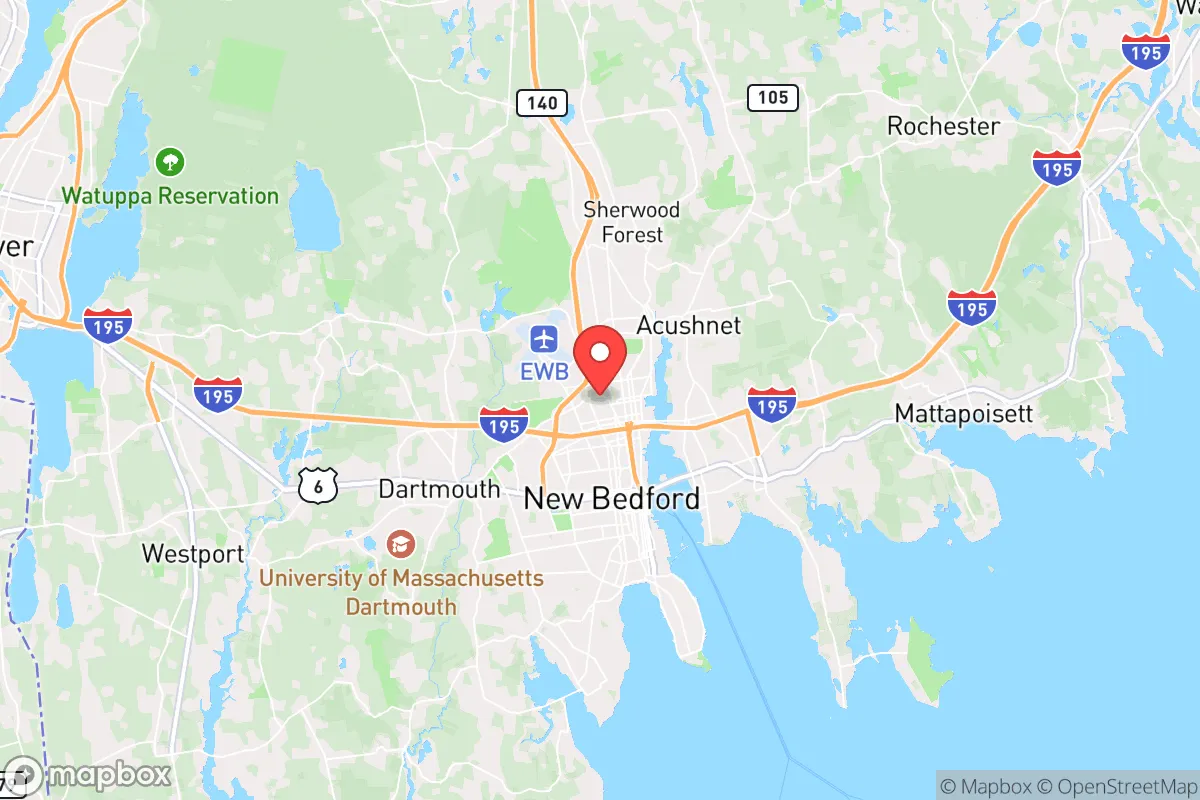
Key Distances
Regional Safe Places
Below is our recommended "safe zones" in Massachusetts and the surrounding area based on our strategic heuristics. For most people, it's unrealistic to live in a “safe zone” full-time due to work, family or other personal reasons. They tend to be more rural. However, many of these areas are perfect for second homes and retreat properties that double as a vacation home or even a short-term rental.
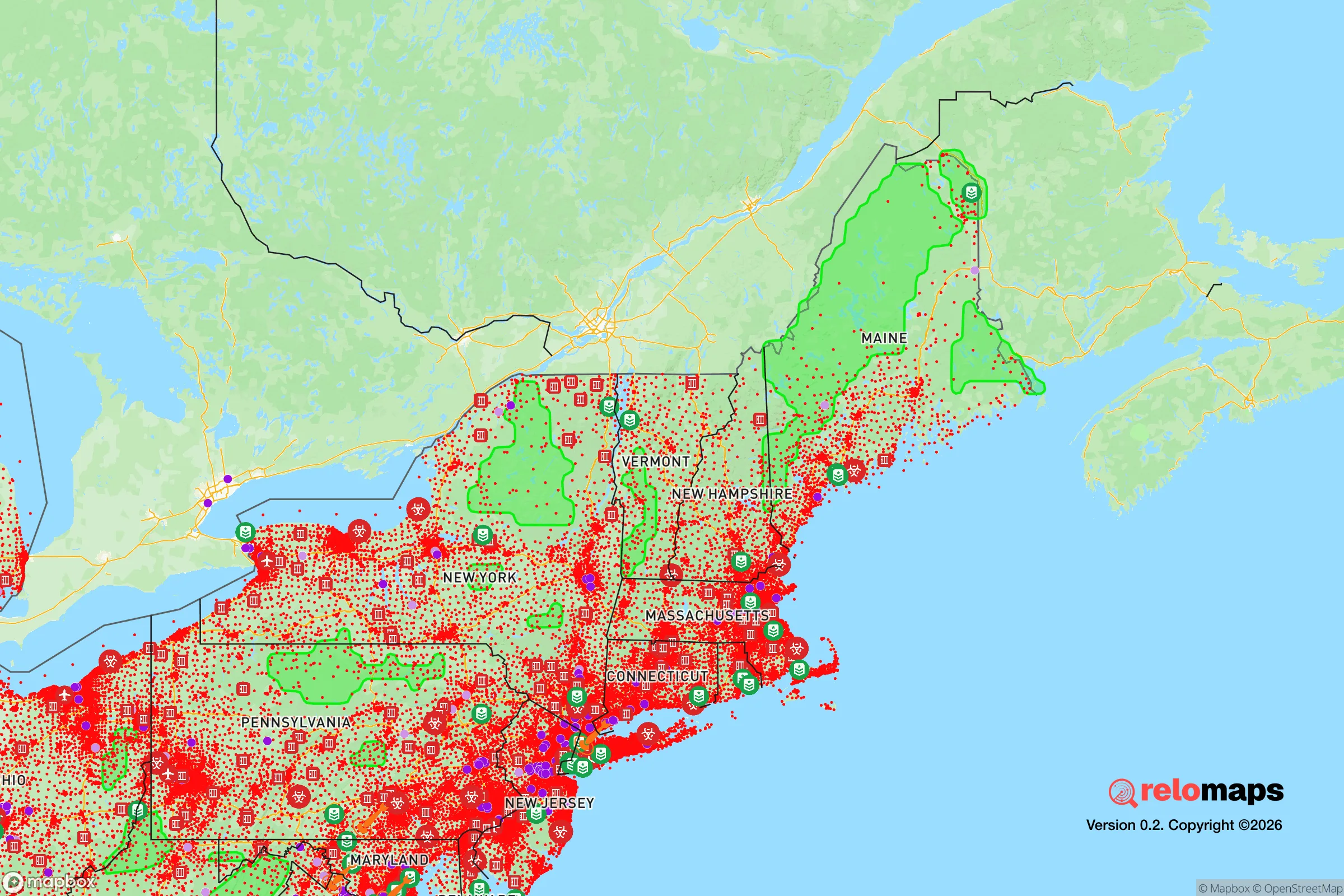
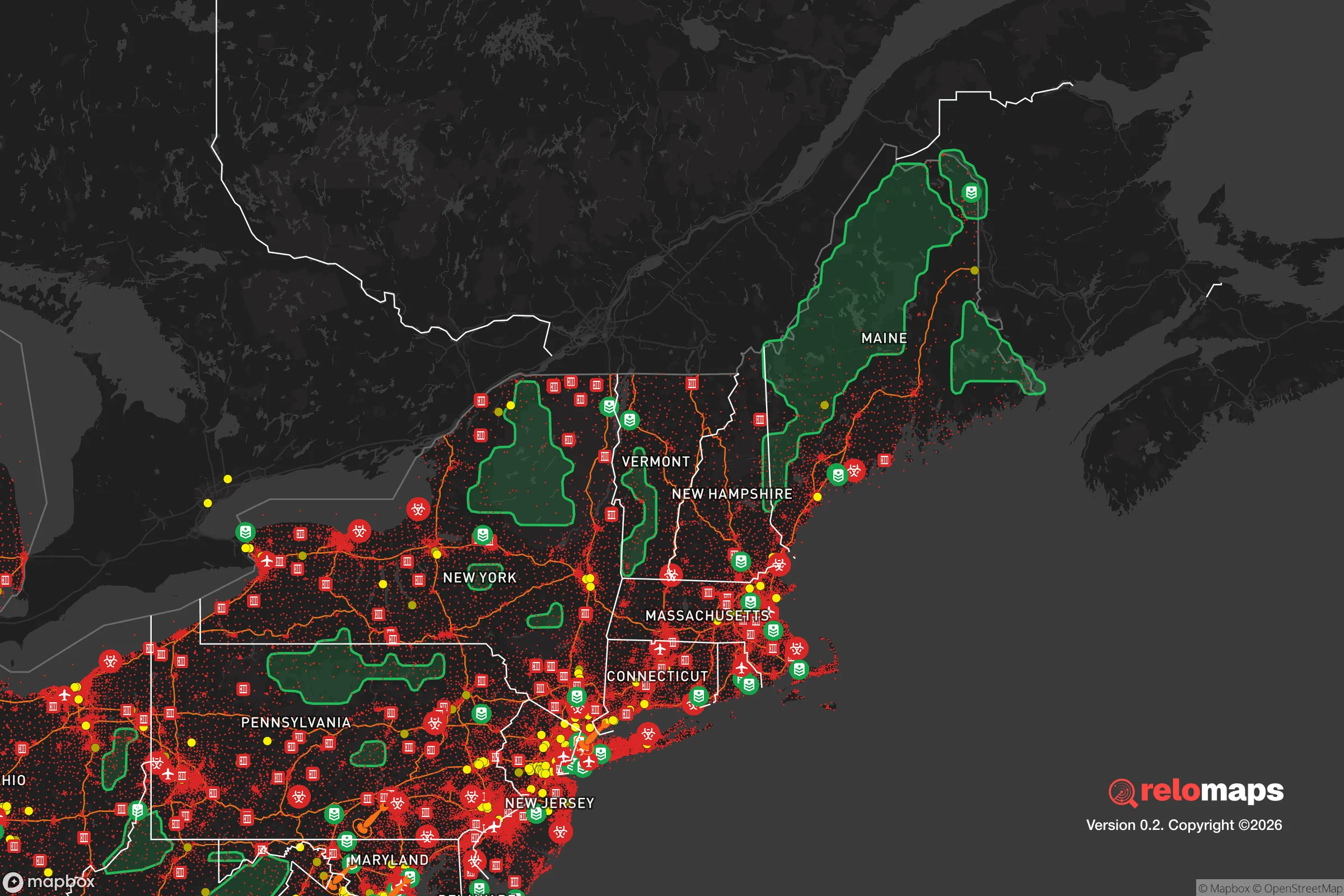


Important Note: For informational purposes only. This does not mean nothing bad ever happens in the green zones. Please use common sense. This is based on public data and modeled with AI. We tried to take a conservative approach but mistakes happen. We update this regularly as new information becomes available.
Solar Generator Recommendations
Backup power matters more here than in safer locations. We've picked three solar generators across budgets and capacity tiers — start with the budget unit if you only need a few essentials, or step up if you want to run a fridge and HVAC for days at a time.

Jackery Portable Power Station Explorer 300
Budget OptionPower on the Go: Weighing only 11 lbs, it's convenient to set up and store with book-sized foldable solar panels

BLUETTI Portable Power Station AC180
Designed for both indoor and outdoor scenarios, AC180 is highly capable as it has a robost capacity and continuous output power.

EF ECOFLOW DELTA Pro Ultra Power Station
Upgraded PickEcoFlow DELTA Pro Ultra is a whole-home energy system designed to grow with your family. Integrated with the Smart Home Panel 2, it scales to meet your evolving energy needs — keeping your home powered, intelligent, and secure through every stage of life.
We earn a commission, at no additional cost to you.
Strategic Assessment Analysis
New Bedford, Massachusetts, offers a mixed bag for the strategic relocator, balancing a resilient maritime economy and a defensible coastal position against the acute risks of being a dense, post-industrial city with a significant urban footprint. Its location on the southern coast of Bristol County, roughly 50 miles south of Boston and 30 miles east of Providence, places it within the shadow of major population centers—a clear negative for those seeking true strategic depth. However, its working port, historic housing stock, and relative isolation from the state's political and economic core provide a few hard advantages for a prepared individual or family.
Geographic position and natural advantages for long-term security
New Bedford sits on the western shore of Buzzards Bay, with direct access to the Atlantic Ocean via the Cape Cod Canal. This is a double-edged sword. The harbor is one of the deepest on the East Coast, and the city's identity is built around the fishing industry—the most valuable in the United States. For a prepper, this means a local, year-round supply of protein that is not dependent on trucking routes or grocery store logistics. The surrounding region, including the Acushnet River watershed and the nearby Elizabeth Islands, offers some natural choke points and escape routes by water. The city itself is built on a series of hills, with the historic downtown and waterfront at sea level and residential neighborhoods climbing to higher ground. This topography provides some natural defensibility against storm surge and offers elevated positions for observation. The climate is moderated by the ocean, meaning winters are less severe than inland Massachusetts, but the area is squarely in the path of nor'easters and, increasingly, tropical storms. The real natural advantage is the working waterfront: a relocator with a boat, or the skills to operate one, gains a mobility option that most urban refugees will lack. The nearby Elizabeth Islands and the Cape Cod National Seashore offer sparsely populated retreat options, but they are not private property and would be contested in a collapse scenario.
Risks, exposures, and proximity to fallout-relevant landmarks
The most glaring risk is New Bedford's population density and its proximity to high-value targets. The city itself has roughly 100,000 people, and the greater metro area pushes 200,000. That is a lot of mouths and a lot of potential for civil unrest when the supply chain falters. The city is also within 50 miles of the Pilgrim Nuclear Power Station in Plymouth (currently decommissioning but still a spent fuel storage site) and within 100 miles of the Seabrook Nuclear Power Plant in New Hampshire. A radiological event at either would put New Bedford in a dangerous downwind zone depending on prevailing winds. Furthermore, the city is a major transportation corridor: Interstate 195 runs through it, connecting to Providence and Cape Cod, and the rail lines carry freight and passengers. In a crisis, these arteries become chokepoints and vectors for fleeing populations. The city's industrial history has left behind environmental liabilities, including PCB contamination in the harbor and legacy brownfield sites. For the survivalist, the presence of a large, economically depressed population with limited resources is a primary concern. The city has a significant homeless population and a history of drug-related crime. In a prolonged emergency, these factors would amplify the risk of looting, gang activity, and violent competition for supplies. The nearby New Bedford Regional Airport is a small facility, but it could become a focal point for government or private evacuation, drawing unwanted attention.
Practical resilience for a relocator: food, water, energy, and defensibility
For the individual or family willing to put in the work, New Bedford offers some practical resilience building blocks. Food security is the city's strongest card. The fishing fleet lands millions of pounds of scallops, flounder, and lobster annually. A relocator with a small boat, a rod, or even a good set of crab traps can supplement their diet directly from the harbor—though water quality in the inner harbor is poor, so offshore fishing is safer. The city also has a strong Portuguese and Cape Verdean community, meaning ethnic markets and specialty grocers are common, offering a more diverse food supply than a typical American suburb. Water is a concern. The city draws its municipal water from the Acushnet River and the Little Quittacas Pond system. This surface water supply is vulnerable to contamination, saltwater intrusion during storm surges, and system failure. A well on higher ground outside the city limits is a far better bet. Energy is a mixed picture. The region is served by Eversource, and grid reliability is average for coastal New England—meaning it fails during nor'easters. Solar is viable, but the city's dense housing stock limits roof space and orientation. A generator and a supply of fuel are non-negotiable. Defensibility is poor within the city itself. The dense, walkable neighborhoods of the South End and the North End are difficult to secure. The best option for a relocator is to secure a property on the city's northern or western edges, near the Freetown State Forest or the Acushnet River headwaters, where you have buffer space and egress routes. The city's police force is underfunded and overstretched; response times in the outer neighborhoods are slow. You are your own first responder here.
The overall strategic picture for New Bedford is one of high risk and moderate reward. It is not a bug-out location; it is a working city with real vulnerabilities. The conservative prepper will see the value in the working waterfront and the relative affordability of housing compared to Boston, but must accept that they are living in a dense, urban environment with a large, potentially unstable population. The smart play is not to live in the city itself but to use it as a resource hub—a place to buy fuel, trade for seafood, and gather intelligence—while maintaining a primary residence in the surrounding towns of Dartmouth, Fairhaven, or Acushnet. Those towns offer better schools, lower crime, and more land. If you are determined to be in the area, buy a property with a well, install a wood stove, and learn to fish. The city will survive because the port will keep running, but the streets around it may not be safe for the unprepared. New Bedford is a strategic outpost, not a sanctuary. Treat it as such.

* Values derived from national, state, county, city and local statistics and may differ in a specific area. Last updated: 2026-04-23T05:00:12.000Z
Narrative content on this page is AI-generated and may contain mistakes. Verify any details that matter before acting on them.
ReloMaps may earn a commission from affiliate links at no extra cost to you.

