Photo: Wikipedia
Political ClimatePolitical Climate in New Bedford, MA
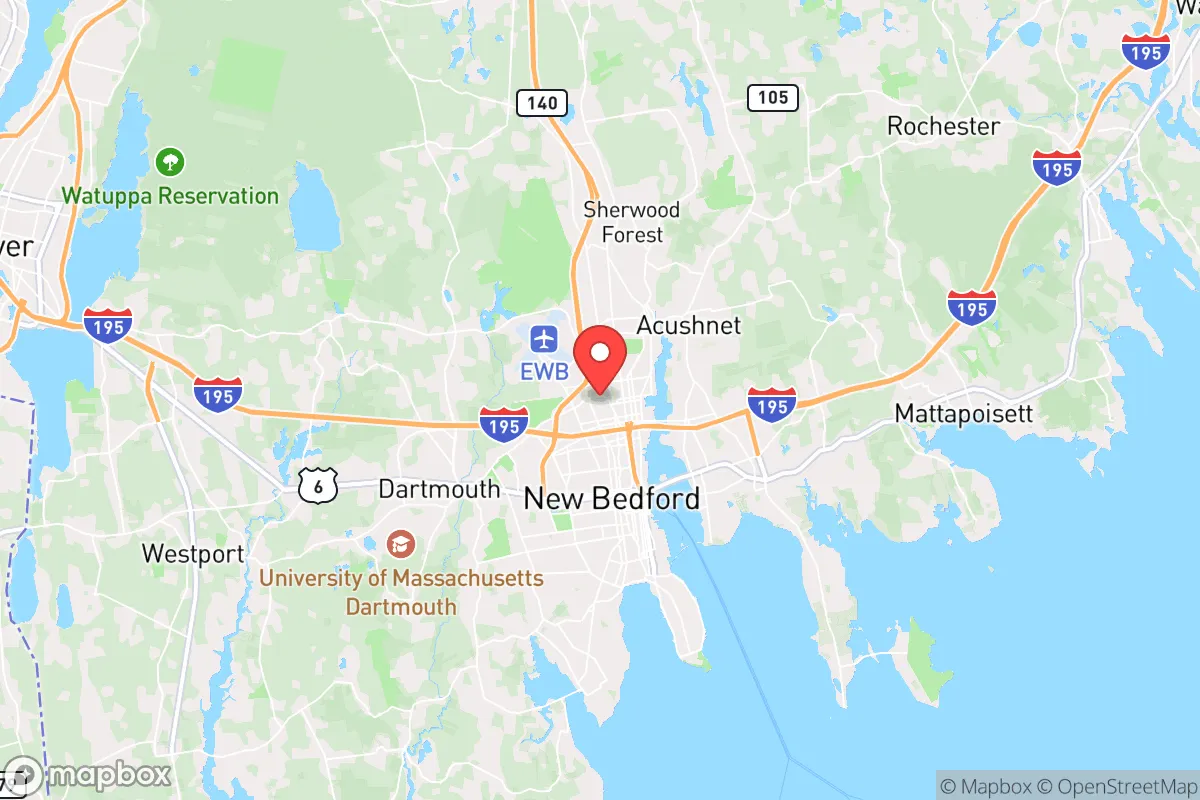
District shown is the primary district for this city’s centroid. Cities may span multiple districts.
Local Political AnalysisPolitical Analysis of New Bedford, MA
New Bedford has been a reliably blue city for decades, and that hasn’t changed much. The Cook PVI of D+6 tells you the math: Democrats hold a solid edge in voter registration and election outcomes, but it’s not a lockstep liberal machine. The real story is how the city’s old-school, working-class Portuguese and fishing community roots are increasingly at odds with the newer, more progressive wave coming out of Boston and Providence. You’ll still find plenty of folks here who vote Democrat out of habit or union loyalty but are deeply skeptical of the cultural and economic shifts being pushed from the statehouse.
How it compares
Drive 20 minutes west to Dartmouth or Fairhaven, and you’ll feel the political temperature drop noticeably. Those towns lean more conservative, with a stronger independent streak and less tolerance for the kind of top-down mandates that New Bedford’s city council often embraces. Up the coast, Fall River is a similar blue-collar city but with a more populist, sometimes Republican-leaning edge—especially on taxes and public safety. New Bedford, by contrast, has seen its city government adopt more progressive stances on housing regulations, zoning, and police oversight, which rubs a lot of the old guard the wrong way. The contrast is sharpest when you look at school board decisions or local ordinances: New Bedford’s leaders are more willing to experiment with policies that feel like they came from Cambridge or Somerville, while the surrounding towns are still fighting to keep government out of their backyards.
What this means for residents
If you value personal freedom—especially the kind that lets you run your small business, keep your property, and raise your kids without the city micromanaging your life—New Bedford’s direction is worth watching closely. The city has been aggressive with rent control proposals, mandated paid leave policies that go beyond state law, and zoning changes that make it harder to own a single-family home without jumping through hoops. There’s also been a push to defund or redirect police resources, which has made some neighborhoods feel less safe, especially after dark. The school system has leaned into DEI training and curriculum changes that prioritize social justice over reading and math, which has parents in the more conservative wards quietly looking at private or charter options. The tax burden is already high, and with the city council’s appetite for new programs, it’s only going up.
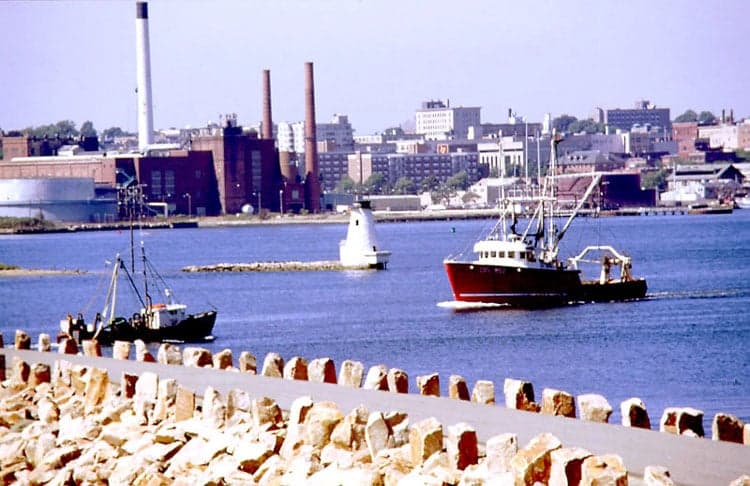
Culturally, New Bedford still has its charms—the working waterfront, the historic homes, the sense of community that comes from generations of families staying put. But the political drift is real. The city’s leadership seems more interested in aligning with national progressive trends than listening to the local fishermen, small contractors, and retirees who actually keep the place running. If you’re thinking of moving here, keep an eye on the next few election cycles. The old guard is aging out, and the new voices coming in are louder, younger, and far less interested in the kind of live-and-let-live conservatism that used to keep this place balanced. It’s not a bad town, but it’s changing faster than a lot of folks are comfortable with.

State Political ClimatePolitical Climate in Massachusetts
State Political AnalysisPolitical Environment in the State
Massachusetts has long been one of the most reliably Democratic states in the nation, with a partisan lean that has only deepened over the past two decades. In the 2024 presidential election, the state delivered roughly 62% of its vote to the Democratic candidate, a margin that has held steady or grown slightly since the 2000s when it was already a safe blue state. The dominant coalition is a powerful alliance of urban progressives, suburban professionals, and academic elites, with the Republican Party largely confined to a few rural pockets and exurban towns. Over the last 10-20 years, the state has shifted further left, driven by demographic changes in the Boston metro area and the steady erosion of the once-competitive moderate Republican brand that produced governors like Mitt Romney and Charlie Baker.
Urban vs. rural divide
The political map of Massachusetts is a stark study in contrasts. The Boston metro area, including Boston itself, Cambridge, Somerville, and Brookline, is the engine of the state’s progressive tilt, routinely delivering 80-90% of the vote to Democrats. These dense, highly educated, and diverse communities are the heart of the state’s political and cultural power. The western part of the state, anchored by Springfield and Amherst, also leans heavily blue, driven by a mix of public sector unions and the University of Massachusetts system. In contrast, the rural and exurban areas of Central and Southeastern Massachusetts tell a different story. Plymouth County has been a rare bright spot for Republicans, with towns like Plymouth and Middleborough often voting red in statewide races. The Cape Cod and the Islands region, once a Republican stronghold, has been trending Democratic for years, though towns like Sandwich and Barnstable still show some GOP resilience. The Berkshires in the far west are solidly blue, but the rural hill towns in between are often the only places where a Republican can win a local race. This divide means that a conservative moving to Massachusetts will find very different political realities depending on whether they settle in a Boston suburb or a town like Sturbridge or Hopedale.
Policy environment
The policy environment in Massachusetts is a textbook case of progressive governance, with high taxes, heavy regulation, and expansive state programs. The state has a flat income tax rate of 5%, but a 2022 ballot question (Question 1) added a 4% surtax on income over $1 million, effectively creating a progressive income tax. Property taxes are moderate by national standards but vary wildly by town, with rates in Boston around $10.50 per $1,000 of assessed value, while rural towns like Hubbardston can hit $18. Sales tax is 6.25%, and the state has some of the highest energy costs in the country due to aggressive green energy mandates. Education policy is dominated by the state’s powerful teachers’ unions, with per-pupil spending among the highest in the nation, but school choice is limited and charter schools face constant political headwinds. Healthcare is heavily regulated, with the state’s 2006 health reform law serving as a model for the Affordable Care Act. Election laws are among the most liberal in the country, with no-excuse mail-in voting, same-day registration, and early voting widely available. For a conservative, the policy environment feels like a constant expansion of government reach into daily life, from strict building codes to mandatory paid family leave.
Trajectory & freedom
On the trajectory of freedom, Massachusetts has been moving decidedly in the direction of less personal liberty over the past decade. The state has some of the strictest gun laws in the nation, including a ban on "assault weapons" and a 10-round magazine limit, with a 2024 law (Chapter 135) further restricting the carrying of firearms in "sensitive places" like parks and government buildings. Parental rights have been eroded by the state’s 2018 "Safe Schools" law, which allows schools to withhold information about a child’s gender identity from parents if the school deems it necessary. Medical autonomy took a hit with the state’s 2020 COVID-19 vaccine mandate for healthcare workers, which was one of the strictest in the country and led to thousands of resignations. Property rights are constrained by the state’s Chapter 40B law, which allows developers to override local zoning to build affordable housing, often in areas where residents oppose it. On the positive side for conservatives, the state has no income tax on Social Security benefits and offers some property tax relief for seniors. But the overall trend is clear: the state legislature, dominated by a supermajority of Democrats, has consistently voted to expand state power into areas of personal choice, from vaccine mandates to speech restrictions under the state’s anti-discrimination laws.
Civil unrest & political movements
Civil unrest in Massachusetts has been relatively muted compared to other states, but there have been notable flashpoints. The 2020 George Floyd protests in Boston were large and occasionally violent, with looting in the Downtown Crossing area and clashes with police. The state’s sanctuary state status, codified by the 2017 "Safe Communities Act," has made it a magnet for immigration activism, with groups like the Massachusetts Immigrant and Refugee Advocacy Coalition pushing for even more protections. On the right, the Massachusetts Fiscal Alliance and local gun rights groups like GOAL (Gun Owners Action League) are active but struggle to gain traction in the legislature. The 2022 Supreme Court decision overturning Roe v. Wade sparked large protests in Boston and led to the state passing a law (Chapter 127) that expanded abortion access and protected providers from out-of-state lawsuits. Election integrity controversies have been minimal, though some conservatives have raised concerns about the state’s mail-in voting system. A new resident would notice the visible presence of political activism in college towns like Amherst and Northampton, where progressive causes dominate public discourse, and the relative quiet of rural areas where conservative views are more common but less organized.
Projection
Looking ahead 5-10 years, Massachusetts is likely to become even more progressive, driven by demographic trends and in-migration patterns. The state’s population is aging and slowly declining, but the Boston metro area continues to attract young, highly educated professionals from around the world, who tend to vote Democratic. The Republican Party in the state is in a long-term decline, with no clear path to winning statewide office after the retirement of moderate figures like Charlie Baker. The state’s tax and regulatory environment will likely become more burdensome, with potential new taxes on wealth or carbon emissions. For a conservative moving in now, the expectation should be that the political climate will become increasingly hostile to their values, with more restrictions on gun rights, more mandates on businesses, and less parental control over education. The only potential check on this trend is the state’s high cost of living, which may eventually drive out some of the progressive base, but that is a slow process. In a decade, Massachusetts will likely look like a smaller, more expensive version of California—a one-party state where conservative voices are marginalized in public policy.
For a new resident, the bottom line is that Massachusetts offers world-class education, healthcare, and economic opportunity, but at the cost of living under a government that is actively expanding its reach into your personal life. If you value low taxes, gun rights, school choice, and parental autonomy, this state will be a constant source of frustration. If you can afford the high cost of living and are willing to fight for your values in a hostile political environment, you’ll find like-minded communities in the rural towns and exurbs. But don’t expect the state to change direction anytime soon—the political trajectory is set, and it’s heading further left.
* Values derived from national, state, county, city and local statistics and may differ in a specific area. Last updated: 2026-04-23T05:00:12.000Z
Narrative content on this page is AI-generated and may contain mistakes. Verify any details that matter before acting on them.
ReloMaps may earn a commission from affiliate links at no extra cost to you.

