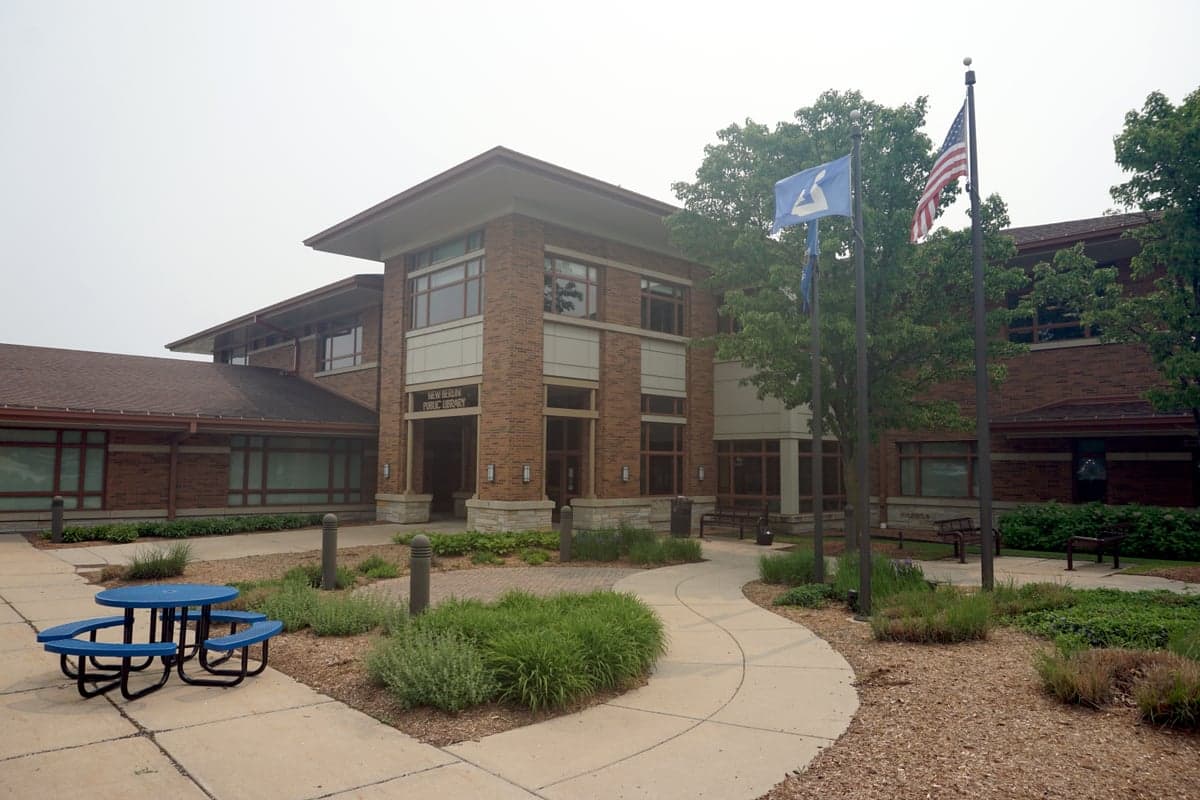
Photo: Wikipedia
Political ClimatePolitical Climate in New Berlin, WI
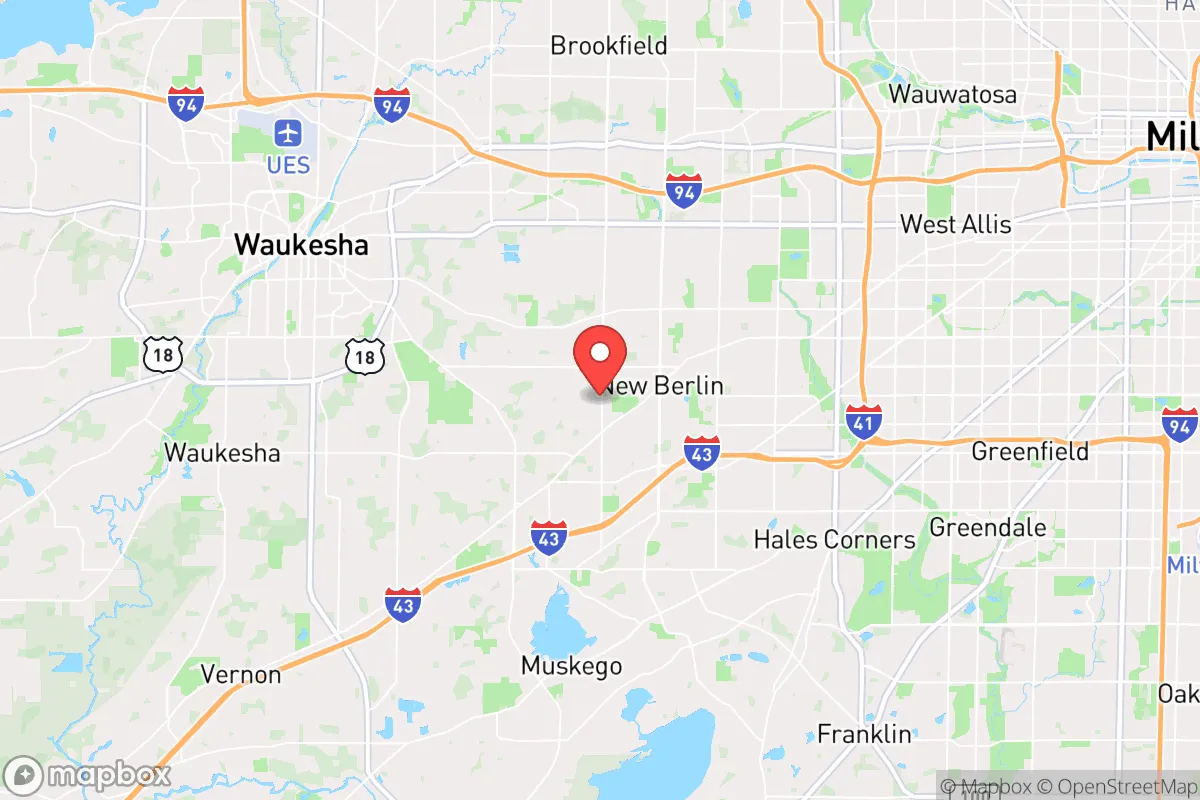
District shown is the primary district for this city’s centroid. Cities may span multiple districts.
Local Political AnalysisPolitical Analysis of New Berlin, WI
New Berlin has long been one of the most reliably conservative communities in Waukesha County, and that hasn't changed much despite some national trends. The Cook Partisan Voting Index (PVI) sits at R+11, meaning the district votes about 11 points more Republican than the national average — and if you've lived here a while, you know that number feels about right. Walk into any local diner or school board meeting, and you'll hear folks talking about property taxes, local control, and keeping government out of their business. That's the New Berlin way. But like a lot of suburbs around Milwaukee, you can feel the pressure shifting a bit, especially as younger families move in from the city and bring different ideas about what "community" means.
How it compares
New Berlin sits in a bit of a political bubble compared to its neighbors to the east. Drive ten minutes into Milwaukee County — say, West Allis or Greenfield — and you'll hit areas that lean more purple or even blue, especially in local races. Head west to Waukesha or Brookfield, and you're in even deeper red territory, where R+11 might actually look moderate. The contrast is sharpest with the city of Milwaukee itself, where progressive policies on policing, taxes, and land use are the norm. New Berlin residents tend to see that as a cautionary tale: what happens when government gets too big and too involved in daily life. The town's leadership has historically pushed back on regional planning efforts and state mandates that feel like overreach, preferring to keep decisions about zoning, schools, and public safety close to home.
What this means for residents
For the people who live here, the political climate translates into a pretty straightforward set of expectations. You can generally count on the city council and school board to be skeptical of new taxes, wary of state or federal programs that come with strings attached, and protective of Second Amendment rights. There's a strong sense that your property is your castle — and that includes the right to use it without a lot of bureaucratic hassle. That said, the community isn't a monolith. You'll find a growing number of residents who are more libertarian than traditional conservative, especially on social issues like marijuana legalization or zoning for smaller, more affordable housing. The tension shows up most in school board elections, where debates over curriculum transparency and parental rights have gotten heated in recent years. Longtime locals worry that if the progressive drift from Milwaukee keeps creeping west, New Berlin could lose the independent character that makes it a great place to raise a family.
Culturally, New Berlin still feels like a place where people wave to neighbors and leave their garage doors open on summer evenings. The big policy fights tend to be about local control — whether it's pushing back against county-wide mask mandates during the pandemic or resisting state pressure to adopt more uniform land-use rules. There's a quiet but firm belief here that the best government is the one closest to the people, and that Washington and Madison should stay out of local decisions. If you're looking for a community that values personal freedom, low taxes, and a hands-off approach from officials, New Berlin fits the bill. Just keep an eye on those school board meetings — that's where the future of the town's political soul is being decided.

State Political ClimatePolitical Climate in Wisconsin
State Political AnalysisPolitical Environment in the State
Wisconsin has long been a classic swing state, but over the past decade it has hardened into a deeply polarized battleground where the blue urban crescent of Milwaukee and Madison fights a rear-guard action against a reddening rural and exurban majority. The state’s overall partisan lean is a razor-thin 50-50, but the trajectory since 2010 has been a slow, grinding shift rightward in the legislature and local offices, even as presidential races remain toss-ups. For a conservative considering relocation, the key takeaway is that Wisconsin offers a mixed bag: a state with a strong conservative backbone in its small towns and farm country, but one where the two dominant metros—Madison and Milwaukee—increasingly dictate cultural and policy battles that affect everyone.
Urban vs. rural divide
The political map of Wisconsin is a tale of two worlds. The Milwaukee metro, including suburbs like Wauwatosa and Shorewood, votes reliably Democratic, driven by union legacy, a large African American population, and a growing progressive professional class. Madison, home to the University of Wisconsin, is the state’s progressive fortress—Dane County routinely delivers 70%+ Democratic margins. Meanwhile, the rest of the state is a sea of red. The Fox Valley (Appleton, Green Bay, Oshkosh) has shifted rightward, with Brown County flipping from Obama to Trump and staying there. The WOW counties (Waukesha, Ozaukee, Washington) surrounding Milwaukee are among the most Republican suburban areas in the nation, routinely voting 60-65% GOP. The Driftless Region in the southwest, including towns like Viroqua and Prairie du Chien, is a mix of libertarian-leaning farmers and conservative small-town voters. The rural-urban divide is stark: in 2024, Trump won 68 of Wisconsin’s 72 counties, but lost the state by a whisker because Milwaukee and Dane Counties alone produced a 400,000-vote Democratic margin. That tension—a red state geography with blue state population centers—defines everything.
Policy environment
Wisconsin’s policy environment is a study in conservative governance at the state level, tempered by progressive local control in the cities. The state has a flat income tax of 4.4% (down from 7.75% in 2010), a Republican achievement that has made it more competitive with neighboring states. Property taxes are moderate, though they vary wildly—Milwaukee’s effective rate is about 2.2%, while rural counties often sit under 1.5%. The state is a right-to-work state (passed in 2015), which gutted public-sector unions and made Wisconsin more business-friendly. Education policy is a flashpoint: the state has a robust school choice program (the nation’s oldest, dating to 1990), allowing vouchers for private and religious schools, which conservatives love. However, Madison and Milwaukee have imposed their own progressive school board policies, including critical race theory and gender identity curricula, creating a patchwork. On healthcare, Wisconsin did not expand Medicaid under the Affordable Care Act until 2023, and then only partially—a compromise that kept premiums lower than in full-expansion states. Election laws are a battleground: the state has voter ID (upheld), but also allows same-day registration and no-excuse absentee voting, a mix that frustrates both sides. The Republican legislature has passed numerous election integrity bills, only to see them vetoed by Democratic Governor Tony Evers.
Trajectory & freedom
On the freedom front, Wisconsin has been a mixed bag. The good news: constitutional carry became law in 2011, and the state has preempted local gun control, meaning Milwaukee cannot ban firearms despite its crime issues. The 2023 Act 12 expanded parental rights in education, requiring schools to notify parents of curriculum changes involving sexuality. Property rights are strong—the state has no statewide rent control, and zoning is largely local, though Madison has imposed inclusionary zoning mandates. The bad news: COVID-era emergency powers were abused by Governor Evers, who issued repeated extensions without legislative approval, leading to a 2022 state supreme court ruling (Wisconsin Legislature v. Palm) that reined in executive overreach. Medical freedom took a hit with the 2023 Act 19, which banned gender transition procedures for minors—a win for parental rights advocates, but a loss for those who see it as government overreach. The 2024 Act 100 banned diversity, equity, and inclusion (DEI) programs in state universities, a conservative victory. Overall, the trajectory is toward more freedom on guns, education, and taxes, but the state supreme court flipped to a 4-3 liberal majority in 2023, meaning future rulings on abortion, redistricting, and election laws could reverse gains.
Civil unrest & political movements
Wisconsin has a history of political volatility. The 2011 Act 10 protests against public union restrictions drew 100,000 people to the Madison capitol, a left-wing uprising that foreshadowed the Occupy movement. In 2020, Kenosha became a national flashpoint after the Jacob Blake shooting, leading to riots, arson, and the Kyle Rittenhouse trial—a case that polarized the state and nation. The Waukesha Christmas parade attack in 2021, where a man drove through a crowd killing six, was exploited by both sides. On the right, the Wisconsin Grassroots Network and Turning Point USA (headquartered in Milwaukee) are active, organizing against election integrity concerns and school board policies. Immigration politics are quieter than in border states, but the 2023 Act 20 banned sanctuary city policies, forcing local law enforcement to cooperate with ICE. Election integrity remains a live wire: the 2020 election saw Milwaukee’s “Democracy in the Park” events (where absentee ballots were collected in parks) spark lawsuits and conspiracy theories. The 2024 election saw record turnout and no major incidents, but distrust lingers. A new resident will notice the political bumper stickers, the yard signs, and the fact that even a trip to the grocery store can turn into a political conversation.
Projection
Over the next 5-10 years, Wisconsin is likely to become more Republican at the state level but more polarized. Demographic trends favor the GOP: the state’s population is aging, and retirees are moving to redder exurbs like Hartland and Oconomowoc. In-migration from Illinois is accelerating, but those newcomers are split—some are conservative refugees from Cook County, others are remote workers who bring progressive values to places like Minocqua and Bayfield. The state supreme court will be the key battleground: a 2025 election could flip it back to conservative control, which would likely lead to new congressional maps (currently gerrymandered by the GOP) and stricter election laws. The 2026 gubernatorial race will be a proxy war for national trends. If Republicans win the governorship, expect a flurry of school choice expansion, tax cuts, and election integrity laws. If Democrats hold it, the state will remain a stalemate. For a conservative moving in now, expect to live in a state where your vote matters more than almost anywhere else, but where cultural battles will be fought in every school board and county commission meeting for the foreseeable future.
Bottom line for a new resident: Wisconsin offers a high quality of life with low taxes, strong gun rights, and school choice—if you live in the right county. Avoid Milwaukee and Madison if you want to escape progressive policies; settle in the WOW counties, the Fox Valley, or the Driftless Region. You’ll pay less in taxes than in Illinois or Minnesota, and your vote will actually count. But be prepared for a state that is perpetually at war with itself, where a single state supreme court election can change the direction of your life. It’s a place where you can still own a home on an acre of land, send your kids to a private school with a voucher, and carry a concealed weapon without a permit—but you’ll have to fight to keep it that way.
* Values derived from national, state, county, city and local statistics and may differ in a specific area. Last updated: 2026-04-21T10:43:07.000Z
Narrative content on this page is AI-generated and may contain mistakes. Verify any details that matter before acting on them.
ReloMaps may earn a commission from affiliate links at no extra cost to you.

