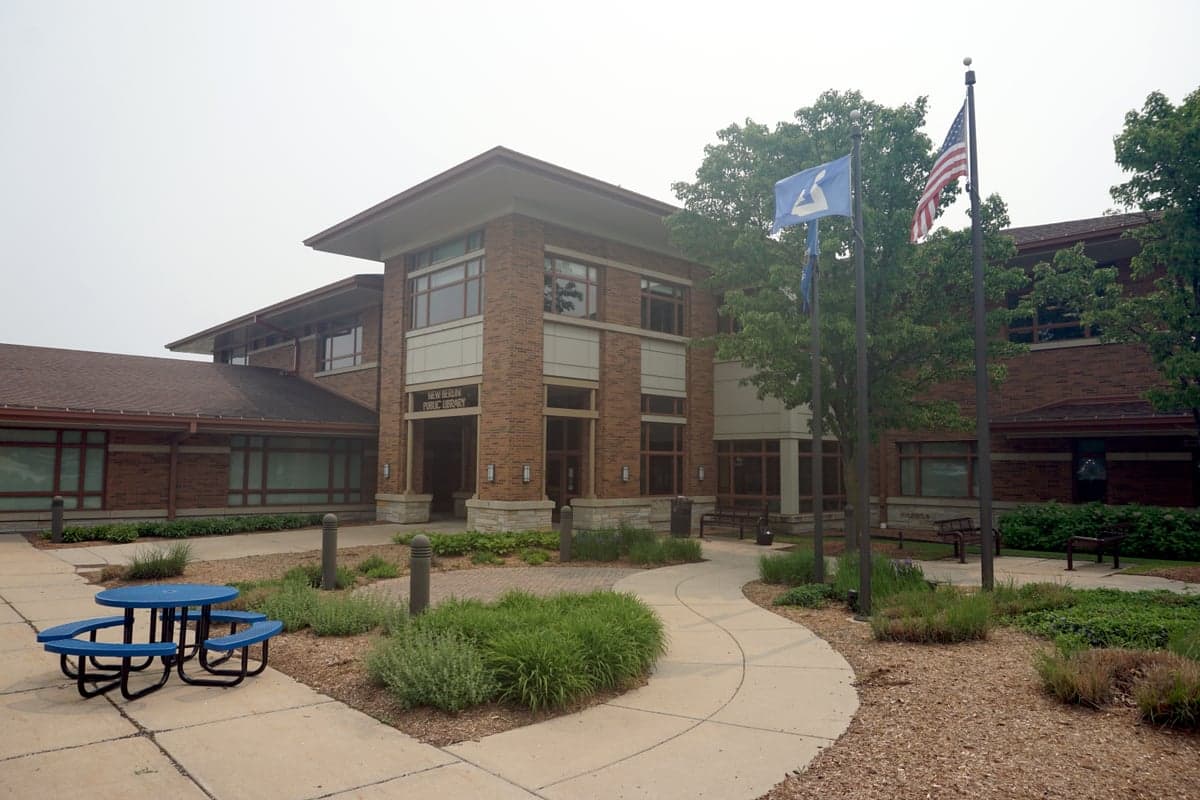
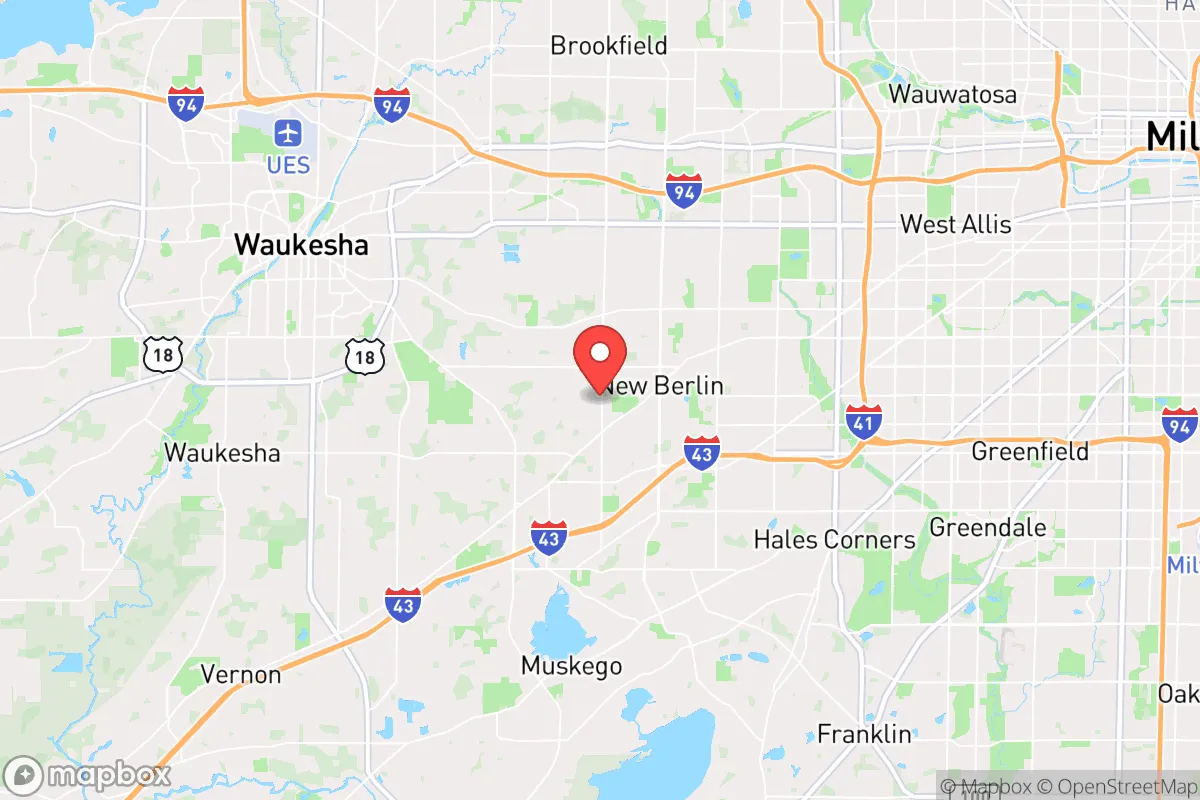
Photo: Wikipedia
Personal Sovereignty in New Berlin, WI
Moderate friction. Expect trade-offs in some aspect of personal liberty and independence.
What does Personal Sovereignty tell us?
Personal Sovereignty measures your capacity for self-reliance and independence with minimal government friction. Higher scores mean fewer barriers between you and the way you want to live... but it assumes you have the space you need and good neighbors.
What does this tell us?
Personal Sovereignty measures your capacity for self-reliance and independence with minimal government friction. Higher scores mean fewer barriers between you and the way you want to live... but it assumes you have the space you need and good neighbors.
State Policy
Energy independence: Importer (15% of energy produced in-state)
Personal Liberty
Homesteading

Personal Liberty Analysis
New Berlin, Wisconsin, offers a notably high degree of personal sovereignty for those seeking to minimize government overreach in daily life, particularly when compared to the regulatory-heavy environments of nearby Illinois or the coastal states. The city’s political culture, rooted in Waukesha County’s reliably conservative voting patterns, creates a local atmosphere where individual autonomy—from property rights to self-defense—is generally respected rather than restricted. For the survivalist or prepper mindset, New Berlin represents a strategic middle ground: close enough to Milwaukee for economic opportunity, yet far enough to maintain a buffer from urban governance and its encroachments on personal freedoms.
Tax burden and regulatory posture: How the local government respects your wallet
Wisconsin’s state-level tax burden is moderate, but New Berlin’s local governance leans heavily toward fiscal restraint. The city operates under a property tax levy limit that ties annual increases to the state’s net new construction growth, effectively capping how much local government can extract from homeowners without a referendum. This is a direct check on government overreach into your property rights. For a single individual or family, the effective property tax rate in New Berlin hovers around 1.8% of assessed value, which is competitive for the Milwaukee metro area. More importantly, the city has a reputation for minimal business regulation—zoning permits for home-based enterprises or workshops are processed without the bureaucratic hostility found in more progressive municipalities. There is no local income tax, and the state’s flat 4.4% income tax (as of 2026) is predictable, allowing for long-term financial planning without fear of progressive rate hikes. The regulatory posture here is one of “leave us alone unless necessary,” a stark contrast to cities like Madison or Milwaukee where environmental and land-use ordinances can strangle self-reliance projects.
Self-defense and gun law specifics: What you can own and where you can carry
Wisconsin is a Shall-Issue state for concealed carry, meaning New Berlin residents face no subjective “good cause” requirement to obtain a permit—if you pass a background check, you get the license. The state preempts local firearm ordinances, so New Berlin cannot ban guns in city parks or impose its own waiting periods, a critical protection against patchwork restrictions. Open carry is legal without a permit for anyone 18 or older who can legally possess a firearm, though in practice, most residents opt for concealed carry to avoid unwanted attention. Magazine capacity is unrestricted, and there is no state-level assault weapons ban. For the prepper, this means you can stockpile standard-capacity magazines and build a defensive rifle without worrying about local overreach. The only notable limitation is that Wisconsin does not recognize out-of-state concealed carry permits from all states—check reciprocity maps before relocating. New Berlin’s police department is generally supportive of lawful gun ownership, and the city’s low crime rate (violent crime roughly 70% below the national average) means defensive firearm use is rare but legally protected. Stand-your-ground laws apply statewide, with no duty to retreat in any place you are lawfully present.
Self-reliance and homesteading viability: Lot sizes, zoning, and off-grid feasibility
New Berlin’s zoning code is a mixed bag for the serious homesteader, but it offers more latitude than most suburban enclaves. The city’s minimum lot size in residential zones is typically one acre, with many properties in the western and southern sections sitting on two to five acres. This is enough space for a substantial garden, a small orchard, and even a few chickens—hens are permitted on lots of one acre or more, though roosters are banned to avoid noise complaints. Rainwater collection is legal without a permit for non-potable uses, and many residents install 500-gallon cisterns for irrigation. However, off-grid solar is feasible but requires a permit; the city does not ban solar panels, but net metering rules with We Energies mean you cannot fully disconnect without a fight. For the prepper, the key limitation is that livestock larger than chickens is prohibited within city limits—no goats, pigs, or cattle. If you want a true homestead with dairy goats or a meat pig, you need to look at the unincorporated townships just west of New Berlin, like Muskego or Vernon. The city’s building code does allow for wood-burning stoves and backup generators, and there are no restrictions on storing bulk food or water. The water table is high enough that a shallow well is possible on larger lots, but most homes are on municipal water, which is a vulnerability in a grid-down scenario. Overall, New Berlin is viable for a suburban self-reliance lifestyle—think Victory Garden plus deep pantry, not full-scale off-grid homestead.
Personal liberties: Parental rights, medical autonomy, speech, and property
Wisconsin has been a battleground for parental rights, and the current legal climate favors family autonomy. Parental opt-out rights for school curricula are strong—parents can exempt their children from sex education or any material they deem objectionable without needing a doctor’s note. The state’s school choice program allows families to use public funds for private or religious schools, reducing the government’s monopoly on education. On medical autonomy, Wisconsin does not have a state-level vaccine mandate for adults, and religious exemptions for childhood vaccinations are honored without excessive bureaucratic hurdles. The state’s right-to-try law allows terminally ill patients access to experimental treatments without FDA interference, a nod to medical freedom. Free speech is robustly protected under the state constitution, and New Berlin has no local hate speech ordinances that could chill political expression. Property rights are further secured by Wisconsin’s private property rights law, which requires government to compensate landowners for any regulatory taking that reduces property value by more than 50%. This is a powerful check against environmental overreach. The only notable liberty concern is that Wisconsin does not have a constitutional carry law—you still need a permit for concealed carry, though the process is straightforward. For the survivalist, the state’s emergency management structure is decentralized, meaning local officials have significant discretion during crises—a double-edged sword that can either protect or restrict depending on who is in charge.
In the broader context of the Midwest, New Berlin ranks as a stronghold of personal sovereignty, particularly for those who prioritize fiscal restraint, gun rights, and parental control. It is not a libertarian utopia—you cannot go fully off-grid, and the municipal water system ties you to infrastructure—but it offers a defensible suburban position where government overreach is the exception, not the rule. For the single individual or family looking to build a resilient life with minimal interference from state or local authorities, New Berlin provides a legal and cultural environment that respects the individual’s right to prepare, protect, and provide for themselves. The trade-off is proximity to Milwaukee’s urban problems, but the city’s conservative governance and engaged citizenry keep those issues at arm’s length. If you are evaluating relocation from a high-control state, New Berlin should be on your short list.

* Values derived from national, state, county, city and local statistics and may differ in a specific area. Last updated: 2026-04-21T10:43:07.000Z
Narrative content on this page is AI-generated and may contain mistakes. Verify any details that matter before acting on them.
ReloMaps may earn a commission from affiliate links at no extra cost to you.

