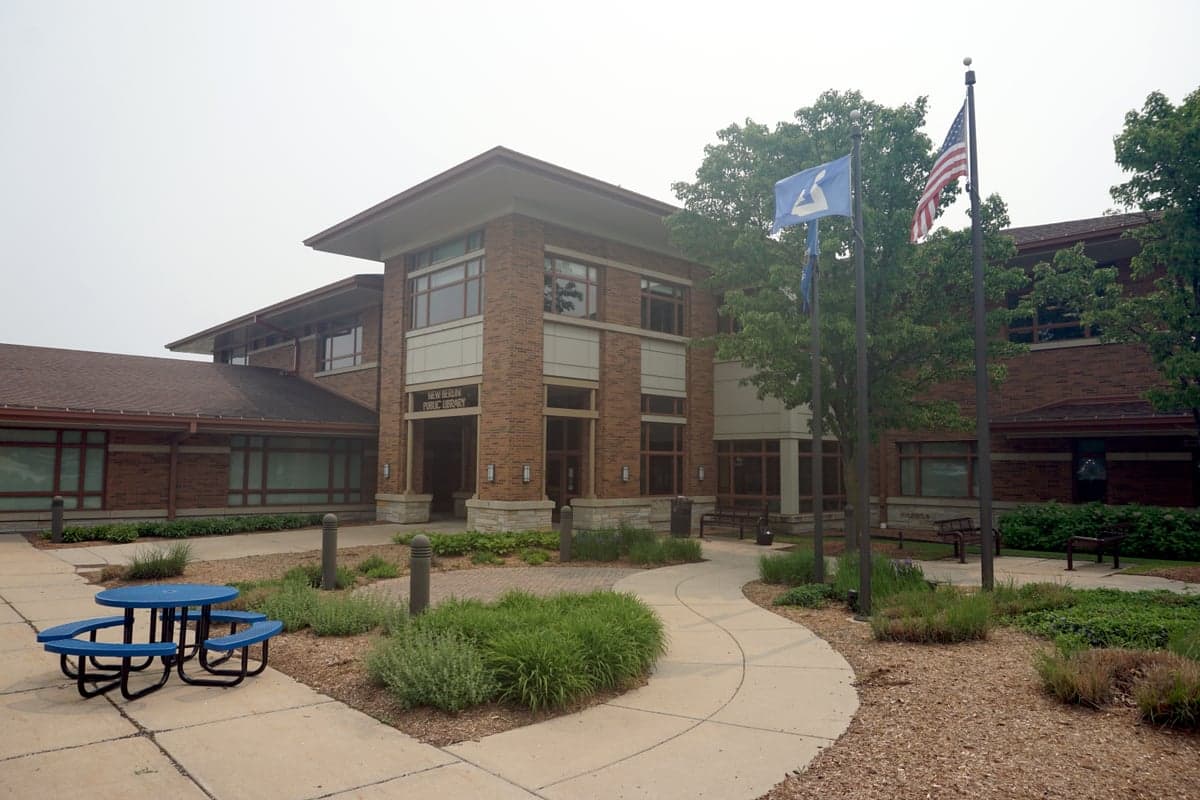
Photo: Wikipedia
Strategic Assessment of New Berlin, WI
Meaningful friction. Expect exposure to either population pressure, blast zones, or natural disaster risk. Consider buying a retreat property.
What does the Strategic Assessment tell us?
Our Strategic Assessment grades tactical survivability of an area. Major population centers, military targets, fallout zones, natural disasters, and border exposure all drive risk — lower exposure means a more defensible position in a crisis.
This is heavily inspired by Joel Skousen's Strategic Relocation book. Highly recommended you checkout the book ($)What does this tell us?
Our Strategic Assessment grades tactical survivability of an area. Major population centers, military targets, fallout zones, natural disasters, and border exposure all drive risk — lower exposure means a more defensible position in a crisis.
This is heavily inspired by Joel Skousen's Strategic Relocation book. Highly recommended you checkout the book ($)Strategic Pillars

Key Distances
Regional Safe Places
Below is our recommended "safe zones" in Wisconsin and the surrounding area based on our strategic heuristics. For most people, it's unrealistic to live in a “safe zone” full-time due to work, family or other personal reasons. They tend to be more rural. However, many of these areas are perfect for second homes and retreat properties that double as a vacation home or even a short-term rental.
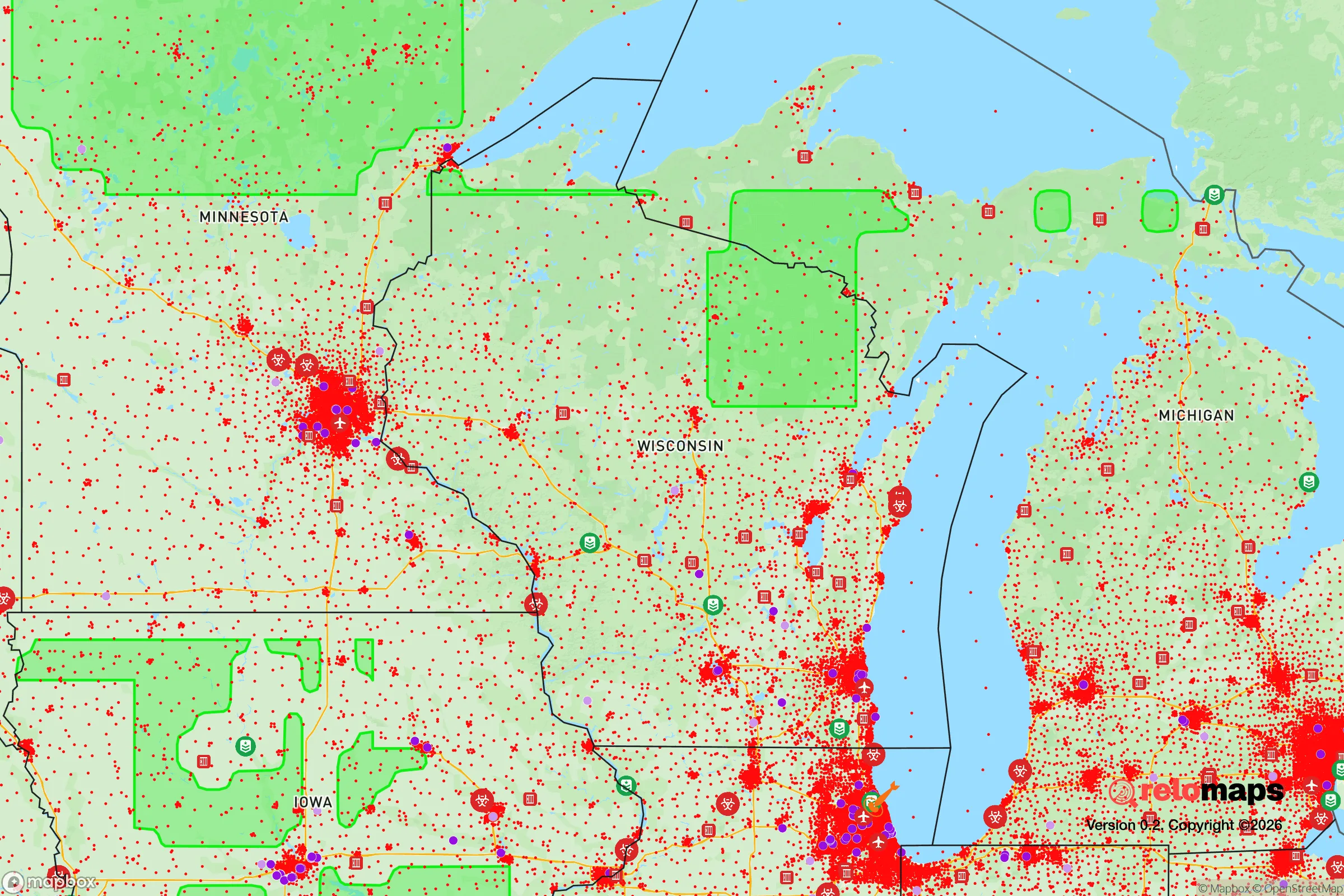
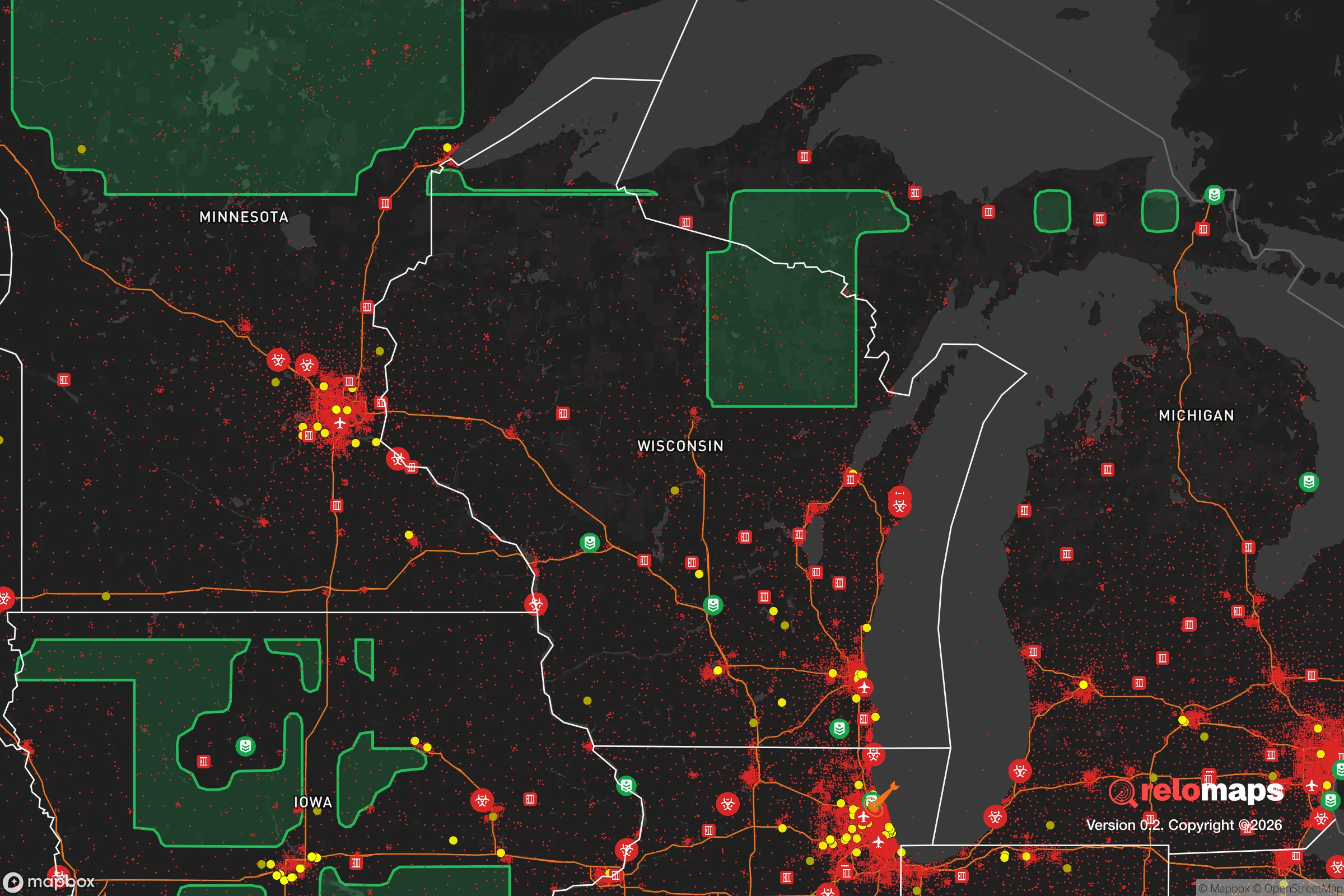


Important Note: For informational purposes only. This does not mean nothing bad ever happens in the green zones. Please use common sense. This is based on public data and modeled with AI. We tried to take a conservative approach but mistakes happen. We update this regularly as new information becomes available.
Solar Generator Recommendations
Backup power matters more here than in safer locations. We've picked three solar generators across budgets and capacity tiers — start with the budget unit if you only need a few essentials, or step up if you want to run a fridge and HVAC for days at a time.

Jackery Portable Power Station Explorer 300
Budget OptionPower on the Go: Weighing only 11 lbs, it's convenient to set up and store with book-sized foldable solar panels

BLUETTI Portable Power Station AC180
Designed for both indoor and outdoor scenarios, AC180 is highly capable as it has a robost capacity and continuous output power.

EF ECOFLOW DELTA Pro Ultra Power Station
Upgraded PickEcoFlow DELTA Pro Ultra is a whole-home energy system designed to grow with your family. Integrated with the Smart Home Panel 2, it scales to meet your evolving energy needs — keeping your home powered, intelligent, and secure through every stage of life.
We earn a commission, at no additional cost to you.
Strategic Assessment Analysis
New Berlin, Wisconsin, sits in a strategic sweet spot that resilience-minded relocators should take seriously: close enough to Milwaukee’s economic engine to sustain a career and supply chain access, yet far enough to avoid the worst of urban collapse scenarios. This Waukesha County suburb of roughly 40,000 residents offers a blend of suburban infrastructure and semi-rural buffer zones that make it a credible base for long-term preparedness. Its position along the I-94 corridor and proximity to Lake Michigan’s freshwater reserves give it geographic advantages that many inland communities lack, but those same assets come with exposure risks that demand careful evaluation.
Geographic position and natural advantages for long-term security
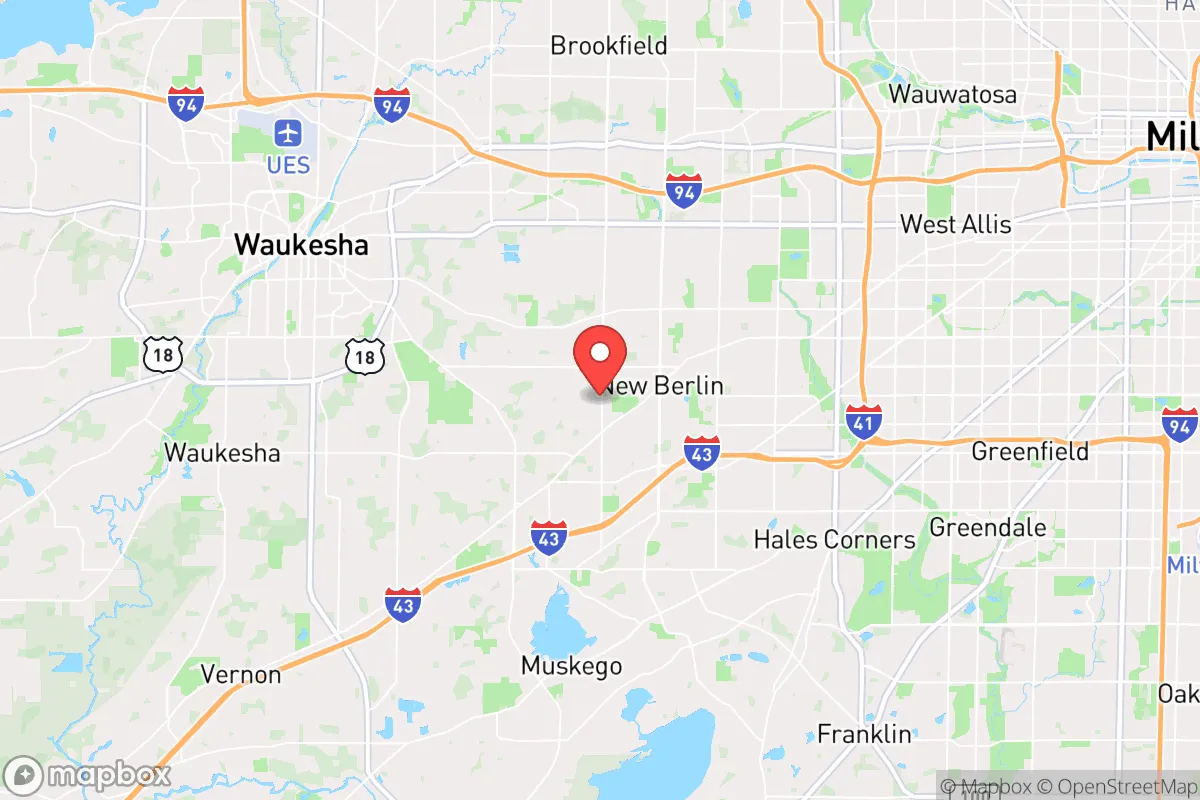
New Berlin’s location in southeastern Wisconsin places it roughly 15 miles west of downtown Milwaukee and 30 miles north of the Illinois border, putting it within a day’s drive of Chicago, Madison, and Green Bay. For a prepper, this means access to multiple evacuation routes—I-94, I-43, and US-18 all pass within a short drive—and the ability to tap into three distinct regional economies if local conditions deteriorate. The city sits on the edge of the Kettle Moraine region, a glacially carved landscape of rolling hills, hardwood forests, and small lakes that provide natural cover and defensible terrain. The area’s groundwater is generally abundant and of good quality, with the deep sandstone aquifer beneath Waukesha County yielding reliable well water for those who invest in private systems. Lake Michigan, just 20 miles east, represents an essentially unlimited freshwater source, though accessing it during a crisis would require travel through potentially congested suburban corridors. The local climate is four-season, with cold winters that naturally slow population movement and reduce the spread of airborne pathogens—a factor that worked in the region’s favor during the COVID-19 pandemic and would apply to any future biological event. The growing season runs roughly 150 days, long enough for serious gardening and small-scale agriculture, and the county’s soil is a mix of silt loam and clay loam that supports staple crops like corn, beans, and squash.
Risks, exposures, and proximity to fallout-relevant landmarks
The most significant vulnerability for New Berlin is its proximity to Milwaukee, a city of nearly 600,000 that would likely experience severe civil unrest, resource shortages, and infrastructure failure during a national crisis. The I-94 corridor connecting Milwaukee to Madison is a natural chokepoint that could become impassable during an evacuation, and the interstate’s bridges over the Menomonee River and other waterways are potential targets for sabotage or collapse. New Berlin is also within 50 miles of the Point Beach Nuclear Plant, a two-unit facility on Lake Michigan that has experienced multiple emergency shutdowns and security incidents since its 1970s construction. A catastrophic release from Point Beach would put New Berlin downwind under prevailing westerly winds, potentially exposing residents to fallout within hours. The city’s own infrastructure—a mix of municipal water, natural gas, and electrical grid—is tied to regional systems that would fail simultaneously during a major event. The Mitchell International Airport, 20 miles east, is a secondary risk: in a pandemic or bioweapon scenario, it could become a vector for disease spread, and in a conventional war, it would be a high-value target. On the positive side, New Berlin has no major chemical plants, refineries, or military bases within its borders, and the nearest active rail lines carry mostly freight rather than hazardous materials. The city’s low population density—roughly 1,200 people per square mile—means that a biological agent or radiation plume would dilute faster than in denser suburbs like Brookfield or Wauwatosa.
Practical resilience for a relocator: food, water, energy, and defensibility
For a relocator serious about self-sufficiency, New Berlin offers a workable but not ideal baseline. The city’s zoning allows for backyard chickens, beekeeping, and small livestock on lots of one acre or more, and many homes in the western half of the city sit on half-acre to two-acre parcels that provide room for raised beds, rainwater catchment, and solar panels. The municipal water supply comes from Lake Michigan via the Milwaukee Water Works, which is vulnerable to contamination and pressure loss during a grid-down event, but private wells are common in the outlying areas and can be retrofitted with hand pumps or solar-powered DC pumps for off-grid operation. The electrical grid is served by We Energies, a utility that has shown moderate reliability but would be overwhelmed by a regional blackout; a whole-home generator with a 500-gallon propane tank is a standard upgrade among local preppers. Natural gas is widely available for heating and cooking, but the pipeline network is a single point of failure that would be compromised in a coordinated attack or earthquake. Food resilience is the weakest link: Waukesha County produces less than 5% of its own caloric needs, and the nearest working farms are 10 to 20 miles west in Jefferson and Dodge counties. A relocator would need to establish relationships with those farmers now, barter for bulk grains and protein, or invest in a serious home garden and greenhouse operation to achieve meaningful food independence. Defensibility is moderate: the city’s street layout is a mix of cul-de-sacs and arterial roads that create natural chokepoints, and the surrounding forested areas provide cover for perimeter security. However, the lack of natural barriers like rivers or ridges means that a determined group could approach from multiple directions. The local police department has about 50 sworn officers and a reputation for professionalism, but in a collapse scenario, they would be stretched thin and likely focused on protecting the city’s core infrastructure rather than individual homes.
The overall strategic picture for New Berlin is one of calculated trade-offs. It offers a solid foundation for a prepared individual or family who is willing to invest in off-grid systems, build local supply chains, and maintain a low profile. The proximity to Milwaukee is a double-edged sword: it provides economic opportunity and access to medical resources now, but it becomes a liability during a crisis. The city’s conservative lean—Waukesha County voted +18 for Trump in 2020—means that local governance and community norms are generally aligned with self-reliance and limited government, which reduces the risk of overbearing emergency regulations. For a relocator who wants to be within striking distance of urban resources while maintaining a defensible position in the upper Midwest, New Berlin is a viable option—but only if you treat it as a base camp, not a fortress. The real resilience lies in the relationships you build with neighbors, the supplies you stock, and the skills you develop before the lights go out.

* Values derived from national, state, county, city and local statistics and may differ in a specific area. Last updated: 2026-04-21T10:43:07.000Z
Narrative content on this page is AI-generated and may contain mistakes. Verify any details that matter before acting on them.
ReloMaps may earn a commission from affiliate links at no extra cost to you.

