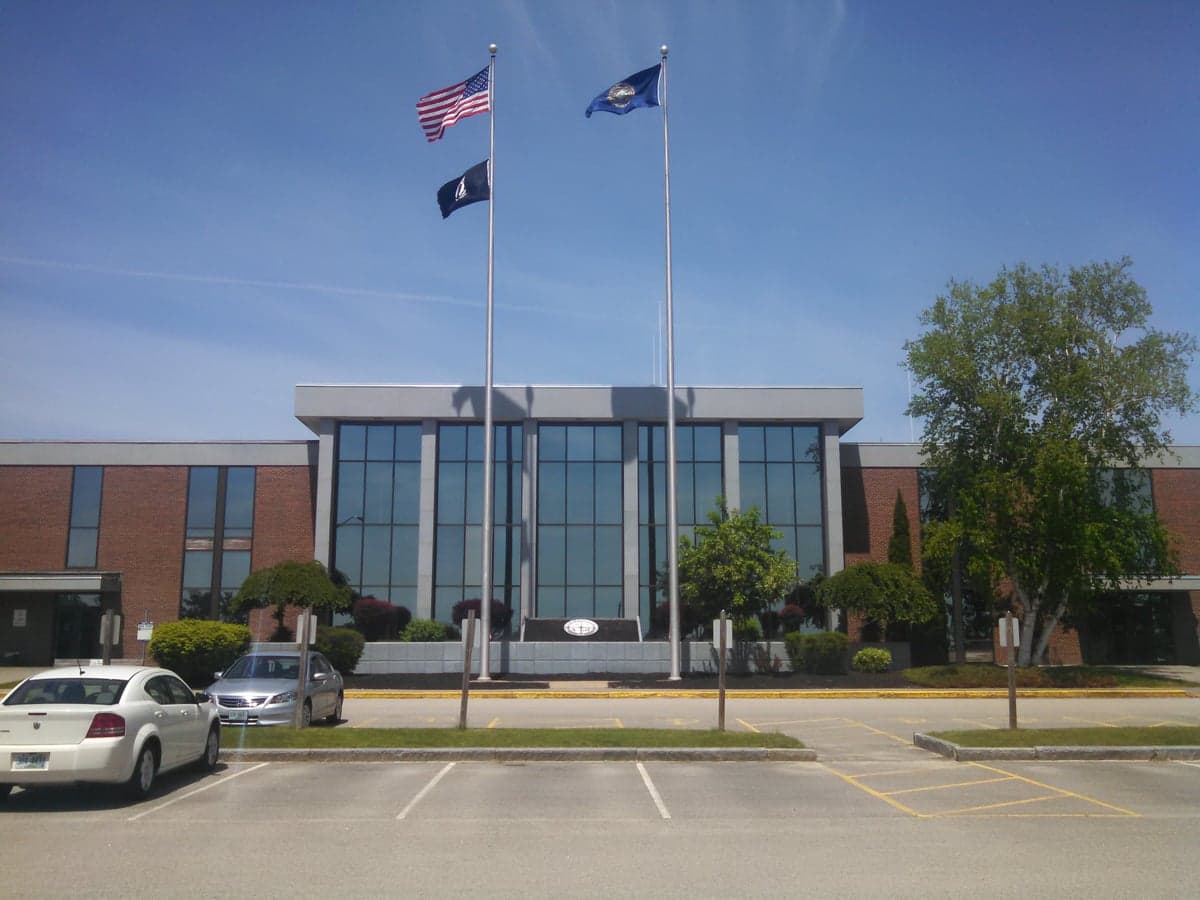
Photo: Wikipedia
Demographics of Strafford County
Affluence Level in Strafford County
A middle-class area roughly in line with national averages across income, home values, education, and employment.
People of Strafford County
Strafford County, New Hampshire, is home to 131,743 residents, a population that remains overwhelmingly white (88.1%) with a very low foreign-born share of just 1.5%. The county’s identity is shaped by its historic mill towns like Rochester and Dover, its role as a bedroom community for the Portsmouth and Seacoast region, and a growing suburban corridor along the Spaulding Turnpike. While the population is less diverse than the national average, modest growth in Hispanic (3.1%) and East/Southeast Asian (1.8%) communities is slowly reshaping the county’s demographic character, particularly in the more urbanized southern towns.
Settlement & growth (pre-1960)
Long before European settlement, the area now known as Strafford County was inhabited by the Pennacook and Abenaki peoples, who lived along the Cocheco, Salmon Falls, and Lamprey rivers. These rivers would later become the engine of European colonization, as English settlers from the Massachusetts Bay Colony pushed north into the New Hampshire frontier in the mid-1600s. The first permanent English settlements were established in Dover (1623) and Durham (1635), making them among the oldest continuously inhabited communities in the state. These early settlers were primarily English Puritans and Congregationalists, drawn by timber, fur trading, and fertile river valleys.
During the 18th and early 19th centuries, the population grew slowly but steadily, fueled by natural increase and a trickle of Scots-Irish and English migrants moving north from Massachusetts. The county was officially formed in 1771 from parts of Rockingham County, named after the Earl of Strafford. The real population boom came with the Industrial Revolution. By the 1820s and 1830s, the Cocheco River in Dover and the Salmon Falls River in Rochester powered massive textile mills, drawing waves of French-Canadian immigrants from Quebec between 1840 and 1900. These French-Canadian families settled in dense mill-worker neighborhoods in Dover, Rochester, and Somersworth, establishing a Franco-American cultural presence that remains strong today. Smaller numbers of Irish immigrants arrived in the 1840s and 1850s, working on railroad construction and in the mills, settling primarily in Dover and Rochester. A modest wave of Polish and other Eastern European immigrants came in the early 1900s, also drawn by mill work, but their numbers were smaller than in southern New England mill cities like Lowell or Manchester.
By the mid-20th century, the textile industry was in decline, and Strafford County’s population growth slowed. The 1950s and early 1960s saw the beginning of suburbanization, as families moved out of the mill cities into surrounding towns like Barrington, Lee, and Madbury, commuting to jobs in Portsmouth and the growing Seacoast economy. The county’s population in 1960 was roughly 60,000, still overwhelmingly white and native-born, with a strong Franco-American and English-descended character.
Modern era (post-1965)
The 1965 Hart-Cellar Act had a relatively muted effect on Strafford County compared to urban areas or the Sun Belt. The county’s foreign-born population remains very low at 1.5%, reflecting its lack of a major urban gateway or large-scale industrial recruitment of immigrants. However, the post-1965 period did see gradual demographic shifts driven by domestic migration and suburban expansion. The most significant change has been the growth of the University of New Hampshire in Durham, which expanded dramatically from the 1960s onward, bringing a steady influx of students, faculty, and staff from across the country and, to a lesser extent, from abroad. This has made Durham the most educated and transient part of the county, with a college-educated share well above the county average of 38.5%.
Domestic migration from Massachusetts and other parts of New England accelerated in the 1980s and 1990s, as families sought lower housing costs and more land while still commuting to Seacoast jobs. This wave settled heavily in the suburban towns along the Spaulding Turnpike corridor: Rochester, Barrington, and Farmington saw significant new housing developments. Rochester, the county’s largest city, transformed from a struggling former mill town into a regional retail and service hub, attracting new residents from southern New England and, increasingly, from other states. The county’s Hispanic population, now 3.1%, began to grow in the 1990s and 2000s, driven by both domestic migration and some direct immigration from Latin America, with small but visible communities forming in Dover and Rochester. The East/Southeast Asian population (1.8%) is concentrated in Durham and Dover, often linked to the university and the region’s high-tech and healthcare sectors. The Indian subcontinent population (0.8%) is similarly small and university-connected. The Black population remains very small at 1.2%, with no significant enclave formation.
Suburbanization has been the dominant demographic force of the modern era. The county’s population grew from roughly 85,000 in 1970 to over 130,000 today, with most of that growth occurring in the towns outside the historic mill cities. This has diluted the Franco-American cultural dominance of earlier decades, though French surnames and Catholic parish traditions remain common in Dover, Somersworth, and Rochester.
The future
Strafford County is likely to continue its slow, steady growth over the next 10 to 20 years, driven primarily by domestic migration from southern New England and, to a lesser extent, from other regions of the country. The county’s diversity will increase modestly, but it will remain one of the whitest and least foreign-born counties in the Northeast. The Hispanic and East/Southeast Asian populations are expected to grow gradually, dispersing across the suburban towns rather than forming dense ethnic enclaves. The Indian subcontinent population will likely remain small and tied to professional sectors. The most significant demographic shift may be generational: as the county’s older, long-established Franco-American and English-descended population ages, younger in-migrants from Massachusetts and beyond will continue to reshape the cultural and political character of the county, particularly in the more liberal-leaning towns of Durham, Lee, and Madbury. Rochester and Farmington, with more working-class and conservative leanings, may see slower demographic change.
For someone moving into Strafford County now, the area offers a mix of historic small-city character, suburban convenience, and rural open space, with a population that is stable, predominantly white, and increasingly educated. The county is becoming more connected to the broader Seacoast economy and culture, but it remains distinct from the more diverse and urbanized parts of New England. New residents will find a place where community identity is still strongly tied to town and parish, where the Franco-American heritage is visible but fading, and where the biggest changes ahead are likely to be gradual rather than transformative.

* Values derived from national, state, county, city and local statistics and may differ in a specific area. Last updated: 2026-08-08T16:08:10.000Z
Narrative content on this page is AI-generated and may contain mistakes. Verify any details that matter before acting on them.
ReloMaps may earn a commission from affiliate links at no extra cost to you.

