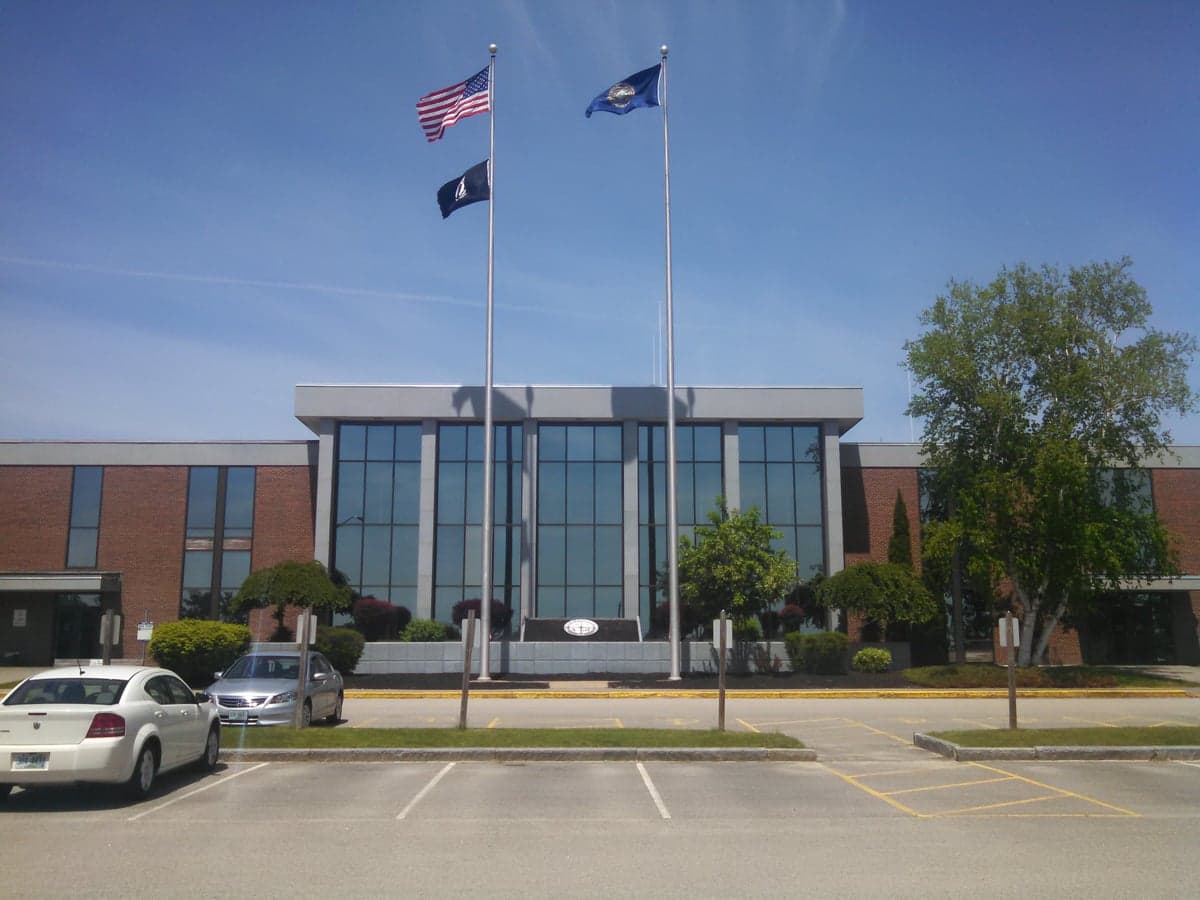
Photo: Wikipedia
Political ClimatePolitical Climate in Strafford County
Showing district-level results — no local-only data available.
Local Political AnalysisPolitical Analysis of Strafford County
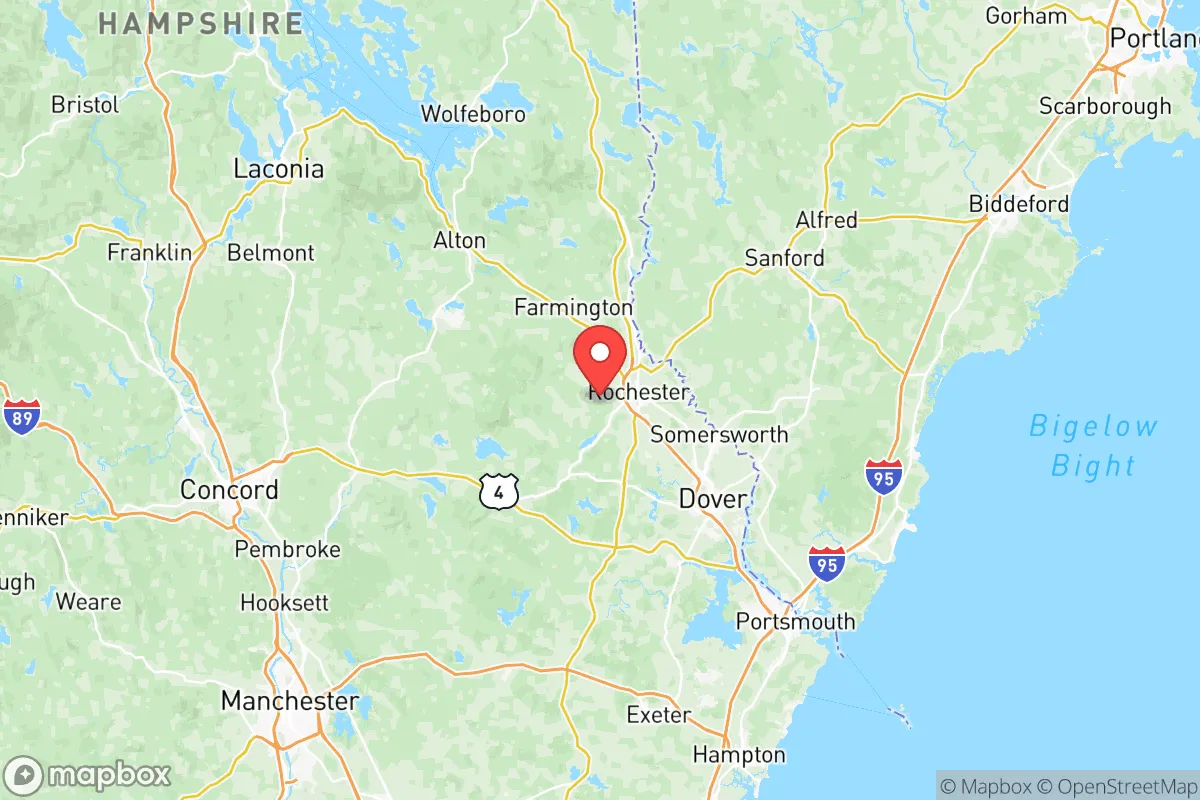
Strafford County, New Hampshire, sits in a fascinating political middle ground. With a Cook Partisan Voting Index (PVI) of D+2, it leans slightly Democratic, but that number masks a deeply competitive landscape where local elections are often decided by razor-thin margins. The county's trajectory has been one of slow but steady Democratic gains, driven largely by the growth of the University of New Hampshire in Durham and the suburban expansion around Dover and Rochester, though the rural towns and exurbs still hold a strong Republican base.
How it compares
Strafford County's D+2 PVI is identical to the statewide New Hampshire PVI of D+2, making it a near-perfect bellwether for the state's political mood. In practice, this means the county's vote often mirrors the statewide result within a percentage point or two. But the internal variation is stark. Durham is the county's Democratic stronghold, routinely delivering 70-80% of its vote to Democratic candidates, powered by the student and faculty population at UNH. Dover and Somersworth are reliably blue but less lopsided, with Dover's downtown and waterfront areas trending left while its outer neighborhoods are more purple. Rochester is the county's swing city—its working-class roots and growing exurban population make it a true battleground, often breaking for Republicans in midterms and Democrats in presidential years. The rural towns—Middleton, Milton, Farmington, and Strafford—lean red, with Farmington and Middleton often voting 55-60% Republican. Lee and Madbury are classic swing towns, with Lee's mix of UNH faculty and rural conservatives making it a precinct to watch on election night.
What this means for residents
For conservative residents, the county's purple hue means their votes matter enormously. A Republican candidate who can win Rochester and hold the rural towns to 60% while keeping losses in Durham and Dover under 15 points can carry the county. For liberal residents, the D+2 lean provides a slight cushion, but complacency is dangerous—local school board and county commission races are often decided by fewer than 500 votes. The practical effect is that both sides organize heavily. You'll see yard signs for both parties in equal measure on Route 125 through Rochester, and the local GOP and Democratic committees are among the most active in the state. The county's political identity is best described as pragmatic and independent—voters here are less ideological than in neighboring Rockingham County (R+4) or Hillsborough County (D+1), and they frequently split tickets, especially in state legislative races.
One cultural distinction that sets Strafford County apart is its relationship with the Lakes Region and Seacoast identities. The county straddles both: the eastern towns like Durham and Dover feel connected to Portsmouth and the coast, while the western towns like Farmington and Strafford look toward the Lakes Region and the White Mountains. This geographic split reinforces the political divide. Policy-wise, the county has been a battleground over school funding and property taxes, with the state's reliance on local property taxes hitting rural towns harder than the more affluent Seacoast communities. The county delegation to the state legislature is often split nearly evenly between parties, meaning local issues like the future of the Rochester Municipal Airport or the expansion of the Dover Transportation Center get hashed out in genuinely bipartisan negotiations. For a new resident, the takeaway is simple: your vote will count here, and you'll find plenty of neighbors who disagree with you—but most will still wave hello on the trail.

State Political ClimatePolitical Climate in New Hampshire
State Political AnalysisPolitical Environment in the State
New Hampshire has long been the most politically independent state in New England, and that reputation still holds, but the ground has shifted. The state’s Cook PVI of D+2 tells a story of a true battleground, but the reality is more nuanced: the state has been trending slightly right over the past decade, even as its southern tier grows more suburban and Democratic. In 2024, Donald Trump lost the state by just under 3 points, a narrower margin than in 2020, and Republicans now control the Governor’s office, the Executive Council, and both chambers of the state legislature. The old “Live Free or Die” libertarian streak is still the dominant political culture, but it’s increasingly expressed through a conservative lens on fiscal policy and local control, even as social issues remain more moderate than in much of the country.
Urban vs. rural divide
The political map of New Hampshire is a classic story of a few dense, liberal-leaning cities surrounded by a vast, conservative-leaning countryside. The entire Democratic base is concentrated in the southeastern corner: Manchester, Nashua, Portsmouth, and Concord reliably vote blue, with Manchester’s Ward 1 and Ward 2 often delivering 70%+ Democratic margins. The Seacoast region, including Durham (home to UNH) and Exeter, is also solidly Democratic. But drive 20 minutes north or west of any of these cities, and you hit deep red territory. Salem and Londonderry in Rockingham County have flipped from swing to reliably Republican over the past two cycles. The entire North Country—Berlin, Lancaster, Colebrook—votes Republican by 20-30 points, driven by a strong hunting and outdoor recreation culture and skepticism of government overreach. The Lakes Region and the Monadnock Region are more mixed, with Keene being a small blue island in a red sea. The key takeaway: if you live in the southern tier near the Massachusetts border, you’re in a purple-to-blue zone; anywhere else, you’re in solid red territory.
Policy environment
New Hampshire’s policy environment is defined by its lack of a broad-based income or sales tax, which is the state’s biggest political constant. The state relies on property taxes and business taxes, and the legislature has consistently resisted any move toward an income tax, with the “no income tax” pledge being a near-requirement for Republican candidates. The regulatory posture is light compared to neighboring Massachusetts and Vermont, especially for small businesses and land use. Education policy is dominated by the school choice debate: in 2024, the state expanded its Education Freedom Account program, which allows public funds to follow students to private or homeschool settings, making it one of the most expansive school choice programs in the country. Healthcare is a mixed bag; the state expanded Medicaid under the Affordable Care Act, but the current Republican legislature has pushed for work requirements and cost controls. Election laws are famously open: same-day voter registration is allowed, and there is no voter ID requirement for most voters, though a 2024 law tightened absentee ballot rules. Gun laws are among the most permissive in the Northeast: no permit required for open or concealed carry, no magazine capacity limits, and a “stand your ground” law on the books since 2011.
Recent policy direction
Over the past three years, the state has moved decisively in a conservative direction on several fronts. On gun and self-defense law, the 2024 session saw the defeat of a proposed “red flag” law, and the legislature instead passed a bill prohibiting local governments from enforcing federal gun restrictions, a direct response to the Biden administration’s regulatory push. On parental and education rights, the 2023 “Parents’ Bill of Rights” (HB 1431) requires schools to notify parents of curriculum changes and allows them to opt their children out of sex education; a 2024 law banned the teaching of “divisive concepts” related to race and gender in K-12 classrooms. On medical and bodily autonomy, the state remains a relative moderate: abortion is legal up to 24 weeks, and a 2024 law codified protections for out-of-state patients seeking care in New Hampshire, though parental notification for minors remains in place. On property rights, the state has resisted statewide zoning mandates, leaving land-use decisions to local boards, which has kept housing costs lower than in Massachusetts but has also limited new construction in the Seacoast. On taxation, the 2024 budget included a phased reduction of the Business Profits Tax from 7.5% to 6.5% by 2027, and the Interest and Dividends Tax was fully repealed as of 2025. On voting and ballot access, the 2024 law requiring proof of residency for same-day registration was a tightening, but the state still ranks among the easiest to vote in nationally.
Civil unrest & political movements
New Hampshire is not a state known for large-scale civil unrest, but it has a vibrant and visible activist culture on both sides. The Free State Project, a movement that has relocated thousands of libertarians to the state since the early 2000s, has had an outsized influence on local politics, particularly in the state legislature, where Free State-aligned members have pushed for the repeal of gun laws, the abolition of property taxes, and the legalization of cannabis (which remains illegal for recreational use, though decriminalized). On the left, the Granite State Progress network and the NH Youth Movement have organized around climate action and abortion rights, with a notable 2023 protest at the State House drawing over 2,000 people against the Parents’ Bill of Rights. Immigration politics are less heated than in border states, but Manchester has seen tensions over its growing refugee and immigrant communities, with a 2024 city council debate over sanctuary policies ending in a compromise that limits cooperation with ICE but does not bar it entirely. Election integrity controversies have been minimal compared to other swing states; the 2020 and 2024 elections were certified without major disputes, though a 2023 audit of the 2020 election in Windham (a Republican town) found no evidence of fraud, despite initial claims. The most visible flashpoint for a new resident would likely be the annual “Live Free or Die” rally at the State House, which draws a mix of libertarians, Second Amendment advocates, and anti-vaccine activists, alongside counter-protests from progressive groups.
Projection
Over the next 5-10 years, New Hampshire is likely to continue its slow rightward drift, but it will remain a competitive state. The key demographic driver is in-migration from Massachusetts, which brings both high-income professionals who lean Democratic and remote workers who value the state’s low taxes and outdoor lifestyle, many of whom are more libertarian than partisan. The Seacoast and the Merrimack Valley will continue to grow and become more purple, while the North Country and the western regions will remain deeply red. The Free State Project’s influence may peak in the next few years as its most active members age out, but its legacy of pushing for small-government policies will persist. The biggest wildcard is housing: if the state fails to build enough housing to accommodate growth, the cost of living will push out younger families and reinforce the existing political divides. A new resident moving in now should expect a state where the political conversation is dominated by taxes, school choice, and local control, with a legislature that is reliably conservative but tempered by a moderate Republican governor and a Democratic-leaning Supreme Court. The “Live Free or Die” ethos is real, but it’s increasingly a conservative version of freedom rather than a libertarian one.
For a conservative relocator, New Hampshire offers a rare combination: low taxes, permissive gun laws, school choice, and a political culture that respects local autonomy, all within a state that is still purple enough to feel like a battleground rather than a foregone conclusion. For a liberal relocator, the state offers a high quality of life, strong abortion protections, and a vibrant civic culture, but with the understanding that the legislature will continue to push conservative policies on education and guns. The bottom line is that New Hampshire is not a red state or a blue state—it’s a state where your vote actually matters, and where the political fights are real, local, and often decided by a few hundred votes in a town hall meeting. If you want to live in a place where your voice can still change the outcome, this is it.
* Values derived from national, state, county, city and local statistics and may differ in a specific area. Last updated: 2026-08-08T16:08:10.000Z
Narrative content on this page is AI-generated and may contain mistakes. Verify any details that matter before acting on them.
ReloMaps may earn a commission from affiliate links at no extra cost to you.

