
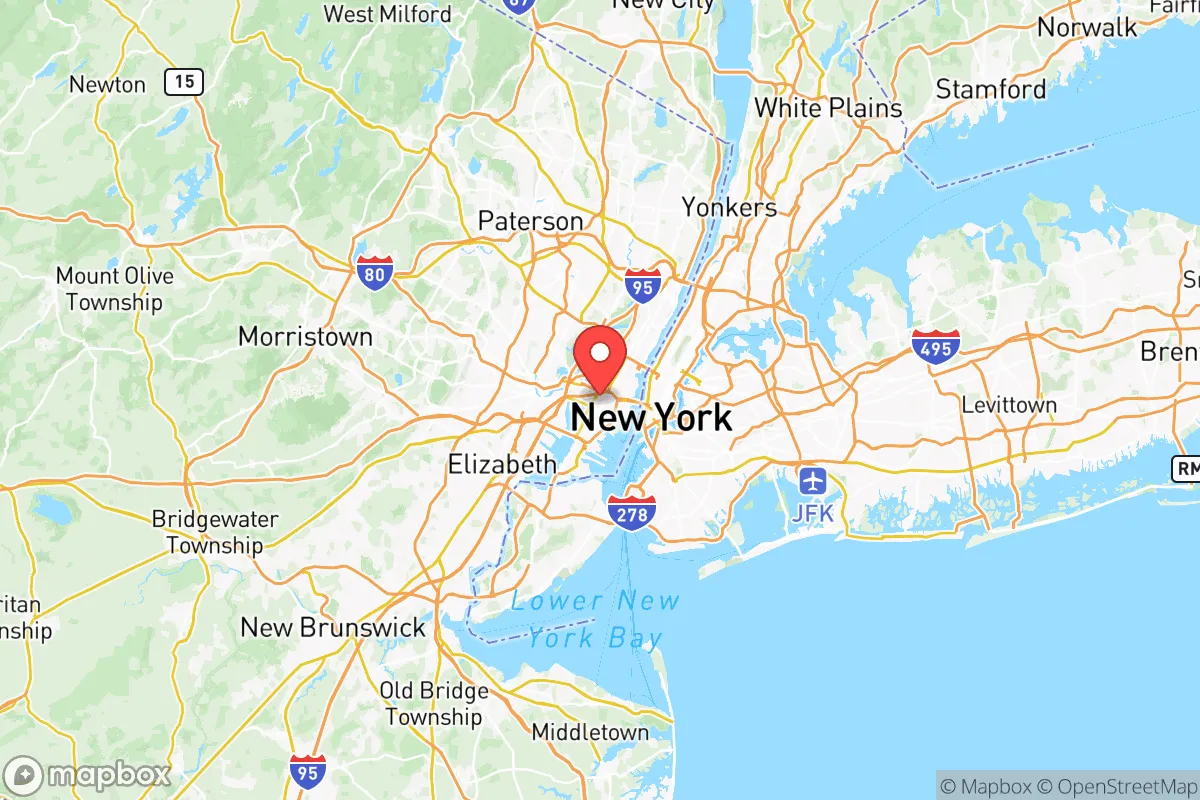
Photo: Wikipedia
Strategic Assessment of Hudson County
High tactical risk. This location is likely close to major population centers, strategic targets, or sits in a high-disaster corridor. A retreat property and careful exit planning is required.
What does the Strategic Assessment tell us?
Our Strategic Assessment grades tactical survivability of an area. Major population centers, military targets, fallout zones, natural disasters, and border exposure all drive risk — lower exposure means a more defensible position in a crisis.
This is heavily inspired by Joel Skousen's Strategic Relocation book. Highly recommended you checkout the book ($)What does this tell us?
Our Strategic Assessment grades tactical survivability of an area. Major population centers, military targets, fallout zones, natural disasters, and border exposure all drive risk — lower exposure means a more defensible position in a crisis.
This is heavily inspired by Joel Skousen's Strategic Relocation book. Highly recommended you checkout the book ($)Strategic Pillars

Key Distances
Strategic Assessment Analysis
Hudson County, New Jersey, presents a complex and largely unfavorable strategic picture for a conservative-leaning relocator focused on resilience, self-sufficiency, and avoiding high-risk population centers. While its proximity to New York City offers economic opportunity, that same proximity is a severe liability in any scenario involving civic unrest, mass casualty events, or large-scale disasters. The county’s dense urban core, heavy reliance on external infrastructure, and position as a prime target for fallout-relevant events make it a poor choice for those prioritizing long-term security and family preparedness over career access.
Geographic position and natural advantages for a strategic relocation
Hudson County sits directly across the Hudson River from Manhattan, with cities like Jersey City, Hoboken, and Bayonne forming a dense, interconnected urban corridor. The county’s natural geography offers little in the way of defensible terrain—it’s a flat, heavily developed peninsula surrounded by waterways. The Hackensack River and Newark Bay provide some natural barriers, but these are navigable and do little to slow a determined threat. The Palisades along the western edge offer elevated ground in parts of North Bergen and Weehawken, but these areas are still densely populated and lack the rural buffer needed for true strategic depth. For a relocator, the county’s only natural advantage is its access to water—potentially useful for fishing or evacuation by boat—but this is outweighed by the overwhelming density and lack of agricultural land. There are no significant freshwater sources for independent supply; the county relies entirely on the Jersey City Municipal Utilities Authority and other regional systems, which are vulnerable to disruption.
Risks, exposures, and proximity to fallout-relevant landmarks
Hudson County is surrounded by high-value, high-risk targets that make it a likely zone for secondary effects of a major event. Directly across the river is New York City, a primary target for any state-level actor or terrorist group. Within the county itself, Bayonne hosts the Bayonne Bridge and the Port of New York and New Jersey—one of the busiest container ports on the East Coast. The Holland Tunnel and Lincoln Tunnel entrances in Jersey City and Weehawken are chokepoints that would become impassable during an evacuation, creating gridlock and potential civil unrest. The Newark Bay Refinery complex, just across the bay in Newark, is a major petrochemical site; a release or attack there would send toxic plumes directly over Hudson County depending on wind direction. Liberty State Park in Jersey City sits adjacent to rail lines and the port, making it a poor bug-out location. For a prepper, the concentration of infrastructure—tunnels, bridges, refineries, ports, and a major city—means that any single event could cascade into a county-wide crisis. The population density (over 9,000 people per square mile in Jersey City alone) guarantees that even a minor disruption would trigger panic and resource shortages.
Practical resilience for a relocator: food, water, energy, and defensibility
For a family or individual looking to establish a resilient household, Hudson County is a logistical nightmare. Food security is virtually nonexistent—there is no significant agricultural land within the county. The few community gardens in Jersey City and Hoboken are small-scale and would be overwhelmed in a crisis. Water independence is equally problematic; the county’s water comes from the Wanaque Reservoir and the Passaic River, both of which are vulnerable to contamination or sabotage. A prepper would need to store weeks’ worth of water, which is impractical in the typical apartment or rowhouse. Energy resilience is poor—most homes rely on the grid, and natural gas lines are common but vulnerable to earthquakes or sabotage. Solar panels are possible but limited by roof space and shading from tall buildings. Defensibility is the weakest point: Hudson County’s urban layout means neighbors are close, escape routes are limited to a few bridges and tunnels, and law enforcement response times would be stretched thin during a widespread event. The Hudson County Sheriff’s Office and local police are professional, but they cannot secure every block in a city of 700,000 people. For a conservative relocator valuing self-reliance, the county offers no realistic option for a secure, independent homestead.
The overall strategic picture for Hudson County is clear: it is a high-risk, low-resilience area that should be avoided by anyone prioritizing long-term preparedness. The economic benefits of being near New York City are real, but they come at the cost of exposure to every major threat—terrorism, civil unrest, infrastructure failure, and natural disaster. For a single individual or family willing to trade career access for security, the better move is to look west to Sussex County or north to Orange County, New York, where land is cheaper, population density is lower, and the ability to store supplies and defend a property is far greater. Hudson County is a place to work, not a place to build a resilient life.

* Values derived from national, state, county, city and local statistics and may differ in a specific area. Last updated: 2026-05-19T07:24:09.000Z
Narrative content on this page is AI-generated and may contain mistakes. Verify any details that matter before acting on them.
ReloMaps may earn a commission from affiliate links at no extra cost to you.

