Photo: Wikipedia
Political ClimatePolitical Climate in Hudson County
Showing district-level results — no local-only data available.
Local Political AnalysisPolitical Analysis of Hudson County
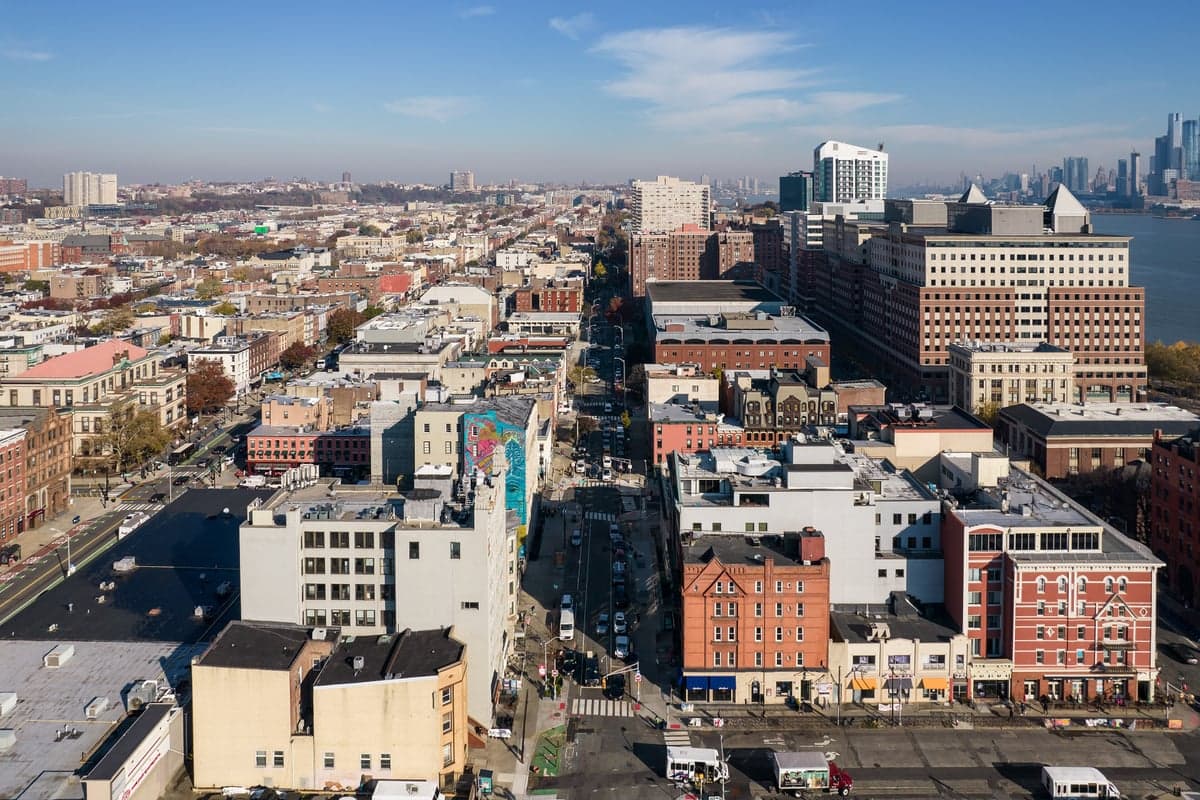
Hudson County is about as blue as it gets in New Jersey, with a Cook PVI of D+27 that makes it one of the most reliably Democratic counties in the entire country. That’s a far cry from the state’s overall D+5 rating, and it means the political machine here has been running on autopilot for decades. I’ve lived here long enough to remember when the party bosses actually had to work to keep people in line; now, it feels like the progressive wing has taken-for-granted attitude has taken over, and that’s something worth keeping an eye on if you value personal freedoms.
How it compares
New Jersey as a whole leans Democratic, but it’s still a purple state in many ways—you’ve got swing districts in places like Ocean County and parts of Morris County that keep things balanced. Hudson County is a different animal entirely. The D+27 PVI means Republicans are essentially non-competitive in countywide races, and the real political fights happen in the Democratic primaries. That’s where you see the variation: Jersey City and Hoboken are deep blue strongholds where progressive policies like rent control and sanctuary city status are the norm, while Bayonne and Kearny still have a more moderate, working-class Democratic streak. North Bergen and Union City are classic machine towns where the local party bosses call the shots, and dissent is often quietly squashed. The swing precincts are almost nonexistent—maybe a few blocks in West New York or Secaucus where independent voters might tip a primary, but general elections are a foregone conclusion.
What this means for residents
For someone like me who’s wary of government overreach, the lack of political competition is a real concern. When one party holds all the cards, there’s less incentive to listen to residents who don’t fit the progressive mold. Property taxes are among the highest in the state, and local governments have a habit of expanding their reach—think strict rent control ordinances in Jersey City that can make it hard for landlords to maintain properties, or the push for “sanctuary” policies that limit cooperation with federal immigration enforcement. The school boards in places like Hoboken and Jersey City have also leaned into progressive curriculum changes that some parents find intrusive. If you value personal freedoms—like the right to choose your own healthcare, run a small business without endless red tape, or send your kids to a school that focuses on basics over ideology—Hudson County’s one-party rule can feel suffocating.
The cultural and policy distinctions here are stark compared to the rest of New Jersey. In the suburbs of Bergen County or the rural parts of Sussex County, you’ll find more balance and a live-and-let-live attitude. Here, the progressive agenda is pushed hard and fast, from plastic bag bans to vaccine mandates for city workers. I’ve seen longtime neighbors move out to Monmouth County or even Pennsylvania just to get away from the constant regulations. The political climate isn’t just blue—it’s a deep, unyielding shade that leaves little room for dissent. If you’re thinking of relocating here, just know that your vote won’t matter much in November, but the primaries, and your voice might get drowned out by the machine. It’s a trade-off: you get the energy of a dense urban area, but you lose a lot of personal autonomy in the process.

State Political ClimatePolitical Climate in New Jersey
State Political AnalysisPolitical Environment in the State
New Jersey has a Cook PVI of D+5, meaning it leans about five points more Democratic than the national average, but that number doesn't tell the whole story. The state has been reliably blue in presidential elections since 1992, but the margin has narrowed slightly in recent cycles—from a 14-point Biden win in 2020 to a 6-point Harris win in 2024. The real action is in the suburbs and exurbs, where a growing number of fiscally conservative, socially moderate voters are pushing back against the state's progressive agenda, while the urban cores remain deeply Democratic and the rural northwest holds firm for the GOP.
Urban vs. rural divide
The political map of New Jersey is a tale of three regions. The urban corridor—Newark, Jersey City, Paterson, and Elizabeth—drives the Democratic supermajority in the legislature, with turnout fueled by dense populations and strong union and minority coalitions. These cities vote 70-80% Democratic and are the engine of the state's blue lean. In contrast, the rural northwest—Sussex County, Hunterdon County, and parts of Warren County—vote 60-65% Republican, driven by gun rights, property tax concerns, and a distrust of Trenton's one-size-fits-all mandates. The real battleground is the suburban ring: Bergen County, Morris County, and Monmouth County. Bergen flipped from reliably red in the 1990s to reliably blue by 2020, but in 2024, Trump improved his margin there by 3 points, signaling a potential shift. Ocean County, meanwhile, is a GOP stronghold that voted 62% for Trump in 2024, powered by retirees and working-class families fleeing high taxes in the north.
Policy environment
New Jersey's policy environment is a mixed bag that leans heavily progressive, but with some surprising brakes. The state has the highest property taxes in the nation—averaging over $9,500 annually—and a progressive income tax that tops out at 10.75% for earners over $1 million. The regulatory posture is dense: the state's own business climate rankings consistently place it near the bottom for ease of doing business, with a maze of environmental, labor, and zoning rules. On education, New Jersey spends more per pupil than almost any other state, but the results are uneven—wealthy suburbs like Millburn and Princeton have top-tier schools, while urban districts like Camden and Newark struggle with chronic underperformance. Healthcare is dominated by the state's Medicaid expansion and a strong insurance mandate, but the cost of care remains high. Election laws are moderately restrictive: no-excuse mail-in voting was made permanent in 2021, but voter ID is not required, which has sparked ongoing debate about election integrity. The state also has a "sanctuary" policy limiting cooperation with federal immigration enforcement, which is a flashpoint for conservative residents.
Trajectory & freedom
Over the past decade, New Jersey has become less free in several key areas, and the trend is accelerating. In 2022, the legislature passed a sweeping gun control package that banned .50 caliber rifles, raised the purchasing age for long guns to 21, and required microstamping on handguns—a law that gun rights advocates call a de facto ban on many popular models. The state also enacted a "red flag" law in 2018 that allows courts to temporarily seize firearms from individuals deemed a threat, with no criminal conviction required. On parental rights, the state has moved in the opposite direction of Florida and Texas: in 2024, the legislature passed a law requiring all public schools to adopt LGBTQ-inclusive curricula, overriding local control. Medical autonomy took a hit with the state's strict COVID-19 vaccine mandates for healthcare workers and school staff, which remain in place despite the end of the public health emergency. Property rights are under pressure from the state's aggressive affordable housing mandates, which force towns to rezone for high-density development, often overriding local zoning boards. The only bright spot for conservatives is the state's recent push to lower corporate taxes—from 11.5% in 2018 to 9% in 2024—but this has been offset by new taxes on millionaires and a proposed wealth tax that is still being debated.
Civil unrest & political movements
New Jersey has seen its share of political flashpoints. In 2020, Newark and Jersey City saw large Black Lives Matter protests, some of which turned violent, with property damage and clashes with police. The state's sanctuary policy has made it a magnet for immigration activism: in 2023, a bus of migrants sent from Texas to Cherry Hill sparked a local crisis, with the mayor declaring a state of emergency and demanding federal help. On the right, the "NJ 2A" movement has held annual rallies at the Statehouse in Trenton, drawing thousands of gun rights activists, and the "Parents Matter" movement has organized school board takeovers in Monmouth County and Ocean County, pushing back against critical race theory and LGBTQ curricula. Election integrity remains a hot-button issue: in 2020, the state's widespread use of mail-in ballots without signature verification led to a lawsuit from the Trump campaign, and in 2024, a controversial law allowed same-day voter registration, which critics say opens the door to fraud. The "New Jersey is not for sale" movement, which opposes the state's affordable housing mandates, has gained traction in affluent suburbs like Montclair and Ridgewood, where residents fear losing local character to high-density development.
Projection
Over the next 5-10 years, New Jersey is likely to become more progressive on social issues but more divided on economic ones. The state's demographic trends favor the Democrats: the urban cores are growing, driven by immigration and young professionals, while the rural northwest is aging and shrinking. However, the exurbs—places like Jackson Township and Lacey Township in Ocean County—are booming with families fleeing high taxes in the north, and these voters are reliably conservative. The wild card is the state's fiscal crisis: with a $10 billion pension liability and a credit rating that has been downgraded multiple times, the state may be forced to cut services or raise taxes further, which could accelerate the exodus of high earners. A conservative moving in now should expect a state that is increasingly polarized, with a government that is friendly to progressive social policies but hostile to gun rights and local control. The next decade will likely see more fights over school curriculum, housing mandates, and tax policy, with the outcome uncertain.
For a new resident, the bottom line is this: New Jersey offers world-class schools and proximity to New York and Philadelphia, but you'll pay for it in taxes and regulatory hassle. If you value local control, gun rights, and low taxes, you'll find yourself fighting an uphill battle in Trenton. If you can afford the cost and tolerate the politics, the state's natural beauty and economic opportunities are unmatched. Just know that the political winds are blowing left, and the fight for freedom is a daily one.
* Values derived from national, state, county, city and local statistics and may differ in a specific area. Last updated: 2026-05-19T07:24:09.000Z
Narrative content on this page is AI-generated and may contain mistakes. Verify any details that matter before acting on them.
ReloMaps may earn a commission from affiliate links at no extra cost to you.

