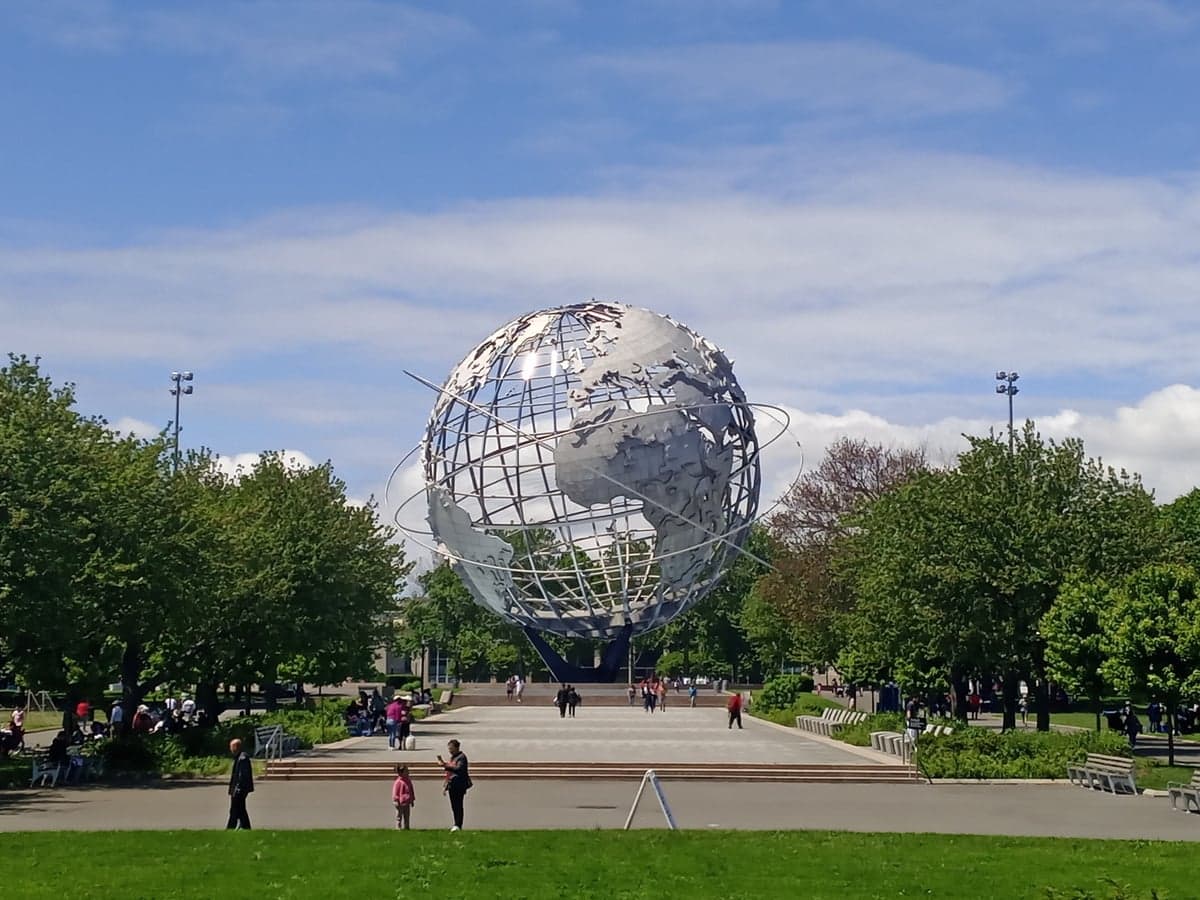
Photo: Wikipedia
Personal Sovereignty in Queens County
Moderate friction. Expect trade-offs in some aspect of personal liberty and independence.
What does Personal Sovereignty tell us?
Personal Sovereignty measures your capacity for self-reliance and independence with minimal government friction. Higher scores mean fewer barriers between you and the way you want to live... but it assumes you have the space you need and good neighbors.
What does this tell us?
Personal Sovereignty measures your capacity for self-reliance and independence with minimal government friction. Higher scores mean fewer barriers between you and the way you want to live... but it assumes you have the space you need and good neighbors.
State Policy
Energy independence: Importer (12% of energy produced in-state)
Personal Liberty
Homesteading

Personal Liberty Analysis
Queens County presents one of the most constrained personal sovereignty environments in the United States, a reality shaped less by local ordinance than by New York State’s centralized regulatory apparatus. For a single individual or family weighing relocation, the county’s 2.3 million residents operate under a dense web of state-level controls covering firearms, taxation, land use, and parental authority that leave comparatively little room for autonomous decision-making. While neighborhoods like Bellerose, Floral Park, and the Rockaway Peninsula retain distinct community characters, the legal framework binding them is uniform and heavy-touch, making Queens a poor fit for those prioritizing self-reliance over access to transit and urban amenities.
How the tax burden and regulatory posture compare to New York State norms
Queens residents face one of the heaviest combined tax loads in the nation, with the average effective property tax rate hovering near 1.8% of home value — roughly double the national average of 0.9%. A median-priced home in neighborhoods like Forest Hills or Bayside, valued around $700,000, carries an annual property tax bill near $12,600, before factoring in the state’s income tax, which tops out at 10.9% for high earners. The regulatory posture compounds the fiscal drag: New York City’s zoning code, administered through the Department of Buildings, imposes strict limits on accessory dwelling units, home occupations, and even basic structural modifications, requiring permits and inspections that routinely take months to secure. Small-business owners in areas like Astoria and Long Island City report that opening a storefront demands multiple city and state licenses, environmental reviews, and compliance with the Scaffold Law — a uniquely New York liability statute that holds property owners fully responsible for worker injuries, driving up insurance costs. Compared to upstate counties like Orleans or Wyoming, where property taxes run closer to 1.2% and county-level permitting is minimal, Queens’ regulatory density is a deliberate feature of its urban design, not an oversight.
Self-defense rights and gun law specifics in Queens County
Queens is among the most restrictive jurisdictions for firearm ownership in the country, operating under the Sullivan Act’s century-old framework plus the 2022 Concealed Carry Improvement Act. A handgun license requires a 16-hour safety course, four character references, and a background check that includes a social media review; the NYPD License Division, which processes applications for Queens residents, currently takes 12 to 18 months to issue a decision, with no guarantee of approval. Concealed carry is legal only with a license, and licensees face a "sensitive location" ban that prohibits firearms in Times Square, subways, parks, and any business serving alcohol — a list so broad that practical carry in neighborhoods like Ridgewood or Jackson Heights is nearly impossible. Long guns are less restricted but still require a background check and a state-issued permit for semiautomatic rifles. Self-defense law in New York follows a "duty to retreat" standard outside the home, meaning a Queens resident confronted in a public space must attempt to escape before using force, even in self-defense. For comparison, a resident of Marble Falls, Texas, or rural Burnet County can carry without a license, faces no sensitive-location restrictions beyond federal buildings, and enjoys Stand Your Ground protections — a chasm in personal sovereignty that no local Queens ordinance can bridge.
Self-reliance and homesteading viability: lot sizes, zoning, and off-grid feasibility
Homesteading in Queens is effectively non-viable, a function of the county’s 109 square miles being almost entirely zoned for dense residential and commercial use. The median lot size in Queens is 2,500 to 4,000 square feet, with most single-family homes in neighborhoods like Bellerose and Douglaston sitting on 40-foot-wide plots — enough for a small garden, but far short of the acreage needed for meaningful food production or livestock. Zoning codes prohibit keeping chickens in most residential districts, ban beekeeping without a special permit, and restrict composting to enclosed bins. Off-grid living is legally impossible: New York State mandates grid connection for any habitable structure, and New York City’s building code requires a certificate of occupancy before anyone can sleep in a dwelling. Rainwater harvesting is restricted by state law to 100 gallons of storage without a permit, and solar panel installation requires both city approval and utility interconnection agreements. The closest approximation to self-reliance is community gardening — Queens has over 100 community gardens, many in areas like Corona and Jamaica, but these are leased city lots, not private property. For genuine homesteading, a resident must look to Suffolk County’s eastern towns like Riverhead or Southold, where 1-acre zoning is common, or to upstate counties where 5-acre minimums and agricultural exemptions make small-scale farming feasible.
Personal liberties: parental rights, medical autonomy, speech, and property
Queens’ personal liberty landscape is defined by state preemption, which leaves local communities little room to diverge from Albany’s mandates. Parental rights are comparatively weak: New York is one of a minority of states that does not require parental consent for a minor to receive mental health counseling, and the state’s 2023 "safe harbor" law allows minors to consent to certain medical treatments without parental notification. Medical autonomy is similarly constrained — New York maintains strict vaccine mandates for school attendance, and the state’s health department holds broad emergency powers that were exercised extensively during the COVID-19 pandemic, including business closures and mask mandates that Queens neighborhoods like Whitestone and Bayside saw enforced heavily. Free speech is protected under the First Amendment, but New York’s anti-SLAPP laws and hate crime statutes create a legal environment where speech deemed harassing can trigger civil liability more readily than in other states. Property rights are the most restricted: rent stabilization covers roughly 45% of Queens’ rental housing stock, meaning landlords in areas like Flushing and Elmhurst cannot set market rates, and tenants have strong eviction protections under the Housing Stability and Tenant Protection Act of 2019. Homeowners face landmark preservation rules in historic districts like those in Jackson Heights, which can dictate exterior paint colors and window replacements. The cumulative effect is a jurisdiction where individual discretion yields to state and city authority across nearly every domain of personal life.
For a relocation reader prioritizing personal sovereignty, Queens County ranks near the bottom of any national comparison — on par with San Francisco and Washington, D.C., and far below the autonomy available in Texas counties like Burnet or Bastrop, where property taxes are lower, gun laws are permissive, and zoning allows genuine rural self-reliance. The county’s strengths — transit access, cultural density, and economic opportunity — come at the direct cost of regulatory freedom. A family seeking independence would find more alignment in the Hudson Valley’s Ulster County, where 2-acre zoning is common and county-level politics lean libertarian, or in Pennsylvania’s Pike County, a 90-minute drive from Manhattan but governed by a far lighter regulatory hand. Queens is a place to live within a system, not outside it; for those who value autonomy as a primary relocation criterion, the county’s dense urban framework will feel less like a home and more like a constraint.

* Values derived from national, state, county, city and local statistics and may differ in a specific area. Last updated: 2026-10-13T23:53:35.000Z
Narrative content on this page is AI-generated and may contain mistakes. Verify any details that matter before acting on them.
ReloMaps may earn a commission from affiliate links at no extra cost to you.

