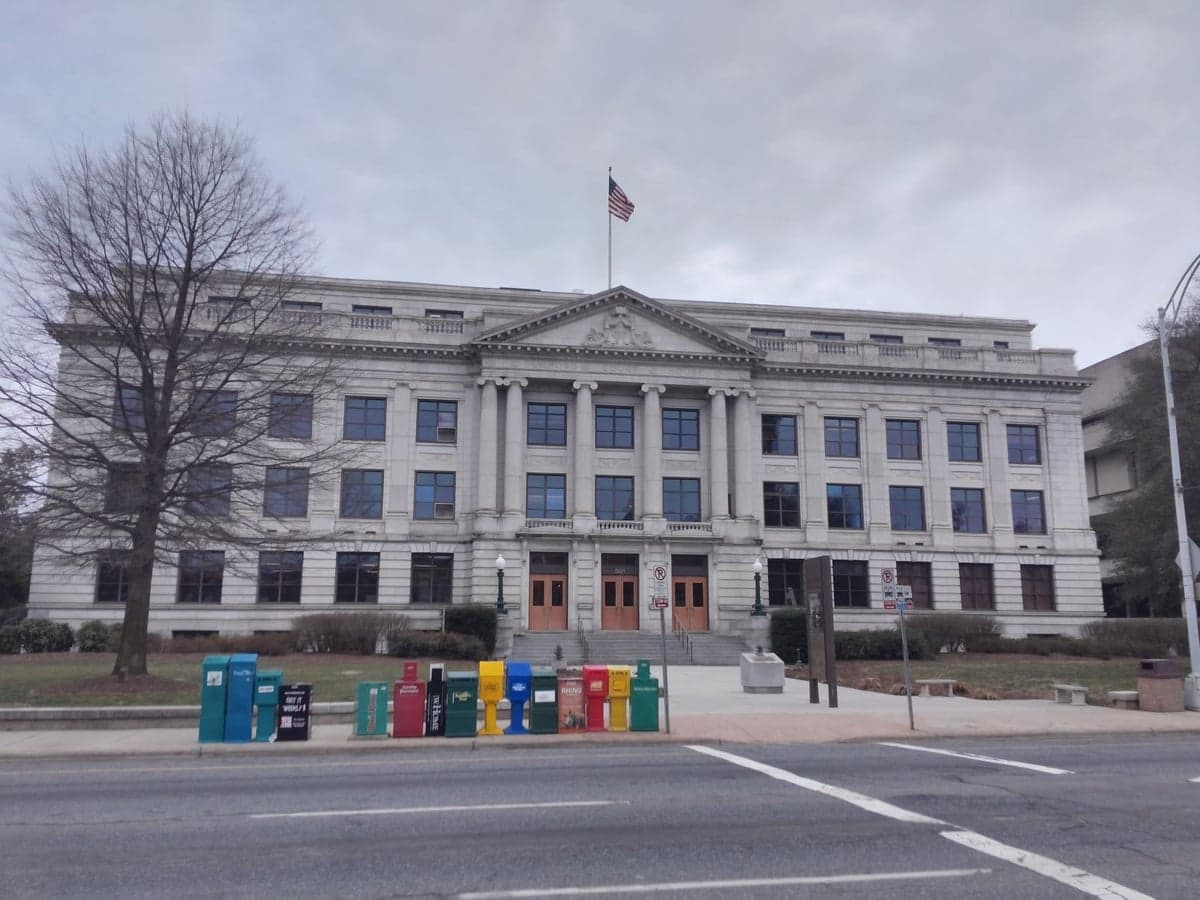
Photo: Wikipedia
Quality of Life in Guilford County
A livable area that tracks near national norms for affordability, walkability, and neighborhood health.
What does Quality of Life tell us?
Quality of Life measures an area by evaluating factors like cost of living, nearby amenities, country club access, airport proximity, socioeconomic signals and neighborhood character. For large states, this is a general average — quality of life can vary dramatically between metro areas, suburbs, and rural communities within the same state.
What does this tell us?
Quality of Life measures an area by evaluating factors like cost of living, nearby amenities, country club access, airport proximity, socioeconomic signals and neighborhood character. For large states, this is a general average — quality of life can vary dramatically between metro areas, suburbs, and rural communities within the same state.
Cost of Living
10% below national average
98%
The Real Cost of Living in Guilford County for 2026
| Tier | Individual | Family (4) |
|---|---|---|
| Survival | $18k | $33k |
| Comfortable | $46k | $67k |
| Luxury | $119k+ | $185k+ |
| Elite (Top 5%) | $154k+ | $239k+ |
Quality-of-Life Analysis
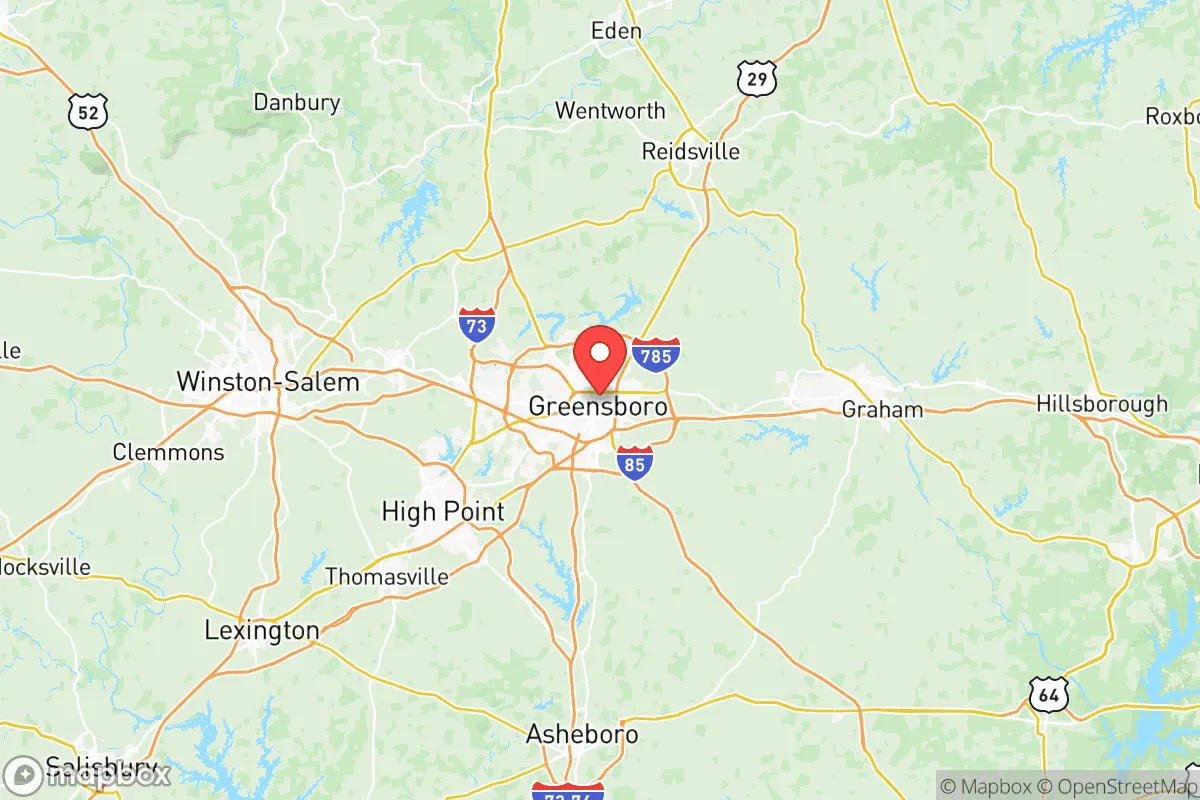
Guilford County offers one of the most complete quality-of-life spectrums in the Piedmont Triad, ranging from the dense, walkable urban core of Greensboro to the historic mill-town charm of High Point and the quiet, unincorporated crossroads of Monticello and Colfax. The county’s character shifts noticeably every few miles, drawing young professionals and university students to its revitalized downtowns, families to its suburban bedroom communities, and retirees or rural homesteaders to its agricultural eastern and southern fringes. With a cost of living index of 90 — 10 points below the national average — and a median commute of just 22.5 minutes, Guilford County delivers an unusually broad set of lifestyle options within a compact geographic footprint.
Largest town(s) & population centers
Greensboro, the county seat and third-largest city in North Carolina, anchors the northern half of the county with a population exceeding 300,000. Daily life here centers around the downtown Greenway, the Tanger Center for the Performing Arts, and the campus of UNC-Greensboro. The city offers a mix of historic neighborhoods like Fisher Park and Lindley Park, alongside newer master-planned communities such as Lake Jeanette. High Point, the county’s second major city, is known globally as the “Home Furnishings Capital” but functions locally as a more affordable, family-oriented alternative to Greensboro. Its downtown has seen significant reinvestment around the High Point Market and the Congdon Yards complex, while neighborhoods like Emerywood and Oak Hollow provide suburban comfort with quick access to the city’s 1,200-acre lake and park system. Together, these two cities contain roughly 85% of the county’s population and offer the widest array of jobs, restaurants, and cultural amenities.
Smaller towns & rural pockets
Outside the urban core, Guilford County preserves several distinct smaller communities. Jamestown, a historic town of about 4,000 residents along the Deep River, blends antique shops and a walkable Main Street with easy access to the Piedmont Triad International Airport. Summerfield, in the northern part of the county, is a rapidly growing bedroom community where large-lot subdivisions and horse farms coexist; its schools are among the highest-rated in the county. Oak Ridge, just west of Summerfield, remains more rural, with working farms and a small-town post office as its social hub. On the county’s eastern edge, Gibsonville straddles the Alamance County line and offers a quiet, railroad-adjacent downtown with a handful of locally owned eateries. Unincorporated areas like Colfax and Monticello are little more than crossroads with a gas station and a few dozen homes, representing the most rural end of the spectrum — places where residents often commute 15 to 20 minutes to reach a grocery store.
Cost & lifestyle range
The cost of living varies noticeably across Guilford County, though it remains affordable by national standards at every level. The most expensive areas cluster in northern Greensboro (around Lake Jeanette and Irving Park) and Summerfield, where median home values can exceed $400,000 — well above the countywide median of $234,900. These neighborhoods offer large lots, top-tier schools, and low crime rates. At the opposite end, eastern High Point and parts of south Greensboro (near the Piedmont Triad International Airport) feature median home values closer to $160,000 and median rents around $1,108, attracting first-time buyers and renters. Rural areas like Gibsonville and Oak Ridge fall in the middle range, with home values typically between $200,000 and $300,000 and property taxes that are lower than in the urban core. The county’s average commute of 22.5 minutes means that even residents in the most remote pockets can reach Greensboro’s downtown or High Point’s employment centers in under half an hour, a rarity for a county of this size.
Guilford County is best suited for people who want urban, suburban, or rural options without leaving the same county — and without paying a premium for that flexibility. Young professionals and students thrive in Greensboro’s downtown and college neighborhoods; families gravitate toward Summerfield, Jamestown, or northwest High Point for schools and space; and retirees or remote workers find value and quiet in Oak Ridge or the unincorporated eastern stretches. The county’s low cost of living, short commutes, and genuine diversity of built environments make it one of the most balanced places to live in the Piedmont Triad.

Crime in Guilford County
Crime rates similar to the national median for U.S. locations.
Violent CrimeViolent Crime Analysis
Property CrimeProperty Crime Analysis
Crime Analysis
Guilford County's overall safety picture is shaped by a moderate violent crime rate of 299.4 incidents per 100,000 residents and a property crime rate of 1,659.9 per 100,000, figures that place it near the middle of North Carolina's urban counties. While not among the state's most dangerous areas, the county's crime landscape is heavily influenced by the policies of its district attorney and the progressive judicial philosophy prevalent in the Greensboro and High Point court systems. These jurisdictions, covering the county's largest cities, have seen a notable emphasis on diversion programs and reduced incarceration for property and drug offenses, a trend that directly correlates with higher recidivism rates and more criminals returning to the streets.
Crime in context
Guilford County's violent crime rate sits slightly below the national average of roughly 380 per 100,000 but above the North Carolina state average of about 280 per 100,000. The property crime rate of 1,659.9 per 100,000 is significantly higher than both the state average (approximately 1,400) and the national average (around 1,950). The gap between violent and property crime is telling: property crime is the dominant concern, driven largely by theft, vehicle break-ins, and larceny in the county's commercial corridors. This pattern is consistent with jurisdictions where progressive prosecutors have deprioritized low-level property offenses, leading to a perception among residents that such crimes carry little consequence. Compared to neighboring counties like Forsyth (Winston-Salem) and Alamance, Guilford's property crime rate is roughly 15-20% higher, a disparity that tracks with the more lenient sentencing guidelines in Guilford's judicial district.
What residents experience
Daily life for Guilford County residents varies sharply by location. In Greensboro, the county's largest city, residents report frequent vehicle break-ins and package thefts, particularly in neighborhoods near the downtown core and along the Wendover Avenue corridor. High Point experiences a higher concentration of violent crime, including aggravated assaults, often linked to drug activity in the city's southern and eastern quadrants. Summerfield and Oak Ridge, smaller towns in the northern part of the county, report crime rates roughly 60-70% lower than Greensboro's, offering a stark contrast in safety. The progressive policies of the Guilford County District Attorney's office, which has championed pre-trial release and reduced cash bail for non-violent offenders, mean that repeat property crime offenders cycle through the system quickly, a source of frustration for victims and neighborhood watch groups. Residents in areas like Jamestown and Pleasant Garden often express that while violent crime is rare, the constant threat of theft and vandalism erodes quality of life.
Neighborhood-level variation is pronounced. The safest areas are concentrated in the northern and western suburbs—Summerfield, Oak Ridge, and northwest Greensboro near the Piedmont Triad International Airport—where median home values exceed $400,000 and community policing is more responsive. The highest crime rates cluster in central Greensboro (around the East Market Street corridor) and southern High Point (near the Thomasville border). For prospective residents, the choice is clear: living outside the progressive judicial influence of Greensboro and High Point in smaller towns like Summerfield or Oak Ridge provides a dramatically safer environment, with lower property crime and a justice system less inclined to prioritize offender rehabilitation over public safety.
* Values derived from national, state, county, city and local statistics and may differ in a specific area. Last updated: 2026-05-10T02:44:29.000Z
Narrative content on this page is AI-generated and may contain mistakes. Verify any details that matter before acting on them.
ReloMaps may earn a commission from affiliate links at no extra cost to you.

