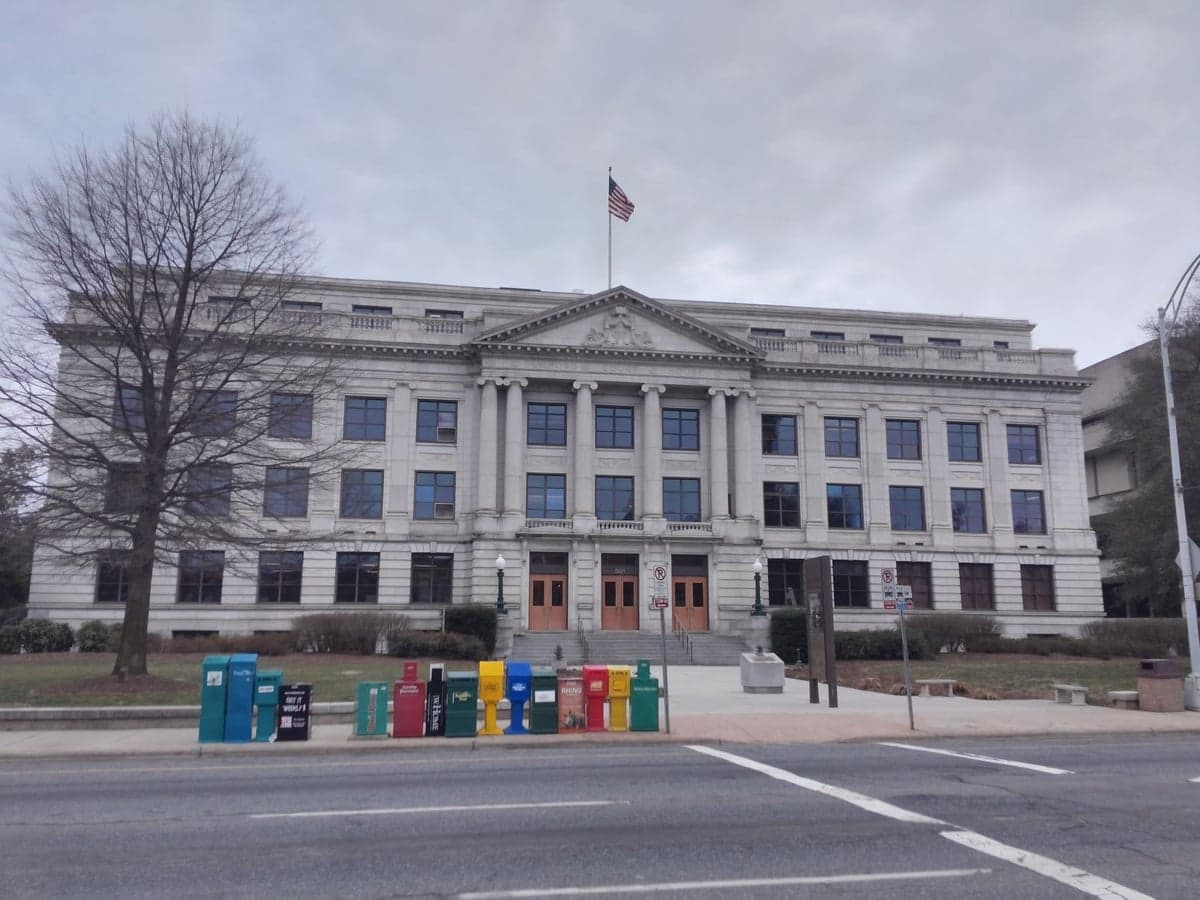
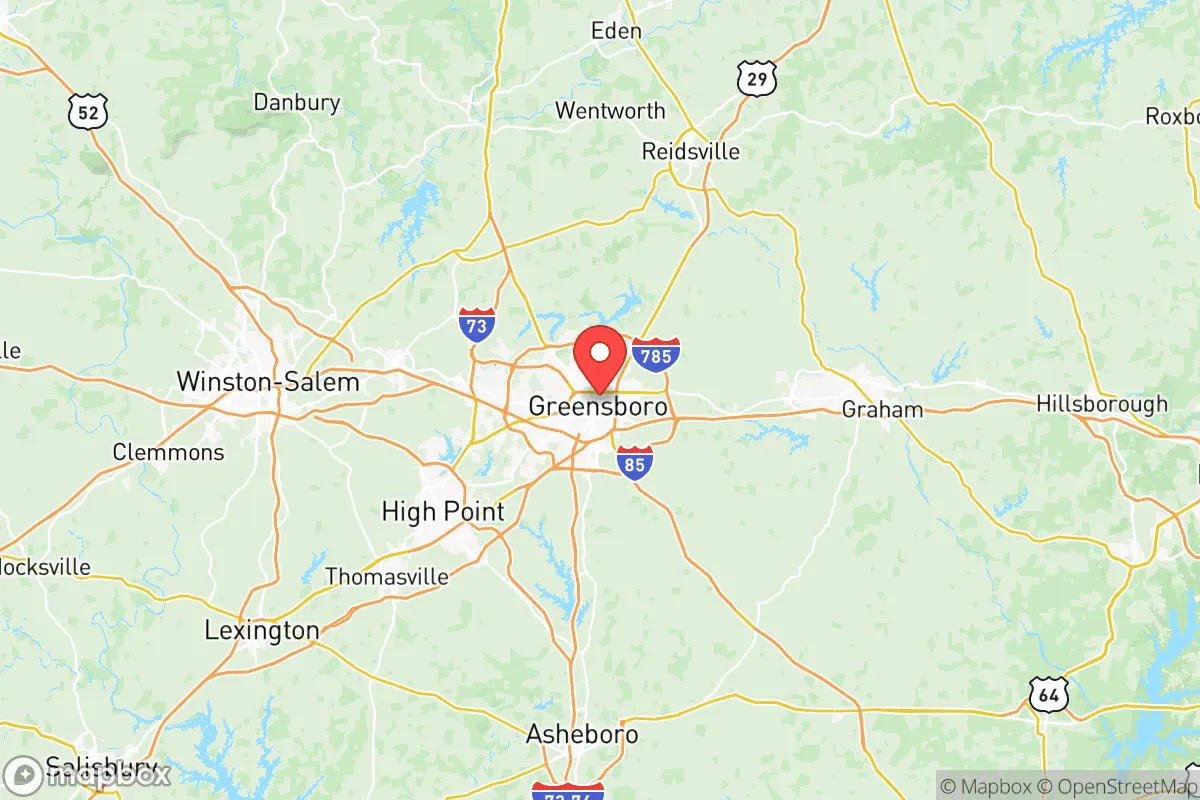
Photo: Wikipedia
Find The Best Places To Live in Guilford County
PRO TIP! You can paste a Zillow or Redfin link to get info on that property.
Best Places to Live in Guilford County
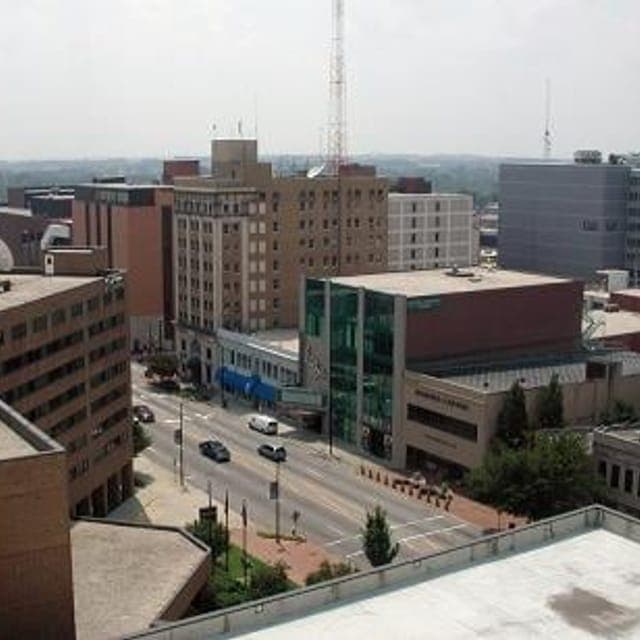

Cities & Towns in Guilford County
Cities in Guilford County
What It's Like Living in Guilford County, NC
Guilford County is one of those places that feels like several different worlds stitched together by a shared sense of Piedmont practicality. You’ve got the bustling urban core of Greensboro, the historic brick charm of High Point, the small-town quiet of Summerfield and Oak Ridge, and the rural stretches near Gibsonville and Pleasant Garden—all within a 30-minute drive. People here don’t brag about the place; they just get on with life, which is exactly why so many families and single professionals find it a comfortable fit.
The Daily Rhythm: Work, Errands, and Weekend Plans
Most days in Guilford County start with a commute that averages about 22 minutes—short enough that you don’t dread it, long enough to finish a podcast. The morning rush on I-40 and Business 85 can slow down near the Greensboro Coliseum or the High Point exit, but it’s nothing like the parking-lot traffic of Charlotte or Raleigh. People tend to cluster their errands around the big shopping corridors: Wendover Avenue in Greensboro for Target and Costco runs, or the Palladium in High Point for a sit-down dinner. On weekends, you’ll find families at the Greensboro Science Center or hiking the trails at Hagan-Stone Park, while singles gravitate toward the breweries in downtown Greensboro—Joymongers, Little Brother Brewing, and Preyer Brewing are local staples. The weather follows a true four-season rhythm: humid summers that push you indoors by noon, crisp falls that make the Blue Ridge Parkway a day-trip favorite, and mild winters where a dusting of snow shuts things down for a day.
Who Fits In Here—and Who Might Struggle
Guilford County works best for people who value affordability over prestige and community over flash. The median home value sits at $234,900, and the cost of living index is 90—well below the national average. That means a family earning the median household income of $66,027 can actually buy a decent three-bedroom in places like Summerfield or Oak Ridge without stretching. Single professionals in their 20s and 30s often land in the neighborhoods around Elm Street in Greensboro or near High Point University, where rentals are reasonable and the social scene is low-key. Parents tend to cluster in the school districts of Northwest Guilford or Northern Guilford, where the high schools are strong and the sports programs are a big deal. The kind of person who thrives here is someone who doesn’t need a 24-hour nightlife or a skyline view—they’d rather have a backyard, a decent job, and a community that waves back. If you’re looking for fast-paced urban energy or a coastal vibe, you’ll be disappointed. If you want a place where your dollar goes further and people still hold doors open, you’ll settle in quickly.
Sports, Festivals, and the Things That Bring People Together
High school football is a genuine cultural force in Guilford County. On Friday nights in the fall, the parking lots at Grimsley High School, Page High School, and Dudley High School fill up with parents, alumni, and neighbors who don’t even have kids playing. The games are social events—people tailgate in the grass, kids run around, and the marching bands are taken seriously. College sports are also big: UNC Greensboro Spartans basketball draws a loyal crowd at the Greensboro Coliseum, and High Point University Panthers games have grown in energy as the school has expanded. For entertainment beyond sports, the county punches above its weight. The Carolina Theatre in Greensboro hosts live music and classic films, the High Point Theatre brings in touring acts, and the Greensboro Coliseum lands everything from monster truck rallies to concerts by artists like Luke Combs and Post Malone. Festivals are a big deal too: the North Carolina Folk Festival in September turns downtown Greensboro into a three-day block party with music, food vendors, and craft tents. In High Point, the Spring Furniture Market twice a year transforms the city into a global hub for furniture buyers—locals either love the energy or avoid the traffic entirely.
Pros and Cons of Living in Guilford County
- Pro: Genuine affordability. You can buy a home here for half what you’d pay in Raleigh or Charlotte, and the property taxes are reasonable. The cost of living index of 90 means your paycheck goes noticeably further.
- Pro: Central location. You’re two hours from the mountains, three hours from the beach, and an hour from Charlotte or Raleigh for big-city amenities. The Piedmont Triad International Airport offers direct flights to major hubs without the chaos of a mega-airport.
- Pro: Strong schools in the right districts. Northern Guilford, Northwest Guilford, and Grimsley high schools are consistently well-regarded, and the county’s magnet programs (like the Early College at Guilford) draw motivated students.
- Con: Violent crime is a real concern. The rate of 299.4 per 100,000 is higher than the national average, and it’s concentrated in parts of Greensboro and High Point. Most suburban and rural areas feel safe, but you need to be aware of neighborhood boundaries.
- Con: Not a lot of nightlife or cultural variety. If you’re used to a city with dozens of music venues, late-night dining, and a thriving arts scene, Guilford County will feel quiet. The options exist—they’re just fewer and farther between.
- Con: Summer humidity is no joke. From June through August, outdoor plans are often dictated by the heat index. You learn to schedule hikes for early morning and save errands for air-conditioned spaces.
What longtime residents love most is the lack of pretense. People in Guilford County don’t try to impress you with their zip code or their job title. They’ll invite you over for a cookout, talk about the weather, and ask where your kids go to school. The county has a quiet confidence—it knows it’s not the flashiest place in North Carolina, but it also knows it works. For single individuals and parents looking for a stable, affordable base with decent schools and real community ties, that’s a pretty solid trade-off.

* Values derived from national, state, county, city and local statistics and may differ in a specific area. Last updated: 2026-05-10T02:44:29.000Z
Narrative content on this page is AI-generated and may contain mistakes. Verify any details that matter before acting on them.
ReloMaps may earn a commission from affiliate links at no extra cost to you.

