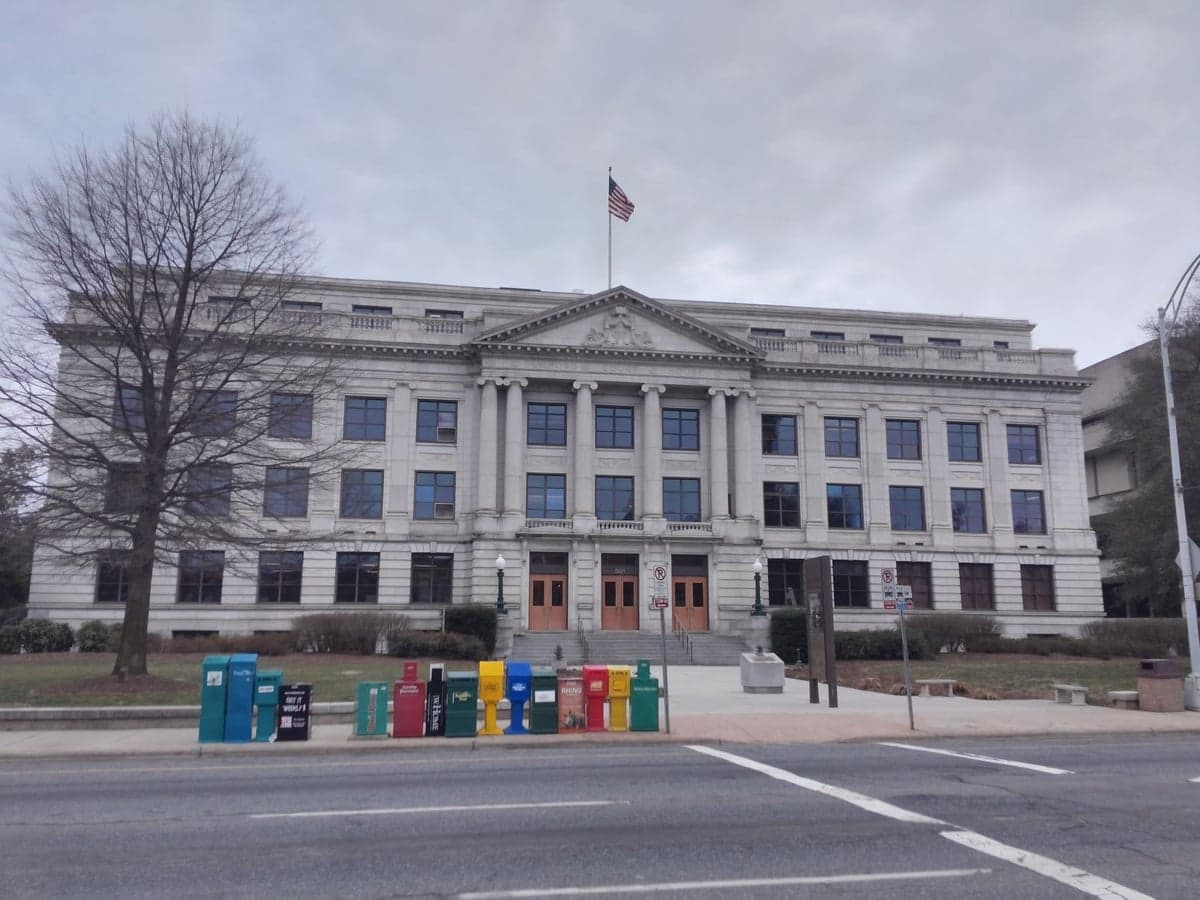
Photo: Wikipedia
Political ClimatePolitical Climate in Guilford County
Showing district-level results — no local-only data available.
Local Political AnalysisPolitical Analysis of Guilford County
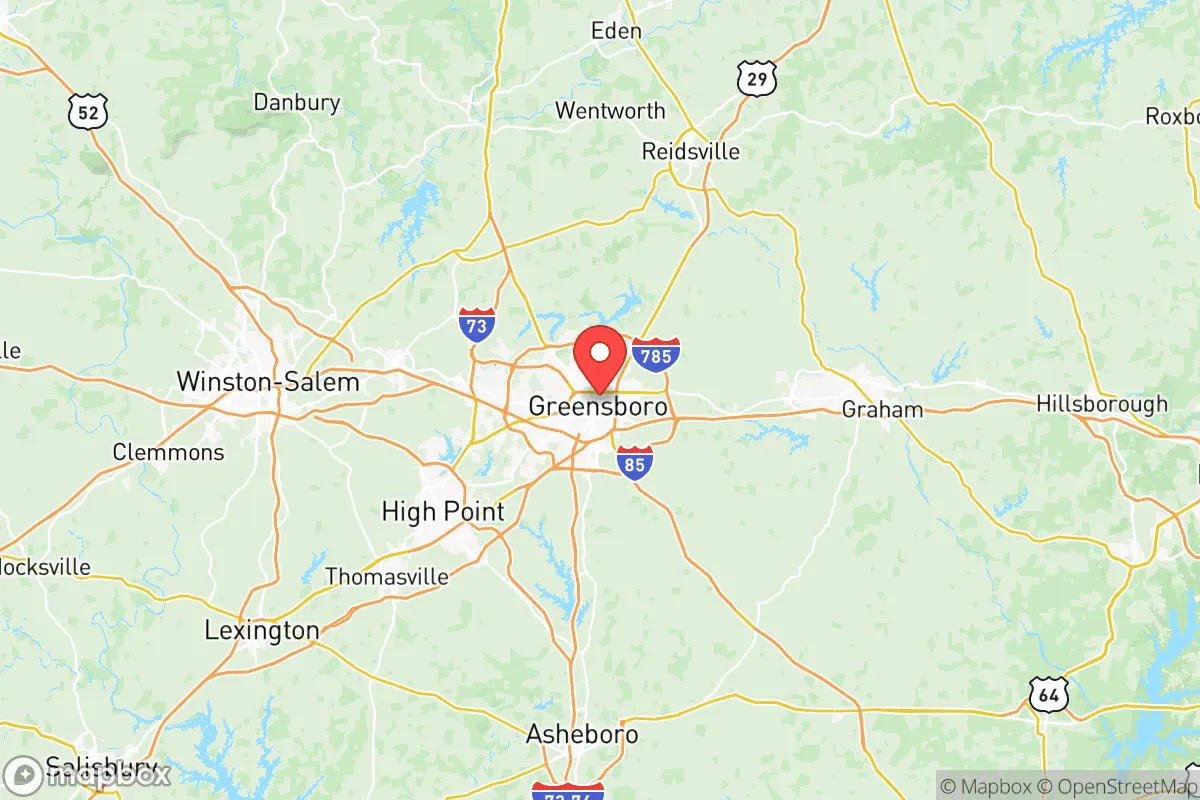
Guilford County, North Carolina, has a Cook PVI of R+9, making it one of the most reliably Republican-leaning counties in the state, but that label masks a lot of internal tension. The county as a whole has voted Republican in every presidential election since 2000, but the margins have been shrinking, and the political landscape is far from uniform. If you’re a conservative looking at this area, you’ll find strongholds of traditional values, but also growing pockets of progressive influence that are shifting the overall balance.
How it compares
North Carolina as a state has a Cook PVI of R+1, meaning it’s a true battleground—slightly Republican-leaning but highly competitive. Guilford County’s R+9 rating puts it significantly to the right of the state average, but that’s only half the story. The county is a microcosm of the urban-rural divide. The city of Greensboro, the county seat, has been trending blue for years, with its downtown and university areas (UNC Greensboro, NC A&T) voting heavily Democratic. In contrast, High Point remains a Republican stronghold, especially in its southern and western precincts, where furniture manufacturing and family-owned businesses anchor a more conservative culture. The rural towns like Summerfield, Oak Ridge, and Stokesdale are deep red, with precincts routinely voting 70-80% Republican. The swing precincts are in the suburban corridors—places like Jamestown and Colfax—where moderate voters can tip an election. So while the county leans right overall, the blue vote in Greensboro is concentrated enough to make local races competitive, especially in city council and school board elections.
What this means for residents
For a conservative living here, the practical reality is that you have to stay engaged. The county government has historically been Republican-controlled, but the Greensboro city council has shifted left in recent years, pushing policies that feel like government overreach—like mask mandates that lasted longer than state guidance, and zoning changes that favor high-density development over single-family neighborhoods. The school board has become a battleground over curriculum transparency and parental rights, with progressive members pushing for critical race theory-inspired materials and gender ideology in K-12 classrooms. If you value personal freedoms—like the right to send your kids to school without political indoctrination, or the right to run a small business without excessive regulation—you’ll find yourself watching local elections closely. The county’s R+9 rating gives conservatives a structural advantage, but it’s not a guarantee; turnout in the rural and suburban precincts is what keeps the balance from tipping.
Culturally, Guilford County still feels like the Old North State in many ways. You’ll find gun shows, church potlucks, and Fourth of July parades in the small towns. But the progressive influence from Greensboro is creeping outward—there’s been a push for sanctuary city policies, and the county’s health department has been aggressive with public health mandates. The contrast between the rural and urban parts of the county is stark: drive 15 minutes from downtown Greensboro to Summerfield, and you’ll go from bike lanes and coffee shops to horse farms and pickup trucks. That divide is only widening, and for conservatives, the key is to keep the county’s rural and suburban voices loud in local government. If you’re thinking of moving here, know that you’ll have to pick your town carefully—and that staying politically active is part of the deal if you want to keep Guilford County from drifting further left.

State Political ClimatePolitical Climate in North Carolina
State Political AnalysisPolitical Environment in the State
North Carolina is a classic battleground state with a Cook PVI of R+1, meaning it leans just slightly Republican overall, but the reality on the ground is far more volatile than that number suggests. Over the last 10-20 years, the state has shifted from a reliably red stronghold—where Democrats only won presidential races in 1976 and 2008—to a purple state where every election is a knife fight. The dominant coalition is a mix of rural conservatives, suburban moderates, and a rapidly growing urban progressive bloc, with the GOP holding the legislature and governorship (as of 2026) but facing constant pressure from the left.
Urban vs. rural divide
The political map of North Carolina is a tale of two worlds. The major metros—Charlotte (Mecklenburg County), Raleigh-Durham (Wake and Durham Counties), and Greensboro-Winston-Salem (Guilford and Forsyth Counties)—are solidly blue, driven by tech transplants, university populations, and banking professionals. Mecklenburg County alone delivered a 30-point margin for Biden in 2020, while Wake County gave him a 25-point win. These areas are growing fast, with Charlotte adding over 100,000 residents since 2020, many from blue states like New York and California. In contrast, the rural east—places like Robeson County (Lumbee-heavy, historically Democratic but trending red) and the far west—Buncombe County (Asheville) is an outlier blue island in a sea of red—are deeply conservative. The real battlegrounds are the exurban and suburban counties like Cabarrus (north of Charlotte), Johnston (southeast of Raleigh), and Union (south of Charlotte), which have flipped from reliably red to competitive as new residents arrive. In 2024, Trump won Union County by only 12 points, down from 20 in 2020, a clear sign of suburban drift.
Policy environment
North Carolina’s policy environment is a mixed bag for conservatives. On the plus side, the state has a flat income tax rate of 4.5% (down from 5.25% in 2020, with a path to 3.99% by 2027), no state estate tax, and a right-to-work law that keeps union influence low. The corporate tax rate is a flat 2.5%, among the lowest in the South. However, the state has a high sales tax (up to 7.5% in some counties) and property taxes that vary wildly—Wake County homeowners pay about 0.85% of assessed value, while rural Columbus County is closer to 0.65%. Education is a flashpoint: the state has a school choice program (the Opportunity Scholarship Program) that now covers all income levels, but the Democratic governor has repeatedly tried to cap it. Healthcare is dominated by the massive UNC Health system and Atrium Health, with Medicaid expansion finally enacted in 2023 after a decade of GOP resistance—a move that added 600,000 people to the rolls but also increased state spending. Election laws are relatively strict: voter ID is required (passed in 2018, upheld in 2024), early voting is generous (17 days), and same-day registration is allowed during early voting. The state has 14 electoral votes and is a perennial swing state, so expect heavy national attention every two years.
Trajectory & freedom
On personal freedom, North Carolina has been a mixed bag over the last decade. The good news: the General Assembly passed a constitutional carry law in 2023 (HB 189), allowing permitless concealed carry for adults 18 and older, a major win for gun rights. Parental rights were strengthened with the Parents’ Bill of Rights (HB 755) in 2023, requiring schools to notify parents of any changes in a child’s health or well-being and banning instruction on gender identity in K-4. The state also banned sanctuary cities (HB 10, 2015) and requires local law enforcement to cooperate with ICE. On the concerning side: the state has a broad anti-discrimination law (HB 2, 2016) that was partially repealed after massive backlash, but the replacement (HB 142) still prevents local governments from passing their own non-discrimination ordinances—a limit on local control. Medical freedom took a hit with the 2023 law requiring parental consent for minors to receive vaccines (a win for some), but the state also maintained a COVID-era emergency powers law that gave the governor broad authority, which was later curtailed by the legislature in 2021. Property rights are strong—the state has a right-to-farm law and limits on eminent domain—but zoning in fast-growing metros like Raleigh is increasingly restrictive, with upzoning battles over density and affordable housing mandates.
Civil unrest & political movements
North Carolina has seen its share of political flashpoints. The 2020 protests in Charlotte and Raleigh over George Floyd’s death turned violent in some cases, with looting and property damage in Uptown Charlotte. The state has a vocal activist left, particularly around the Moral Mondays movement (led by Rev. William Barber), which has organized large protests at the legislature over voting rights, Medicaid expansion, and education funding. On the right, the state has a strong Second Amendment movement—the 2023 constitutional carry bill drew thousands to the capitol—and a growing parental rights movement that has targeted school board meetings in Wake County and Mecklenburg County over critical race theory and LGBTQ curriculum. Immigration politics are less heated than in border states, but the ban on sanctuary cities has been a point of contention, with Durham and Orange County (Chapel Hill) openly resisting cooperation with ICE. Election integrity remains a hot-button issue: the 2020 election saw a 74,000-vote margin for Trump (out of 5.5 million cast), but the state’s election board (split 3-2 along party lines) has been accused of partisan bias by both sides. The 2024 election saw a tighter margin, with Trump winning by about 1.5 points, and the state legislature has since passed stricter ballot security measures, including signature verification and chain-of-custody rules.
Projection
Over the next 5-10 years, North Carolina is likely to become more competitive, not less. The in-migration from blue states—roughly 300,000 new residents since 2020, mostly to Charlotte, Raleigh, and Wilmington—is slowly shifting the suburbs leftward. The GOP’s hold on the legislature is strong due to gerrymandered maps (the 2023 maps gave Republicans a 10-4 edge in the U.S. House and supermajorities in both state chambers), but the governor’s race in 2024 was a nail-biter, with the Democrat winning by 3 points. The state’s growing Hispanic population (now 10% of the state, concentrated in Charlotte and the Piedmont Triad) is trending Democratic, while the rural white vote is shrinking. The wildcard is the state’s booming economy—low taxes, good weather, and a strong job market (especially in tech, finance, and biotech) will continue to attract new residents, but many of them are coming from high-tax, high-regulation states and may not be as conservative as the native population. Expect the state to remain a toss-up in presidential elections, with the GOP holding the legislature but losing the governorship more often than not. A new resident moving in now should expect a state that is politically divided, with a conservative legislature but a liberal-leaning governor, and a culture war that plays out in every school board and county commission meeting.
For a conservative looking to relocate, North Carolina offers a strong foundation: low taxes, gun rights, school choice, and a growing economy. But the political winds are shifting, and the state’s urban centers are becoming more progressive by the year. If you’re moving to Cabarrus County or Johnston County, you’ll find a solidly conservative community with good schools and low crime. If you’re looking at Raleigh or Charlotte, expect a purple-to-blue environment where your vote matters but your values may be in the minority at the local level. The bottom line: North Carolina is still a good bet for freedom-minded folks, but it’s not Texas or Florida—you’ll need to stay engaged in local politics to keep it that way.
* Values derived from national, state, county, city and local statistics and may differ in a specific area. Last updated: 2026-05-10T02:44:29.000Z
Narrative content on this page is AI-generated and may contain mistakes. Verify any details that matter before acting on them.
ReloMaps may earn a commission from affiliate links at no extra cost to you.

