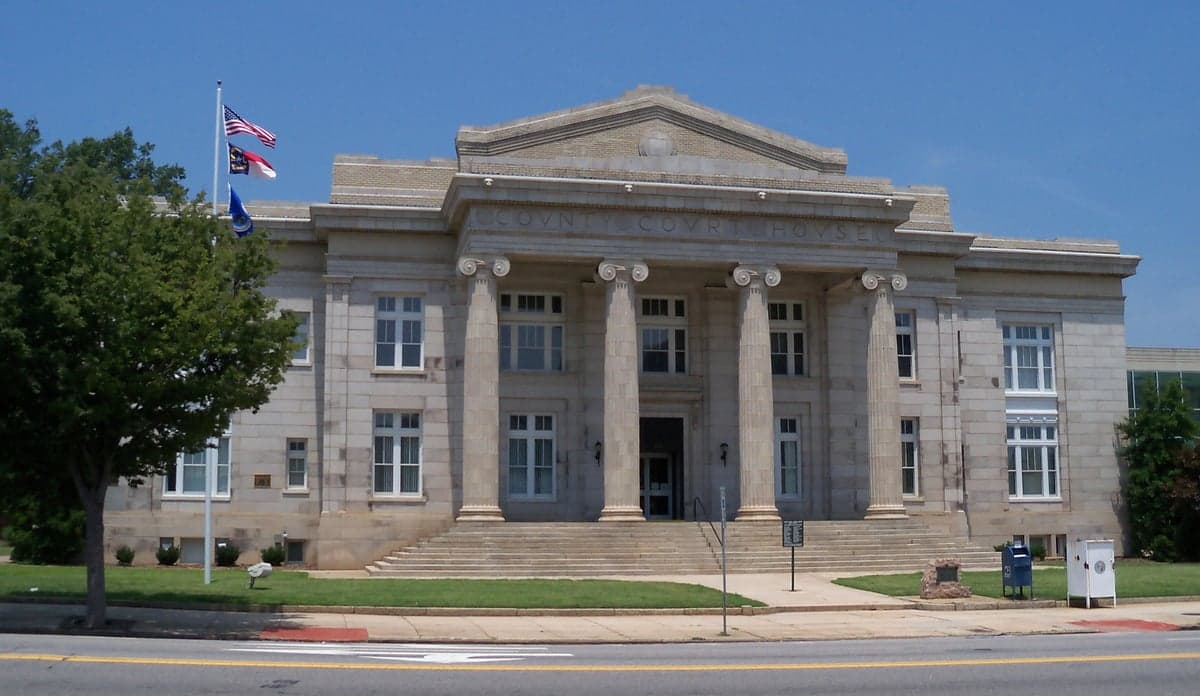
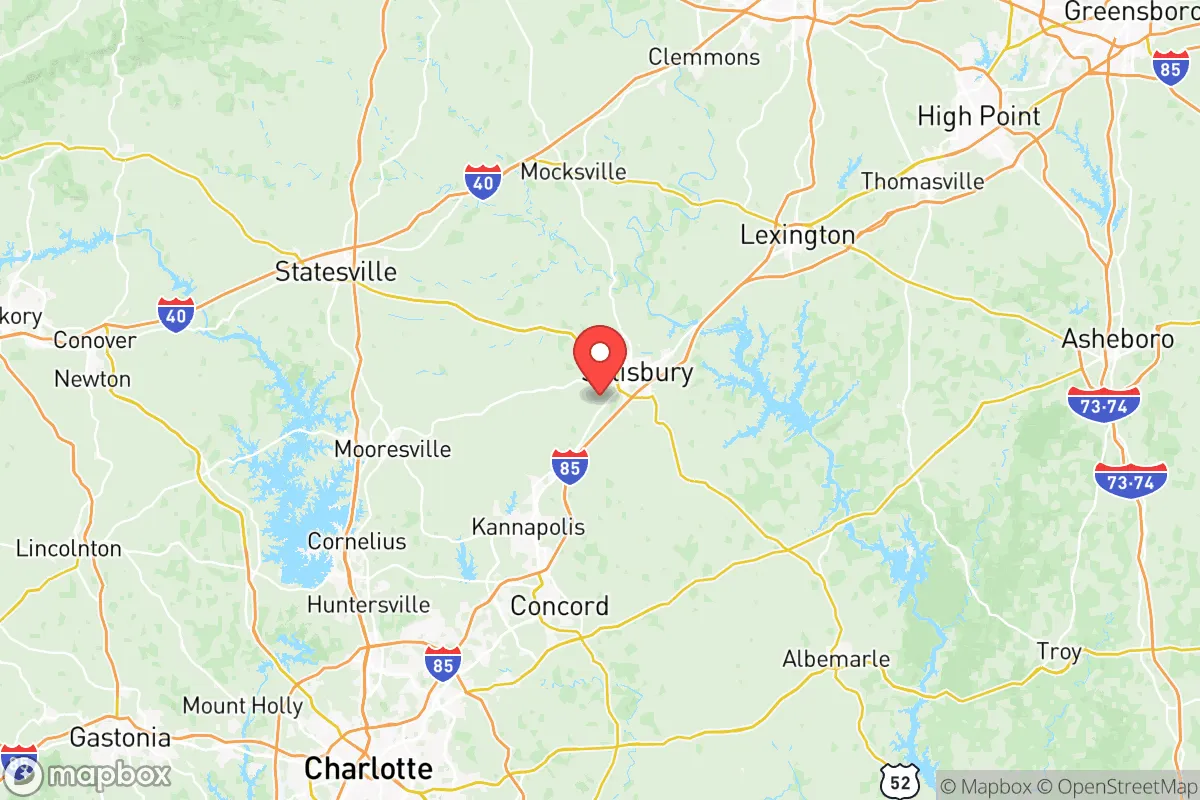
Photo: Wikipedia
Political ClimatePolitical Climate in Rowan County
Showing district-level results — no local-only data available.
Local Political AnalysisPolitical Analysis of Rowan County
Rowan County has been a reliably conservative stronghold for as long as anyone around here can remember, and the numbers back that up with a Cook PVI of R+9. That’s a solid nine points more Republican than the national average, and it puts us a full eight points to the right of North Carolina as a whole, which sits at R+1. But if you’ve been paying attention the last few election cycles, you’ve seen the same cultural shifts creeping in that are happening everywhere—and it’s worth keeping an eye on where things are headed.
How it compares
When you stack Rowan County up against the rest of North Carolina, the difference is stark. The state as a whole is a true purple battleground—R+1 means it’s basically a coin flip in statewide races. But here in Rowan, we’ve consistently voted Republican by double-digit margins in presidential elections. The rural areas and smaller towns like China Grove and Rockwell are deep red, with precincts that routinely go 70-80% Republican. Salisbury, the county seat, is where you’ll find the blue pockets—especially around the historic downtown and near Catawba College, where younger voters and transplants have shifted a few precincts to lean Democratic. The swing precincts are mostly in the unincorporated areas between Salisbury and Kannapolis, where growth from Charlotte’s sprawl is bringing in new residents who don’t always share our traditional values. That’s the real story: the county’s political future depends on whether those newcomers assimilate or try to change the character of the place.
What this means for residents
For folks who value limited government and personal freedom, Rowan County still feels like a refuge compared to what you see in Mecklenburg or Wake counties. Property taxes are reasonable, zoning is minimal, and there’s a general attitude of “live and let live” as long as you’re not hurting anyone. But the warning signs are there. The school board has seen contentious battles over curriculum transparency and parental rights, with progressive activists pushing for things like critical race theory and gender ideology in classrooms. The county commission has held the line on mask mandates and vaccine passports, but it takes constant vigilance to keep that from changing. If you’re looking at moving here, understand that the political climate is still solidly conservative, but it’s not immune to the same national trends that are eroding freedom elsewhere. The key is getting involved locally—school board meetings, county commission sessions, and precinct meetings—because the fight for our rights happens at the ground level.
Culturally, Rowan County is still a place where the Second Amendment is respected, church attendance is high, and neighbors look out for each other without government telling them to. The biggest policy distinction from the state as a whole is our resistance to the kind of zoning and land-use regulations that have driven up housing costs in Charlotte and Raleigh. You can still buy a decent piece of land here without jumping through hoops. But the long-term concern is that as Charlotte’s influence expands up I-85, we’ll see more pressure to adopt urban-style policies that restrict property rights and individual choice. For now, Rowan County remains a place where conservative values aren’t just tolerated—they’re the norm. But that’s something worth protecting, not taking for granted.

State Political ClimatePolitical Climate in North Carolina
State Political AnalysisPolitical Environment in the State
North Carolina is a state that leans Republican on paper—its Cook PVI is R+1—but the real story is a decade-long battle between its deep-red rural counties and rapidly bluing metro areas. Over the last ten to twenty years, the environment has shifted from a reliably Republican stronghold (think George W. Bush winning it by double digits in 2000 and 2004) to a slackjawed toss‑up where Barack Obama came within 0.2% in 2008, Donald Trump carried it by 1.3% in 2020, and state-level races are decided by razor‑thin margins. The long arc is clear: in‑migration from places like California, New York, and Florida is watering down the old electorate, and while Republicans still hold the legislature and most statewide offices, the state’s future is far from settled.
Urban vs. rural divide
If you draw a map of North Carolina’s politics, it looks like a checkerboard. The Piedmont Crescent—Charlotte, Raleigh, Durham, Greensboro, and Winston-Salem—votes solidly blue. Wake County, anchored by Raleigh, gave Joe Biden over 65% in 2020; Mecklenburg (Charlotte) pushed 62% blue. The Research Triangle itself—Durham and Orange counties—is deep blue, routinely clocking 75–80% Democratic margins. Compare that with the eastern and western rural counties: Wilkes, Yadkin, Davie, and Bladen routinely vote 70–80% Republican. Asheville (Buncombe County) is a liberal island in the mountains, while surrounding counties like Haywood, Henderson, and Cherokee lean hard right. Coastal areas like Wilmington (New Hanover County) are purple but trending left due to retirees and remote workers, whereas nearby Brunswick County remains ruby red. The real battle is in the suburbs: fast‑growing exurbs of Raleigh (like Garner, Fuquay-Varina) are still reddish but slipping, while places like Mooresville (Iredell County) and Cornelius (Mecklenburg) attract transplants who vote like they did up north.
Policy environment
At the state level, Republicans have held the General Assembly for over a decade, and the policy tilt reflects it. The flat state income tax has dropped from 5.25% to 4.5% in 2023, with a further decline to 3.99% scheduled by 2026. The corporate income tax was phased down to a flat 2.5% starting 2024. No state income tax on Social Security, and there’s a standard deduction. But the state also expanded Medicaid under Democratic Governor Roy Cooper in 2023—a deal that increased the size of government but was packaged with certificate-of-need repeal and hospital funding. On education, charter schools and private-school vouchers (Opportunity Scholarships) have been expanded, and in 2023 the General Assembly passed a Parents’ Bill of Rights (HB 259) that requires schools to notify parents of changes in student services and to get consent for certain curricula. School choice remains a strong draw for conservative families. Election laws include a voter‑ID requirement (upheld after years of litigation) and early voting, but also restrictions on ballot drop boxes (limited to one per county) and strict signature verification. Gun laws are solid: the state adopted permitless concealed carry (SB 41) in 2023 over Cooper’s veto, and still honors the Second Amendment beyond what many blue states allow.
Trajectory & freedom
On one hand, the state is looking freer—gun rights expanded, taxes cut, school choice widened. The Youth Health Protection Act (HB 574) signed into law in 2023 bans gender‑transition surgeries and restricts hormone therapy and puberty blockers for minors, a clear protection of parental rights and children from experimental medicine. The legislature also passed a law preempting local sanctuary policies (HB 370 in 2019) and cracking down on “ghost candidates.” On the other hand, the influx of new residents is bringing progressive local policies into suburban school boards and city councils. Wake, Durham, and Buncombe counties have adopted collective bargaining for public employees—a shift away from the state’s right-to-work tradition. In Charlotte, the city council continues to consider local nondiscrimination ordinances that expand protected classes beyond state law. The trajectory is a tug‑of‑war: the General Assembly tries to lock in conservative gains through preemption and constitutional amendments (like the 2012 marriage amendment), while the executive branch under a Democrat (Cooper) has used veto pens creatively. The real concern for a conservative moving here is that the state’s freedom is distributed unevenly—if you settle in a blue city, you’ll feel more government overreach in schools and land‑use policies.
Civil unrest & political movements
North Carolina hasn’t seen the massive street violence of Portland or Seattle, but it has had its flashpoints. The 2020 George Floyd protests in Raleigh and Charlotte turned destructive, with looting and arson hitting local businesses. Activist groups like the Raleigh People’s Alliance and Moms for Liberty (active in Union, Wake, and Moore counties) face off regularly. College campuses—UNC Chapel Hill, Duke, NC State—are hot
* Values derived from national, state, county, city and local statistics and may differ in a specific area. Last updated: 2026-06-06T01:06:35.000Z
Narrative content on this page is AI-generated and may contain mistakes. Verify any details that matter before acting on them.
ReloMaps may earn a commission from affiliate links at no extra cost to you.

