Photo: Wikipedia
Demographics of Union County
Affluence Level in Union County
A middle-class area roughly in line with national averages across income, home values, education, and employment.
People of Union County
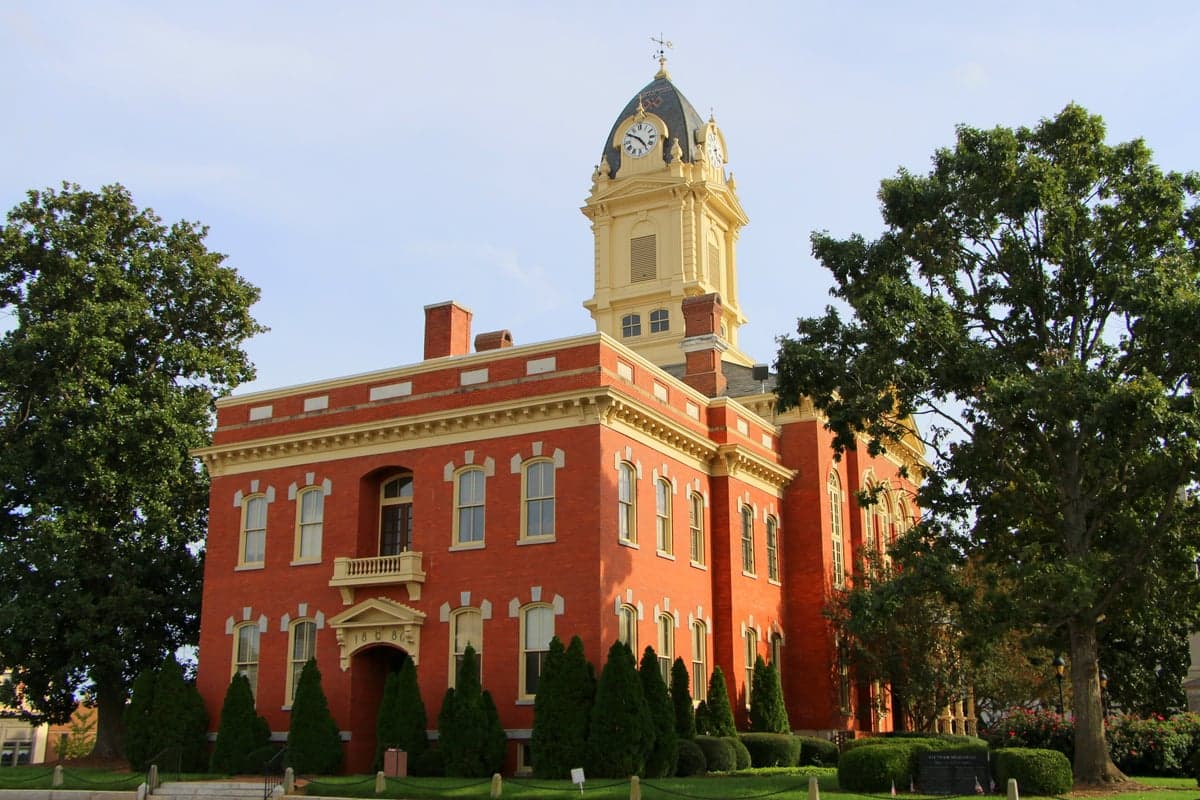
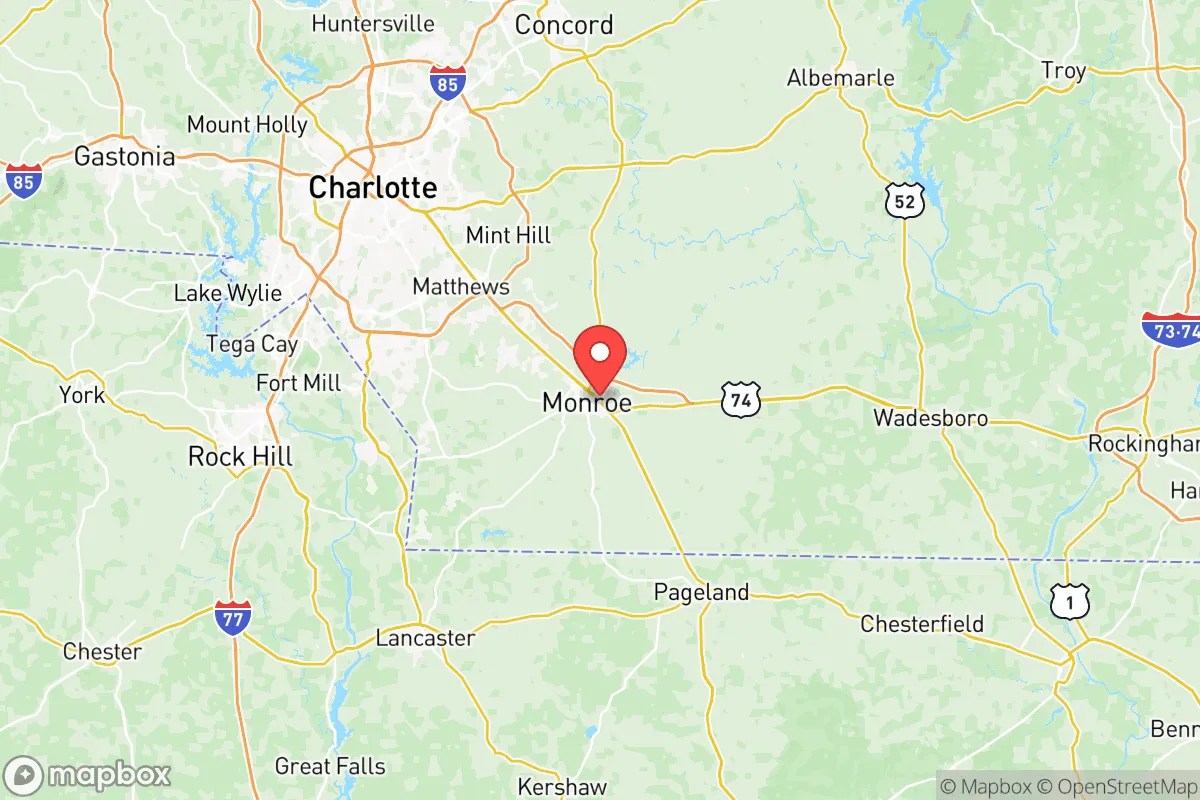
Union County, North Carolina, today is a rapidly growing, predominantly conservative suburban-exurban county with a population of 244,975 that is 68.0% White, 12.9% Hispanic, 10.9% Black, and 2.6% Indian (subcontinent). Its residents are characterized by a strong sense of local identity, a high rate of homeownership, and a population that is notably more family-oriented and less transient than neighboring Mecklenburg County, with 39.0% holding a college degree. The county’s distinctive identity is rooted in its agricultural past, its role as a bedroom community for Charlotte, and a demographic profile that is becoming more diverse through both domestic migration and international immigration, particularly from Hispanic and Indian communities.
Settlement & growth (pre-1960)
Before European settlement, the area now known as Union County was inhabited by the Catawba Native American nation, who used the land for hunting grounds. The first European settlers, primarily of Scots-Irish and English descent, began arriving in the mid-18th century, moving south along the Great Wagon Road from Pennsylvania and Virginia. These early settlers were drawn by the promise of fertile, inexpensive land in the Piedmont region, establishing small farms and communities such as Monroe, the county seat founded in 1844, and Waxhaw, an early trading post named after the Waxhaw Native American tribe. The county itself was formed in 1842 from parts of Anson and Mecklenburg counties, named for the union of these two territories.
Throughout the 19th and early 20th centuries, Union County remained a deeply rural, agricultural economy centered on cotton, corn, and livestock. The population was overwhelmingly White and native-born, with a significant Black population—many of whom were enslaved before the Civil War and later worked as sharecroppers and tenant farmers. Small crossroads communities like Marshville, Wingate, and Indian Trail served as local trading hubs. The arrival of the railroad in the late 1800s connected Monroe to larger markets, but the county did not experience the industrial boom that transformed nearby Charlotte. The Great Migration saw many Black residents leave Union County for northern industrial cities between 1910 and 1960, reducing the Black population share. By 1960, Union County’s population was still under 45,000, overwhelmingly White and rural, with a small, established Black community concentrated in Monroe and the eastern part of the county.
Modern era (post-1965)
The 1965 Hart-Cellar Act had a limited immediate impact on Union County, as the area remained largely agricultural and insular through the 1970s. The transformative demographic shift began in the 1980s and accelerated after 2000, driven not by international immigration but by massive domestic migration from the Rust Belt and coastal states. The construction of Interstate 485 and the expansion of Charlotte’s suburban footprint turned Union County into a prime destination for families seeking larger lots, lower taxes, and highly rated schools. Towns like Wesley Chapel, Weddington, and Stallings exploded in population, transforming from rural hamlets into affluent, master-planned subdivisions. This wave was predominantly White, with a growing number of Black and Hispanic families also moving from Charlotte proper for more space and perceived safety.
Hispanic immigration to Union County began in earnest in the 1990s, driven by labor demand in construction, landscaping, and agriculture. The Hispanic population grew from negligible to 12.9% by 2026, with a visible concentration in Monroe, where a commercial corridor along Roosevelt Boulevard features Mexican grocery stores, taquerias, and Latin American restaurants. A smaller but growing Indian (subcontinent) population, now at 2.6%, has been drawn by professional jobs in Charlotte’s banking and tech sectors, settling primarily in the western part of the county near the Mecklenburg line, particularly in Waxhaw and Marvin. The East/Southeast Asian population remains modest at 1.4%, with families often choosing the same western towns for their school districts. The Black population, at 10.9%, has grown slightly from its post-Great Migration low, with new arrivals coming from other parts of North Carolina and the Northeast, settling in Monroe and the more affordable eastern side of the county.
The future
Union County’s population is projected to continue growing, likely surpassing 300,000 by 2040, driven by ongoing domestic migration from high-cost, high-tax states like New York, New Jersey, and California. The county is not tribalizing into distinct ethnic enclaves but is instead experiencing a pattern of spatial assimilation, where Hispanic and Indian families are increasingly moving into the same subdivisions as White families, particularly in the western towns. The Hispanic population is expected to grow to 15-18% over the next decade, driven by both immigration and higher birth rates, while the Indian population may reach 4-5% as Charlotte’s professional sector expands. The White share, while still a majority, will continue to decline gradually as the county diversifies. The cultural identity of Union County is absorbing these new groups rather than being fundamentally altered, with newcomers adopting the area’s conservative political leanings, emphasis on family, and preference for large-lot suburban living. The eastern part of the county, including Marshville and Wingate, remains more rural and less diverse, with slower growth and a stronger agricultural heritage.
For someone moving into Union County now, the area is becoming a more diverse, still strongly conservative, family-oriented suburb that is absorbing new populations into its existing cultural framework. The county offers a blend of rural heritage and modern suburban convenience, with a demographic trajectory that points toward continued growth, gradual diversification, and a stable, property-rights-oriented political culture. The key dynamic to watch is whether the western towns can maintain their school quality and infrastructure as growth accelerates, and whether the eastern part of the county will see its own development boom or remain a quieter, more affordable alternative.

* Values derived from national, state, county, city and local statistics and may differ in a specific area. Last updated: 2026-05-17T01:03:44.000Z
Narrative content on this page is AI-generated and may contain mistakes. Verify any details that matter before acting on them.
ReloMaps may earn a commission from affiliate links at no extra cost to you.

