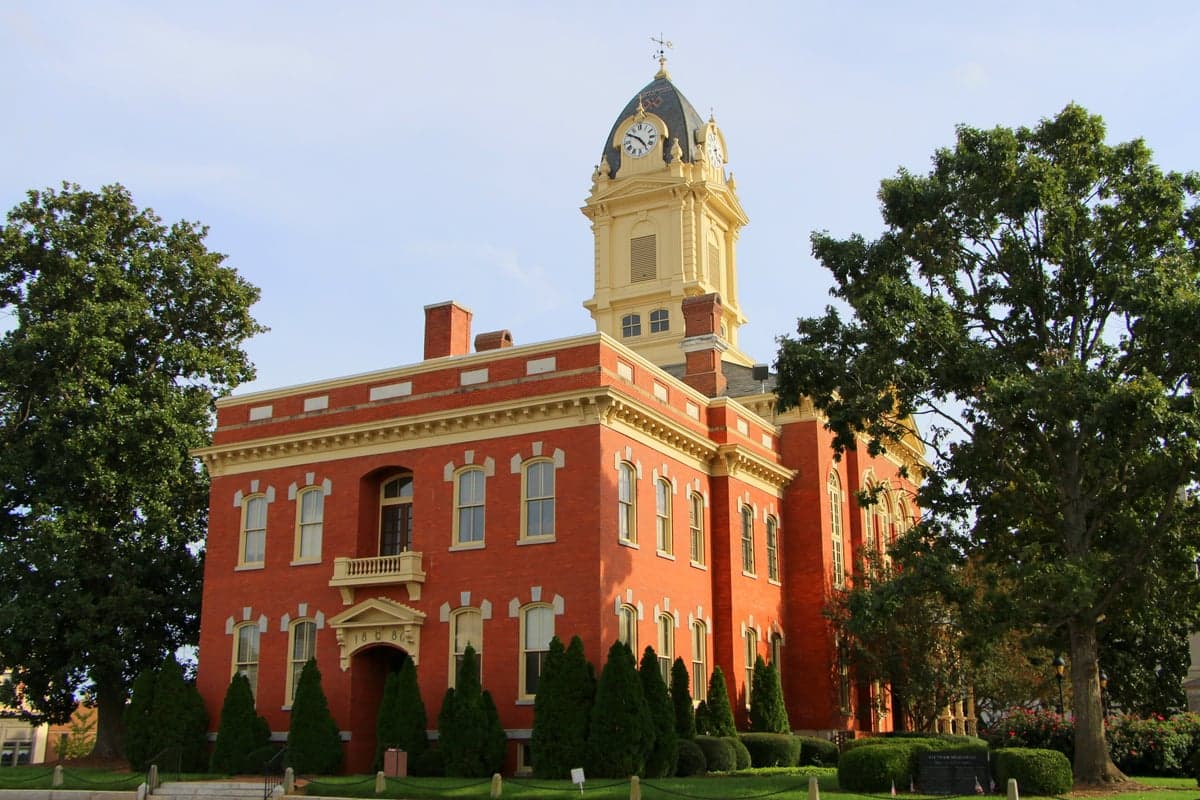
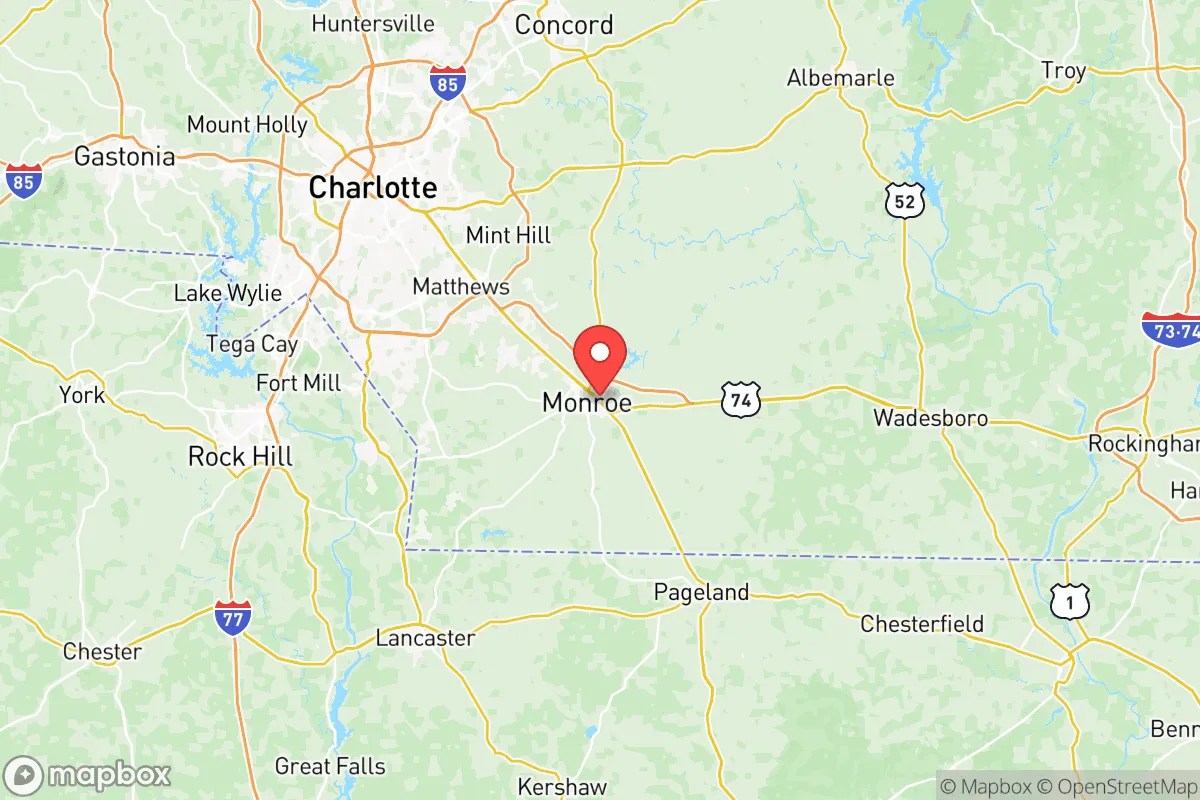
Photo: Wikipedia
Political ClimatePolitical Climate in Union County
Showing district-level results — no local-only data available.
Local Political AnalysisPolitical Analysis of Union County
Union County is one of the most reliably conservative areas in North Carolina, with a Cook Partisan Voting Index of R+10, making it a full nine points more Republican than the state as a whole (R+1). That’s not just a number on a map—it reflects a deep, stable political culture that has held firm even as the Charlotte metro area has grown outward. If you’re looking for a place where traditional values and limited government aren’t just campaign slogans but the default way of life, Union County is it. But don’t think it’s a monolith; there’s real variation from town to town, and the trends are worth watching.
How it compares
Compared to North Carolina’s statewide R+1 lean, Union County’s R+10 rating puts it in a different political universe. The state as a whole is a true battleground—flipping between red and blue in presidential races and often decided by razor-thin margins. Union County, by contrast, hasn’t voted for a Democratic presidential candidate since 1976. In 2024, Donald Trump carried the county by roughly 30 points, while he won the state by just over 3. That gap tells you everything about how insulated this area is from the broader swing-state dynamics. Within the county, the political geography breaks down predictably: Waxhaw and Weddington are deep red, with GOP turnout regularly exceeding 70% in precincts like those around Providence High School. Monroe, the county seat, is more mixed—still solidly Republican overall, but with pockets of blue in the downtown precincts and near the hospital, where younger professionals and some government workers live. Indian Trail and Stallings are the swingiest areas; they’ve seen an influx of Charlotte commuters, and while they still lean right, the margins have tightened by about 5 points since 2020. Marshville and Wingate remain reliably conservative, with a strong rural, agricultural base.
What this means for residents
For someone who values personal freedoms and is wary of government overreach, Union County is a breath of fresh air. There are no county-level mask mandates, no business shutdowns, and no heavy-handed zoning restrictions like you see in Mecklenburg County just to the west. The local school board has consistently pushed back against progressive curriculum mandates, and the county commission has a track record of rejecting state or federal overreach—whether it’s gun control proposals or environmental regulations that would hamstring local farmers and small businesses. That said, the growth is real. New subdivisions are popping up everywhere, and with them come new residents from blue states and blue counties. If you look at precinct-level data from 2024, the areas around the new developments in Wesley Chapel and western Union County saw Democratic vote share increase by 3-4% compared to 2020. It’s not a wave yet, but it’s a trend that bears watching. The long-term concern is that if this growth continues unchecked, the county’s political culture could shift—not overnight, but gradually, as more people bring their big-government habits with them.
Culturally, Union County still feels like the Old North State in the best ways. You won’t find a “sanctuary city” policy here, and the sheriff’s office cooperates fully with federal immigration enforcement. The county’s Second Amendment sanctuary resolution, passed in 2020, remains a point of pride for many residents. The biggest policy distinction from the state as a whole is on taxation: Union County has one of the lowest property tax rates in the Charlotte region, and there’s a strong cultural resistance to raising them for anything other than core services like roads and public safety. If you’re looking for a place where the government stays out of your business and your wallet, this is still one of the best bets in North Carolina. Just keep an eye on those new subdivisions—they’re the canary in the coal mine.

State Political ClimatePolitical Climate in North Carolina
State Political AnalysisPolitical Environment in the State
North Carolina is a classic battleground state, currently leaning Republican by a Cook PVI of R+1, but it’s a lean that feels more like a tightrope walk than a solid footing. Over the last 20 years, the state has shifted from a reliably conservative stronghold—where Democrats were still competitive in rural areas—to a purple state where the GOP holds a narrow edge, driven by explosive growth in the Charlotte and Raleigh-Durham metros. The dominant coalitions are a rural, traditional conservative base in the east and mountains, clashing with a rapidly expanding, college-educated, and increasingly progressive urban corridor. The trajectory is a slow, grinding leftward tilt in the cities, but the state legislature and many counties have pushed back hard, keeping the overall balance in play.
Urban vs. rural divide
The political map of North Carolina is a tale of two worlds. The urban crescent—Charlotte (Mecklenburg County), the Raleigh-Durham-Chapel Hill triangle (Wake, Durham, Orange counties), and Greensboro-Winston-Salem (Guilford and Forsyth counties)—is the engine of Democratic growth. Mecklenburg County alone delivered over 300,000 votes for Biden in 2020, while Wake County added another 280,000. These metros are filled with transplants from blue states, tech and finance workers, and university communities, making them reliably blue. In contrast, the rural east—places like Duplin County and Robeson County—and the western mountains, including Buncombe County (Asheville), are more mixed. Buncombe is a blue island in a red sea, but the surrounding counties like Henderson and Haywood are deeply red. The suburbs are the real battleground: Union County (south of Charlotte) and Johnston County (southeast of Raleigh) have flipped from purple to solid red in recent cycles, thanks to conservative families fleeing the city. Meanwhile, Wake County suburbs like Cary and Apex are trending blue as they densify. The divide isn’t just geographic—it’s cultural, with rural voters feeling increasingly alienated by the urban-driven policy agenda.
Policy environment
North Carolina’s policy environment is a mixed bag for conservatives. The state has a flat income tax rate of 4.5% (down from 7% in 2013), and the GOP legislature has been steadily cutting it, with a goal of 3.99% by 2027. There’s no state property tax, and sales tax is capped at 7.5% in most counties—a relatively low burden. Regulatory posture is business-friendly, with right-to-work laws and a tort reform system that limits lawsuit abuse. On education, the state has a robust school choice program: the Opportunity Scholarship Program provides vouchers for low-income families to attend private schools, and it was expanded in 2023 to include all income levels. However, the Leandro court case has forced the state to spend billions more on public schools, a source of tension. Healthcare is a sore spot: the state refused Medicaid expansion for a decade under GOP governors, but in 2023, the legislature finally passed it, with a work requirement waiver pending federal approval. Election laws are a flashpoint: the state requires photo ID to vote (upheld by courts), has early voting, and no-excuse absentee voting, but the GOP has fought to tighten rules, including limiting same-day registration and ballot drop boxes. The overall environment is conservative-leaning, but the urban counties are pushing back on every front.
Trajectory & freedom
Is North Carolina becoming more or less free? It depends on where you stand. On gun rights, the state is a bright spot: in 2023, the legislature passed permitless carry (HB 189), allowing any legal gun owner to carry concealed without a permit, overriding Governor Roy Cooper’s veto. This was a major win for Second Amendment advocates. On parental rights, the state passed the Parents’ Bill of Rights (SB 49) in 2023, requiring schools to notify parents about curriculum changes and medical services, and banning instruction on gender identity and sexuality in K-4. This was a direct response to progressive school board activism in places like Chapel Hill-Carrboro and Wake County. On medical autonomy, the state banned abortion after 12 weeks in 2023 (down from 20), with exceptions for rape, incest, and fetal anomalies—a significant restriction that pleased pro-life conservatives but angered urban progressives. On property rights, the state has strong eminent domain protections, but local zoning battles in Charlotte and Raleigh are increasingly contentious, with city councils pushing upzoning and density mandates that rural transplants hate. The trajectory is a tug-of-war: the GOP legislature is expanding freedom on guns, education, and abortion, while urban counties are tightening regulations on housing, land use, and public health mandates. For a conservative, the state is getting freer at the state level, but local governments in blue metros are a growing threat.
Civil unrest & political movements
North Carolina has seen its share of civil unrest, but it’s not the chaos of Portland or Seattle. The 2020 Black Lives Matter protests in Charlotte and Raleigh were large but mostly peaceful, though there were isolated incidents of looting and property damage in Charlotte’s South End. The state has a strong organized conservative movement, anchored by groups like the John Locke Foundation and NC Values Coalition, which have successfully pushed the legislative agenda. On the left, the Moral Mondays movement, led by Reverend William Barber, has staged regular protests at the state legislature since 2013, focusing on Medicaid expansion, voting rights, and racial justice. Immigration politics are relatively quiet compared to border states, but Charlotte and Durham have declared themselves “sanctuary cities” in spirit, refusing to cooperate fully with ICE detainers. This has led to legislative battles, with the GOP passing a 2015 law requiring sheriffs to honor ICE requests—a law that’s been challenged in court. Election integrity is a hot-button issue: the 2020 election saw razor-thin margins (Trump lost by 1.3%), leading to GOP-led audits and a 2023 law that tightened absentee ballot rules and banned private funding for elections. There’s no serious secession talk, but rural counties like Yadkin and Stokes have passed resolutions asserting “constitutional sovereignty” against federal overreach. A new resident would notice the political energy: yard signs, bumper stickers, and local news coverage are intensely partisan, but the state’s culture of politeness keeps most disagreements civil.
Projection
Over the next 5-10 years, North Carolina is likely to become more purple, but not necessarily blue. The in-migration from blue states—especially New York, New Jersey, and California—is concentrated in the urban crescent, which will continue to push Charlotte, Raleigh, and Asheville leftward. However, the rural and suburban counties are growing too, and they’re voting red. The key battleground will be the suburbs: places like Union County and Johnston County are filling up with conservative families fleeing the city, while inner-ring suburbs like Cary and Morrisville are becoming more diverse and liberal. The state legislature is gerrymandered to favor the GOP, and that’s unlikely to change until 2030 at the earliest, so conservative policy wins on taxes, guns, and education will likely continue. But the governor’s mansion is up for grabs in 2024, and if a Democrat wins, they’ll have veto power over the legislature’s agenda. The wildcard is the courts: the state supreme court flipped to a 5-2 Republican majority in 2023, which will uphold conservative laws on abortion, voting, and education. For a conservative moving in now, expect a state that remains center-right on policy for the next decade, but with constant cultural warfare in the cities. The rural-urban divide will widen, and the state’s identity will be a perpetual tug-of-war between the traditional values of the east and mountains and the progressive aspirations of the urban core.
For a new resident, the bottom line is this: North Carolina offers a relatively low-tax, business-friendly environment with strong protections for gun rights, parental control in schools, and a conservative judiciary. But you’ll need to pick your county carefully. If you move to Wake County or Mecklenburg County, you’ll be in a blue bubble with high property taxes and progressive school boards. If you choose Union County, Johnston County, or Brunswick County (coastal), you’ll find a more conservative community with lower taxes and a slower pace. The state is a microcosm of the national divide, but it’s still a place where your vote matters—and where conservative values can win at the state level, even if the cities are lost. Just don’t expect it to stay the same; the influx of outsiders is changing the culture, and the fight over what North Carolina will become is just getting started.
* Values derived from national, state, county, city and local statistics and may differ in a specific area. Last updated: 2026-05-17T01:03:44.000Z
Narrative content on this page is AI-generated and may contain mistakes. Verify any details that matter before acting on them.
ReloMaps may earn a commission from affiliate links at no extra cost to you.

