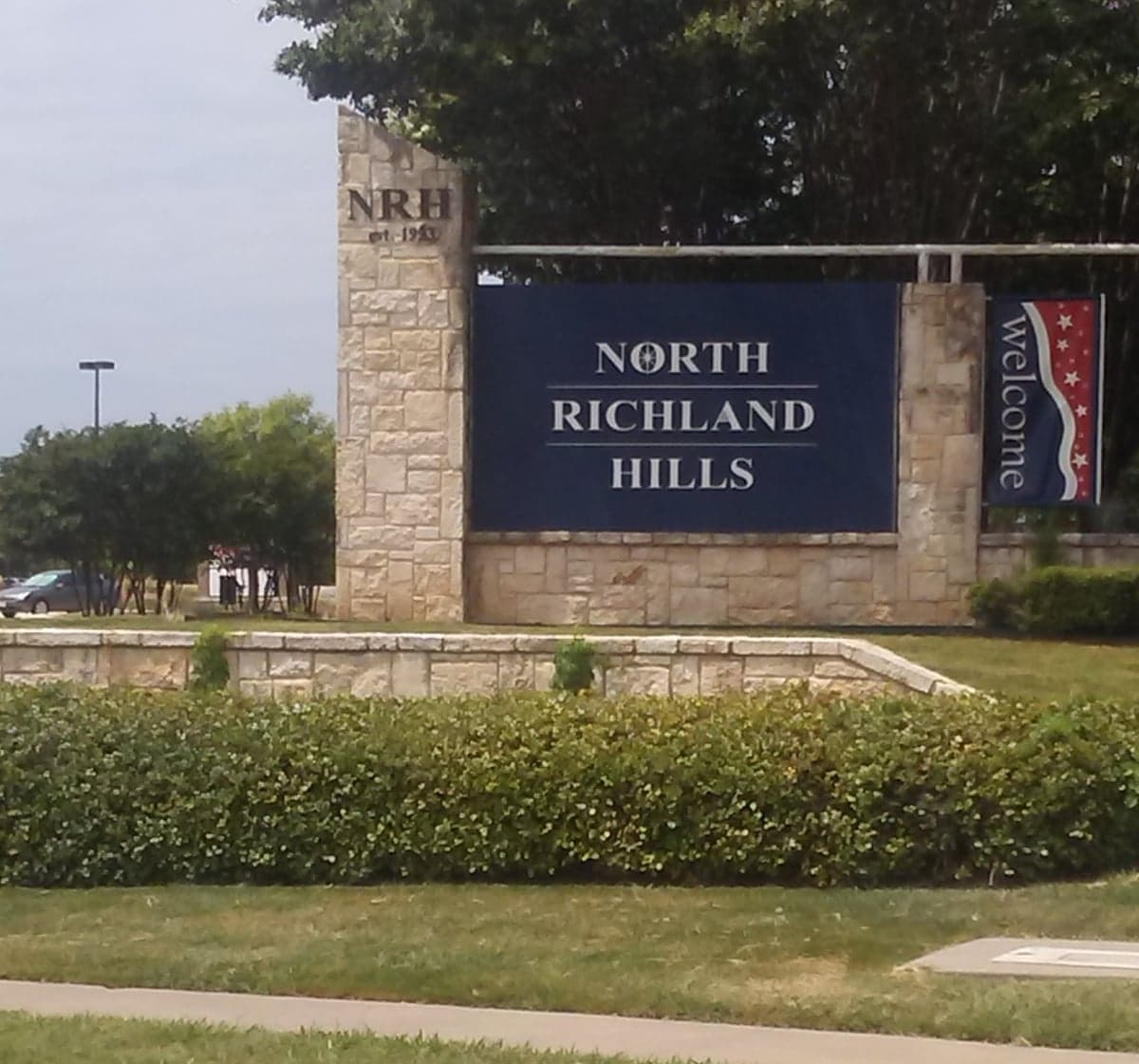
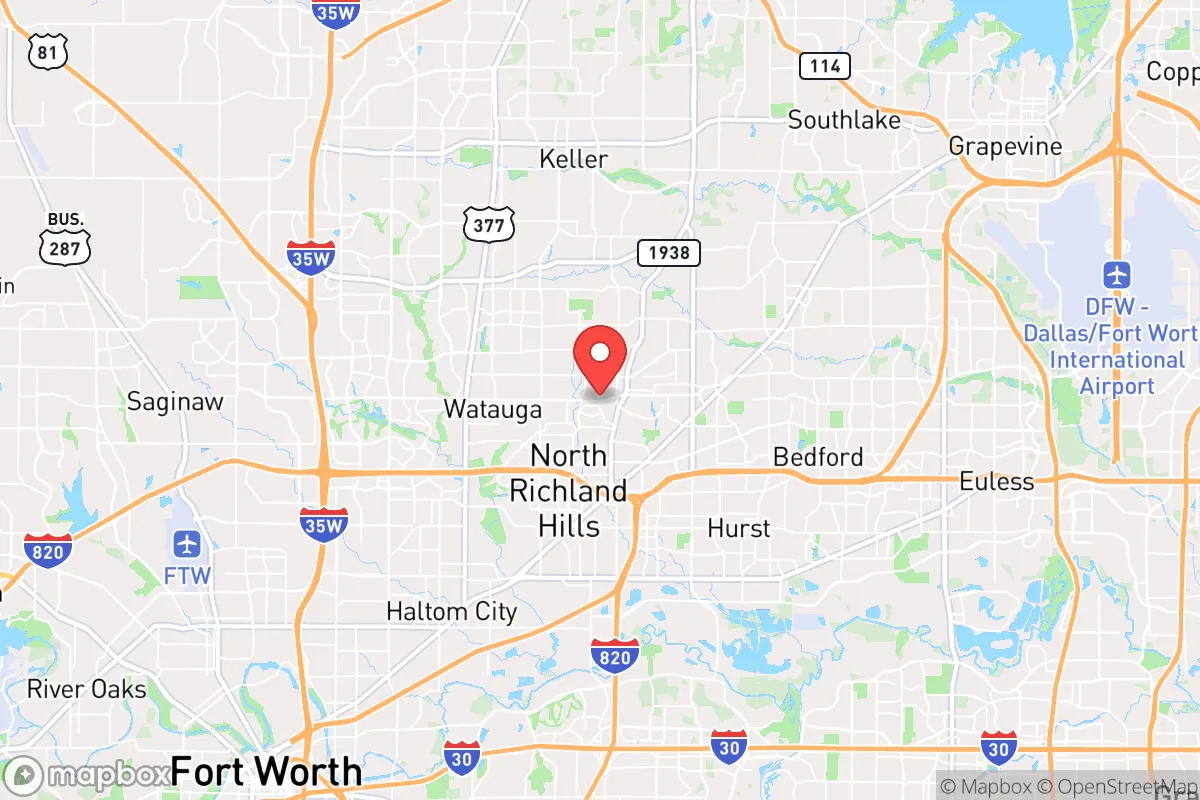
Photo: Wikipedia
Quality of Life in North Richland Hills, TX
A high quality of life with strong walkability, manageable living costs, healthy neighborhood signals, and solid amenity access.
What does Quality of Life tell us?
Quality of Life blends cost of living, nearby amenities, socioeconomic signals, and neighborhood character. City-level scores represent the whole municipality; individual neighborhoods can differ.
What does this tell us?
Quality of Life blends cost of living, nearby amenities, socioeconomic signals, and neighborhood character. City-level scores represent the whole municipality; individual neighborhoods can differ.
Cost of Living
29% above national average
The Real Cost of Living in North Richland Hills, TX for 2026
| Tier | Individual | Family (4) |
|---|---|---|
| Survival | $26k | $48k |
| Comfortable | $63k | $93k |
| Luxury | $149k+ | $231k+ |
| Elite (Top 5%) | $175k+ | $272k+ |
101%
The Area Signal
A metric tracking the socioeconomic signals of the area.
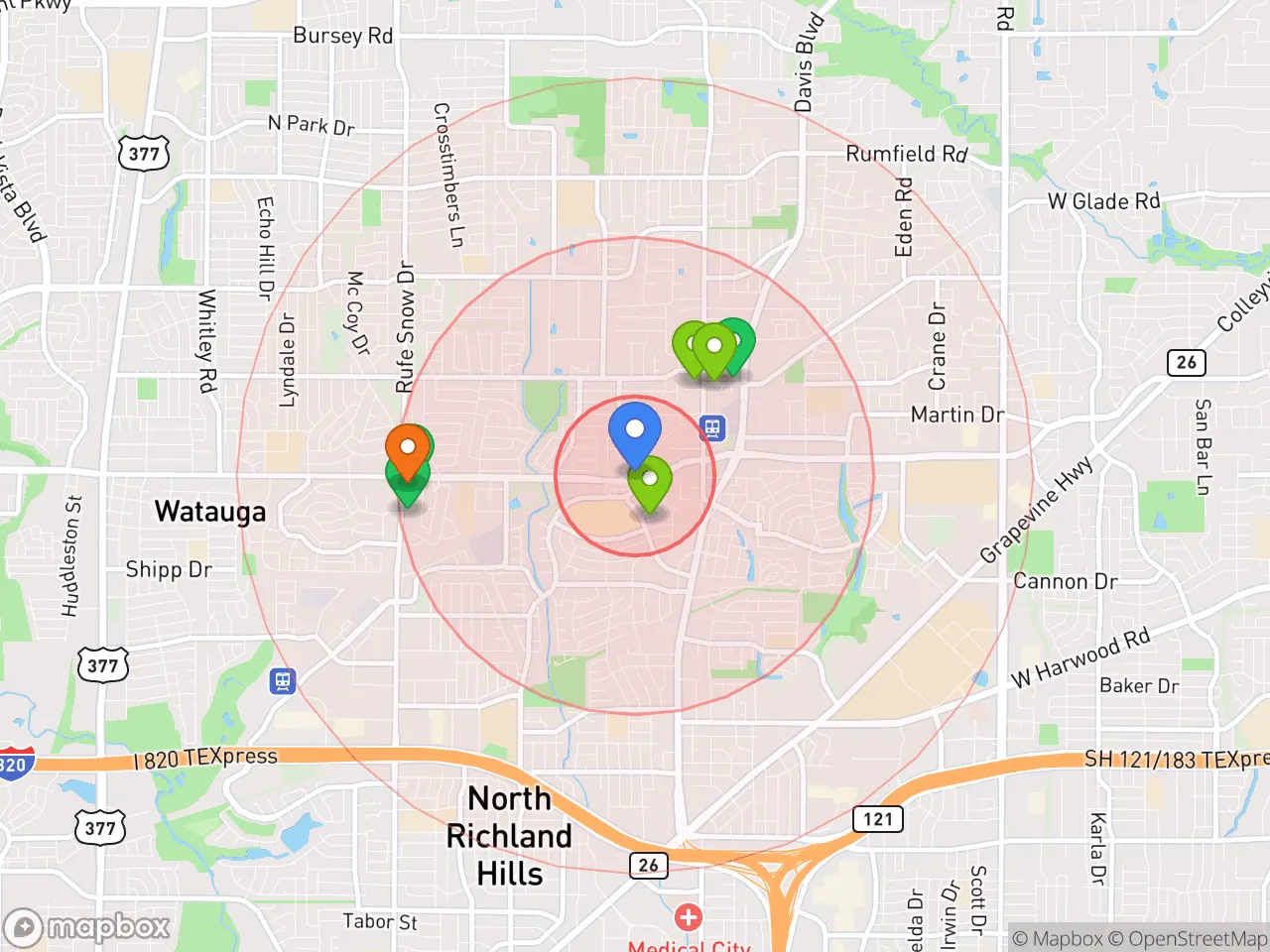
Hobbies
Explore the areaGroceries
8 within 10 miles
Gas
20 within 10 miles
Hospital
20 within 20 miles
Airport
DFW — Dallas/Fort Worth International
Post Office
USPS — Watauga, TX
Critical Amenities
Quality-of-Life Analysis
North Richland Hills is an affluent, family-oriented suburb in the Dallas-Fort Worth metroplex, with a cost of living index of 129 (29% above the U.S. average) that reflects its desirability among professionals and long-term residents. The city’s population of roughly 70,000 skews toward married couples with children, drawn by strong public schools and a suburban lifestyle that balances proximity to Fort Worth (about 10 miles west) with a quieter, more self-contained community feel. Median household income hovers around $80,000, supporting a stable tax base and well-maintained public spaces.
Cost of living, housing prices, and how affordability compares to nearby suburbs
Housing is the primary driver of North Richland Hills’ above-average cost of living. The median home value sits at $324,800, notably lower than neighboring Southlake (median over $700,000) but higher than less affluent suburbs like Haltom City (median around $220,000). Median rent is $1,609, which is competitive for the mid-cities region—comparable to Bedford and slightly below Keller. For buyers, the market offers a mix of 1970s–1990s ranch-style homes and newer infill construction, with property taxes averaging 2.3–2.5% of assessed value (typical for Tarrant County). Renters face a tight market with vacancy rates under 5%, pushing lease prices up roughly 8% year-over-year since 2023. While the COL index is high, it remains 10–15% cheaper than core Dallas or Frisco, making North Richland Hills a pragmatic choice for families wanting good schools without the premium price tag of the northern suburbs.
What daily life is like for families: schools, parks, and commute realities
Daily life in North Richland Hills revolves around the Birdville Independent School District, which serves most of the city and earns a B+ rating from Niche, with Richland High School and North Richland Middle School both recognized for strong academic programs and extracurriculars. The city maintains over 20 parks, including the 40-acre Green Valley Park with sports fields and a dog park, and the NRH2O Family Water Park—a regional draw that anchors summer recreation. The average commute time is 27.5 minutes, slightly below the DFW average of 29 minutes, with most residents driving to jobs in Fort Worth (via Highway 26 or Loop 820) or Dallas (via Highway 121 or Interstate 35W). Traffic on major arteries like Davis Boulevard and Precinct Line Road can back up during peak hours, but the city’s grid layout and ample surface-street alternatives keep delays manageable. Retail is concentrated along Northeast Loop 820, anchored by North East Mall in nearby Hurst, and local dining leans toward chain restaurants and family-owned Tex-Mex spots. The overall rhythm is quiet and predictable, with low crime rates (violent crime roughly 60% below the national average) and strong community engagement through events like the annual July 4th celebration at NRH2O.
North Richland Hills is best suited for families and mid-career professionals who prioritize good schools, safe neighborhoods, and a reasonable commute over urban nightlife or walkability. Empty-nesters and retirees also find appeal in the city’s medical facilities (including Texas Health Harris Methodist Hospital Hurst-Euless-Bedford nearby) and active senior centers. Singles and young renters may find the social scene limited compared to Fort Worth’s Near Southside or Dallas’s Uptown, but for those seeking a stable, well-resourced suburb with solid housing value relative to the DFW elite, North Richland Hills delivers consistently. The city’s 2024 population growth of 1.2% suggests it remains a steady, if not explosive, choice for relocation within the metroplex.

Crime in North Richland Hills, TX
Generally safer than 58% of comparable U.S. locations.
Violent CrimeViolent Crime Analysis
Property CrimeProperty Crime Analysis
Crime Analysis
North Richland Hills is a notably safe suburb within the Dallas-Fort Worth metroplex, posting violent crime rates that are roughly one-third the national average. With a violent crime rate of 150.6 incidents per 100,000 residents, the city offers a level of personal security that is rare for a community of its size located within a major metropolitan area. However, the property crime rate of 1,772 per 100,000 is closer to the national average, indicating that while violent confrontations are uncommon, theft and property offenses are a more routine concern for residents.
Crime in context
To understand North Richland Hills' safety profile, it is essential to compare its figures against broader benchmarks. The city's violent crime rate is significantly lower than both the Texas state average (roughly 450 per 100,000) and the national average (approximately 380 per 100,000). This places North Richland Hills among the safer municipalities in Tarrant County. The property crime rate, while higher than the violent crime figure, is still below the national median for cities of comparable size. A critical factor for residents to consider is the influence of the broader Tarrant County justice system. As part of a large, progressive-leaning metroplex, the county has seen district attorneys and judges who prioritize diversion programs and reduced sentencing. While intended to reduce recidivism, this ideological approach has a direct, negative consequence: it places more criminals back on the street sooner, undermining the safety of law-abiding citizens and victims. This systemic leniency is a legitimate concern for anyone evaluating long-term safety in the region.
What residents experience
Daily life in North Richland Hills is characterized by a low likelihood of violent victimization. Residents are far more likely to encounter property-related issues such as vehicle break-ins, package theft, and burglary than they are to experience assault or robbery. The city's police department maintains a visible presence and a community-oriented policing philosophy, which contributes to the low violent crime numbers. However, the property crime rate of 1,772 per 100,000 means that roughly 1 in 56 households experiences a property crime annually. This risk is manageable with standard precautions like home security systems and locking vehicles, but it is a persistent reality of suburban life near a major urban center.
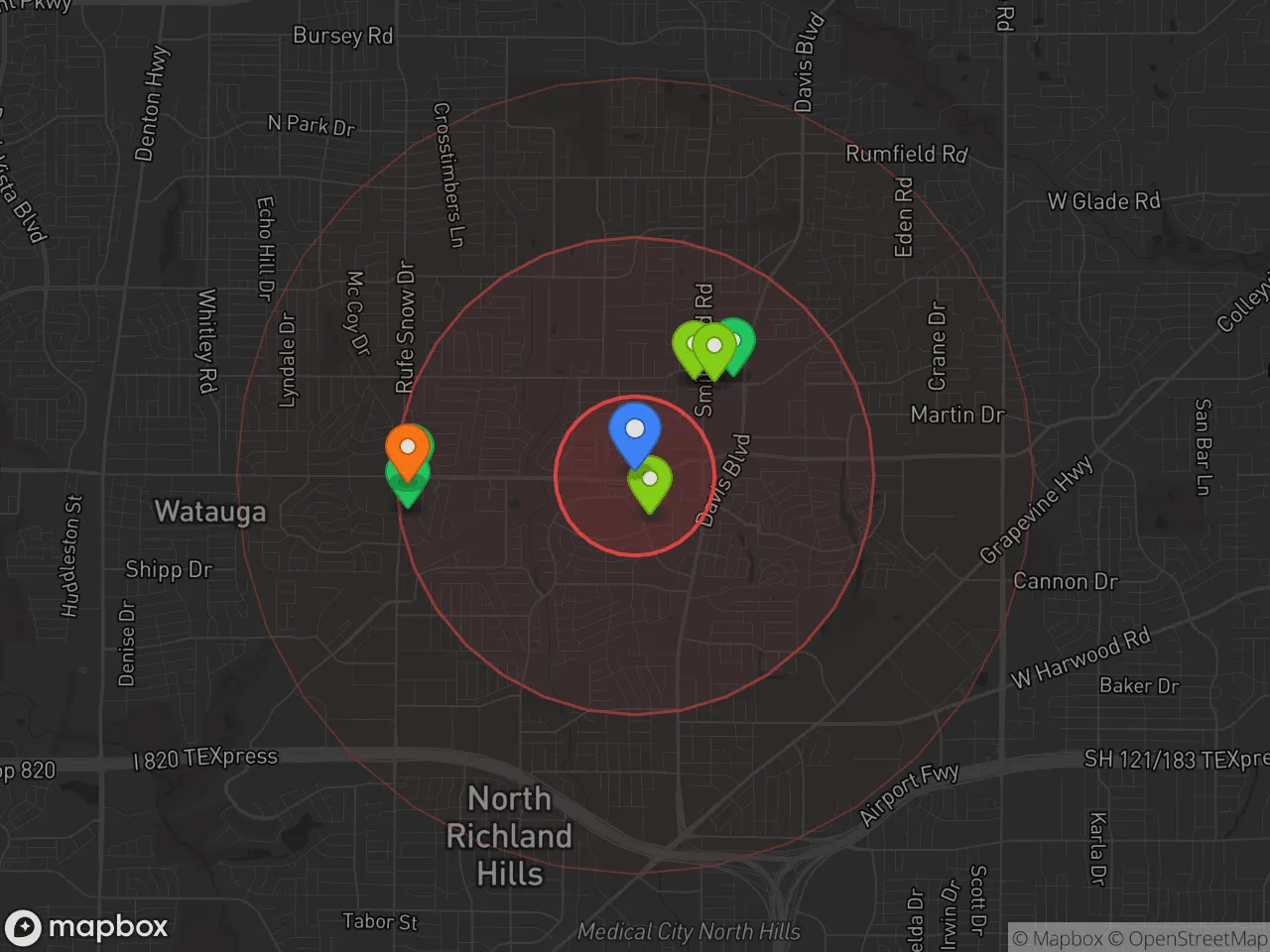
Neighborhood-level variation in crime is present but not extreme. Areas closer to the major commercial corridors like NE Loop 820 and Davis Boulevard tend to see higher rates of property crime, particularly theft from vehicles and shoplifting. The established residential neighborhoods west of Rufe Snow Drive and south of Hurstview Drive generally report the lowest incident rates. The city's most significant safety advantage is its low violent crime rate, which is a direct reflection of its stable, middle-class population and effective local policing. The primary risk factor remains the progressive criminal justice policies at the county level, which can erode the deterrent effect that keeps property crime in check.
* Values derived from national, state, county, city and local statistics and may differ in a specific area. Last updated: 2026-05-29T21:28:04.000Z
Narrative content on this page is AI-generated and may contain mistakes. Verify any details that matter before acting on them.
ReloMaps may earn a commission from affiliate links at no extra cost to you.

