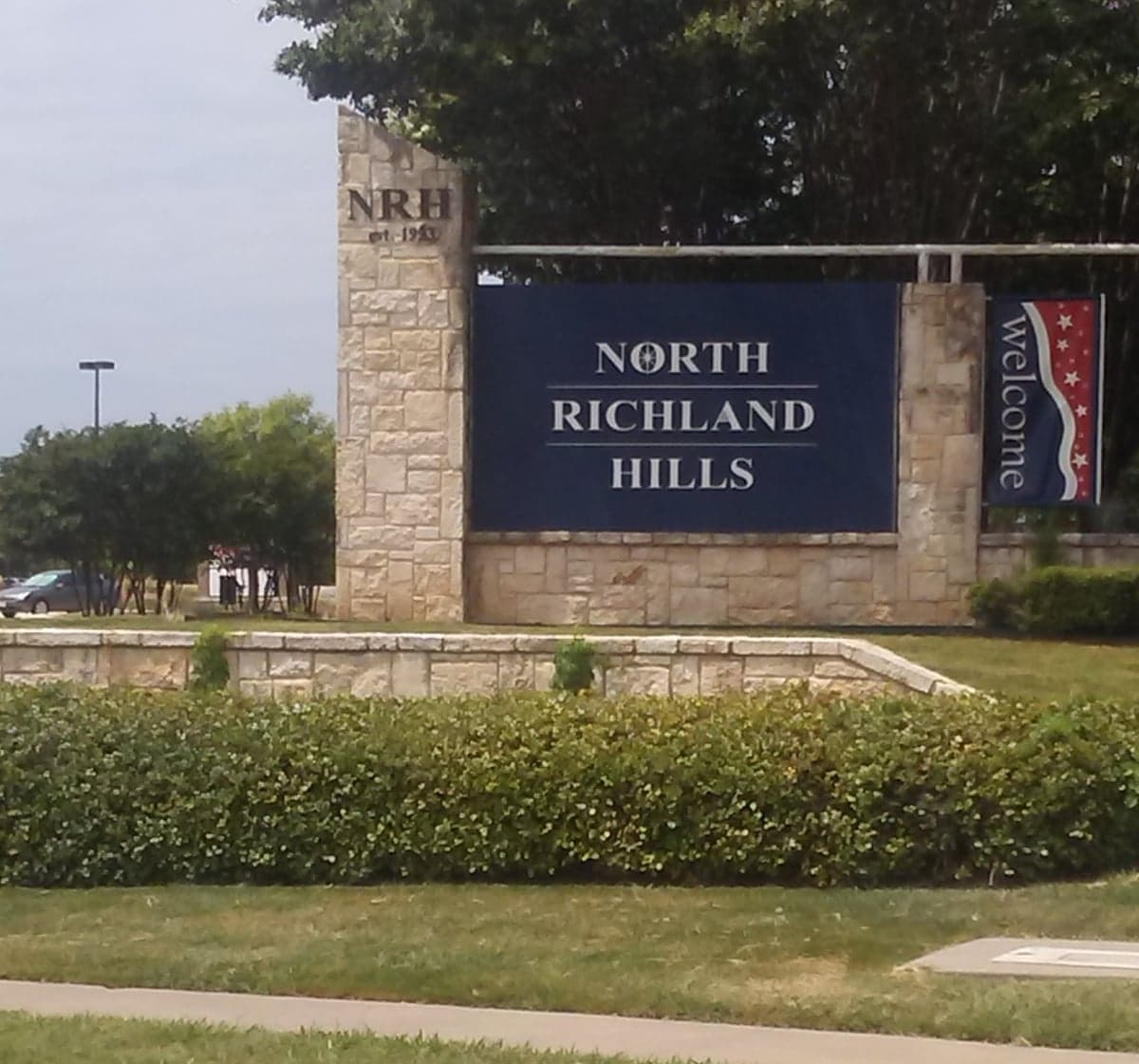
Photo: Wikipedia
Political ClimatePolitical Climate in North Richland Hills, TX
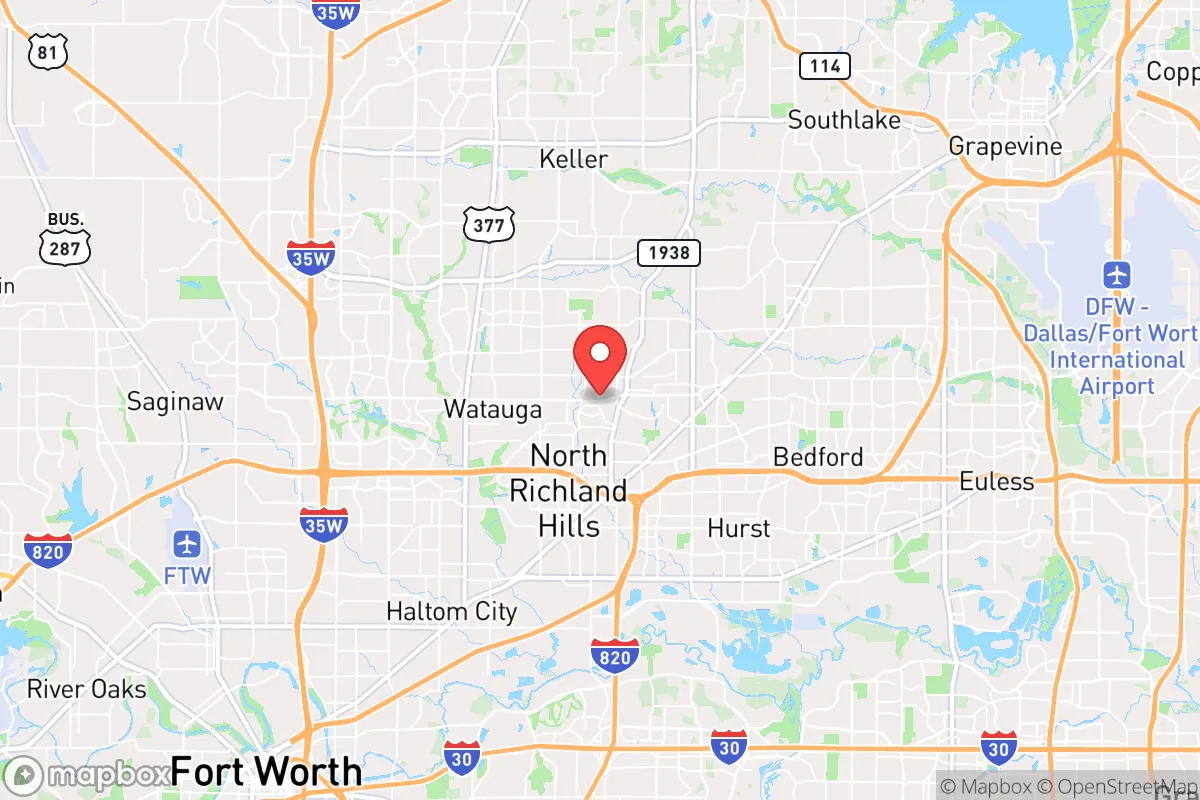
District shown is the primary district for this city’s centroid. Cities may span multiple districts.
Local Political AnalysisPolitical Analysis of North Richland Hills, TX
North Richland Hills has long been a solidly conservative community, and that hasn’t changed much, even as the broader Dallas-Fort Worth metroplex has seen some shifts. The area’s Cook Partisan Voting Index (PVI) of R+7 tells you the real story: this is a place where folks tend to vote for limited government, lower taxes, and a strong Second Amendment. It’s a bit more conservative than the state of Texas as a whole, which sits at R+4, and that gap has actually felt wider on the ground in recent years. While you see some of the bigger cities nearby, like Fort Worth proper or Dallas, drifting leftward on certain cultural issues, North Richland Hills has held its ground. The local elections and school board races here still reflect a community that values personal responsibility and isn’t eager to see government creep into everyday life.
How it compares
When you stack North Richland Hills up against the rest of Texas, the difference is more than just a number. The state’s R+4 PVI is pulled down by the massive blue votes out of Houston, Austin, and Dallas, but out here in the mid-cities, the vibe is different. Drive ten minutes east to Hurst or Bedford, and you’ll find a similar conservative tilt, but head south toward Fort Worth’s near southside or west to the more suburban edges of Tarrant County, and you start seeing a different political flavor. North Richland Hills sits in a sweet spot where the old-school Texas values—mind your own business, keep the government out of your wallet and your home—are still the default. The contrast with places like Dallas, where progressive policies on policing and zoning have taken hold, is stark. Here, the local council and school board have been more resistant to the kind of top-down mandates that have become common in blue-leaning cities.
What this means for residents
For someone living here, the political climate translates directly into daily life. You’re less likely to see the kind of overreach that’s become common in other parts of the state—no heavy-handed business closures, no aggressive tax hikes disguised as “equity” initiatives, and a general sense that your property rights and personal freedoms are respected. The local police department still operates with a community-oriented, pro-public safety approach, not the defund or reform-at-all-costs mentality you see elsewhere. School policies have stayed focused on academic basics and parental involvement, not social experiments. That said, there’s a quiet concern among long-time residents that the growth from Dallas is bringing in new folks who might not share those values. The worry is that as the area gets more crowded, the political balance could tip, and you’ll start seeing the same kind of government overreach that’s made other parts of Texas less appealing.
Culturally, North Richland Hills still feels like a place where the Fourth of July parade matters more than a city council diversity resolution. The local churches are active, the gun ranges are busy, and the conversation at the coffee shop is more likely to be about property taxes or the latest school board decision than about some new progressive ordinance. There’s a quiet pride in being a community that hasn’t lost its way, even as the world around it changes. If you’re looking for a place where the government stays out of your business and the neighbors still wave, this is it. But keep an eye on the newcomers—if the trend lines from Dallas keep pushing west, the next decade could test just how long that conservative character holds.

State Political ClimatePolitical Climate in Texas
State Political AnalysisPolitical Environment in the State
Texas has been a reliably Republican state for decades, with a Cook PVI of R+4, but the political landscape is far from monolithic. The dominant coalition has long been a mix of social conservatives, fiscal libertarians, and rural traditionalists, but the last 10-20 years have seen a slow, steady shift toward competitive two-party dynamics driven by explosive growth in the suburbs and major metros. While the state hasn’t flipped blue, the margins have tightened noticeably — from double-digit GOP wins in the 2000s to single-digit ones in recent cycles — and the internal fault lines are sharper than ever.
Urban vs. rural divide
The political map of Texas is a study in stark contrasts. The state’s major urban centers — Austin, Dallas, Houston, San Antonio, and El Paso — are solidly Democratic, with Austin and El Paso being the most liberal. These cities drive the blue vote, fueled by young professionals, tech transplants, and minority communities. But the real story is in the suburbs and exurbs. Places like Collin County (north of Dallas) and Fort Bend County (southwest of Houston) have shifted from deep red to purple or even blue in local races, driven by rapid population growth and demographic change. Meanwhile, the vast rural expanse — the Panhandle, West Texas, East Texas piney woods, and the Hill Country — remains deeply Republican. Lubbock, Amarillo, and Tyler are GOP strongholds where Democratic candidates rarely break 30%. The divide isn’t just geographic; it’s cultural. Rural Texans view the urban centers as out-of-touch with traditional values, while city dwellers see rural areas as resistant to progress. This tension is the central political fact of modern Texas.
Policy environment
Texas’s policy environment is a mixed bag for conservatives. On the plus side, there’s no state income tax, a business-friendly regulatory posture, and relatively low property taxes compared to high-tax states like California or New York. The state has also passed significant election integrity measures, like SB 1 (2021), which tightened voter ID requirements and limited mail-in ballot access. On education, Texas has a strong school choice movement, with Education Savings Accounts (ESAs) passed in 2023, though implementation has been rocky. However, the state’s property tax burden is still high for homeowners, and local school funding relies heavily on property taxes, which can be a shock for newcomers. Healthcare is a mixed bag: Texas has not expanded Medicaid, which keeps costs lower for the state but leaves many low-income residents uninsured. The state’s Heartbeat Act (SB 8, 2021) effectively banned abortion after six weeks, a major win for social conservatives. But the regulatory environment is not uniformly free — occupational licensing remains a barrier in some fields, and the state’s alcohol laws are still archaic in places (no Sunday liquor sales in many counties).
Trajectory & freedom
On the freedom front, Texas has moved in both directions over the past decade. On the positive side for conservatives, the state has expanded gun rights significantly. Constitutional Carry (HB 1927, 2021) allows permitless carry of handguns, a major expansion of Second Amendment rights. Parental rights were strengthened with HB 900 (2023), which restricted sexually explicit content in school libraries and gave parents more oversight. The state also passed SB 14 (2023), banning gender transition procedures for minors, a move that drew national attention. On the concerning side, government overreach has crept in. The state’s COVID-19 response saw some of the most aggressive business closures in the country in early 2020, though Governor Abbott later banned vaccine mandates. More troubling for liberty-minded residents is the growth of eminent domain for private projects, like the Texas Bullet Train proposal, which faced fierce opposition from rural landowners. Property rights are generally strong, but local zoning in cities like Austin has become increasingly restrictive, driving up housing costs. The trajectory is a tug-of-war: Texas is freer than most states on guns and taxes, but less free on social issues and local land use than many conservatives would like.
Civil unrest & political movements
Texas has seen its share of political flashpoints. The 2020 Black Lives Matter protests in Austin, Dallas, and Houston were large and occasionally violent, with property damage in downtown Austin. The state’s response was a backlash against “defund the police” rhetoric, leading to HB 1900 (2021), which penalized cities that cut police budgets. Immigration politics are a constant flashpoint. The state has engaged in a long-running feud with the Biden administration over border security, with Governor Abbott’s Operation Lone Star deploying state troopers and National Guard to the border, busing migrants to sanctuary cities like New York and Chicago. This has been popular with the GOP base but has drawn lawsuits and criticism from civil liberties groups. The secession rhetoric — “Texit” — is mostly a fringe movement, but it flares up after every election cycle. Election integrity remains a hot-button issue: the 2020 and 2022 elections saw widespread claims of fraud in counties like Harris County (Houston), leading to the removal of the county’s election administrator. A new resident will notice the political polarization in everyday life — bumper stickers, yard signs, and heated conversations at the grocery store are common, especially in the suburbs.
Projection
Over the next 5-10 years, Texas is likely to become more politically competitive, but not necessarily more liberal. The massive in-migration from California and other blue states is often cited as a Democratic shift, but many of those newcomers are actually conservatives fleeing high taxes and regulation. The real demographic wildcard is the Hispanic vote, which has been trending rightward in South Texas — counties like Starr and Zapata flipped from blue to red in 2020 and 2022. If that trend continues, Texas could actually become more Republican. However, the urban cores will keep growing, and the suburbs will continue to diversify. The state’s political future will be decided in places like Bexar County (San Antonio) and Tarrant County (Fort Worth), which are now true swing counties. Expect more fights over school funding, property taxes, and water rights as the population booms. The 2026 gubernatorial race will be a bellwether — if a Democrat can crack 48% statewide, the GOP’s dominance is truly in jeopardy.
Bottom line for a new resident: If you’re a conservative moving to Texas, you’ll find a state that largely aligns with your values on taxes, guns, and parental rights, but you’ll need to pick your county carefully. The rural areas and small towns are still deeply red, while the suburbs are increasingly purple. You’ll pay no income tax, but property taxes will hit you hard. You’ll have broad personal freedoms, but you’ll also see government overreach in areas like eminent domain and local zoning. Texas is still a free state by national standards, but the freedom is unevenly distributed — and the fight over what kind of Texas emerges in the next decade is just getting started.
* Values derived from national, state, county, city and local statistics and may differ in a specific area. Last updated: 2026-05-29T21:28:04.000Z
Narrative content on this page is AI-generated and may contain mistakes. Verify any details that matter before acting on them.
ReloMaps may earn a commission from affiliate links at no extra cost to you.

