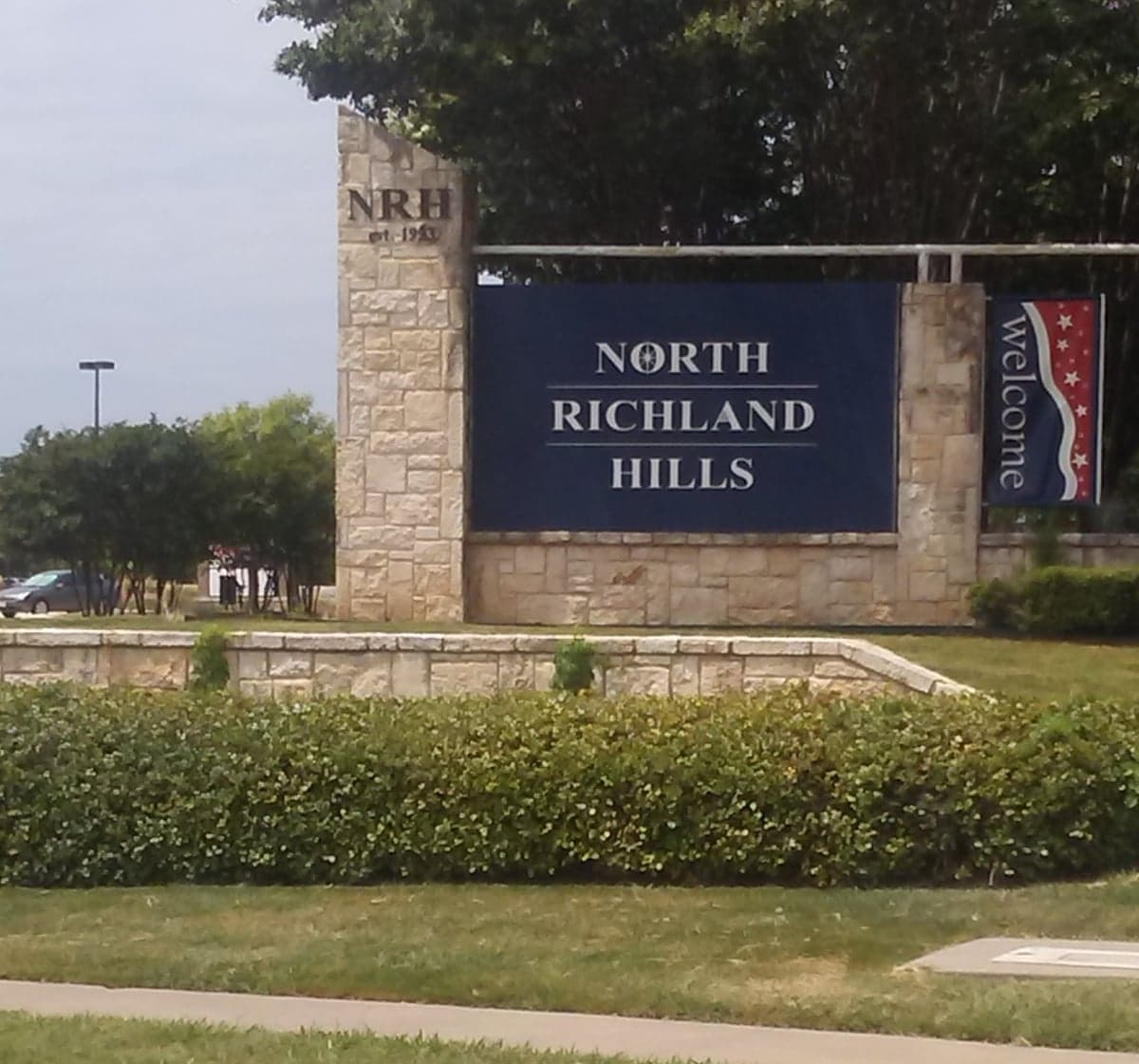
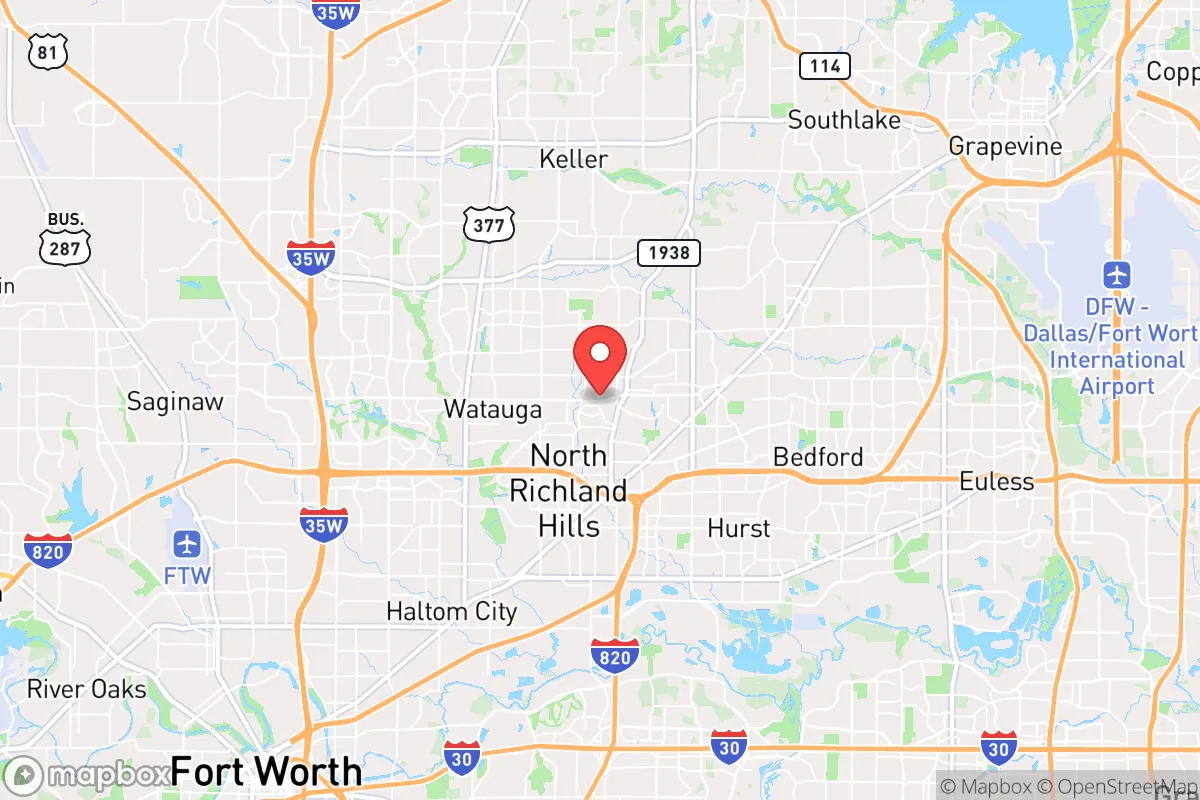
Photo: Wikipedia
Personal Sovereignty in North Richland Hills, TX
Strong independent fundamentals that actively favor personal liberty and low regulation.
What does Personal Sovereignty tell us?
Personal Sovereignty measures your capacity for self-reliance and independence with minimal government friction. Higher scores mean fewer barriers between you and the way you want to live... but it assumes you have the space you need and good neighbors.
What does this tell us?
Personal Sovereignty measures your capacity for self-reliance and independence with minimal government friction. Higher scores mean fewer barriers between you and the way you want to live... but it assumes you have the space you need and good neighbors.
State Policy
Energy independence: Net exporter (220% of energy produced in-state)
Personal Liberty
Homesteading

Personal Liberty Analysis
North Richland Hills offers a surprisingly robust environment for personal sovereignty, especially when measured against the encroaching regulatory creep seen in many other parts of the country. As a mid-sized Tarrant County city situated in the Dallas-Fort Worth metroplex, it benefits from Texas’s strong state-level preemption laws that limit local government overreach, while maintaining a distinctly suburban character that allows for a degree of self-reliance uncommon in similarly sized cities. For the individual or family approaching relocation with a prepper or survivalist mindset, the key question is whether this suburb provides enough breathing room to live according to your own rules, or whether it merely offers a slightly larger cage than the alternatives.
Tax burden and regulatory posture: How Texas state law limits local overreach
The most significant advantage for personal sovereignty in North Richland Hills is the absence of a state income tax, which immediately puts more money back into your hands for self-directed priorities like supplies, training, or land acquisition. Property taxes in Tarrant County are not trivial—expect effective rates around 2.1% to 2.4% of assessed value—but Texas law caps annual appraisal increases at 10% for homesteads, preventing the kind of runaway tax hikes seen in states like California or New York. More critically, the city operates under Texas’s strict preemption statutes, meaning local ordinances cannot exceed state law on matters like firearm regulation, occupational licensing, or land use. This creates a predictable regulatory floor: you won’t wake up to a surprise city council ban on backyard chickens, rainwater collection, or home-based businesses, as long as you comply with basic zoning. The city’s zoning code does require permits for major structures and limits accessory dwelling units in some neighborhoods, but it’s far less restrictive than the HOA-dominated suburbs to the north or the hyper-regulated urban cores of Austin and Dallas. For the sovereignty-minded, the trade-off is clear: you pay higher property taxes than rural counties, but you gain the infrastructure and emergency services that make self-reliance more practical during a crisis.
Self-defense and gun law specifics: What the Second Sanctuary means for residents
North Richland Hills sits in Tarrant County, which in 2021 was designated a Second Amendment Sanctuary County, meaning local officials have formally pledged not to enforce unconstitutional federal gun restrictions. This is not symbolic: the county sheriff’s office has publicly stated it will not assist federal agencies in enforcing any future bans on commonly owned firearms, magazines, or ammunition. For residents, this translates into practical freedom. Texas law allows permitless carry (constitutional carry) for anyone 21 or older who can legally possess a firearm, and North Richland Hills has no local ordinances restricting open or concealed carry beyond state law. The city does have a municipal court and police department, but they operate under the same state preemption—no local magazine bans, no waiting periods, no additional background checks beyond the federal system. For the prepper, this means you can legally keep a defensive rifle in your vehicle, store ammunition without quantity limits, and train on private property without fear of noise ordinances being weaponized against you. The nearest gun ranges are within a 15-minute drive, and the city’s proximity to Fort Worth means multiple gun shows and training facilities are accessible. The only notable restriction is that discharging a firearm within city limits is prohibited except on licensed ranges or in self-defense, so zero-acreage homesteaders will need to travel for live-fire practice.
Self-reliance and homesteading viability: Lot sizes, zoning, and off-grid feasibility
This is where North Richland Hills reveals its suburban limitations. The typical lot size in the city ranges from 0.15 to 0.35 acres, with most homes built on slabs with minimal yard space. While the city does not prohibit vegetable gardens, composting, or small-scale food production, the zoning code restricts livestock to chickens only (hens, no roosters) and requires a minimum lot size of 7,500 square feet for that privilege. Larger animals like goats, rabbits for meat, or beekeeping are effectively prohibited in standard residential zones. Rainwater collection is legal and encouraged by the state, but the small roof footprints of typical homes limit practical storage to a few hundred gallons. Off-grid energy is technically feasible—Texas law prohibits HOAs and cities from banning solar panels—but the city’s building code requires grid interconnection for new construction, making true off-grid living illegal without a variance. For the serious prepper seeking land for a retreat or a self-sufficient homestead, North Richland Hills is a compromise: you can maintain a substantial pantry, grow a significant vegetable garden, and store emergency supplies, but you cannot achieve food or energy independence on a standard suburban lot. The real value here is as a base of operations—a place to live while you acquire rural acreage within a two-hour drive, leveraging the city’s infrastructure for work and supply runs.
Personal liberties: Parental rights, medical autonomy, speech, and property
Texas has become a national leader in protecting parental rights, and North Richland Hills residents benefit directly from state-level legislation. The Texas Parental Bill of Rights (HB 101) gives parents the explicit authority to direct their children’s education, medical care, and moral upbringing, including the right to opt out of any curriculum or school activity without penalty. The city’s schools—part of the Birdville Independent School District—have not implemented the kind of controversial gender ideology policies seen in districts like Austin or Dallas, and the district’s board has publicly affirmed parental notification requirements. On medical autonomy, Texas law prohibits vaccine mandates by private employers and government entities, and the state’s ban on COVID-19 vaccine passports remains in effect. For the sovereignty-minded, this means you can refuse any medical treatment for yourself or your children without facing government coercion, though private hospitals may still enforce their own policies. Free speech protections are robust: the city has no ordinances restricting political signage, public assembly, or expressive conduct beyond standard time-place-manner rules. Property rights are strengthened by Texas’s ban on red flag laws and its requirement that any condemnation for public use be compensated at fair market value plus relocation costs. The city does enforce building codes and nuisance ordinances, but these are applied uniformly and rarely used as pretext for harassment. The net effect is a legal environment where the default assumption is liberty, not permission—a stark contrast to the coastal jurisdictions where every aspect of life requires a government-issued license.
In the broader context of American personal sovereignty, North Richland Hills represents a solid B+—not the frontier freedom of rural Texas or Wyoming, but far more protective of individual autonomy than the vast majority of suburban America. The combination of state-level preemption, Second Amendment sanctuary status, parental rights legislation, and a local culture that values self-reliance creates a buffer against the worst forms of government overreach. The trade-offs are real: you cannot homestead at scale, you will pay property taxes that fund a municipal apparatus you may not fully support, and you live within a metroplex that could become a target during a major crisis. But for the individual or family seeking a strategic relocation point—a place to live, work, and prepare while maintaining access to urban resources—North Richland Hills offers a legal and cultural foundation that respects your right to live as you see fit. The question is not whether this city is perfect, but whether it gives you enough room to build the life you want while the world around you grows more uncertain. For most sovereignty-minded people, the answer is yes—provided you understand its limits and plan accordingly.

* Values derived from national, state, county, city and local statistics and may differ in a specific area. Last updated: 2026-05-29T21:28:04.000Z
Narrative content on this page is AI-generated and may contain mistakes. Verify any details that matter before acting on them.
ReloMaps may earn a commission from affiliate links at no extra cost to you.

