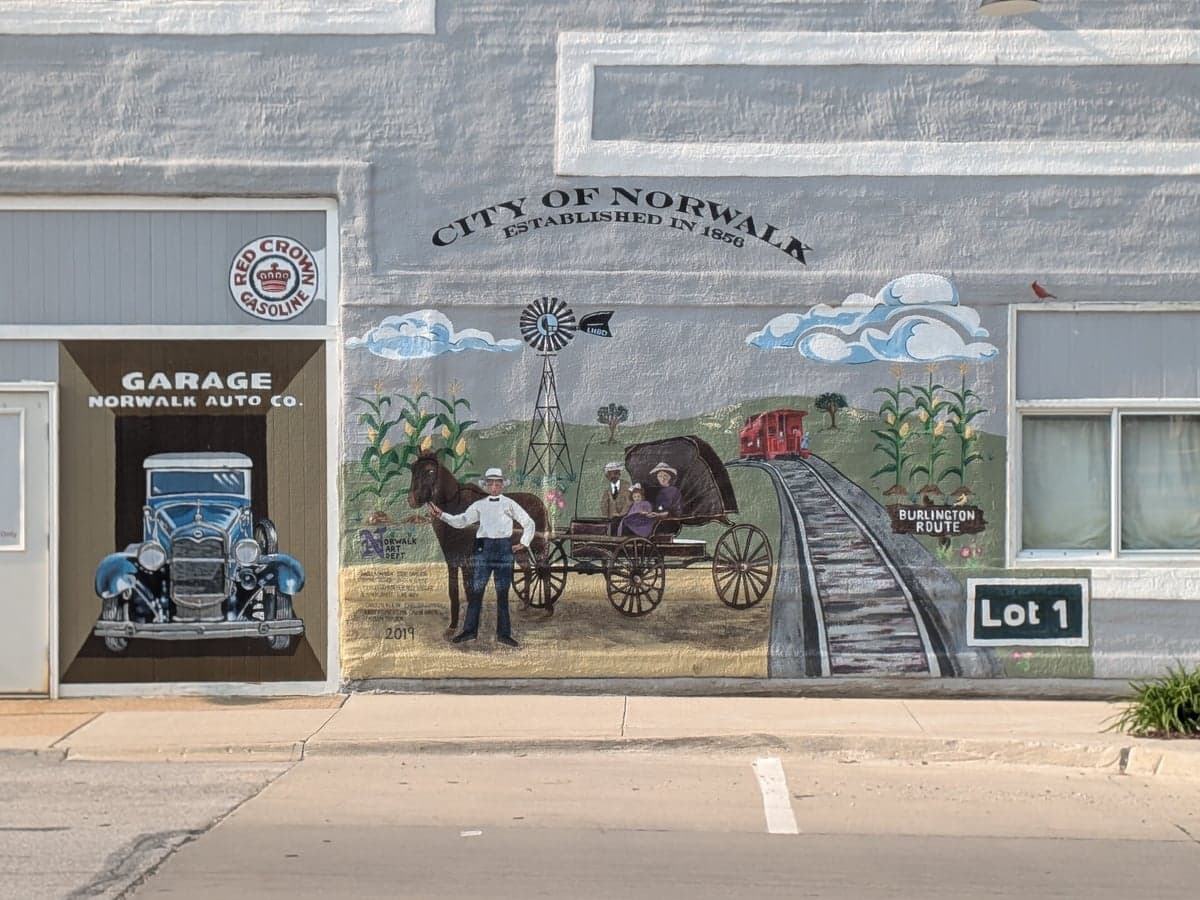
Photo: Wikipedia
Political ClimatePolitical Climate in Norwalk, IA
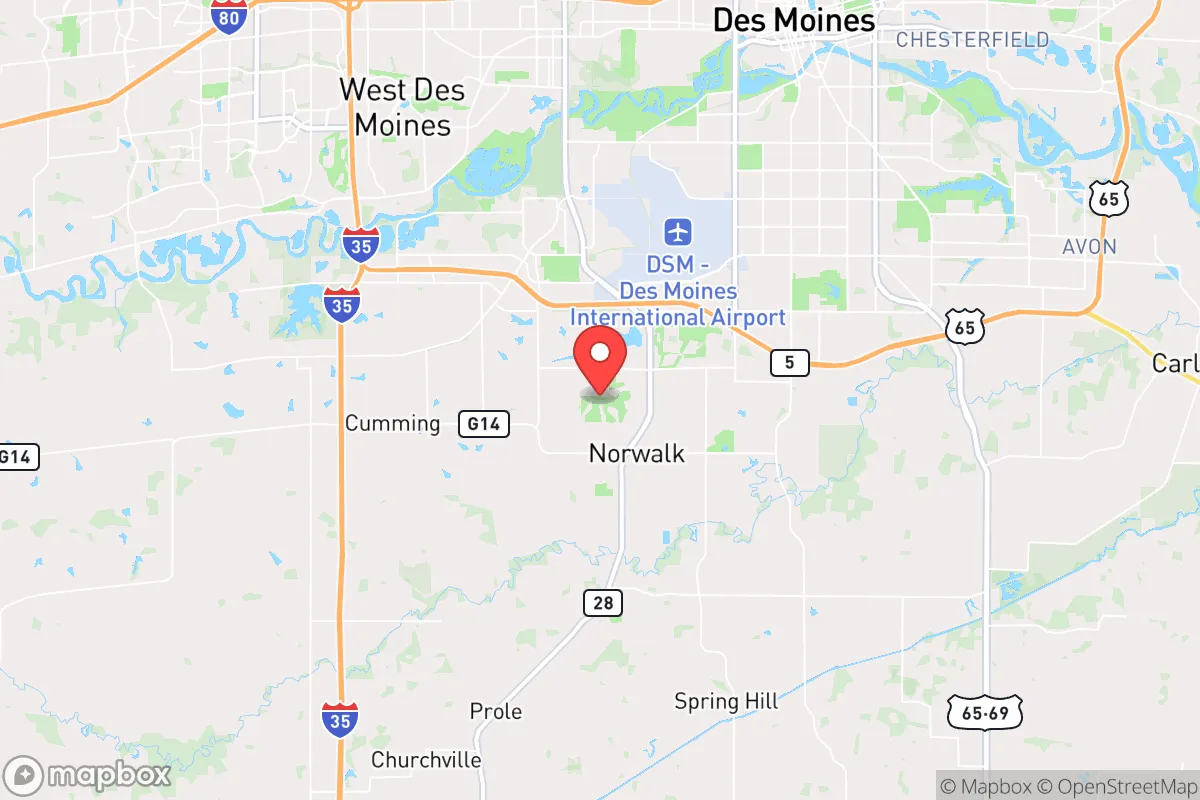
District shown is the primary district for this city’s centroid. Cities may span multiple districts.
Local Political AnalysisPolitical Analysis of Norwalk, IA
Norwalk, Iowa, has long been a reliably conservative community, and that hasn't changed much despite the rapid growth it's seen over the last decade. The Cook PVI rating of R+4 tells you the basics—this is a place where Republican candidates can generally count on winning, but it's not a deep-red stronghold like some of the more rural counties to the south and west. What you're really seeing here is a suburb that's holding its ground politically, even as the Des Moines metro area as a whole has drifted leftward. The real story isn't about Norwalk flipping blue; it's about whether the steady influx of new residents from more progressive areas will slowly erode the local culture of limited government and personal responsibility that folks here have always valued.
How it compares
If you want to understand Norwalk's political character, look at the towns around it. Drive ten minutes north into West Des Moines or Clive, and you'll hit areas that are trending purple or even light blue, especially in the newer subdivisions packed with young professionals and remote workers. Head south or east toward Indianola or Carlisle, and you're back in more reliably conservative territory, though even those towns are feeling the pressure from metro sprawl. Norwalk sits right on that dividing line—it's still got enough of a small-town, farming-roots feel that most folks here are skeptical of government overreach, whether it's zoning rules that tell you what you can do with your own land or state-level mandates that feel like they came from Des Moines or Washington. The contrast with the core of Polk County is stark: Norwalk voters tend to see taxes and regulations as the real threats to their way of life, not the boogeyman of the week.
What this means for residents
For someone living here, the political climate translates into a few concrete realities. First, you've got a city council and school board that still lean conservative, which means they're generally reluctant to raise property taxes or impose new fees on homeowners and small businesses. That's a big deal when you're watching neighboring suburbs nickel-and-dime residents with bond issues and special assessments. Second, the local culture around personal freedoms is pretty strong—you don't see a lot of heavy-handed mask mandates or business shutdowns here, even during the worst of the pandemic scares. People expect to be trusted to make their own decisions, and they vote accordingly. The concern among longtime residents is that as more people move in from places like Chicago or the coasts, they'll bring a mindset that sees government as the solution to every problem, not the problem itself. So far, Norwalk has held the line, but it's something to keep an eye on over the next five to ten years.
One thing that sets Norwalk apart from some of its neighbors is the way it handles development. There's a real wariness here about letting the county or state dictate how the town grows. You'll hear folks at the coffee shop grumbling about "smart growth" initiatives that sound like a backdoor way to control property rights. The school district is good, but there's a strong preference for local control over curriculum and spending—no one wants some bureaucrat in Des Moines telling teachers what to do. If you're the kind of person who values being left alone to live your life without a lot of red tape, Norwalk is still a solid bet. Just don't expect it to stay that way forever if the metro keeps creeping south.

State Political ClimatePolitical Climate in Iowa
State Political AnalysisPolitical Environment in the State
Iowa has been a reliably Republican state in presidential elections since 2016, but it wasn’t always that way. For decades, it was a classic purple swing state, backing Barack Obama twice before flipping hard to Donald Trump by nearly 10 points in 2020 and again in 2024. The shift is driven by a coalition of rural conservatives, evangelical Christians, and working-class voters who have abandoned the Democratic Party over cultural and economic issues. However, the state’s two most populous counties—Polk (Des Moines) and Johnson (Iowa City)—remain staunchly Democratic, creating a sharp urban-rural split that defines Iowa’s political landscape.
Urban vs. rural divide
The political map of Iowa is a tale of two worlds. The Des Moines metro area, anchored by Polk County, votes reliably blue—Polk went +15 for Biden in 2020 and has trended leftward as the city grows with younger, college-educated transplants. Johnson County, home to the University of Iowa in Iowa City, is the bluest county in the state, often voting +30 or more Democratic. These two counties alone produce enough votes to keep Democrats competitive in statewide races. But outside those islands, the rest of Iowa is deeply red. Rural counties like Sioux, Lyon, and Plymouth in the northwest routinely vote 70-80% Republican. The shift is most visible in once-Democratic strongholds like Dubuque and Clinton counties along the Mississippi River, which flipped hard to Trump in 2016 and have stayed red since. Even suburban counties like Dallas (west of Des Moines) and Linn (Cedar Rapids) are trending right, though they remain competitive.
Policy environment
Iowa’s policy environment has shifted dramatically rightward since 2017, when Republicans gained full control of state government. The state now has a flat 3.8% individual income tax rate (down from a progressive 8.98% top rate in 2020), with a plan to phase it down to 3.5% by 2027. Corporate taxes are also being slashed. There is no estate tax, and property taxes are capped. On education, Governor Kim Reynolds signed a universal school choice law in 2023, allowing any family to use public funds for private or homeschool expenses—a major win for parental rights. Healthcare policy is mixed: Iowa expanded Medicaid under the Affordable Care Act, but the state also passed a six-week abortion ban in 2023 (enforced after a heartbeat is detected), which was upheld by the Iowa Supreme Court in 2024. Election integrity saw new voter ID requirements and stricter absentee ballot rules passed in 2021. The state also enacted a “Second Amendment Preservation Act” in 2021, which prohibits state enforcement of any future federal gun bans—a clear statement on local sovereignty.
Trajectory & freedom
Iowa is becoming more free in several key areas, especially fiscal policy and education. The 2023 school choice law is a landmark expansion of parental freedom, allowing families in Des Moines or rural towns like Pella to redirect tax dollars to the school of their choice. Gun rights have expanded: permitless carry was signed into law in 2021, and the Second Amendment Preservation Act blocks state cooperation with federal gun control. On medical freedom, Iowa passed a law in 2022 prohibiting mask and vaccine mandates in schools and government buildings. However, there are concerning trends. The state’s medical marijuana program remains highly restrictive—only low-THC products are allowed, and there is no recreational cannabis. Property rights saw a blow in 2022 when the Iowa Supreme Court upheld the use of eminent domain for a carbon pipeline project, sparking fierce backlash from landowners. The state also passed a “critical race theory” ban in K-12 schools in 2021, which conservatives applaud, but some worry about government overreach into curriculum.
Civil unrest & political movements
Iowa has seen relatively little civil unrest compared to coastal states, but there have been notable flashpoints. In 2020, Black Lives Matter protests in Des Moines and Iowa City turned violent on a few nights, leading to property damage and a heavy police response. Since then, organized activism has been dominated by the fight against carbon pipelines—a grassroots movement that has united farmers, landowners, and libertarians across party lines. The “Iowa Property Rights” group has held large rallies at the state capitol, successfully pressuring the legislature to tighten eminent domain rules in 2023. Immigration politics are quieter here than in border states, but Governor Reynolds sent Iowa National Guard troops to Texas in 2021 and again in 2024 to assist with border security. There is no sanctuary city policy anywhere in Iowa; in fact, a 2024 law requires local law enforcement to cooperate with federal immigration authorities. Election integrity remains a hot topic: the 2020 and 2022 elections saw no major fraud scandals, but Republican-led audits and the new voter ID law have kept the issue alive among activists.
Projection
Over the next 5-10 years, Iowa is likely to become more Republican and more conservative. In-migration is modest but tilts right—people moving from Illinois and California for lower taxes and cultural alignment. The Des Moines metro will continue to grow and diversify, potentially making Polk County even more Democratic, but the rural and suburban counties are solidifying their red lean. The state’s population is aging and slowly declining in rural areas, which could weaken the Republican base over time, but the GOP’s structural advantages—gerrymandered legislative maps, a strong evangelical voting bloc, and a unified conservative media ecosystem—are likely to hold. The biggest wildcard is the carbon pipeline fight: if the state continues to side with corporate interests over property rights, it could fracture the Republican coalition. Expect further tax cuts, continued school choice expansion, and possibly a push for a constitutional amendment on school funding. Abortion will remain a defining issue, but the 2024 court ruling has largely settled the matter for now.
For a conservative-leaning individual or family moving to Iowa, the bottom line is this: you’ll find a state that respects your wallet, your right to choose your child’s education, and your Second Amendment rights. The political climate is stable and trending in your direction, with a government that is actively reducing its footprint in your life. The trade-offs are a slower pace of life, harsh winters, and a state that is still wrestling with how to balance property rights with corporate development. If you value low taxes, school choice, and a culture that doesn’t force progressive ideology on you, Iowa is a solid bet. Just know that the Des Moines and Iowa City areas are blue islands where you’ll encounter more progressive attitudes—so choose your county wisely.
* Values derived from national, state, county, city and local statistics and may differ in a specific area. Last updated: 2026-04-29T21:58:29.000Z
Narrative content on this page is AI-generated and may contain mistakes. Verify any details that matter before acting on them.
ReloMaps may earn a commission from affiliate links at no extra cost to you.

