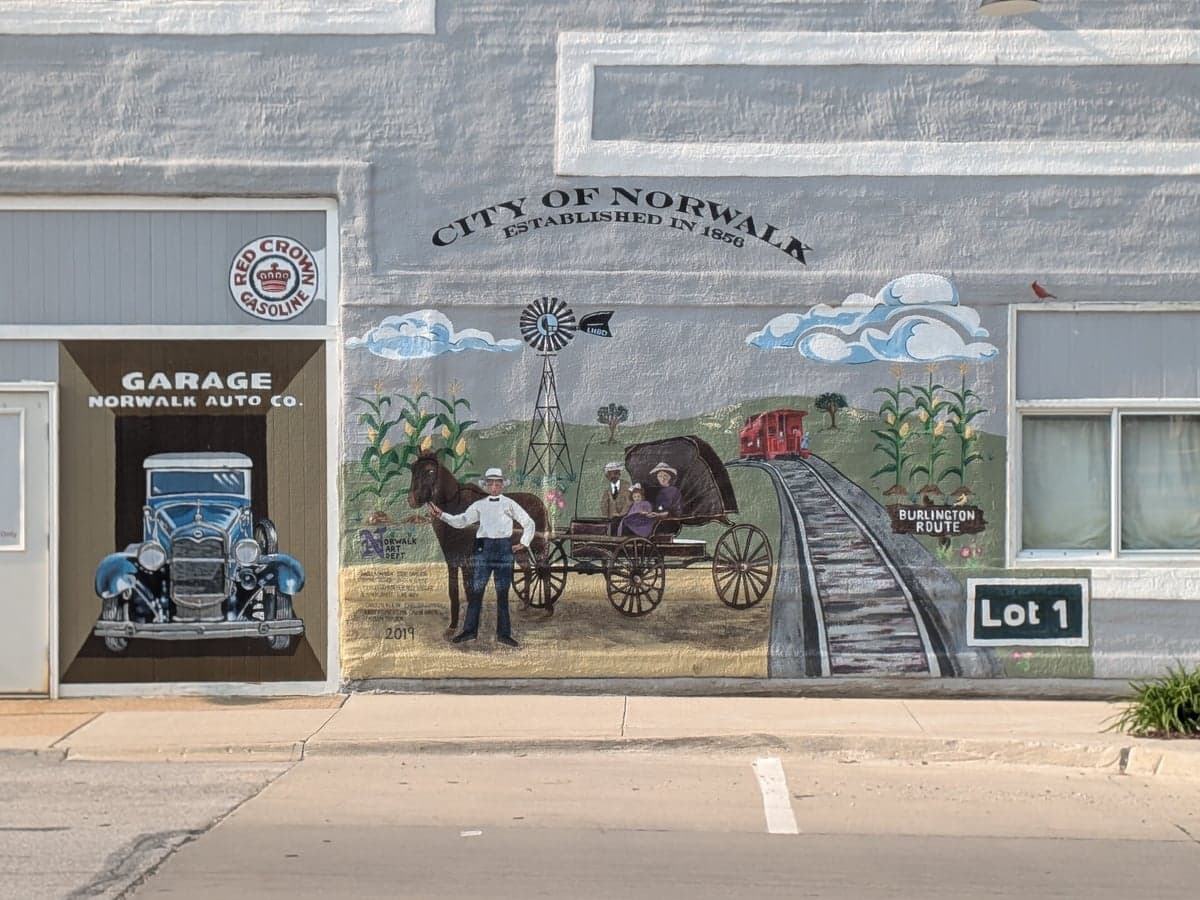
Photo: Wikipedia
Quality of Life in Norwalk, IA
A high quality of life with strong walkability, manageable living costs, healthy neighborhood signals, and solid amenity access.
What does Quality of Life tell us?
Quality of Life blends cost of living, nearby amenities, socioeconomic signals, and neighborhood character. City-level scores represent the whole municipality; individual neighborhoods can differ.
What does this tell us?
Quality of Life blends cost of living, nearby amenities, socioeconomic signals, and neighborhood character. City-level scores represent the whole municipality; individual neighborhoods can differ.
Cost of Living
16% below national average
The Real Cost of Living in Norwalk, IA for 2026
| Tier | Individual | Family (4) |
|---|---|---|
| Survival | $14k | $26k |
| Comfortable | $54k | $79k |
| Luxury | $150k+ | $233k+ |
| Elite (Top 5%) | $177k+ | $274k+ |
120%
The Area Signal
A metric tracking the socioeconomic signals of the area.
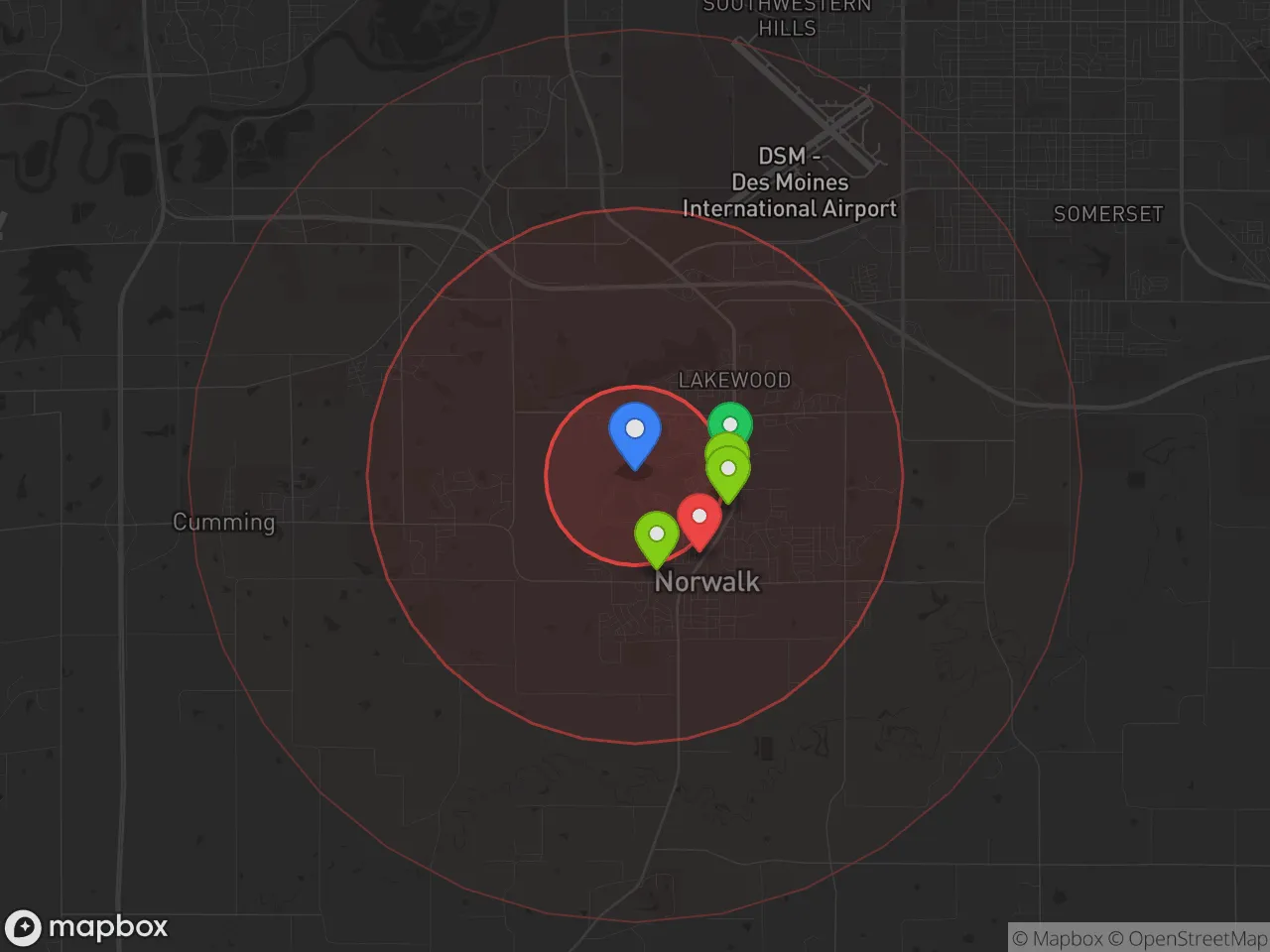
Hobbies
Explore the areaGroceries
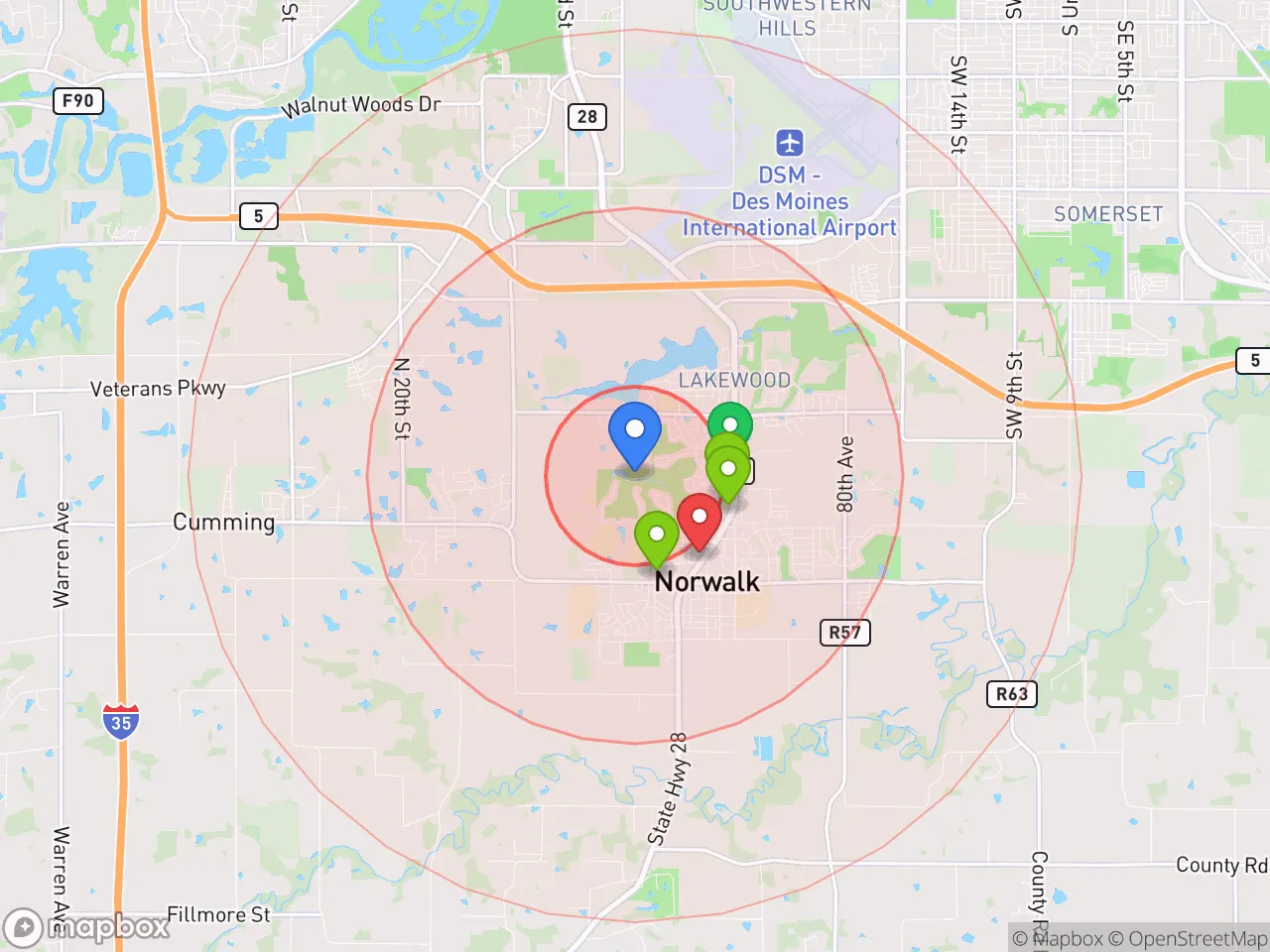
4 within 10 miles
Gas
20 within 10 miles
Hospital
9 within 20 miles
Airport
MCI — Kansas City International
Post Office
USPS — Norwalk, IA
Critical Amenities
Quality-of-Life Analysis
Norwalk, Iowa, presents a quality-of-life profile that blends small-town affordability with the economic gravity of the Des Moines metro, attracting a mix of young families, skilled tradespeople, and professionals seeking lower costs without sacrificing urban access. With a cost-of-living index of 84 (well below the U.S. average of 100), the community is notably more affordable than nearby West Des Moines or Ankeny, yet its median home value of $275,700 and median rent of $869 reflect a market that has appreciated steadily since 2020, driven by demand from commuters and remote workers. The population skews younger and more family-oriented than the state average, with a median age around 35 and a higher-than-typical share of households with children under 18.
Cost of living, housing, and how Norwalk compares to nearby suburbs
Norwalk’s cost-of-living index of 84 means everyday expenses—groceries, utilities, and transportation—run roughly 16% below the national norm, a significant advantage over neighboring suburbs like Clive (index ~96) or Waukee (~92). The median home value of $275,700 is roughly $30,000–$40,000 less than comparable new-construction homes in Ankeny or Johnston, making Norwalk a value play for buyers priced out of those markets. Renters benefit from a median rent of $869, which is about 12% lower than the Des Moines metro average and nearly 20% below the national median. However, property taxes in Warren County are slightly above the state median, averaging around 1.6% of assessed value, which can offset some of the housing savings for homeowners. The average commute of 21.6 minutes is shorter than the national average of 26 minutes and notably faster than commutes from farther exurbs like Indianola or Carlisle, thanks to direct access via Highway 28 and Interstate 35.
Schools, amenities, and what daily life feels like in Norwalk
Daily life in Norwalk revolves around the highly rated Norwalk Community School District, which serves roughly 2,800 students across four elementary schools, one middle school, and one high school. The district consistently posts above-average test scores in reading and math, and its graduation rate hovers near 95%. For recreation, residents rely on the Norwalk Aquatic Center, the expansive McAninch Sports Complex (with soccer fields, baseball diamonds, and walking trails), and the nearby Lake Ahquabi State Park for fishing and hiking. Retail and dining are concentrated along Highway 28, anchored by a Hy-Vee grocery store, local coffee shops like The Daily Grind, and casual eateries such as Smokey D’s BBQ. The town lacks a major hospital, but MercyOne Des Moines Medical Center is a 20-minute drive north. The rhythm is distinctly suburban: quiet evenings, active youth sports leagues, and a calendar of community events like the Norwalk Summerfest and the weekly farmers market from June through September.
Norwalk is best suited for buyers and renters who prioritize affordability and a short commute over urban nightlife or walkability. Young families will find the schools and recreation options compelling, while remote workers and commuters to downtown Des Moines (about 15 minutes via I-35) benefit from the low housing costs and manageable drive. Retirees on fixed incomes may also appreciate the lower rent and property tax burden compared to Polk County suburbs, though those seeking dense medical services or cultural amenities may prefer West Des Moines. Overall, Norwalk offers a pragmatic trade-off: a lower cost of entry into the Des Moines metro, with the trade-off being fewer immediate amenities and a car-dependent layout.

Crime in Norwalk, IA
Lower crime rates than 96% of comparable U.S. locations.
Violent CrimeViolent Crime Analysis
Property CrimeProperty Crime Analysis
Crime Analysis
Norwalk, Iowa, is one of the safest communities in the Des Moines metro area, with violent crime rates dramatically below both state and national averages. The city recorded a violent crime rate of just 49.7 incidents per 100,000 residents, and a property crime rate of 279.7 per 100,000, placing it in the lowest tier of crime risk for a suburb of its size. These figures reflect a community where serious crime is rare and residents generally feel secure in their daily routines.
Crime in context
To understand Norwalk’s safety advantage, it helps to compare its numbers to broader benchmarks. The national violent crime rate in 2024 was approximately 380 per 100,000, meaning Norwalk’s rate is roughly 87% lower than the U.S. average. Even the state of Iowa’s violent crime rate—around 280 per 100,000—is over five times higher than Norwalk’s. Property crime in Norwalk (279.7 per 100K) also sits well below the national average of roughly 1,950 per 100,000 and the Iowa average of about 1,600 per 100,000. These numbers place Norwalk in the company of the safest suburbs in the region, comparable to Waukee or Johnston.
What residents experience
For those living in Norwalk, the low crime statistics translate into tangible daily peace of mind. The most common incidents are minor property crimes like theft from unlocked vehicles or occasional vandalism, rather than violent confrontations. Residents frequently report leaving garage doors open during the day and walking neighborhood streets after dark without concern. The city’s police department maintains a visible presence, and community engagement is high through programs like National Night Out and neighborhood watch groups. Because Norwalk is part of the Des Moines metropolitan area, however, residents should be aware that broader county-level justice policies can influence regional crime trends. Polk County, which surrounds Norwalk, has seen debates over progressive prosecution policies in recent years, a factor that some residents monitor closely as it can affect recidivism and the overall safety climate in the metro area.
Neighborhood-level variation
Crime in Norwalk is not evenly distributed, though the variation is modest compared to larger cities. The newer developments on the city’s north and west sides, such as those near the high school and along Highway 28, tend to have the lowest incident rates, benefiting from newer infrastructure and higher property values. Older sections near the historic downtown core and areas closer to the Interstate 35 corridor see slightly more property crime, particularly theft from vehicles. Overall, no neighborhood in Norwalk approaches a level that would be considered high-crime by national standards, but prospective homebuyers may want to prioritize homes in the northern subdivisions for the lowest possible risk profile.
* Values derived from national, state, county, city and local statistics and may differ in a specific area. Last updated: 2026-04-29T21:58:29.000Z
Narrative content on this page is AI-generated and may contain mistakes. Verify any details that matter before acting on them.
ReloMaps may earn a commission from affiliate links at no extra cost to you.

